


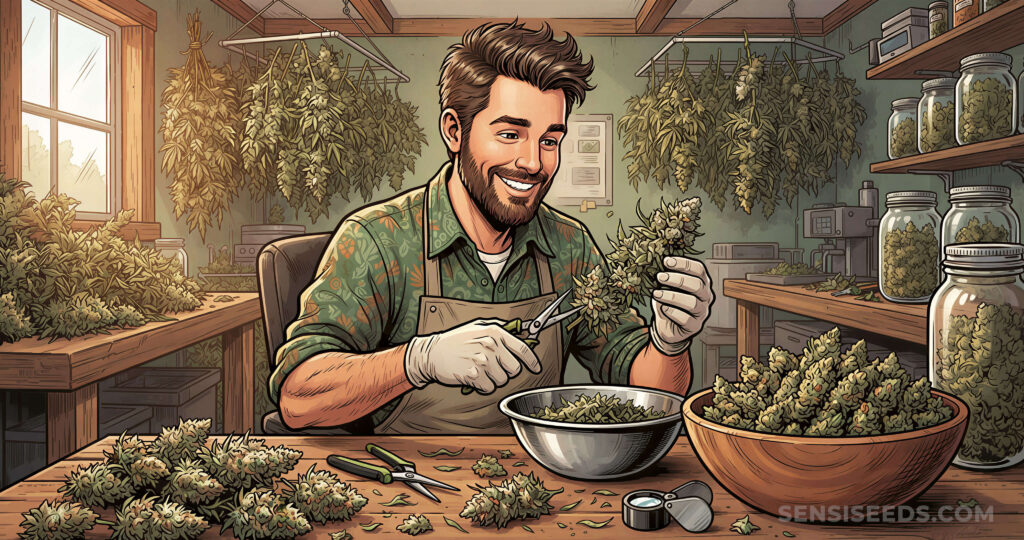
Most smokers have (on numerous occasions) found themselves appreciating the meticulous trim of a bud. And while manicuring cannabis flowers obviously improves their looks, knowing how to trim weed is about much more than aesthetics.
Trimming can make or break a harvest, either enhancing the smell and taste of your weed as it dries/cures or degrading it substantially.
In this guide, you’ll learn not just how to trim cannabis buds properly, but also the science behind trimming; the difference between wet vs dry trimming techniques; which cannabis trimming tools you need to successfully manicure your buds, as well as what to do with cannabis trim.
Understanding why trimming matters
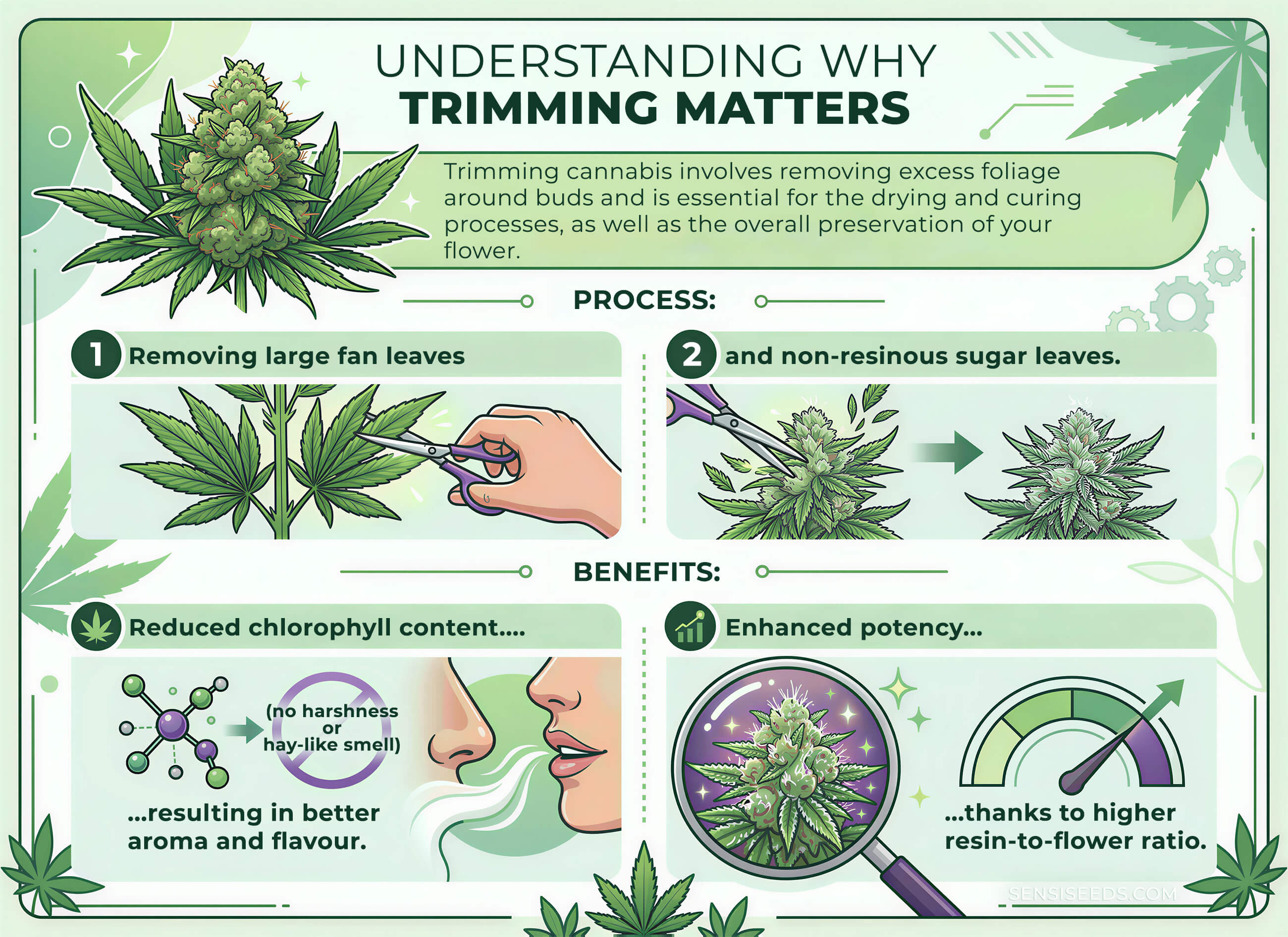
Trimming cannabis involves removing excess foliage around buds. Of course, this includes the large fan leaves you find protruding out from the middle of long colas, but also the smaller sugar leaves close to the calyxes that make up flowers.
And though it might seem contradictory to take sharp scissors to your buds after eagerly watching them grow, manicuring cannabis flowers helps:
- Reduce their water and chlorophyll content. This facilitates drying and curing, especially in humid climates.
- Improves their resin-to-flower ratio. The most resinous parts of cannabis flowers are their calyxes and the sugar leaves closest to them. By removing excess foliage that contains fewer trichomes, you end up with buds boasting a higher concentration of resin-to-plant matter.
The effects of poor cannabis trimming
Poor trimming won’t just affect the look of your flowers. It can also:
- Increase the chance of mould during drying or curing. Fan and sugar leaves hold excess moisture that can get trapped in your flowers, creating a breeding ground for bad bacteria and fungal pathogens (particularly mildew and Botrytis).
- Contribute to “hay smell”. The excess chlorophyll in poorly trimmed cannabis buds produces a hay or grass-like aroma, even after weeks of curing.
- Poor flavour and harshness when smoked or vaped. Again, this is due to the excess chlorophyll left over in untrimmed flowers.
Related post

Wet vs. dry trimming: Which is best for maximum flavour and potency
Whether you choose to wet vs dry trim your cannabis depends on:
- Your setup. Growers with dedicated drying and curing rooms/tents and precise control over the environment may prefer dry trimming.
- Your experience. Wet trimming is usually easier and more appealing to inexperienced growers.
- Your local climate. Wet trimming helps minimise the risk of mould/mildew in humid areas.
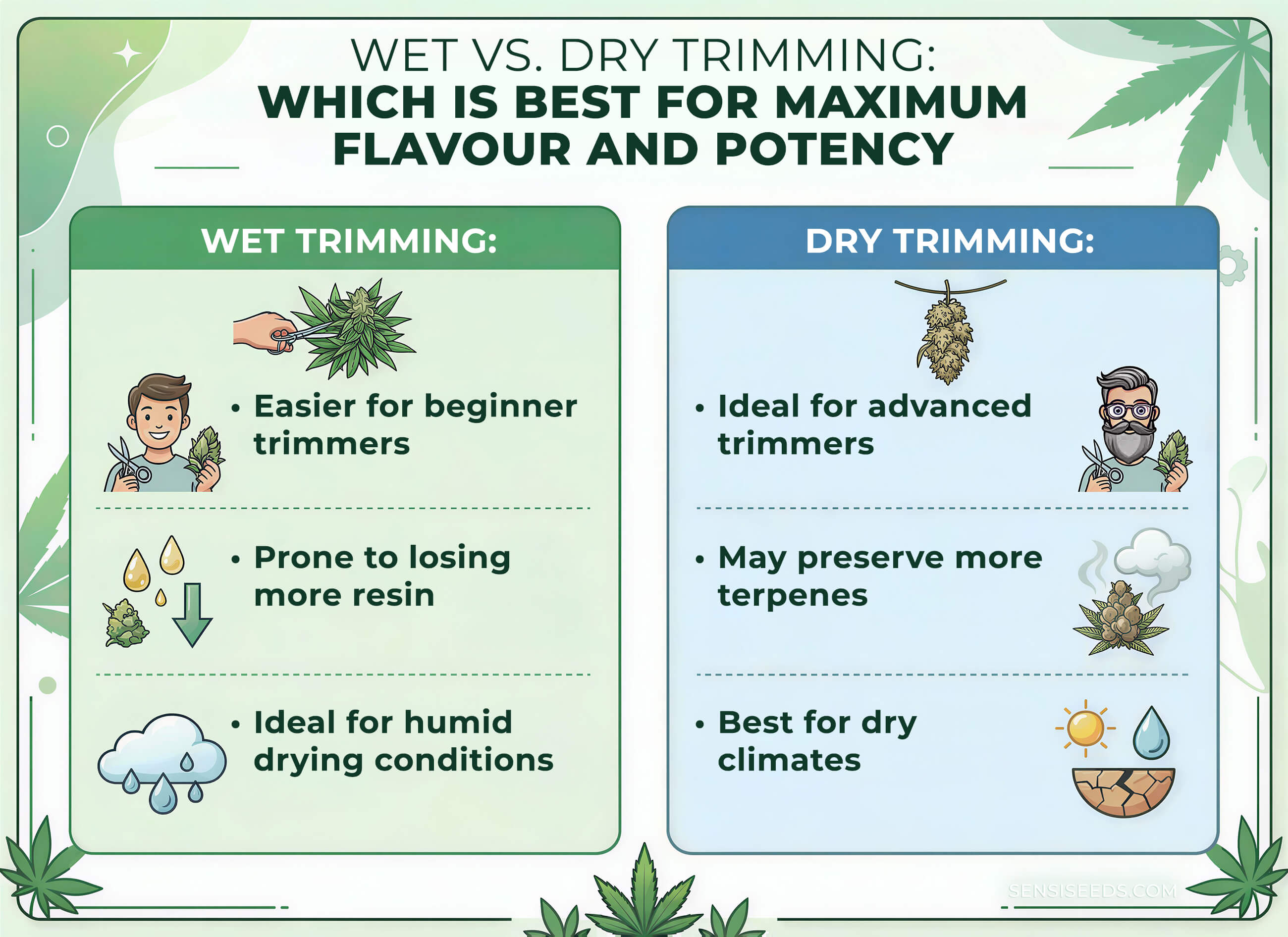
Use the table below to gauge the pros and cons of wet vs dry trimming:
| Wet trimming | Dry trimming |
| Performed right after harvest, before buds are hung to dry. | Plants are hung and dried with all their foliage, then trimmed after 7-14 days. |
| Easier for beginners. The leaves of fresh plants are perky and naturally point away from flowers. | Requires some patience and experience. As cannabis plants dry, their leaves curl around their flowers, coming close to the calyxes that make up the flower structure. |
| Ideal for humid conditions. Wet trimming removes excess foliage early, meaning your buds will dry faster. This minimises the risk of moisture getting trapped in your flowers, which causes bud rot. | Ideal for dry conditions. Leaving excess foliage on your buds causes them to dry more slowly (ideal for arid conditions). |
| Increased risk of trichome loss. Live flowers are sticky and hard to handle. Trimming them can degrade some trichomes. | Many growers find that, as they curl around buds, the excess leaves on untrimmed plants help protect trichomes during both the drying and trimming process. |
| Contributes to a “puffy” look. Because the leaves of fresh plants are perky, trimmers can cut closer to the flower structure, producing buds with a puffier appearance. | Contributes to a more rounded, natural look as sugar leaves are allowed to curl around the central bud structure. |
Dry trimming has one major advantage over wet trimming: it may help to preserve some trichomes in your flower. However, dry trimming is more difficult and not well suited to warm, humid conditions. Ultimately, you should choose a trimming technique that you’re comfortable with and that suits your drying/curing environment.
How to trim cannabis: Step-by-step
Knowing how to trim weed properly is key to preserving the aromas, flavours, and potency of your buds. Luckily, with the right tools and procedures, trimming is simple.
Cannabis trimming tools
Clean and efficient trimming relies on proper equipment. Before you start manicuring your buds, ensure you have:
- Trimming and garden shears. Use fine-tipped scissors for detailed trimming and larger shears to break down branches.
- 70-90% isopropyl alcohol wipes, for cleaning resin buildup on scissors/shears.
- Trim trays, to catch sugar leaves as you trim them from your buds.
- Nitril gloves, to prevent resin buildup on the hands.
Preparing your workspace
Trimming takes time. Even small harvests of just a few plants can take hours to process. To ensure you’re comfortable and efficient throughout your trimming sessions, use:
- Ergonomic seating. This includes a chair with good back support, as well as a table set to a comfortable height.
- Proper lighting. Use bright, cool-spectrum LED lighting to ensure you can tell apart resinous sugar leaves and other, non-resinous foliage without having to strain your eyes.
- A clean work surface and tools. Sterilise your shears/scissors, trim trays, and work surfaces regularly with alcohol to avoid contaminating your bud as you trim.
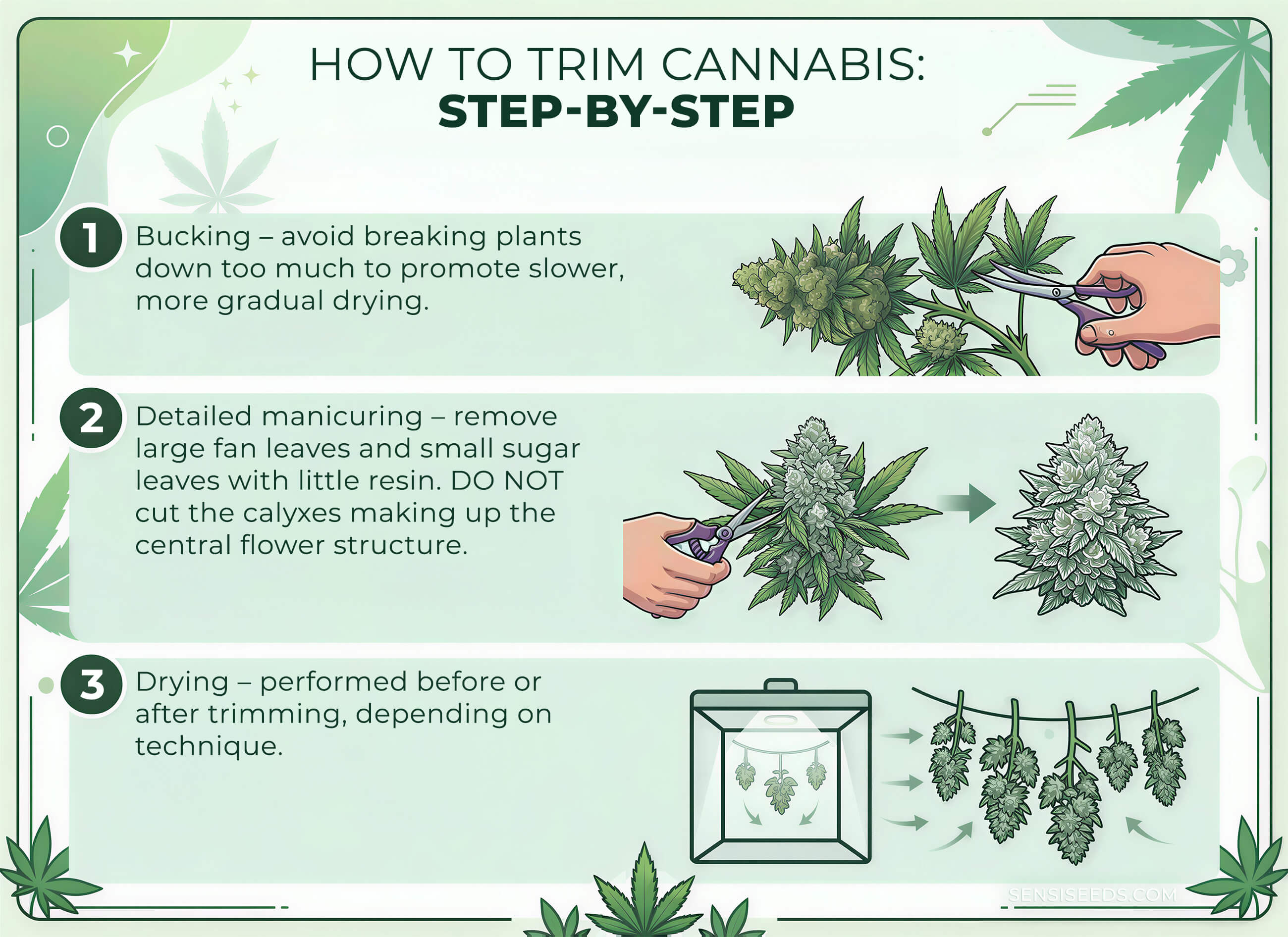
How to trim cannabis: Wet trimming explained
Wet trimming cannabis involves manicuring your buds immediately after harvest. It consists of:
- Bucking (only if necessary due to limited space).
a. Where possible, avoid breaking plants down too much. This promotes slower, gradual drying and minimises terpene loss.
b. Remove large fan leaves as you harvest your plants. - Detailed manicuring.
a. Use smaller, fine-tipped scissors to carefully trim around your flowers, removing leaves with little-to-no resin.
b. Collect your trim in trays. - Drying.
a. Hang-dry plants or large branches from lines and individual buds on drying racks.
How to trim weed: Dry trimming explained
Dry trimming involves manicuring your flowers after they’ve dried for 7-14 days. It consists of:
- Harvesting and hang-drying your plants.
a. Remove large fan leaves from your colas.
b. Again, try hang-drying entire plants or large branches to promote slower, gradual moisture loss.
c. You’ll know your weed is dry once the small branches on your buds audibly snap when you bend them. - The manicure.
a. Carefully snip away the brittle, curled sugar leaves around your buds.
b. Don’t forget to collect your trim!
Related post
The anatomy of the cut: Precision trimming explained
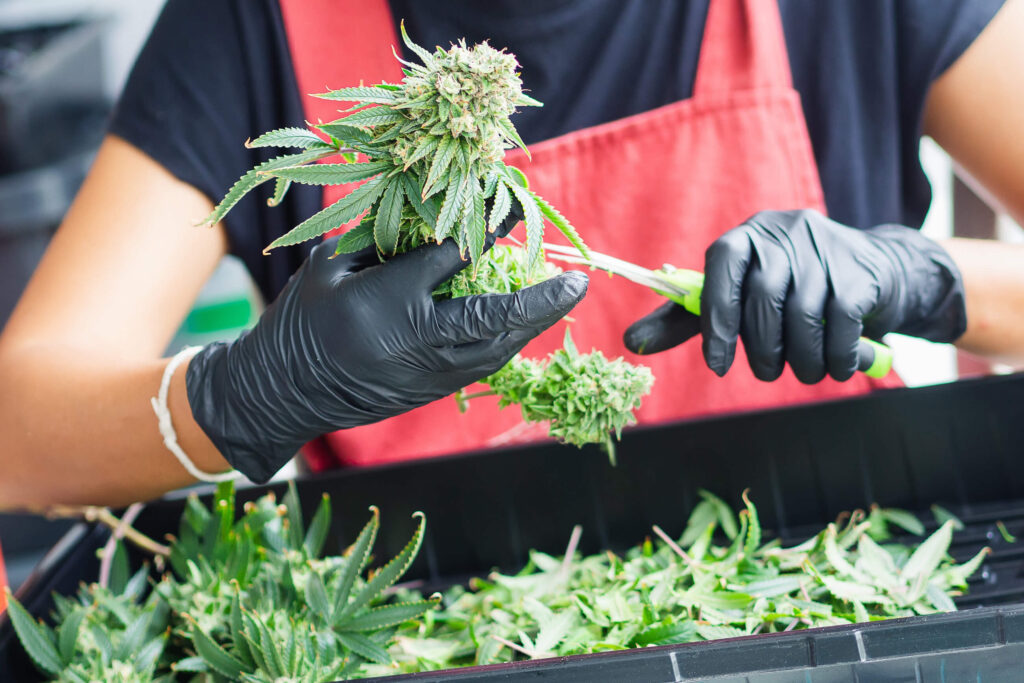
The goal of top-shelf manicuring is straightforward; to remove less-resinous foliage from buds without damaging their central structure and calyx clusters.
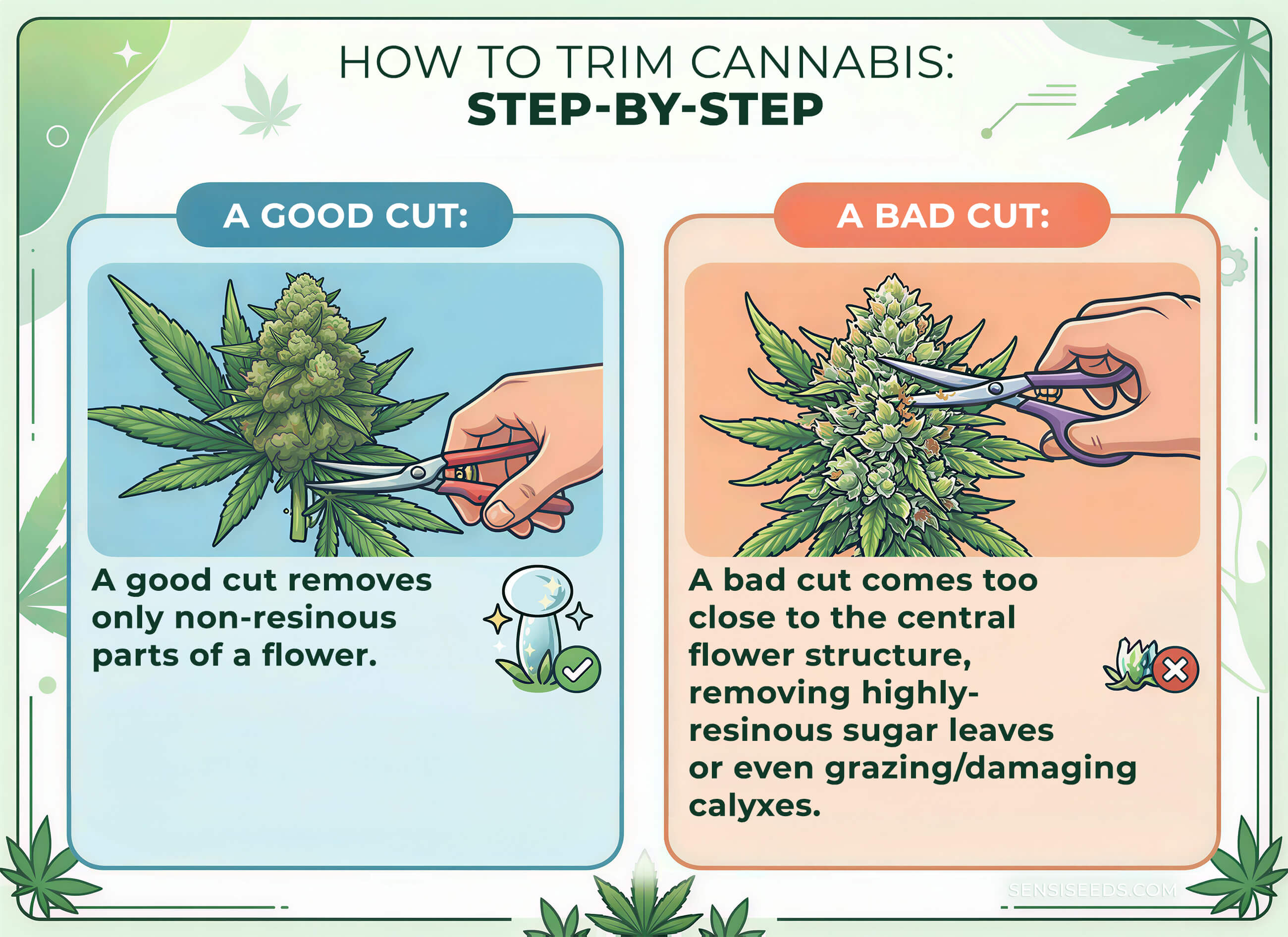
As you trim your buds, focus on:
- Removing large fan leaves. These are easy to spot, as they grow straight out of branches and colas.
- Trimming non-resinous sugar leaves. These are the small leaves surrounding calyxes.
- Preserving the calyx. Avoid shaving or clipping calyxes, as these are the most resinous parts of your buds and part of their central structure.
- Removing long stems. Keep the stems of your buds flush with their bases for a clean, professional appearance.
Expert trimming tips
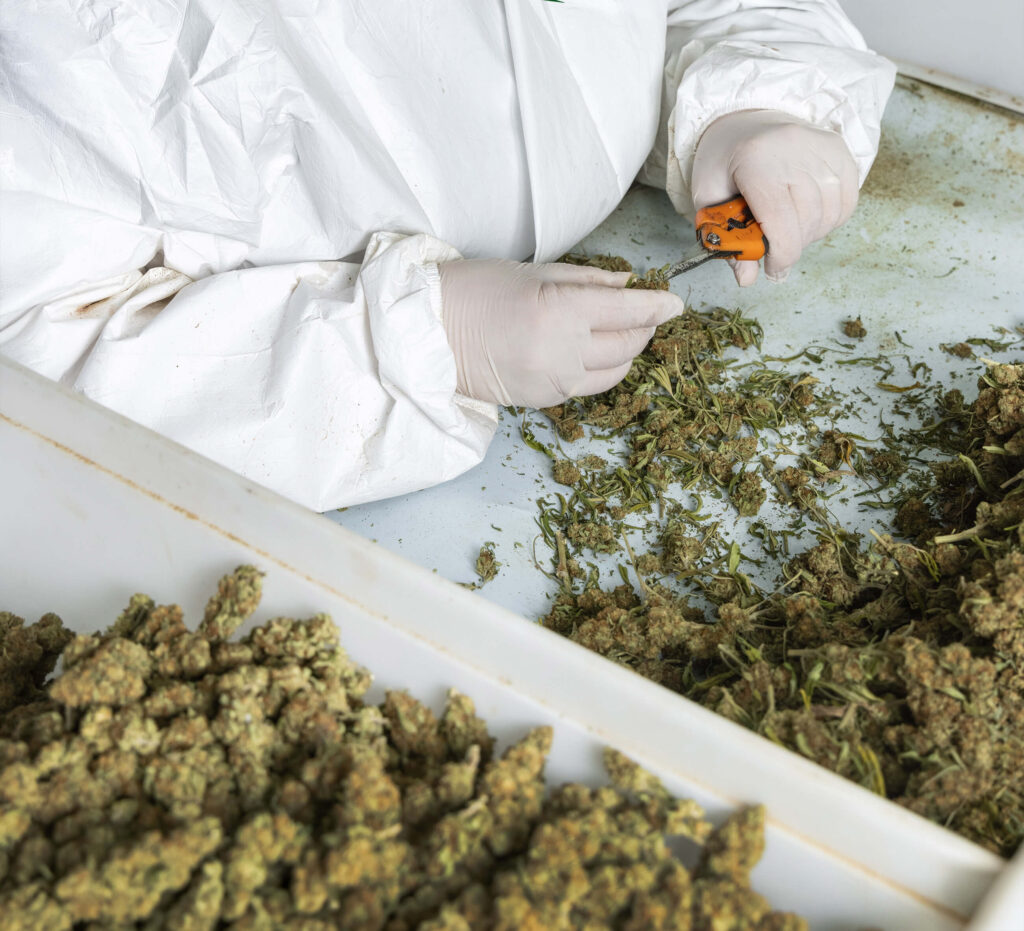
- Clean your scissors and shears often. Cannabis trichomes can quickly form a thick, sticky resin on your equipment. Clean it regularly using isopropyl alcohol to keep it working properly.
- Handle your flowers gently. Never grab buds themselves; handle them by the branches at their base to prevent crushing and degrading trichomes.
- Constantly rotate your buds as you cut to ensure an even trim all around.
- Follow a system. Systematically trimming your buds from top to bottom (or vice versa) helps keep you focused, working efficiently through large harvests, and an even trim all around.
- Separate high-grade trim. Sugar leaves often contain fair amounts of resin and can be turned into edibles or concentrates.
- Prioritise cleanliness. Make sure your tools and workspace are clean and sterilised.
Quality control: How to know if buds are trimmed properly
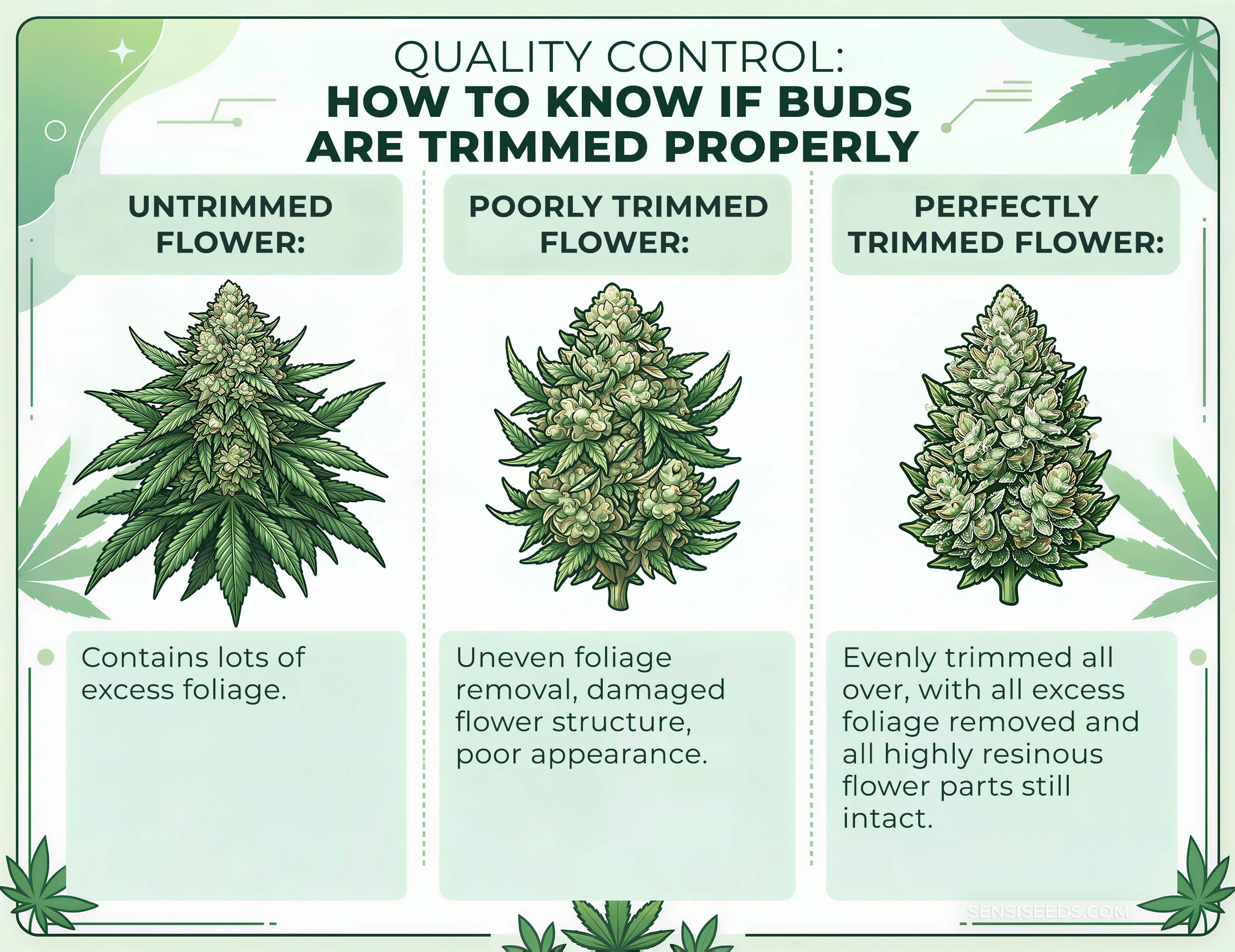
After trimming your weed, inspect individual buds. They should:
- Be free of fan leaves. These leaves contain very little resin and a lot of chlorophyll, adding a harsh, grassy flavour to weed and a hay-like smell if not removed during trimming.
- Have short stems flush with the bottom of flowers.
- Boast clearly visible calyxes that don’t look like they’ve been crushed by clumsy handling or shaved with scissors.
- Have tightly trimmed, frosty sugar leaves.
Related post

Common trimming mistakes to avoid
No matter how good your genetics, poor trimming can really diminish the look and quality of your flower. Avoid these common trimming pitfalls and don’t ruin months of hard work in the grow room in minutes!
- Over trimming (trimming too deeply into the central flower structure). This damages trichomes, removes resinous flower parts, and can even cause flowers to break apart entirely as you destroy the calyx clusters holding them together.
- The fix: When in doubt about whether or not to remove sugar leaves, check their resin. If they look visibly frosty, leave them in place or only trim away their tips if necessary.
- Under trimming (leaving too much excess leaf on your buds). This leads to excess moisture and chlorophyll in your flowers. In very humid environments, under trimming can contribute to mould issues. In the best-case scenario, it contributes a harsh, grassy flavour and hay-like smell to your cured bud.
- The fix: Remove fan leaves and non-resinous sugar leaves, and cut back stems as much as you can. As you gain more experience trimming, you’ll learn to trim closer to the flower and spot the kind of foliage to remove with more certainty.
- Ignoring the local environment. The biggest mistake rookie trimmers make is blindly choosing wet or dry trimming based on what they read online. Remember, whether you wet vs dry trim your weed should depend on your local conditions, your drying setup, and your confidence as a trimmer; not what someone says on a forum.
- The fix: Wet trim if your local climate is humid; if you have little-or-no control over the conditions in your drying space, or if you’re new to trimming. Dry trim, on the other hand, if your environment is warm and dry and you feel comfortable trimming around tightly curled sugar leaves.
- Not saving your trim! Resinous cannabis trim makes fine extracts and edibles. Don’t throw it away!
Note: Never store wet trim! Spread it out on large trays or clean surfaces over a layer of paper towel and dry it until it feels crisp to the touch. Then bag or jar it and store in a cool, dark space.
Cannabis trimming FAQs
A: Wet trimming is best for inexperienced trimmers or anyone drying their weed in humid areas with little control over the drying atmosphere. Dry trimming promotes slower, more gradual moisture loss and is best when you’re able to dry cannabis in a controlled environment or live in very dry areas.
A: While it’s common to remove low foliage from flowering plants (known as “lollipopping”) you should leave some fan leaves on your colas. Your plants need them to photosynthesise!
A: Use nitril gloves to keep the oils from your skin from coming into contact with the plant’s trichomes. Always handle buds from the stem, never by grabbing the flower itself, and avoid stacking plants on top of each other or hanging them too closely together.
A: No! Modern strains produce a lot of resin, even on sugar leaves. Only remove leaves (or parts of them) that visibly contain less resin!
Got your own tips for trimming cannabis or specific questions? Share your experiences/question in the comments below!
- Disclaimer:Laws and regulations regarding cannabis cultivation differ from country to country. Sensi Seeds therefore strongly advises you to check your local laws and regulations. Do not act in conflict with the law.

Quit trying to sell the idea of air filtration systems that wayyyy over price junk
Oh, a filter? I’m going to try dry trimming next time. I had a bunch on a drying rack, after the appropriate amount of time, it all went into jars to cure. A couple of weeks later, I went on a trip, didn’t take any bud with me. The whole time after I left the house, I couldn’t figure out why everything smelled like fresh bud… My suitcase was in the same room as the drying rack, and I noticed as soon as I didn’t have my suitcase, no more bud smell. As soon as my suitcase came off the conveyor belt at my destination, super strong fresh bud smell… I laughed my whole trip…
If you’re selling, looks still matter, but imho, dry trimming is best…
I like what you have to say about trimming,both wet and dry trimming methods I agree with. If I have to wet trim, it’s because of storms or damage of some kind. A dehumidifier is your friend just like red bull can be also. You are spot on regarding dry trim. Sharp scissors are a must, rubbing alcohol is handy too. Parking at a trim is getting harder since some have decided it’s easier to take than it is to grow your own…
I wanted to thank you profoundly for saving my (mind) today! I just finished up harvesting in a hurry Friday night because they announced a big storm was coming. 50 mile an hour winds hit and a chair blew into my girls. A small lower branch broke and I was off to buy a carbon filter to put in my garage along with some plastic to make a room. ($200 later) I had 3 beautiful indica girls I hung up in a hurry and had no time to trim before hanging (besides the larger fan leaves). Your article made me realize my intuition was right in thinking the leaves left on will also protect the trichomes while curing. Thank goodness I found your article!! Now let’s hope this medicine helps my seizures!! –Seizing in Seattle —
few things catch me and bring me to a new understanding of what i thought i know about dry trimming method. thanku for providing such a great examples.
Great Posts Keep Up good work Thank You Michael
Hi Seshata i think you are bang on there is far better flavour when dry cut
Have you are tried Bruce banner if so could let.me know where they can be bought and why sensi doesn’t stock them thanks.Sean
“As well as the above equipment, it is vital to ensure that your working environment is suitably prepared. The temperature of your trimming room should be maintained at a comfortable 18-24°C (65-75°F) and the relative humidity at 45-55%. Using an oscillating fan on a low setting will ensure good circulation of air—do not use fans on high settings while trimming, as you could end up losing trichomes in the breeze.”
Completely unnecessary, fresh trichomes do not come off easily. Besides, in tropical settings natural humidity is far greater, and still don’t pose harm to drying plants, even untrimmed ones.
“Lastly, it is highly advisable to set up a carbon filter and extract fan to ensure that the powerful aroma of cannabis does not become apparent to neighbours or passing police officers. Most growers understand the necessity for maintaining an odour-filtration system while their plants grow, but it is surprising how many still fail to understand the importance of using filters while trimming—which is arguably the time cannabis smells the most powerful.”
Filters won’t make odor come off clothes, hair or skin.
“Filters won’t make odor come off clothes, hair or skin.” While this is correct, the author never stated or insinuated that a filter does this. If you have a properly filtered grow room then no odors should be escaping at all; unless you’re walking up to police officers & offering them a whiff then everything should be fine. It’s the grow room that people are trying to mask, clothing/hair/skin is more common sense and/or hygiene than anything else. As far as the fans not on high setting while trimming plants goes: While fresh, wet trichomes do not come off easily, dry ones do. Plus, why would you want a fan blasting at you while you’re attempting to carefully trim very small leaves that are extremely close to the buds? Does adding a strong wind to the equation sound like something that will make trimming easier? Not likely, not to mention that you’ll end up with crispy buds on the outside pretty quickly, while the insides remain full of moisture. It’s evident from your comments that you were attempting to somehow poke holes in this article; unfortunately the examples cited don’t hold water, just like the buds that are stuck in front of your blasting fan.
I don’t believe it!
It’s my birthday tomorrow and I’m starting my first grow, YAAAYZZZZZ!
Thanks for the wisdom, I will be back for more.
P.S. you are cute!