Considering taking a break from cannabis? Weed tolerance breaks offer higher highs, less brain fog, and a better relationship with cannabis. Learn how to take a t-break, manage withdrawal, and the science behind cannabis tolerance!
Table of contents
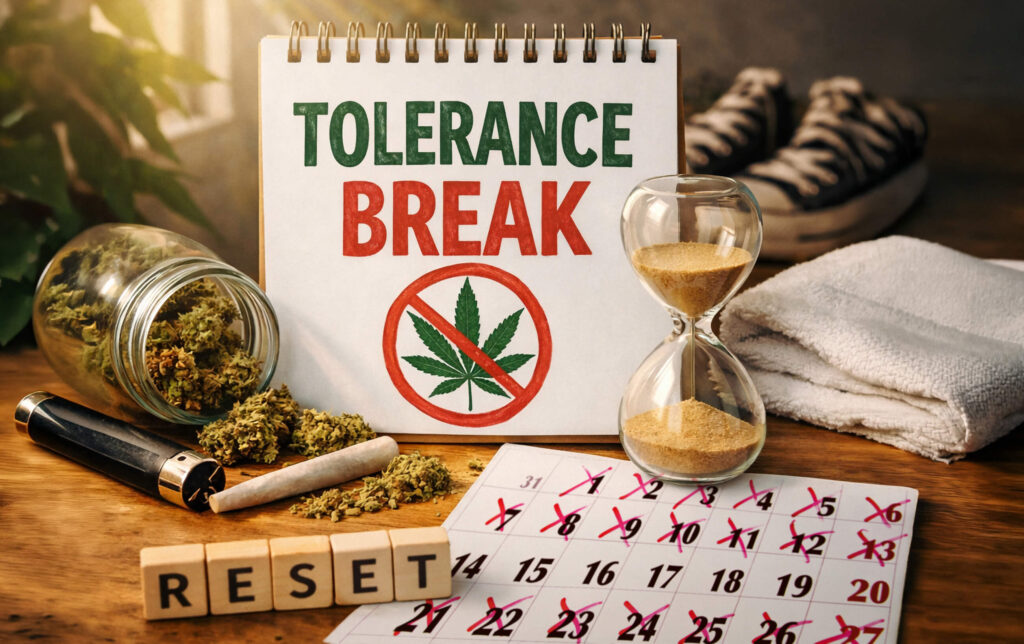
Taking a t-break is about more than just quitting cannabis cold turkey for a day or two. Learn how to properly take a weed tolerance break below, from the science behind how cannabis tolerance builds up, to the ideal length of t-breaks and even how to ease back into consumption afterwards.
What is a weed tolerance break?

Tolerance breaks (“t-breaks”) are scheduled periods of cannabis abstinence. One of the main reasons users take t-breaks is to reset their sensitivity to cannabis, thereby reducing the amount of weed they need to consume in order to feel the effects they’re after.
Other popular reasons for taking a weed t-break include:
- Reducing brain fog or improving concentration
- To pass a scheduled drug test
- Saving money
- Reevaluating one’s consumption habits and relationship with cannabis
- To improve physical and mental health
- To reduce negative side-effects associated with long-term cannabis use, such as anxiety or memory issues
The science behind THC tolerance
Cannabis acts on the endocannabinoid system (ECS), which is partially made up of specific receptors (CB1 and CB2) designed to respond to endogenous cannabinoids like anandamide and 2-AG (which the body produces in very limited quantities).
And while weed might be a natural substance, the cannabinoids in cannabis are up to 10x more potent than those produced by our bodies. In turn, they overstimulate the ECS and, over prolonged periods of consistent use, cause our bodies to downregulate the system in order to maintain homeostasis.

First, the body desensitises CB1 receptors, which sit on the surface of cell membranes and are the main targets for THC. This means that the receptors become less effective at binding to THC, reducing its effect on the body and causing us to develop a tolerance.
With more prolonged regular exposure to THC, cells can actually absorb CB1 receptors entirely, bringing them inside cell walls where they can’t be stimulated by cannabinoids (either endogenous or plant-derived).
In a 2012 study published in the journal Molecular Psychiatry, researchers from the US National Institute of Health explored the downregulation of CB1 receptors in daily cannabis smokers. Using an agonist of CB1 receptors, they found that daily smokers had roughly 20% less receptors than non-smokers in some parts of the brain (primarily regions of the neo and limbic cortex).
Moreover, the researchers found that the downregulation of these receptors varied across different regions of the brain. For example, the hippocampus and cerebellum (responsible for memory and learning, and motor skills and emotions, respectively) showed faster and more widespread receptor downregulation than other regions.
With less physiological targets for THC, regular cannabis users find themselves needing increasingly higher doses to enjoy the effects they’re looking for.
What happens during a tolerance break
When you take a tolerance break, your body stops receiving THC and other phytocannabinoids. As it detects the deficit, your body begins reversing the downregulation process by:
- Eliminating THC metabolites from fat stores.
- Upregulating and resensitising CB1 receptors, allowing them to return to the surface of cells.
- Returning endocannabinoid synthesis to baseline.
All of these processes are triggered by your body’s desire to maintain equilibrium. Over time, they allow your ECS to recalibrate and function normally again.
Related post

How long should a weed tolerance break last?
How long you abstain from cannabis use depends entirely on your physiology and your consumption patterns.
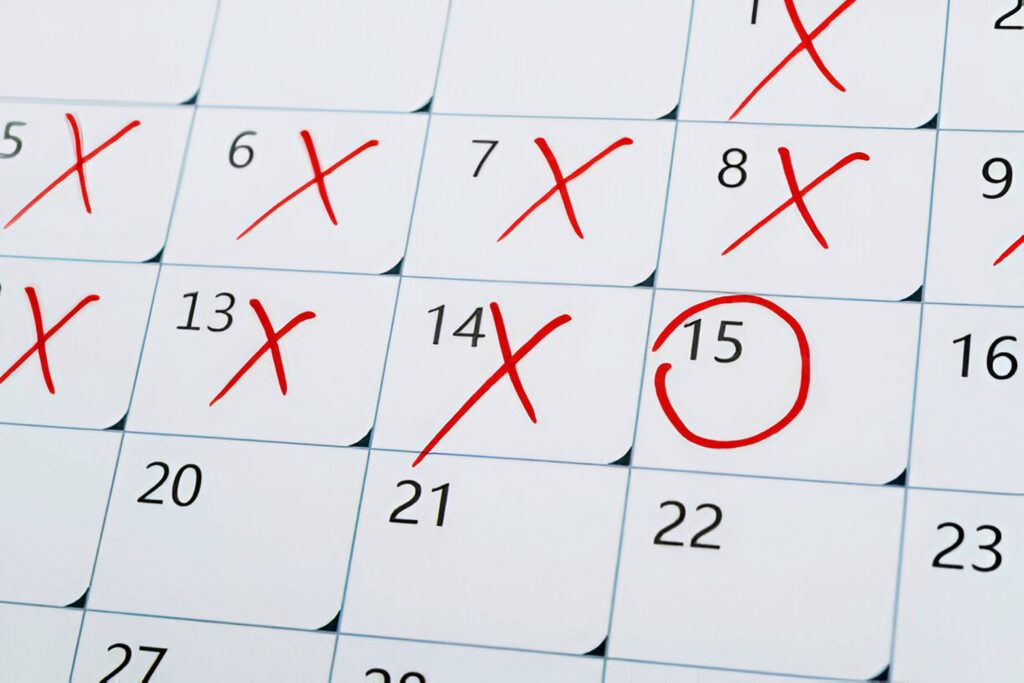
Most users find that breaks of 3-4 weeks are enough to fully restore their tolerance and recalibrate their ECS. The aforementioned study by the NIH also confirms that, after 4 weeks, CB1 receptor density returns to normal in daily users. However, heavy users sometimes opt to take longer breaks of up to 6-8 weeks.
General guidelines for taking a cannabis t-break
If you’re a daily user looking to reset your tolerance completely, a 4-week t-break is usually ideal. However, some users also report positive effects after:
- 24-48 hours. While this doesn’t allow enough time for cannabis receptors to recalibrate, some users find it effective for relieving symptoms like brain fog.
- 1-2 weeks. Moderate users may notice a notable drop in their tolerance with a 1-2-week break.
- 4+ weeks. This is usually a good idea for long-term, daily users who, apart from resetting their tolerance, also want to re-evaluate their habit and relationship with cannabis.
Basically, the more cannabis you consume, the longer your tolerance break should be. Use the chart below for examples of different tolerance break schedules.
Customise your tolerance break based on your habits
| CUSTOM TOLERANCE BREAK SCHEDULES |
| HABITS | GOALS | RECOMMENDED BREAK LENGTH | |
| LIGHT USERS | 1-2 times per week, sticking to flower and (very rarely) hash. | Reset tolerance, improve productivity, and clear mental fog | 1-2 weeks |
| MODERATE USERS | 3-4 times per week, using a mix of flower, edibles, and the occasional concentrate. | Reset tolerance, clear mental fog, combat unwanted side effects (like anxiety), and avoid dependence. | 3-4 weeks |
| HEAVY USERS | Daily use of flower and high-potency cannabis (like vape pens, dabs, or edibles). | Reset tolerance completely and re-evaluate chronic use patterns. | 6-8 weeks |
Note: Apart from the amount of cannabis you use, the biggest factors impacting how long your tolerance break should be are:
- Your sensitivity to cannabinoids. Some people are simply more sensitive to weed than others and may benefit from longer breaks.
- Your consumption method. High-potency concentrates and edibles will ramp up your tolerance much faster than flower.
Daily medical users:
It’s important to note that many people use cannabis on a daily basis not out of habit but in order to deal with serious medical symptoms.
If that sounds like you, taking a standard tolerance break might not be possible. In that case, some alternatives to help you manage your tolerance buildup include:
- Swapping high potency vape pens (very popular among medical patients) for flower or hash.
- Reducing the use of gummies or other edibles as much as possible.
- Sticking to 1 daily dose at whatever time works best (early morning for daytime relief, or evening for sleep).
Looking for an alternative to hyper potent weed? Check out our selection of the 5 best CBD strains, ideal for when you’re looking to reduce your use (and tolerance) for THC.
Common weed tolerance break symptoms and side effects

When chronic users abruptly stop using cannabis, their bodies produce a cluster of symptoms known as Cannabis Withdrawal Syndrome (CWS). These symptoms typically strike within 24-48 hours of quitting; peak within 2-7 days, and can last up to 2-3 weeks in chronic users.
Though not dangerous nor fatal, CWS is uncomfortable and comprises of a range of physical, emotional, and cognitive changes.
Physical changes:
- Sleep disruption: Most users who quit cannabis experience insomnia, night sweats, and very intense dreaming due to THC’s interference with the REM sleep cycle (which is when dreaming occurs). Learn more about cannabis’ effect on sleep here.
- Appetite fluctuations, often accompanied by mild nausea.
- Physical fatigue, including lethargy, headaches, and general malaise.
Emotional and cognitive changes:
- Irritability, mood swings, and restlessness.
- Anxiety and depression.
Related post
How to take a weed tolerance break step-by-step:
1. Set clear goals and timelines

Ambiguity leads to relapse. Set yourself up for success by knowing exactly how long your tolerance break will last and, most importantly, why you’re doing it. Without a concrete “why”, the urge to light up will undoubtedly triumph over your vague desire to stop or cut down.
Of course, everyone has their own reasons for taking a cannabis tolerance break. Some common motivations include:
- Clearing brain fog
- Getting better sleep
- Increasing productivity
- Improving focus or memory
- Reducing anxiety and depression
- Enjoying better highs after the break is over
2. Prepare your environment

“Out of sight, out of mind” is a super valid strategy for quitting weed or maintaining a tolerance break. And you’d be surprised just how effective it is.
With your bong and stash sitting on the coffee table, refusing the urge to smoke becomes almost impossible. So, take the time to prep your environment by:
1. Removing triggers
This can be your stash and smoking gear, but might also extend to social media accounts focused on cannabis, places (dispensaries or cannabis clubs), or specific people (your smoking buddies). Of course, we’re not saying you should break up lifelong friendships for a 1-month break from weed. But real friends will understand and support you through a t-break, even if that means distancing themselves for the time being.
2. Planning alternative activities
Do you usually light up after work? Find another activity to fill up that time, such as taking a walk, going to the gym, or focusing on a hobby. If you usually light up in the morning, try reorganising your morning routine to minimise cravings.
3. Support your body

The endocannabinoid system helps regulate sleep, appetite, mood, and much more. If you’re a heavy user and experience symptoms of cannabis withdrawal, support your body by:
1. Staying hydrated
Drink at least 2 litres of water per day.
2. Exercising
Cardio and strength training can produce bursts of dopamine and endocannabinoids that provide a natural “high” that might help replace the chemical one you’re so used to getting from weed.
3. Practicing good sleep hygiene
Insomnia is one of the biggest side effects of quitting cannabis. Minimise it by following a strict wind-down routine and sleep schedule. Also, consider using natural sleep supplements like melatonin if necessary.
4. Eating healthy
Accompany your tolerance break with a healthy, mixed diet rich in nutrient-dense, natural foods.
4. Track your progress

Monitoring your journey creates a positive feedback loop that reinforces your behaviour and keeps you focused on why you’re taking a break in the first place. Reflecting on the process and seeing the positives, for example, can help provide the rush you need to stay on track.
Track your progress by:
- Using generic habit trackers to visualise your weed-free streak and celebrate milestones.
- Journalling. Take time to reflect on the ups and downs of your journey. You’ll likely notice high irritability and poor moods for the first 1-3 days, followed by a gradual return to normality. Recognising this pattern is key for pushing through the tough days and making the best of the easy ones!
5. Manage cravings and withdrawal symptoms

Cannabis withdrawal is very real, but also temporary. When symptoms strike, first remind yourself that the discomfort will pass, and that it’s indicative of recovery.
Also, remember that the first 72 hours of withdrawal are typically the hardest. Get past them, and you should notice a notable decline in the severity of symptoms.
Moreover, try to lighten your symptoms with the following coping mechanisms:
- Breathing exercises, like the 4-7-8 technique (breathing for 4 counts, holding for 7, and exhaling for 8) can help alleviate mild anxiety or irritability. For more intense cases, high-intensity exercise might prove more effective.
- To curb appetite loss related to cannabis withdrawal, on the other hand, it can help to focus on eating multiple, light, yet nutritious snacks rather than forcing down large meals. Herbal teas can also help calm mild cases of nausea.
- When dealing with sleep issues, try to establish a soothing bedtime routine. Limit screen time and caffeine consumption for a few hours before heading to bed, and try using baths or showers to promote relaxation. Meditating also helps some individuals, and natural supplements like valerian root or melatonin can help with sleeplessness.
Finally, for cravings, try changing your physical environment the moment cravings strike. Go outside, call a friend, drink a glass of water, or engage in light physical activity. Most cravings are short-lived, so it’s all about catching them as soon as they strike rather than letting them fester.
Related post

Do weed tolerance breaks actually work?
In 2012, the US NIH confirmed that, within roughly one month of abstinence, cannabinoid receptors in a daily smoker’s brain return to baseline. That means that tolerance breaks aren’t some smoker’s myth or placebo effect, but a well-documented, physiological process driven by the brain’s neuroplasticity.
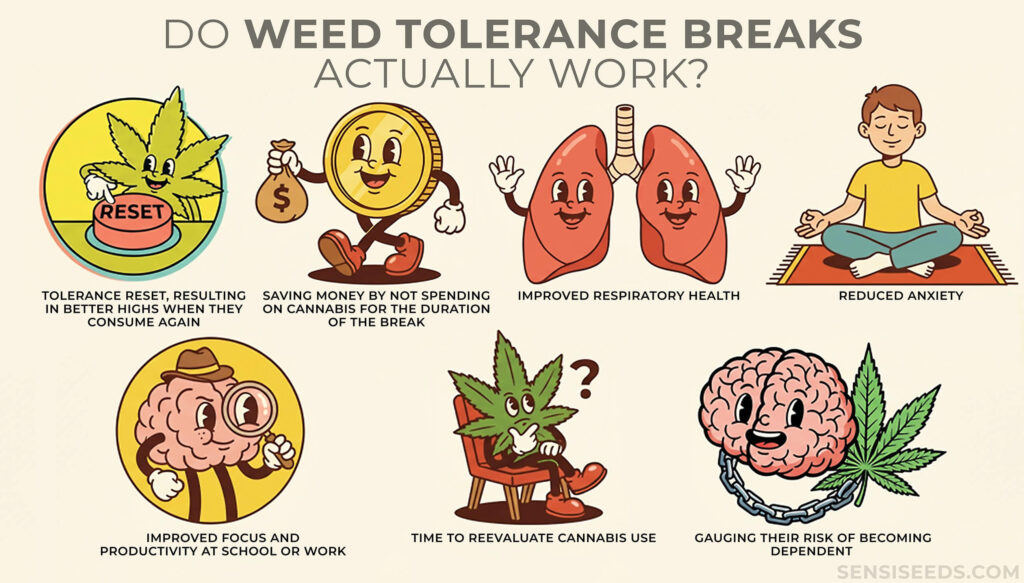
The open-access, peer-reviewed journal Cannabis interviewed weed users about t-breaks and found that they reported benefits including:
- Tolerance reset, resulting in better highs when they consume again
- Saving money by not spending on cannabis for the duration of the break
- Improved respiratory health
- Reduced anxiety
- Improved focus and productivity at school or work
- Time to reevaluate cannabis use
- Gauging their risk of becoming dependent
What to do after taking a tolerance break?
For chronic users, taking a weed t-break can almost be a spiritual experience that allows them to rediscover cannabis altogether. After weeks of abstinence, that first puff can bring back the giggles and creativity that, for so many, is what triggered their love for cannabis in the first place.
How you step back into consumption, therefore, is key for making those effects last. Here are some tips to maximise the impact of your tolerance break:
1. Reintroduce cannabis gently and conscientiously

When you decide to start using cannabis again, remember to take it easy. If you took a full 4 weeks off, your body is now chemically different than it was before and might be notably sensitive to THC and its effects.
Start by being aware of the strength of your cannabis, and consider easing your way in with flower. Start low with a single hit, assess the effects for 10-20 minutes, and only take more doses if necessary. Over time, experiment with edibles or concentrates responsibly.
2. Be mindful
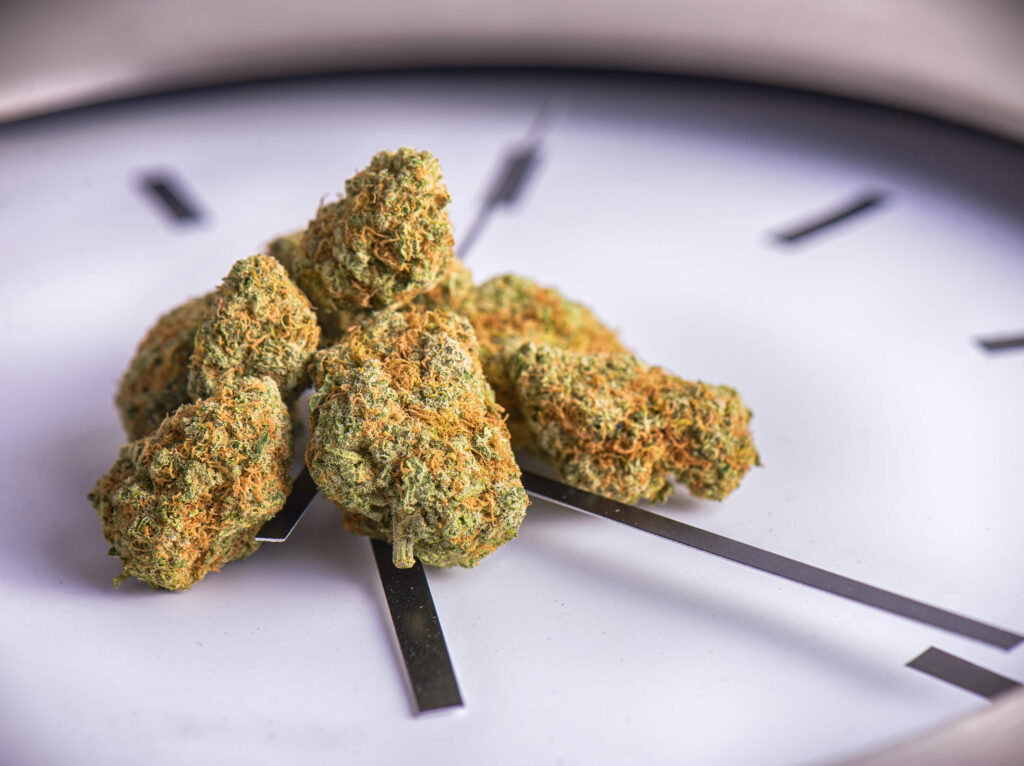
Don’t just light up the day after your t-break ends out of habit. Use the momentum of your break to reevaluate your usage patterns and light up when you really feel it. Try limiting the frequency with which you use, rotate strains to maintain tolerance, and even consider microdosing.
3. Enjoy the benefits!

Cannabis users, especially heavy daily smokers, report profound benefits after taking a t-break. These include:
- Deeper, more restorative sleep
- Better emotional regulation
- More motivation and increased productivity
- Better memory and concentration
- Improved respiratory health
- A “reset” of their relationship with cannabis
Weed t-break FAQs
A: A 3-day cannabis break won’t be enough to reset cannabinoid receptors. However, it may temporarily ease mental fog and anxiety.
A: Tolerance is subjective and not defined by a specific amount. If you find yourself needing to consume large doses of weed to get high or experiencing less intense or short-lived effects after smoking, it might be time to consider taking a t-break.
A: Ideally 4 weeks, which is the time it takes for cannabinoid receptors to reset. However, users who consume cannabis 1-2 times a week can take shorter breaks of 1-2 weeks, while heavy users may consider even longer breaks (6-8 weeks).
A: Tolerance breaks can cause symptoms of cannabis withdrawal in heavy users. This includes headaches, nausea or appetite loss, physical fatigue, sleep problems, anxiety, and irritability.
A: Whenever you feel your tolerance climbing too high or notice cannabis having a negative effect on your life. This is, of course, completely subjective and depends on your lifestyle and usage patterns. Daily users may take multiple t-breaks a year, while weekend smokers might never feel the need to take one at all.
That’s enough from us; now we want to hear from you! Do you take tolerance breaks? If so, how do they help you recalibrate your love for weed and what strategies do you use to deal with cravings or symptoms of withdrawal? Share your experience in the comments below.
Related post
- Disclaimer:Laws and regulations regarding cannabis use differ from country to country. Sensi Seeds therefore strongly advises you to check your local laws and regulations. Do not act in conflict with the law.