


In this report, we outline our experience with Lemon Pavlova Feminized, a 65% indica hybrid we developed in collaboration with Aficionado French Collection. These moderate-sized plants are heavy producers, and we were thrilled with just how well this plant performed.
Total growing time: 105 days
Flowering time: 70 days
Final height: 94 cm
Final yield: 109 grams
THC content: 24.1%
Lemon Pavlova Feminized is a 65% indica bred by Aficionado French Connection for the 2026 Sensi Seeds’ Breeding Grounds project. Breeders started with a cross between Creme De Menthe and Pianono, and crossed that with Shiva Skunk. Developed by Leo Stone in California and refined by Professor Q at Aficionado’s outdoor breeding facility in Colombia, this is a sweet and layered strain, known for its citrusy and minty flavours.
We grew our Lemon Pavlova Feminized cannabis plant in an 8-litre plastic pot filled with BAC Lava mix below a 1000 W lamp on an 18/6 schedule. We kept our grow space at a stable 23°C during the day, with nighttime temperatures dropping to 21°C and an initial relative humidity of 65%, which was gradually lowered as the plant matured.
Germination & seedling
We first needed to germinate our seed. Simply fold up two or three paper towels and add just enough water so that they’re damp but not dripping. Next, place any seeds on top of the paper towels and cover your seeds with another damp paper towel. Place the plate in an open plastic bag, and set it in a warm place out of direct sunlight.
After a couple of days, our seed split open, revealing a thin white taproot, indicating that the seed was ready for planting. We placed the seed (taproot down) into a pre-soaked Rockwool cube, which was then set under a 600 W lamp and left alone for a few days. After three days, our seedling had fully sprouted and developed a few healthy pre-leaves, indicating that it was time for its first feeding.
At this stage, plants are extremely delicate, and giving them too much light, water, or nutrients can cause lasting damage. Therefore, these feedings used only 100 ml of pH-balanced water (pH 6.0; EC 0.8), mixed with a small amount of rooting hormone.
Vegetation
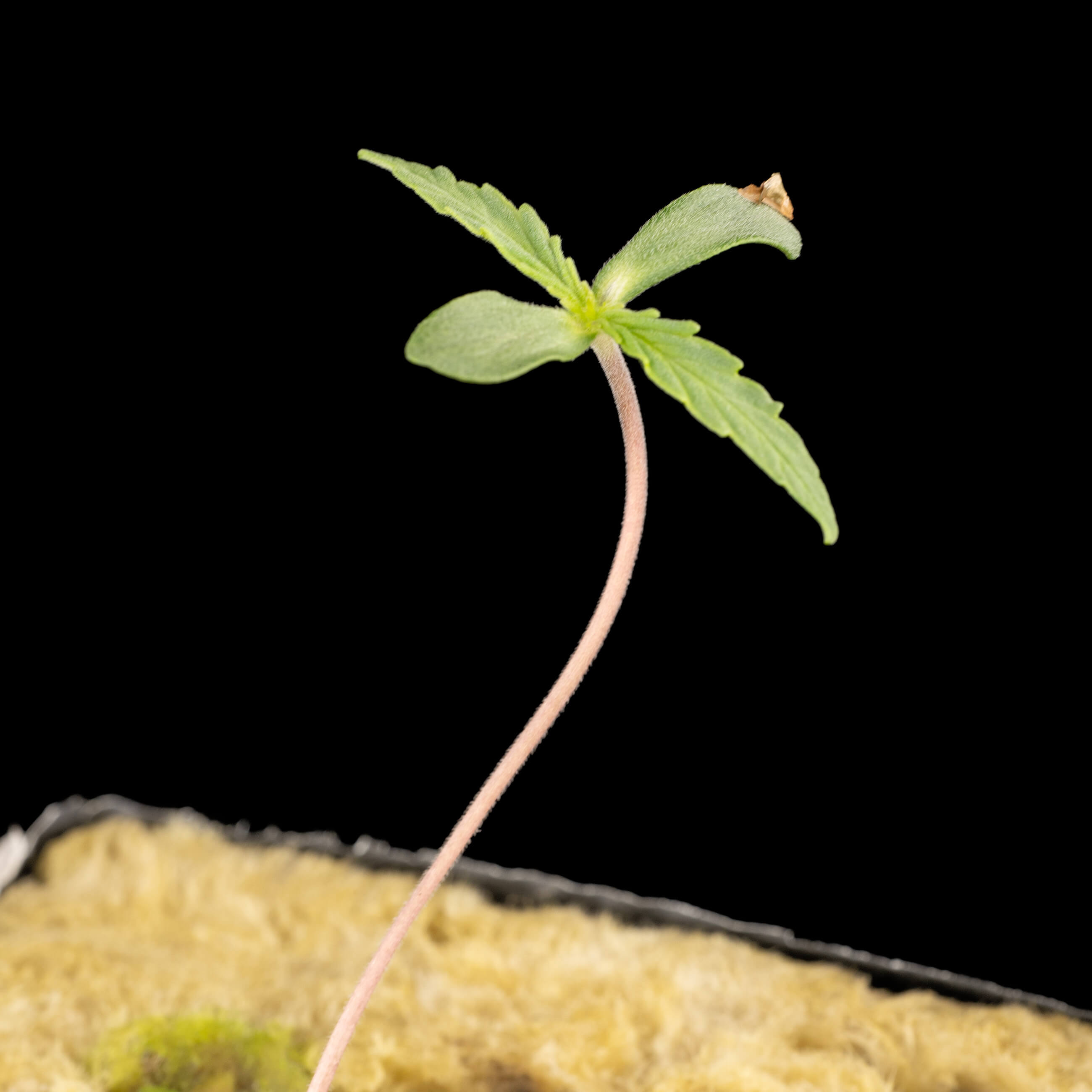
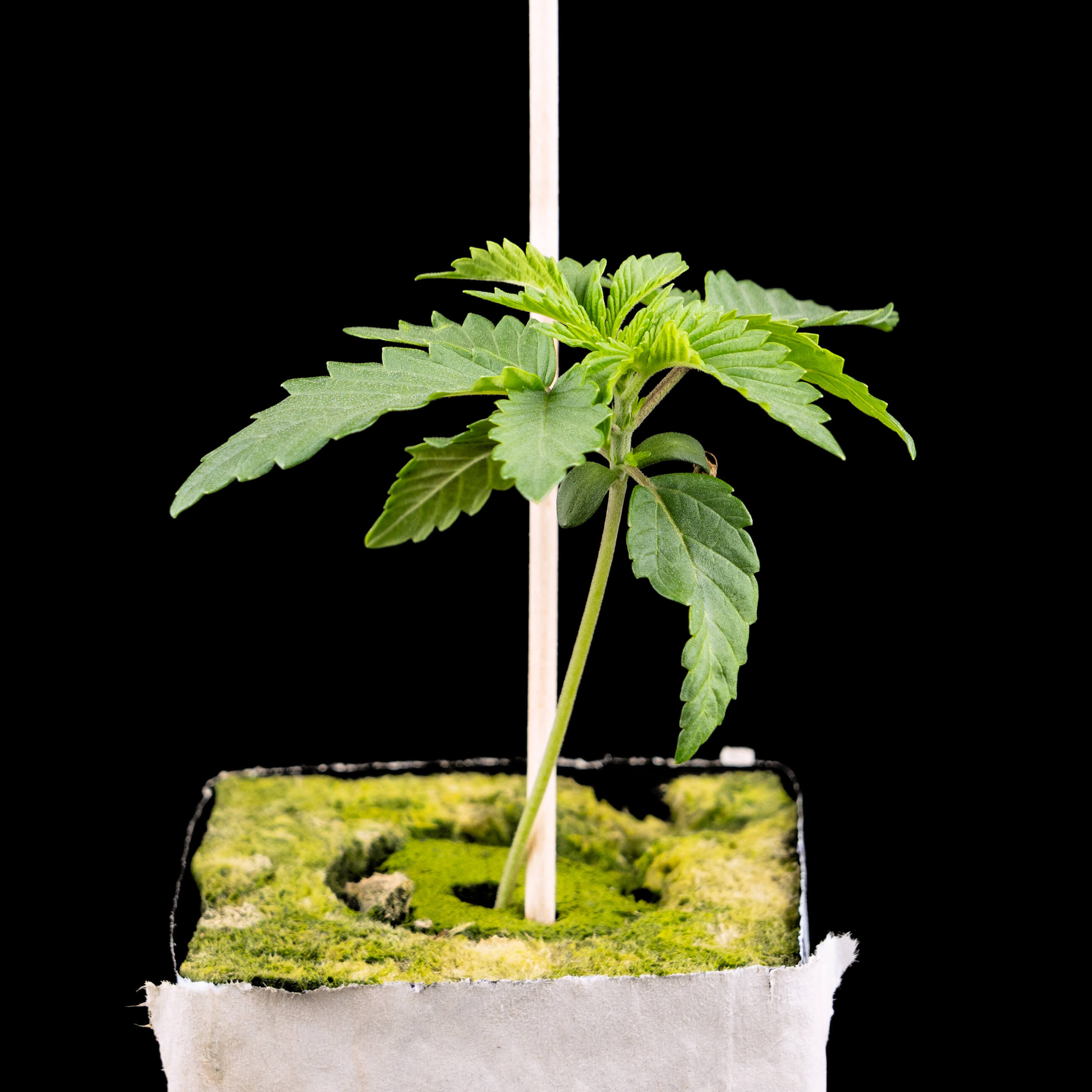
After one week, our plant was still quite short, only 3 cm tall, but healthy with the first true leaves already appearing. By the end of week two, it had grown slightly, reaching 5 cm, and developed a second and third set of leaves. By now, the roots were growing out of the Rockwool cube, and it was time to move it into an 8-litre plastic pot and set it beneath our 1000 W light. To help it along, we began daily feedings with 200 ml of water (pH 6.0; EC 1.4) mixed with Bio Grow liquid nutrients.
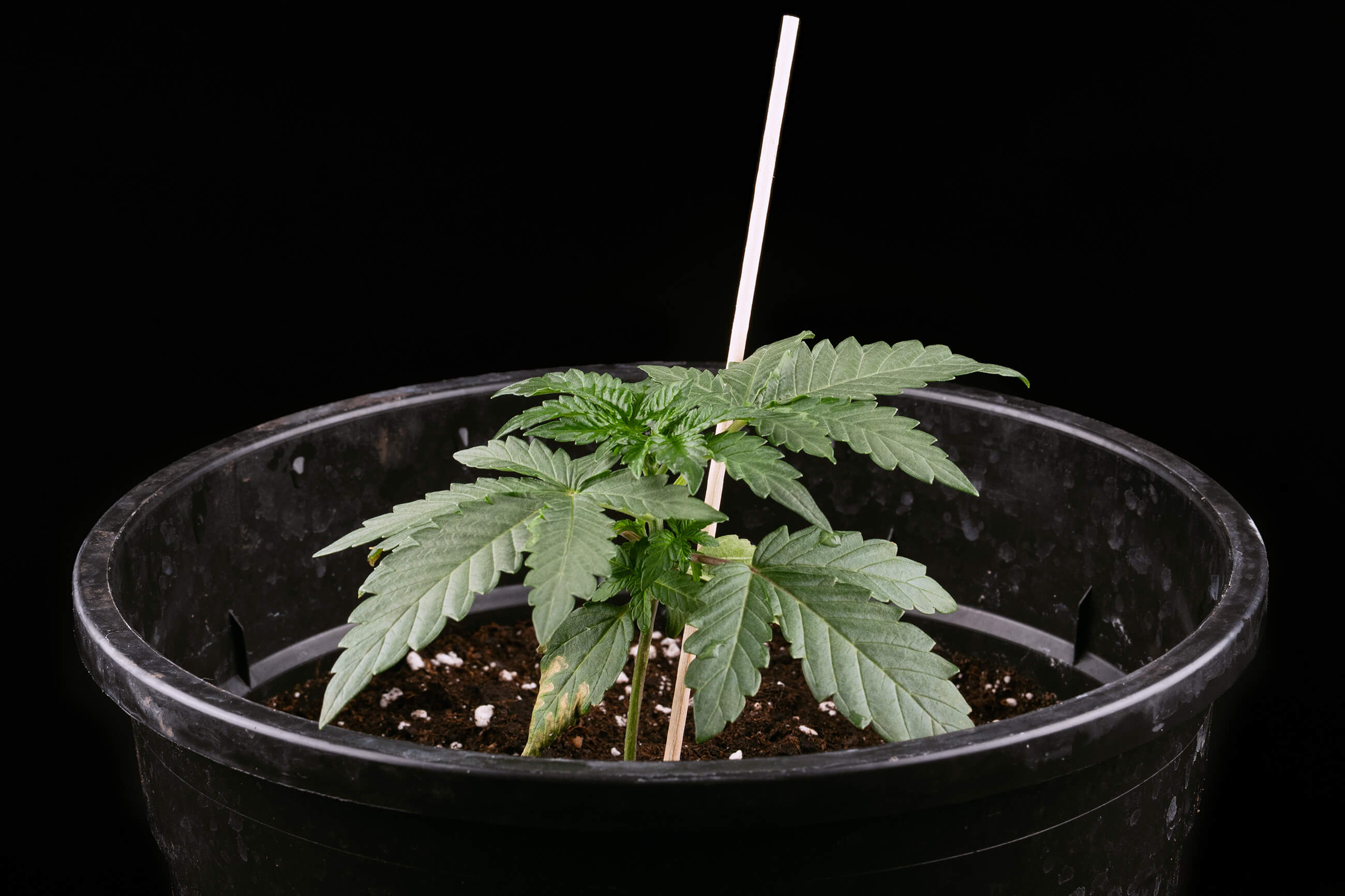
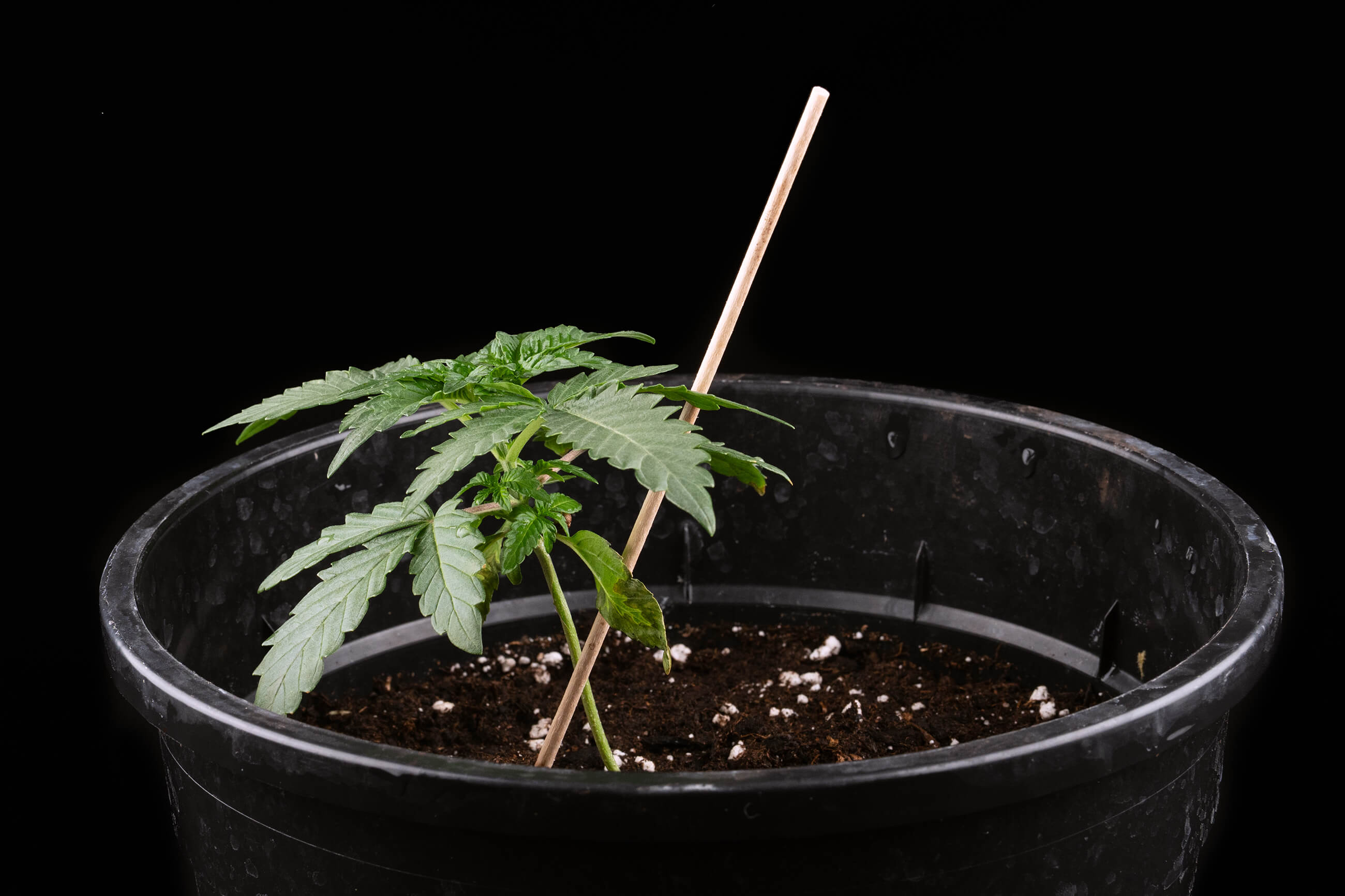
As we made our way through week three, our Lemon Pavlova Feminized cannabis plant more than doubled in size to reach a height of 12 cm and grew multiple new sets of broad, pale leaves along fairly tight internodal spacing. With the plant set to take off, we increased daily feedings to 400 ml.
Before we could begin flowering, we hung satchels of Neoseiulus californicus and Amblyseius swirskii from the plant’s lower branches. These pouches contain small predatory mites that don’t harm cannabis plants, but feed on parasites like spider mites and thrips, which can devastate a harvest if left unchecked. We change these every 4 weeks to maintain a fresh supply.
Related post

Flowering
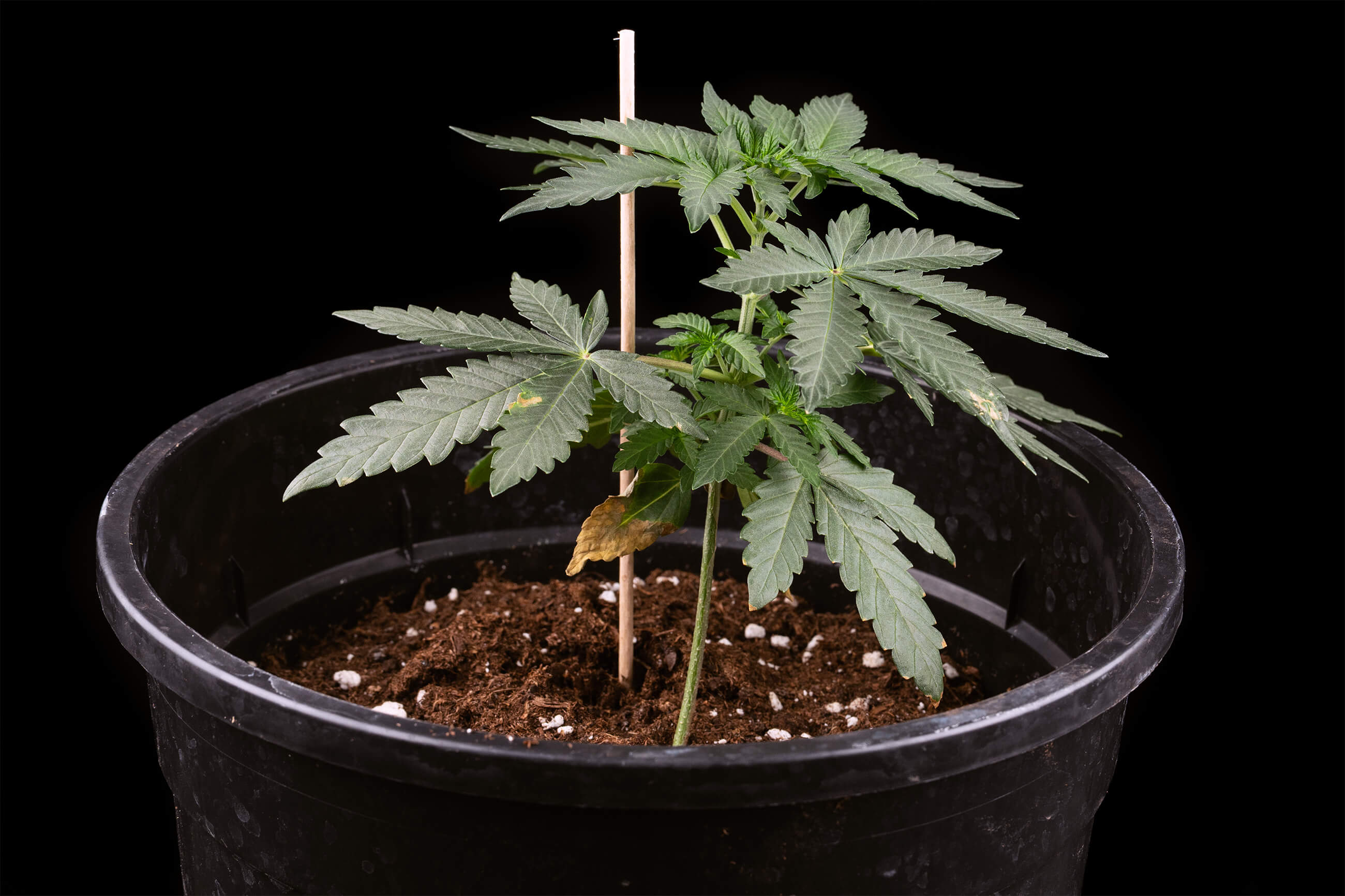
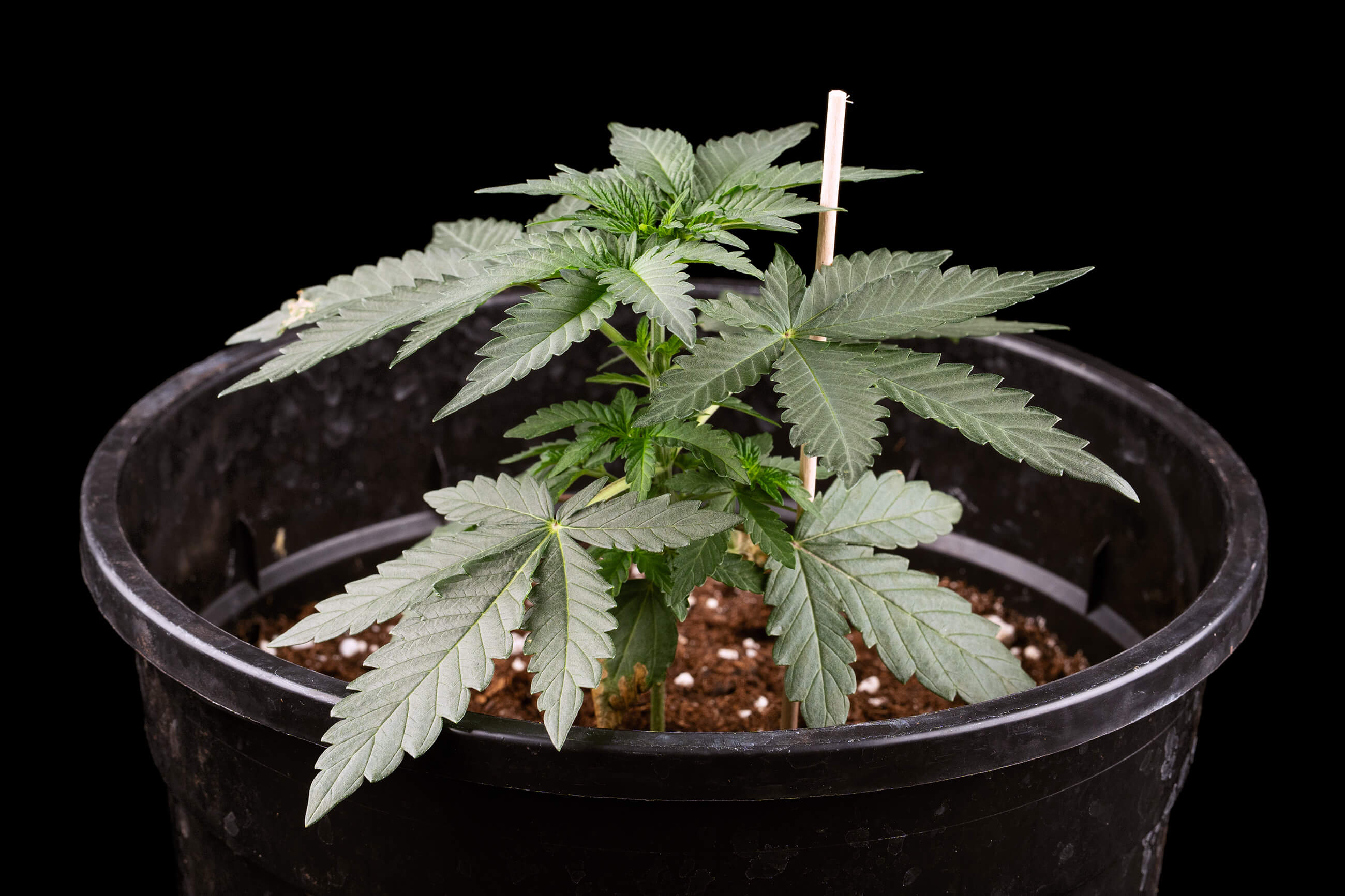
In week four, we switched our plant to flowering by flipping our lights to a 12/12 schedule and adjusting our watering to use 800 ml of water mixed with Bio Flower liquid nutrient (pH 6.0; EC 1.8). By the end of the week, our plant had grown to 17 cm and was beginning to show significant stretch between the inner nodes.
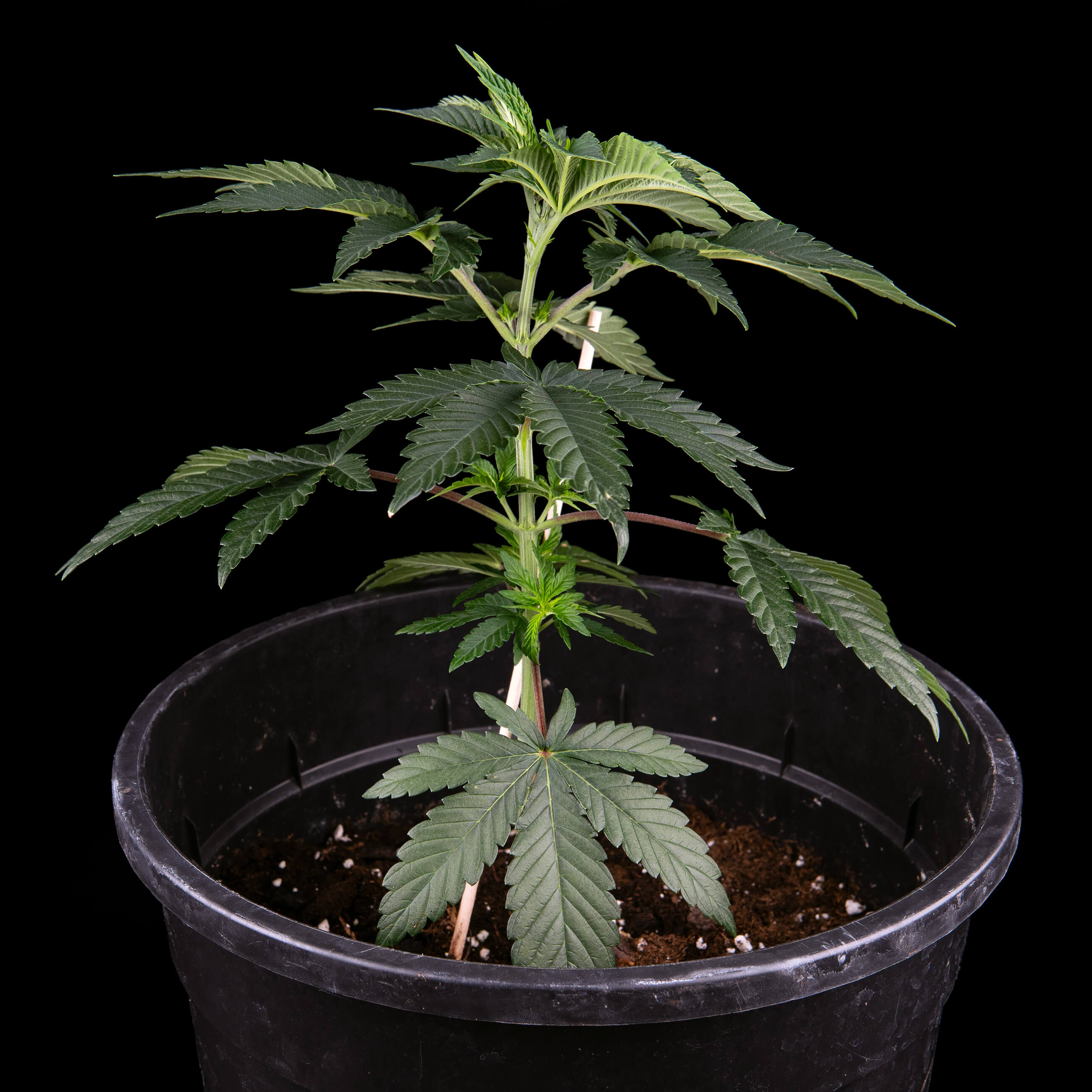
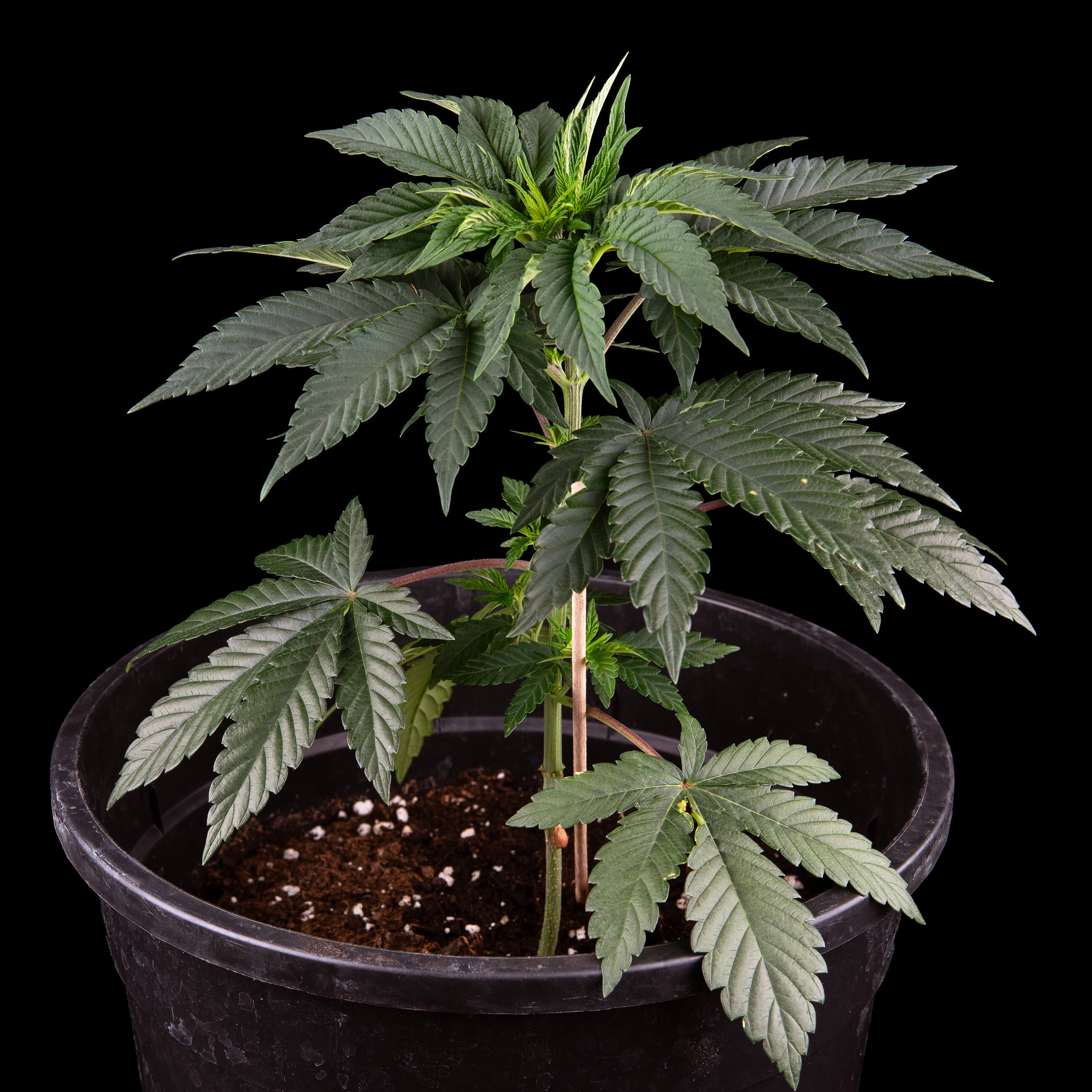
Through week five, our plant continued its rapid growth, finishing the week standing 25 cm tall as the internodal spacing continued to stretch. Despite the heavy indica genetics, this plant was taking on a more sativa-like shape at this fairly early stage. With more rapid growth to come in the next weeks, we again upped our daily feedings to 1000 ml per day.
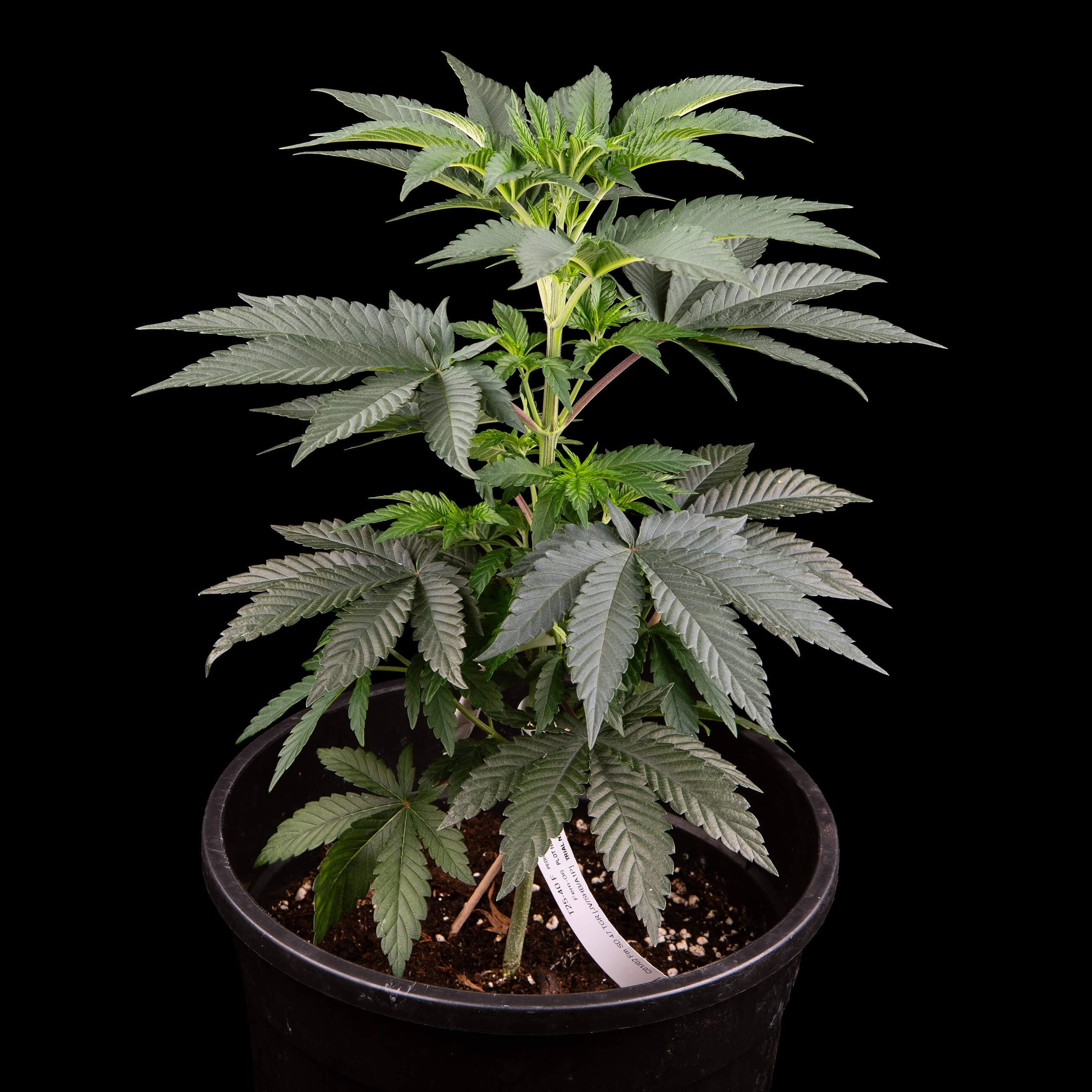
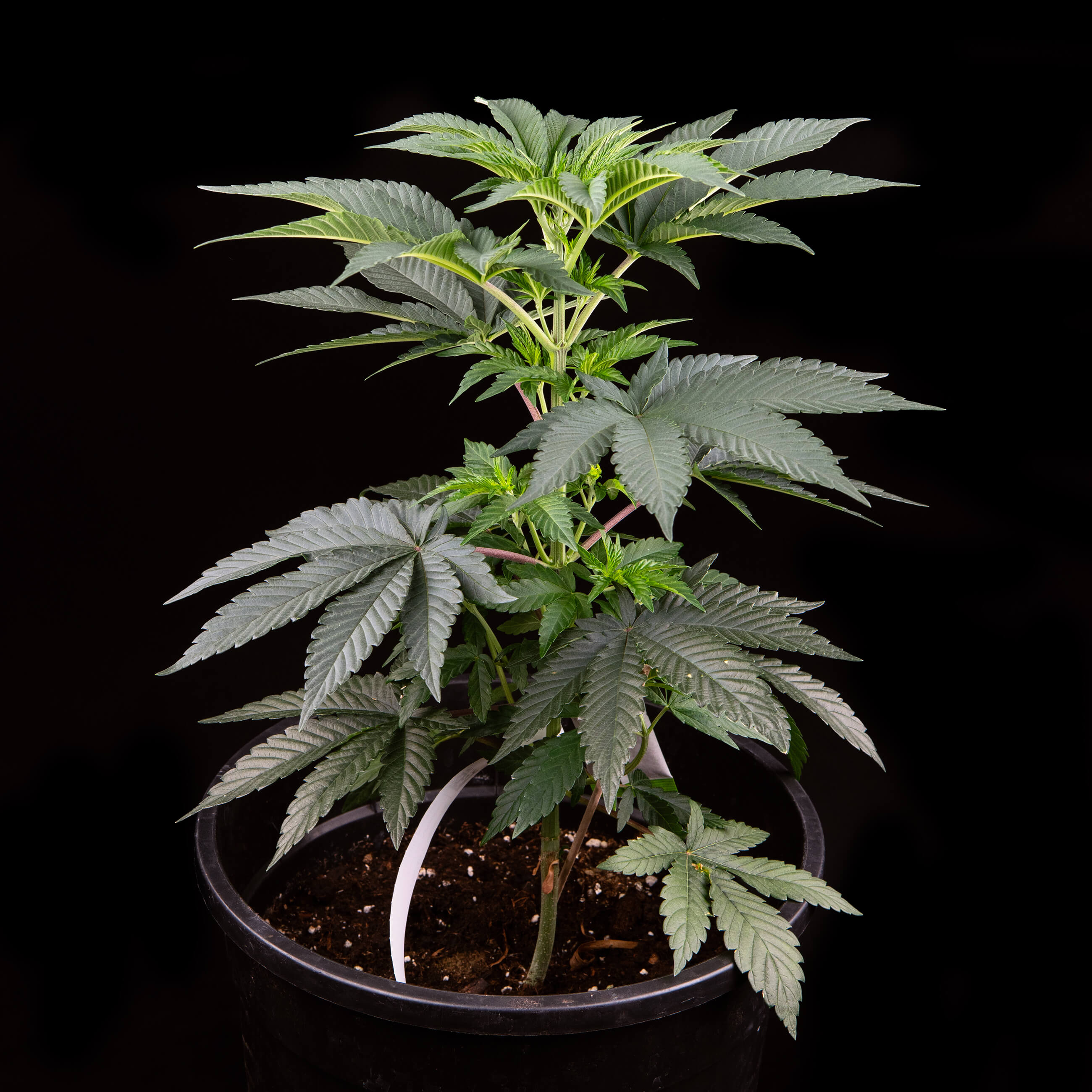
In week six, things continued to accelerate, with our plant growing 9 cm to reach 34 cm tall. The internodal spacing was still stretching, though rather slowly, and much of the height gain was new growth of the main stem. Lower down, the lateral branches were beginning to really take shape, giving the plant a somewhat compact, cylindrical appearance. Expecting flowering to kick off any day now, we increased daily feedings to 1500 ml: this would not change for the rest of the grow.
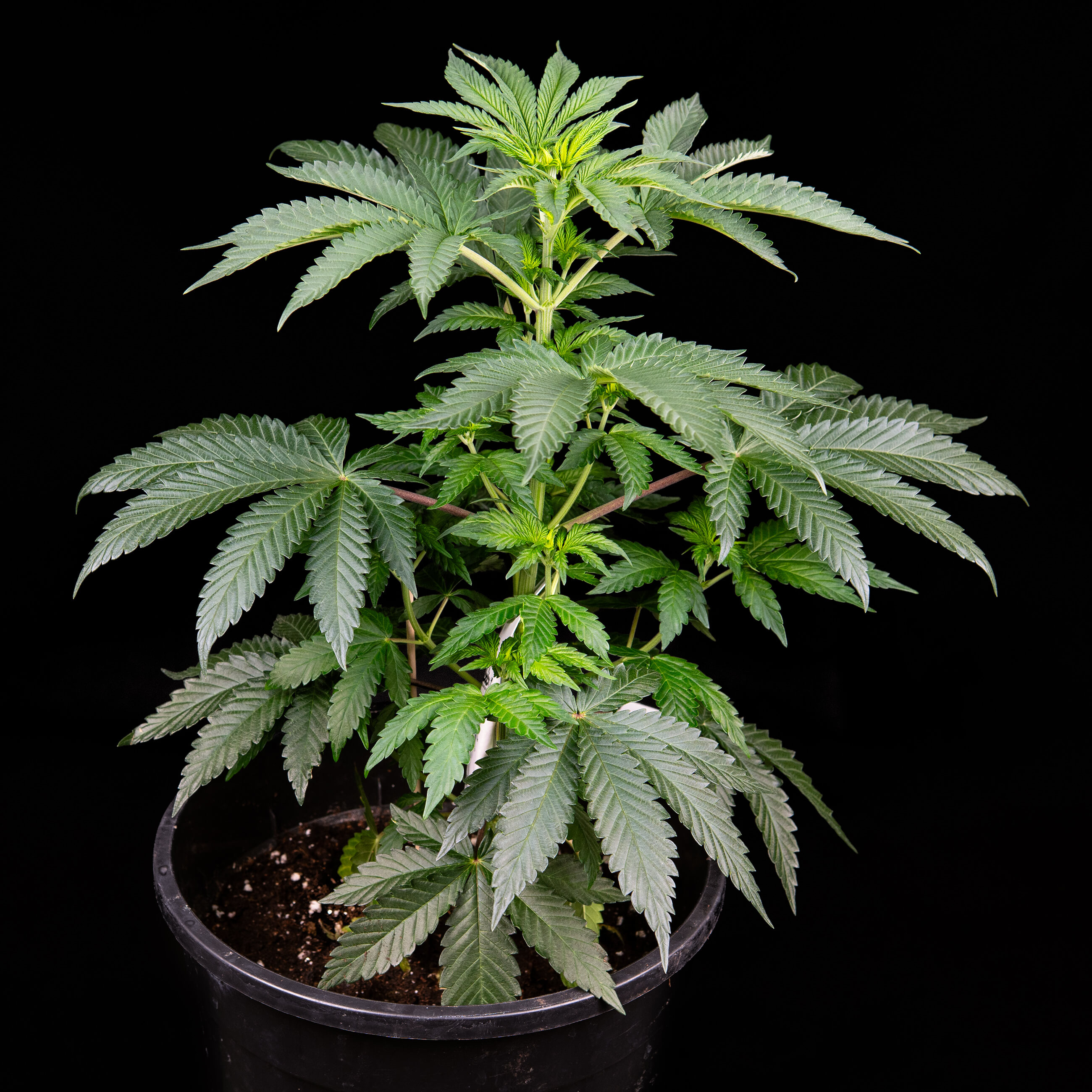
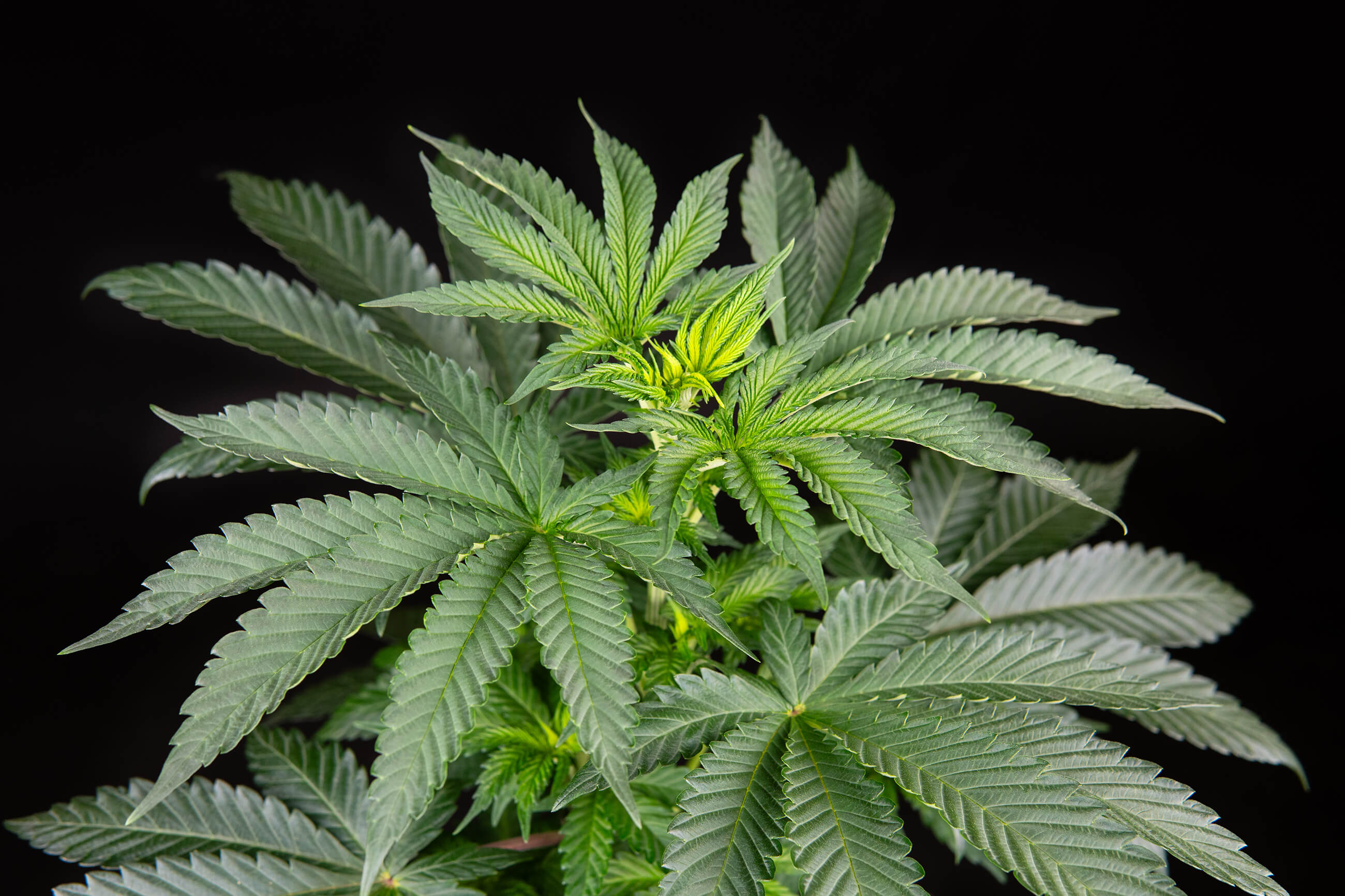
Week seven saw another round of steady growth, with our plant finishing the week at a height of 41 cm. The growth was a combination of new leaves at the top, as well as some minor stretch lower down. The lateral branches were slowly growing longer, but we weren’t seeing any signs of flowering quite yet.
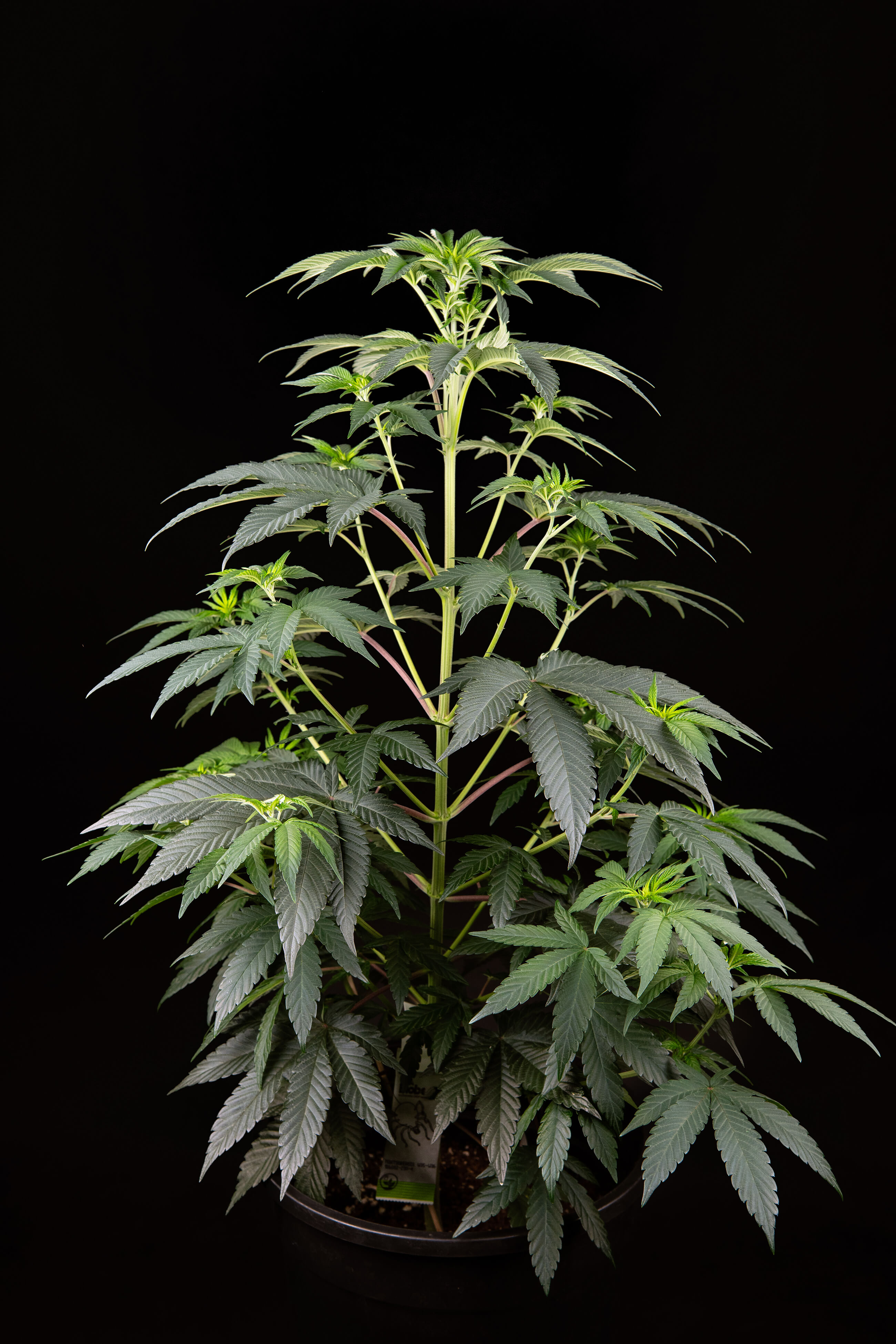
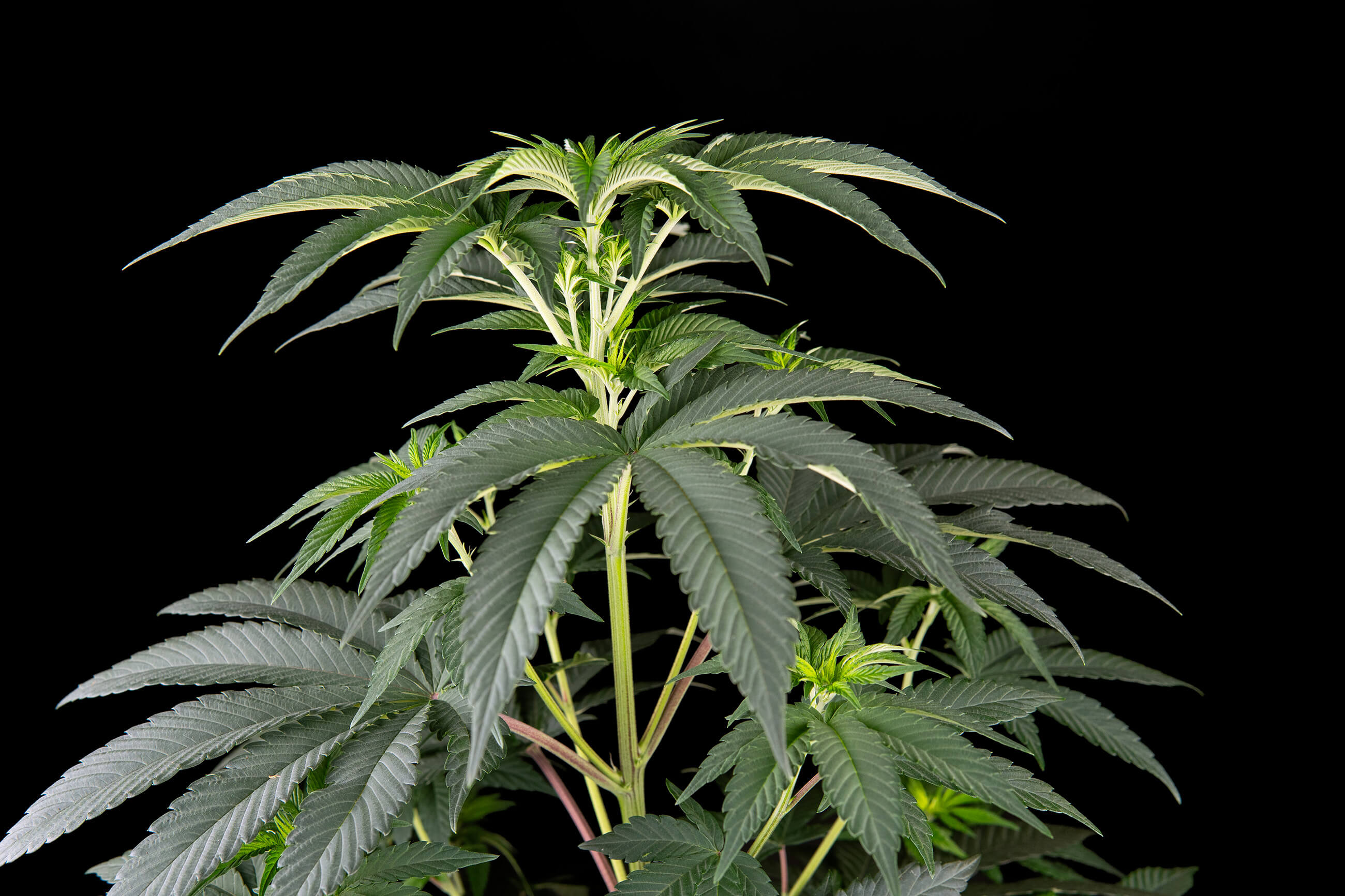
In week eight, our plant had its largest week-on-week growth, shooting upwards an astounding 22 cm to finish the week at 63 cm tall. This was almost completely from stretch in the main stem and lateral branches, which more than tripled in length. With this new growth, the plant took on a bit of a Christmas-tree shape, with an open, airy frame perfect for allowing airflow and light penetration in the lowest branches.
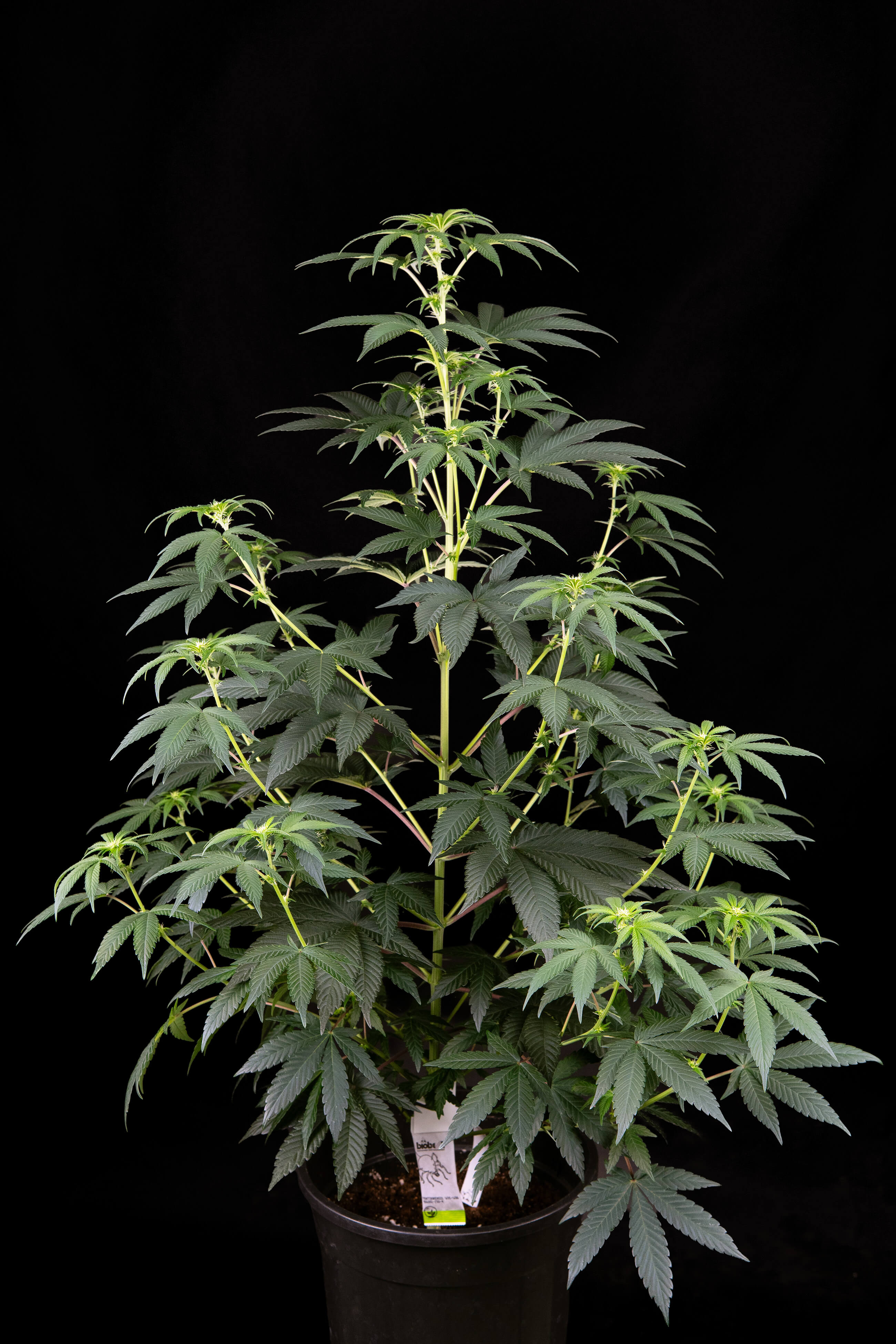
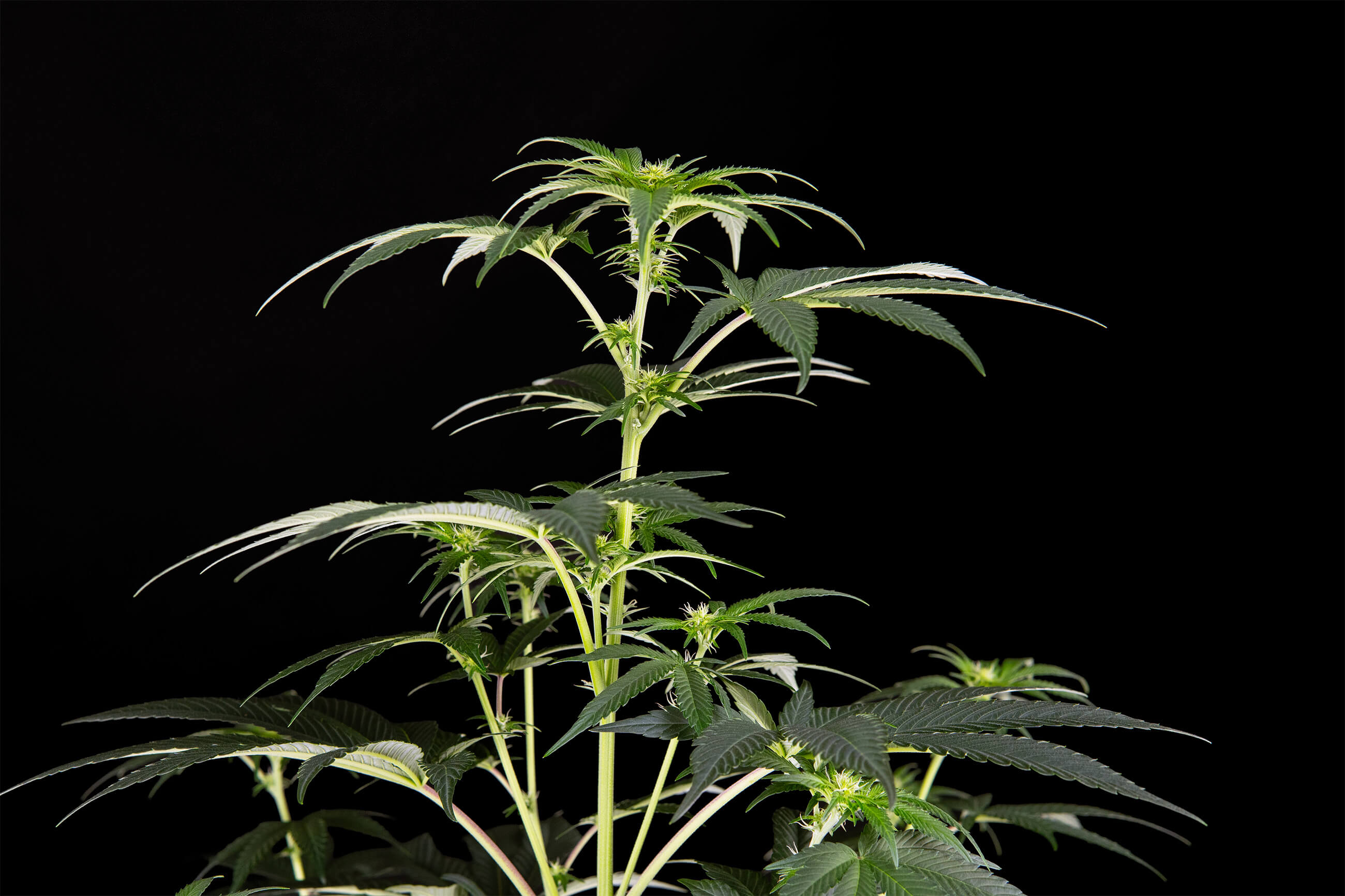
Week nine saw the first signs of flowering as small clusters of white pistils began to grow at the tops of branches. This week also saw another round of extreme growth, with our plant finishing the week at 78 cm. The lateral branches continued to grow upwards and outwards, and the main stem was slowly rising above the lower canopy. By the end of the week, each flowering site was blooming.
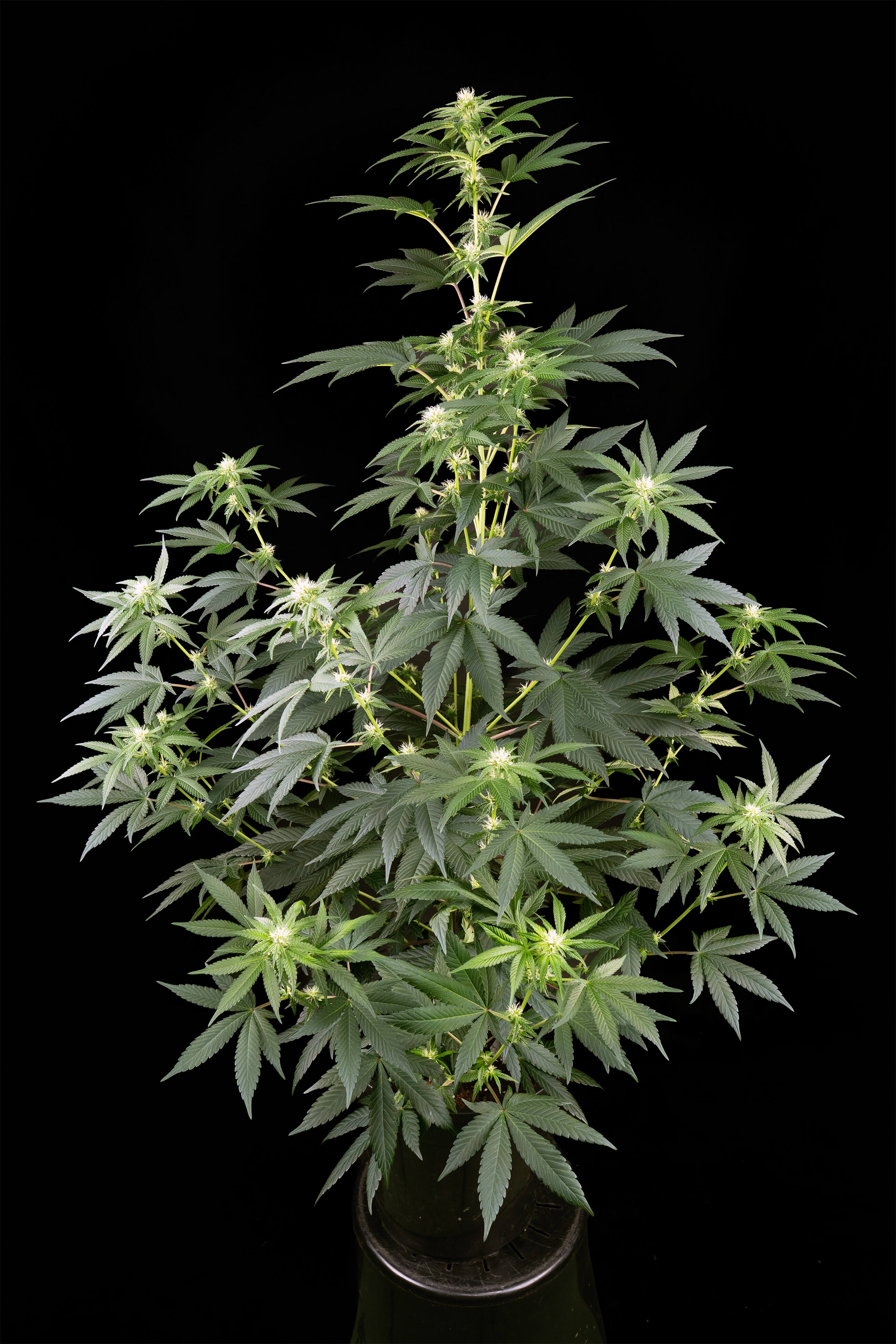
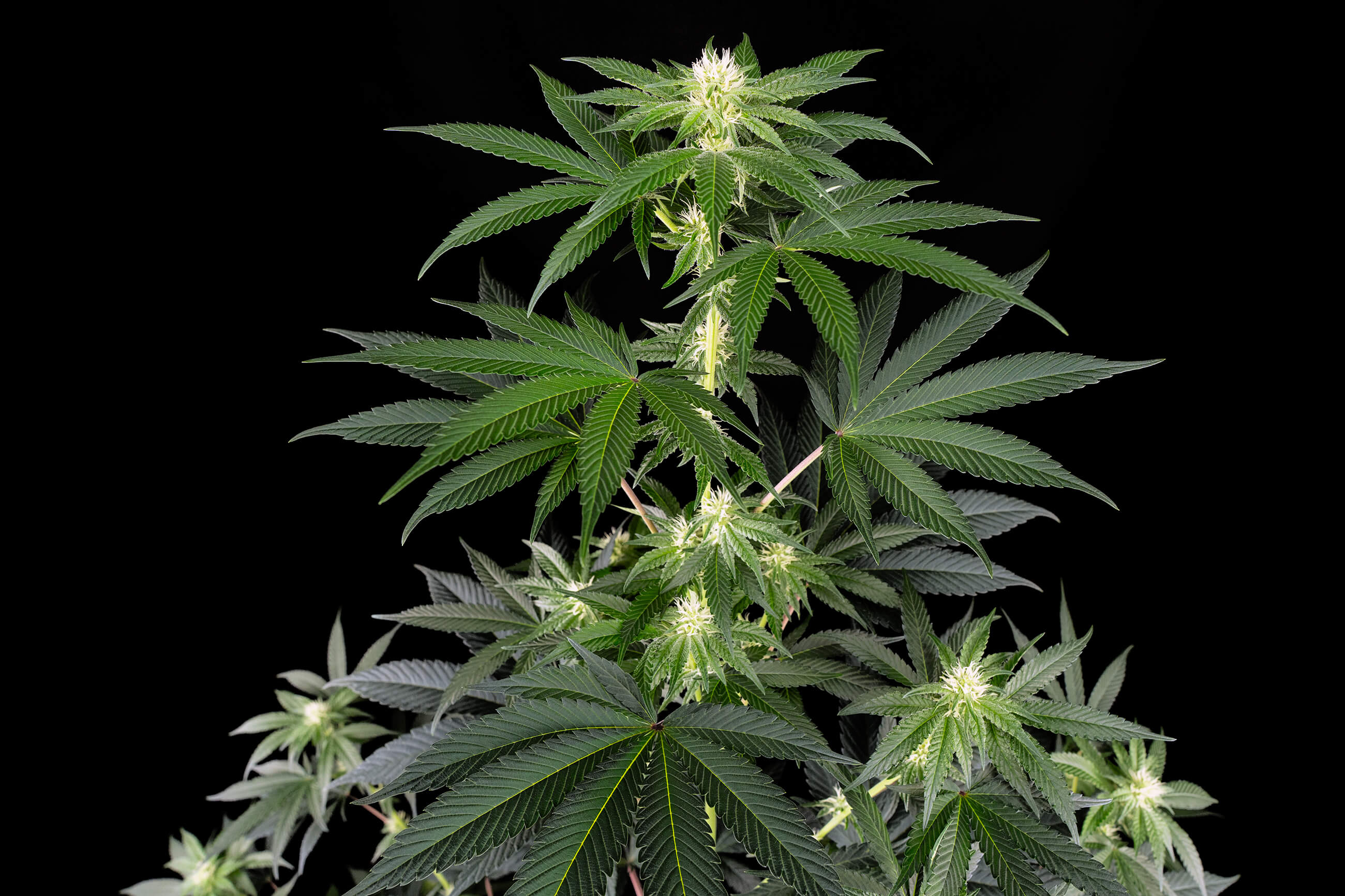
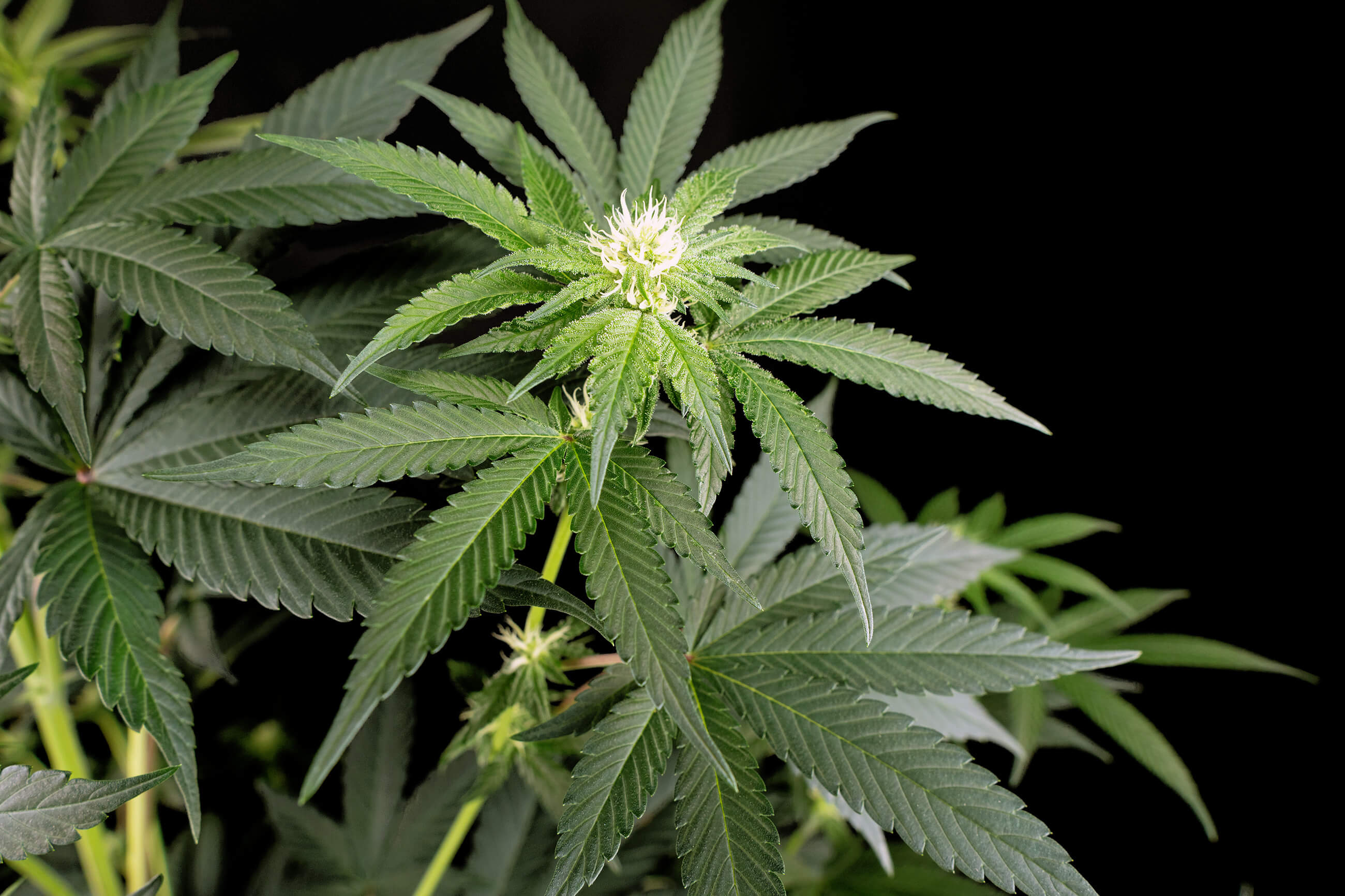
Through week ten, growth slowed significantly, with the plant only gaining 5 cm to stand 83 cm tall. This slowdown was accompanied by a rapid uptick in flower growth, as each flowering site was now sporting a small but rapidly growing bud.
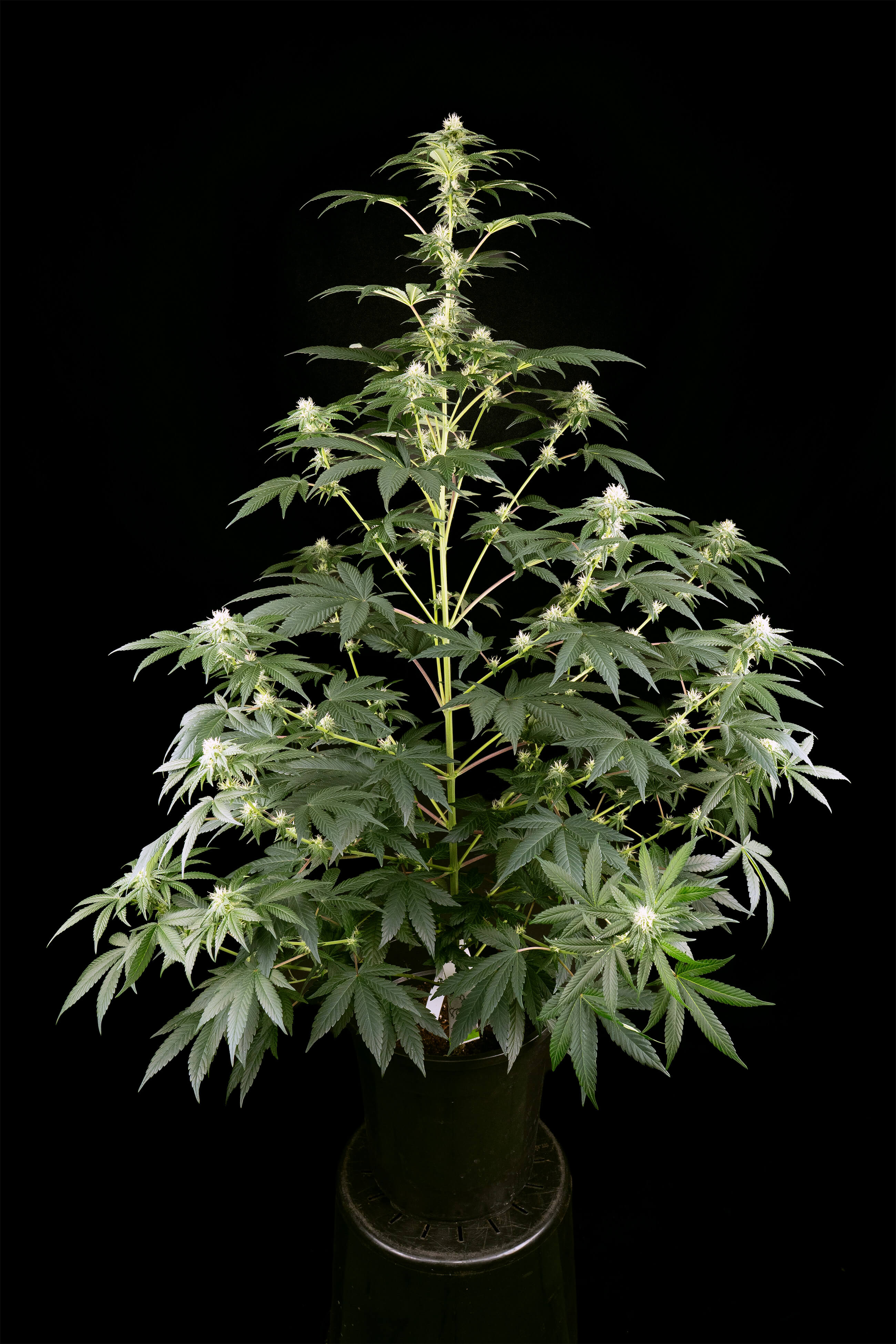
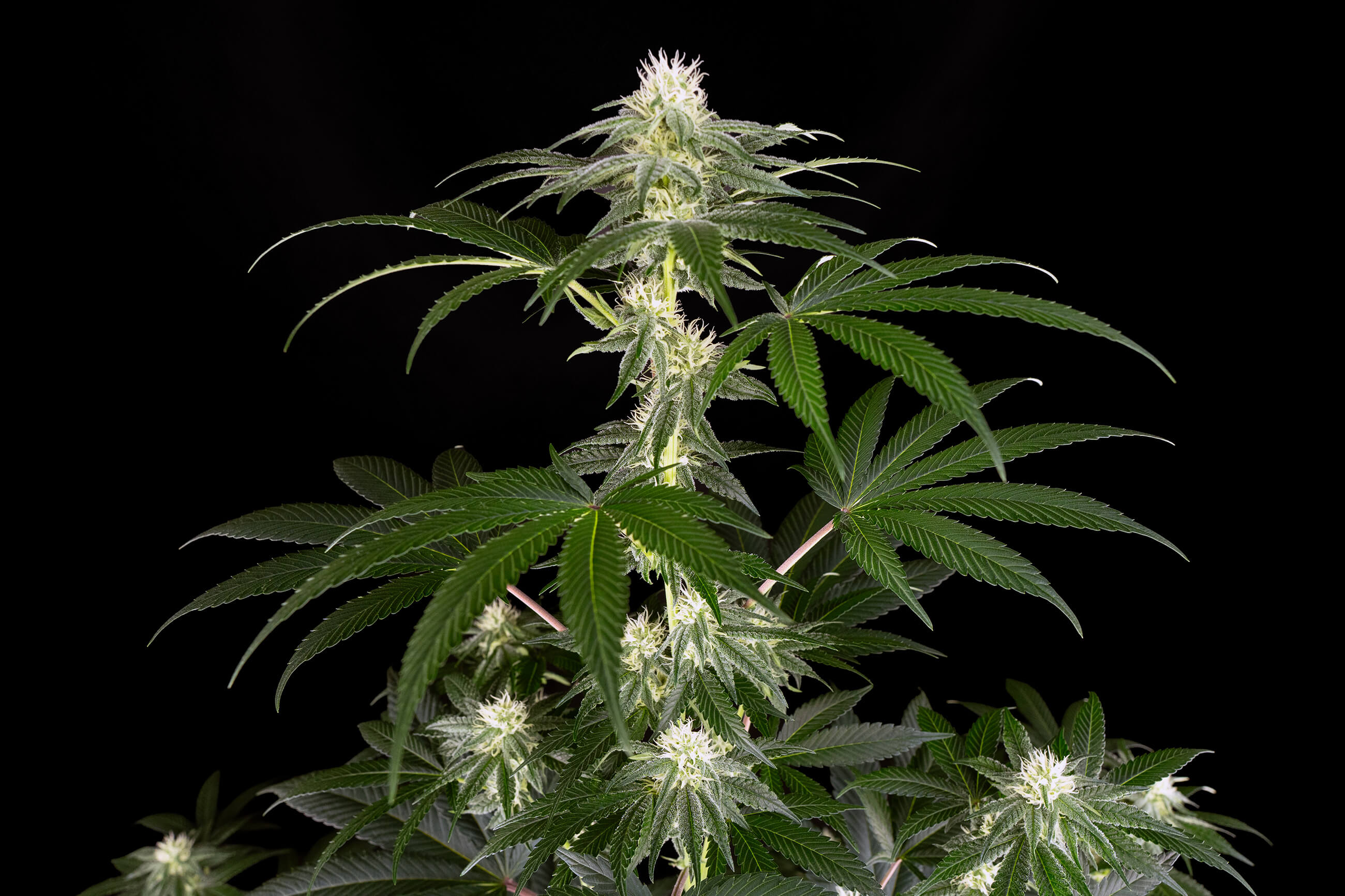
In week eleven, our plant had its last burst of vertical growth, finishing the week at 93 cm tall. This growth was entirely due to the main stem rising above the lower canopy, as the lateral branches stayed roughly the same size. By now, the main cola had fully formed, and every bud was growing noticeably larger each day.
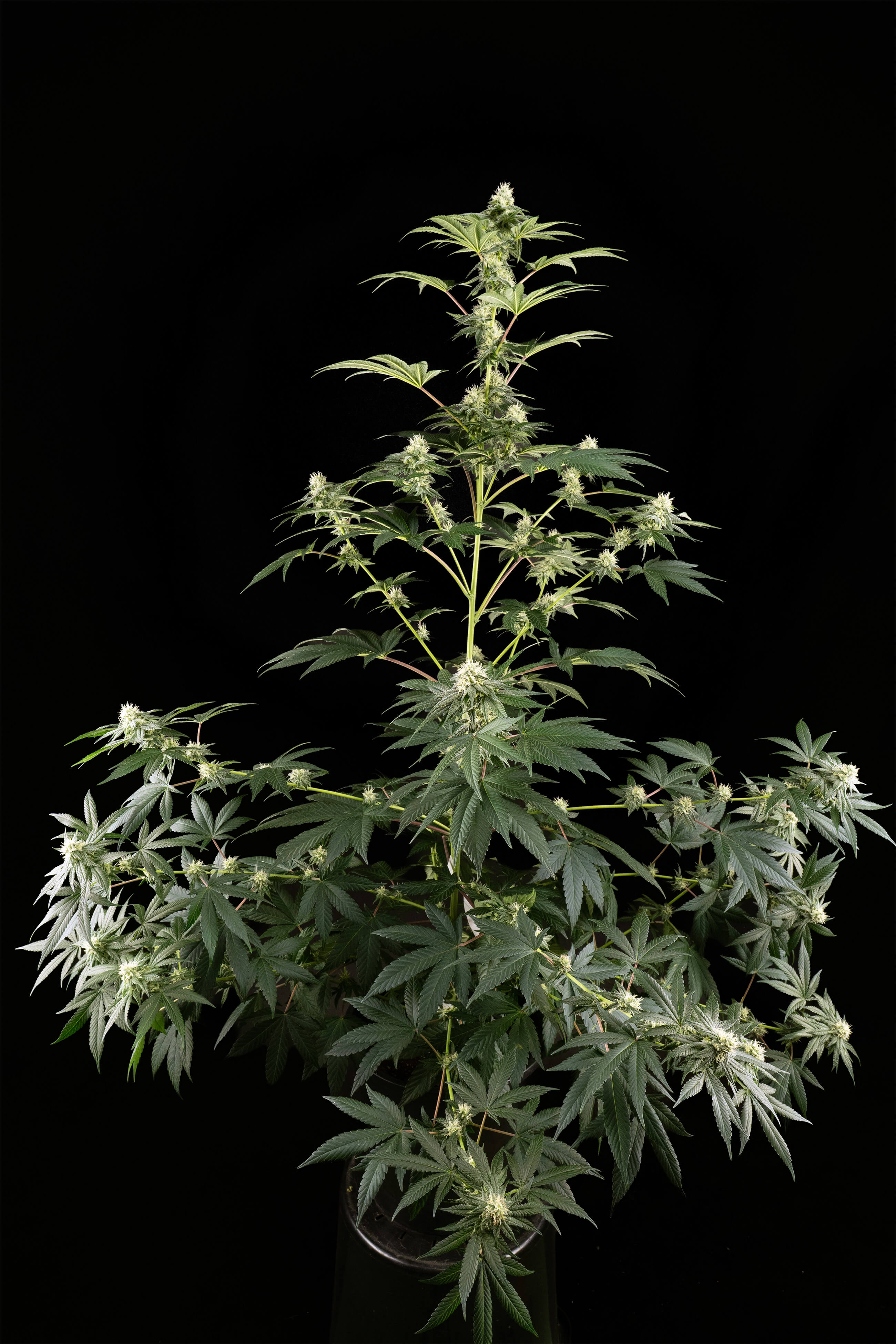
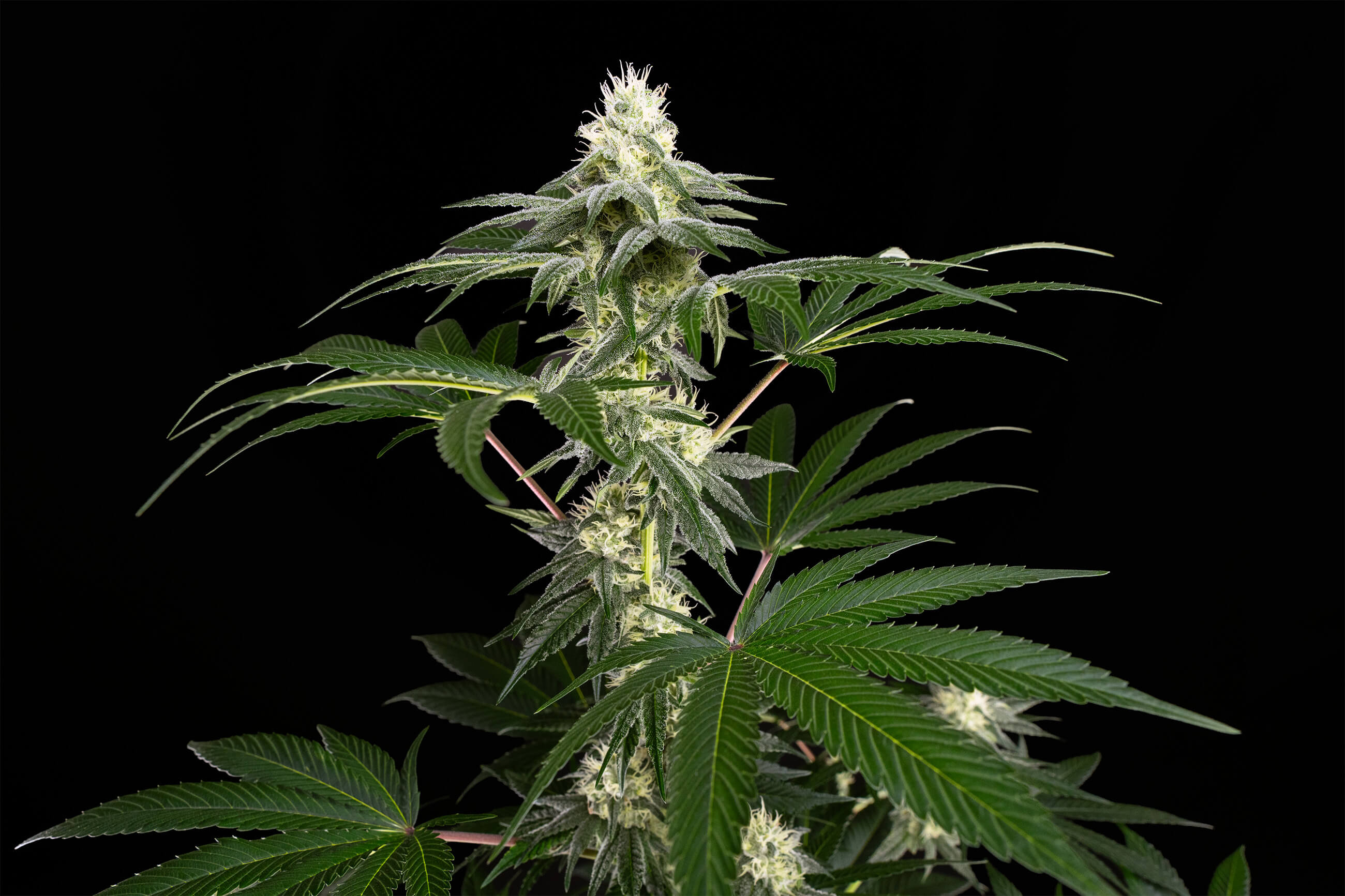
Week twelve saw only a single cm in height gain, as the plant had fully committed to flower production. The buds were on the smaller side, but quite dense, and the lower branches were beginning to bend beneath their weight. At this point, there was nothing more to do but wait for the plant to finish its job.
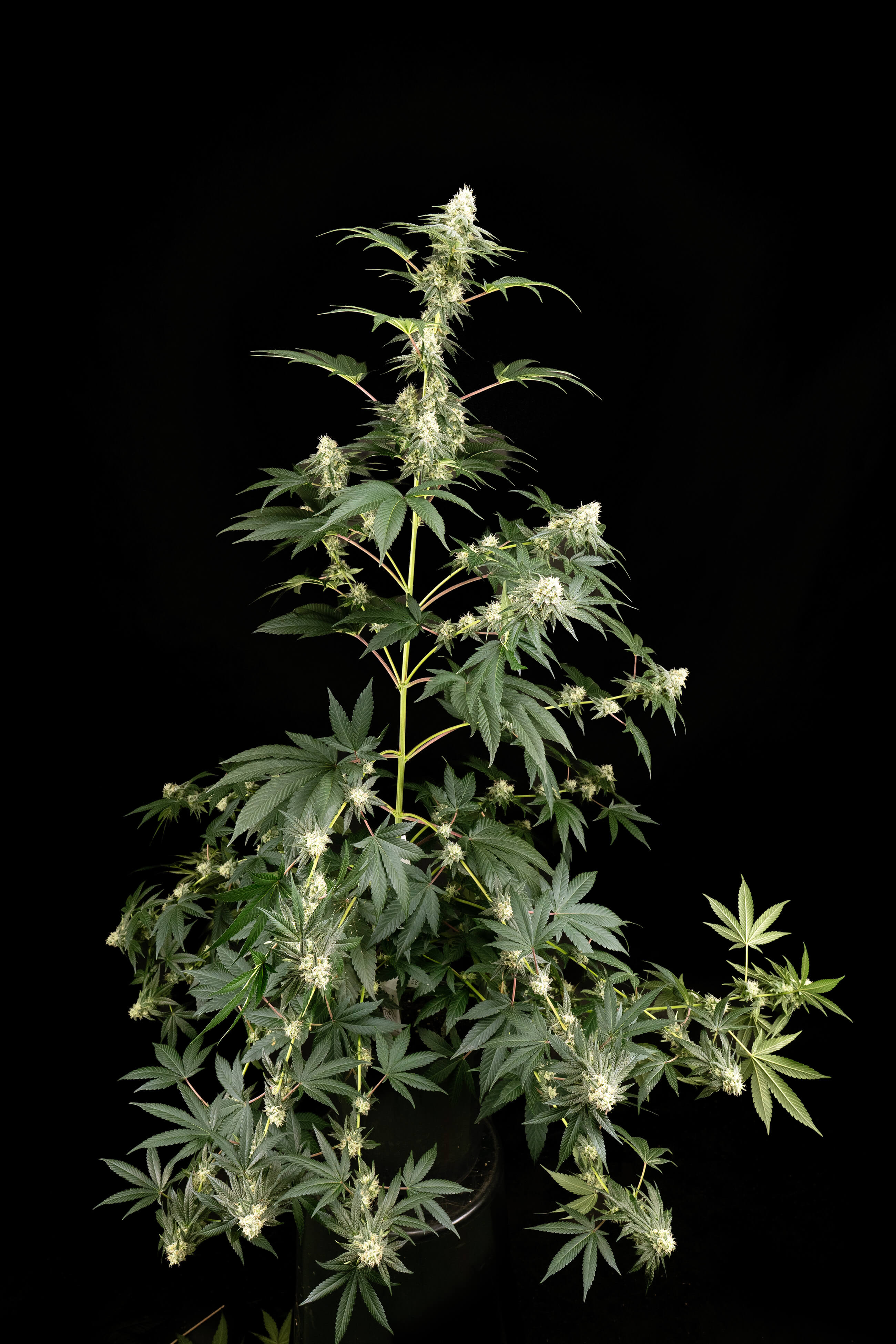
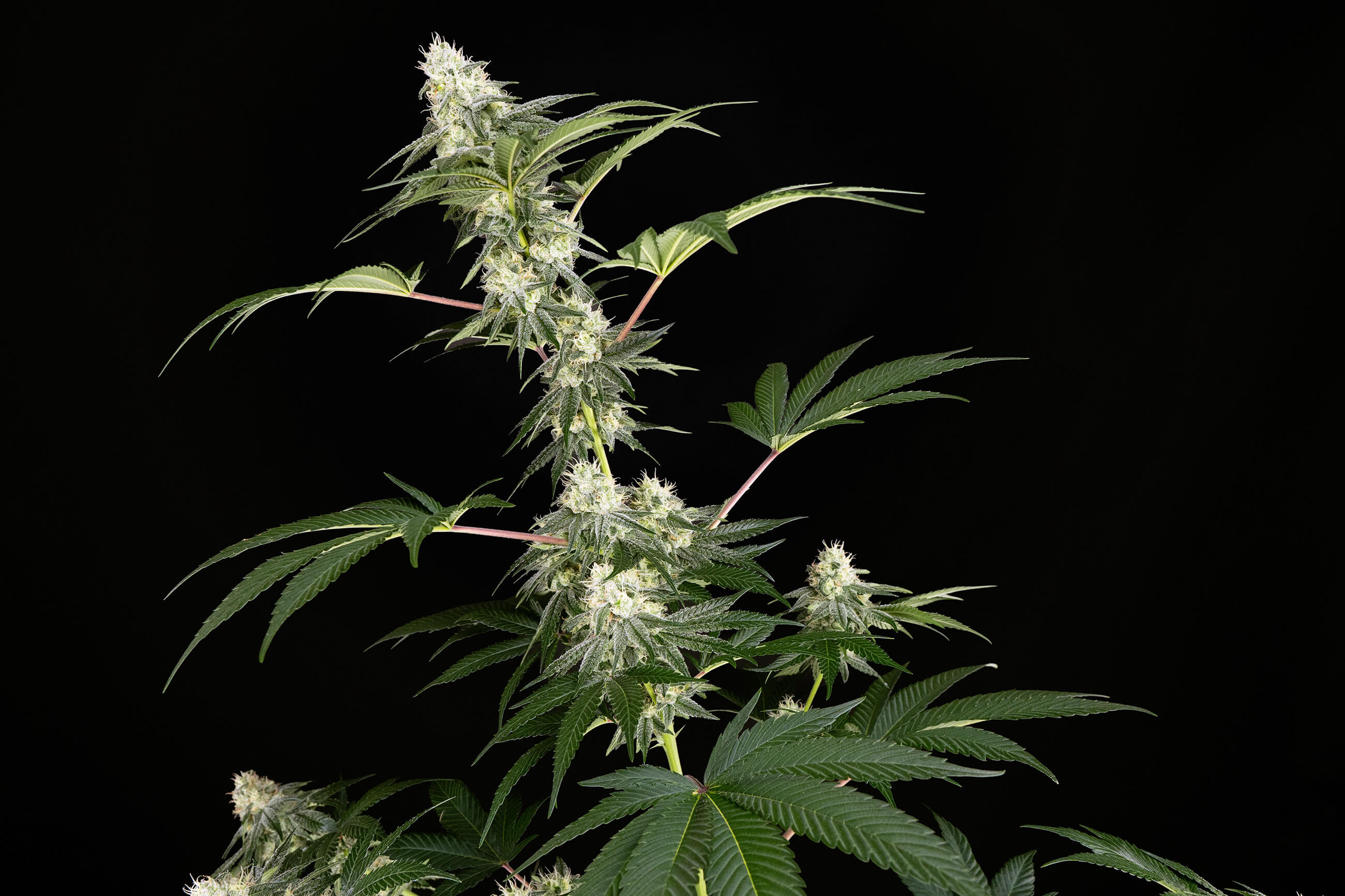
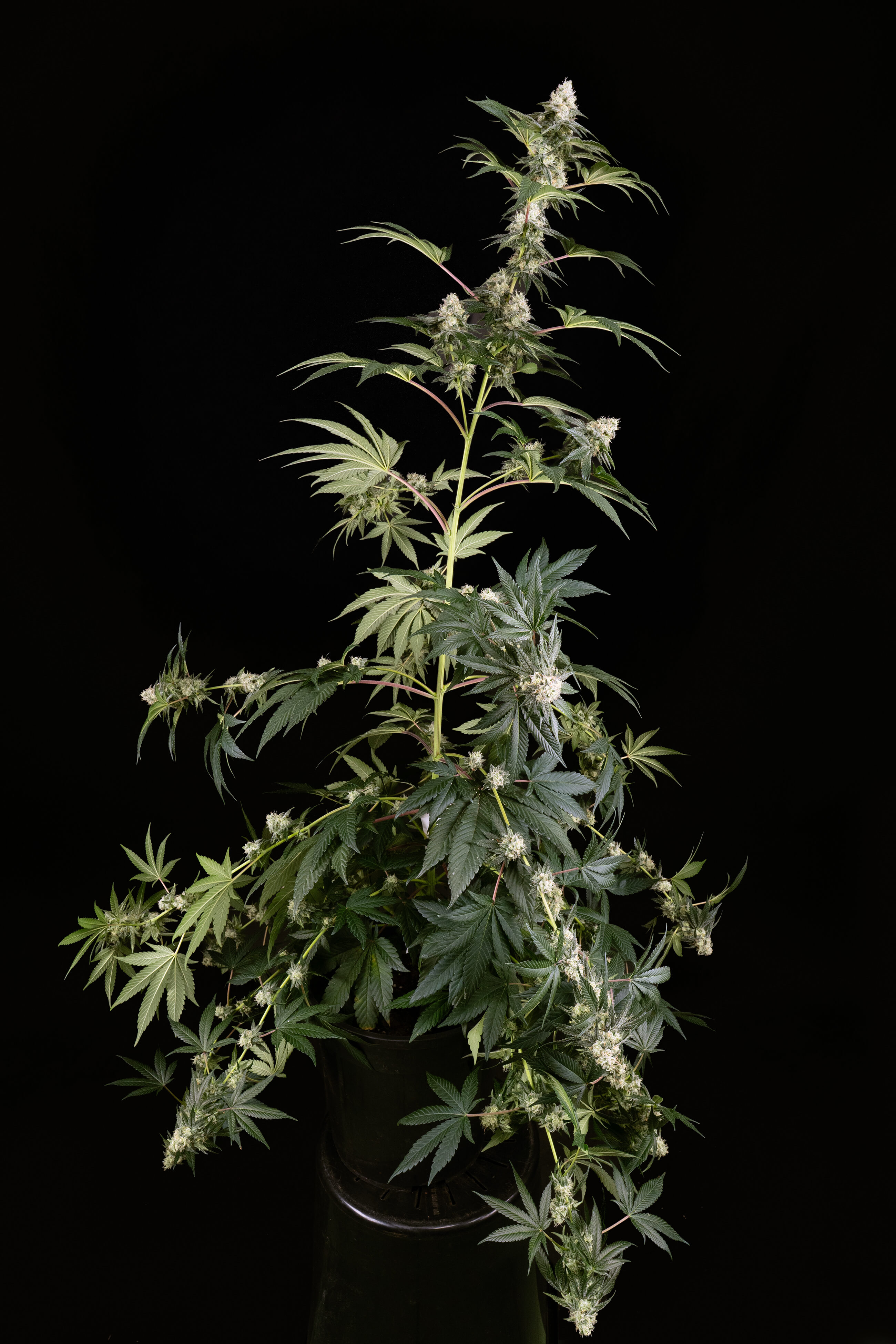
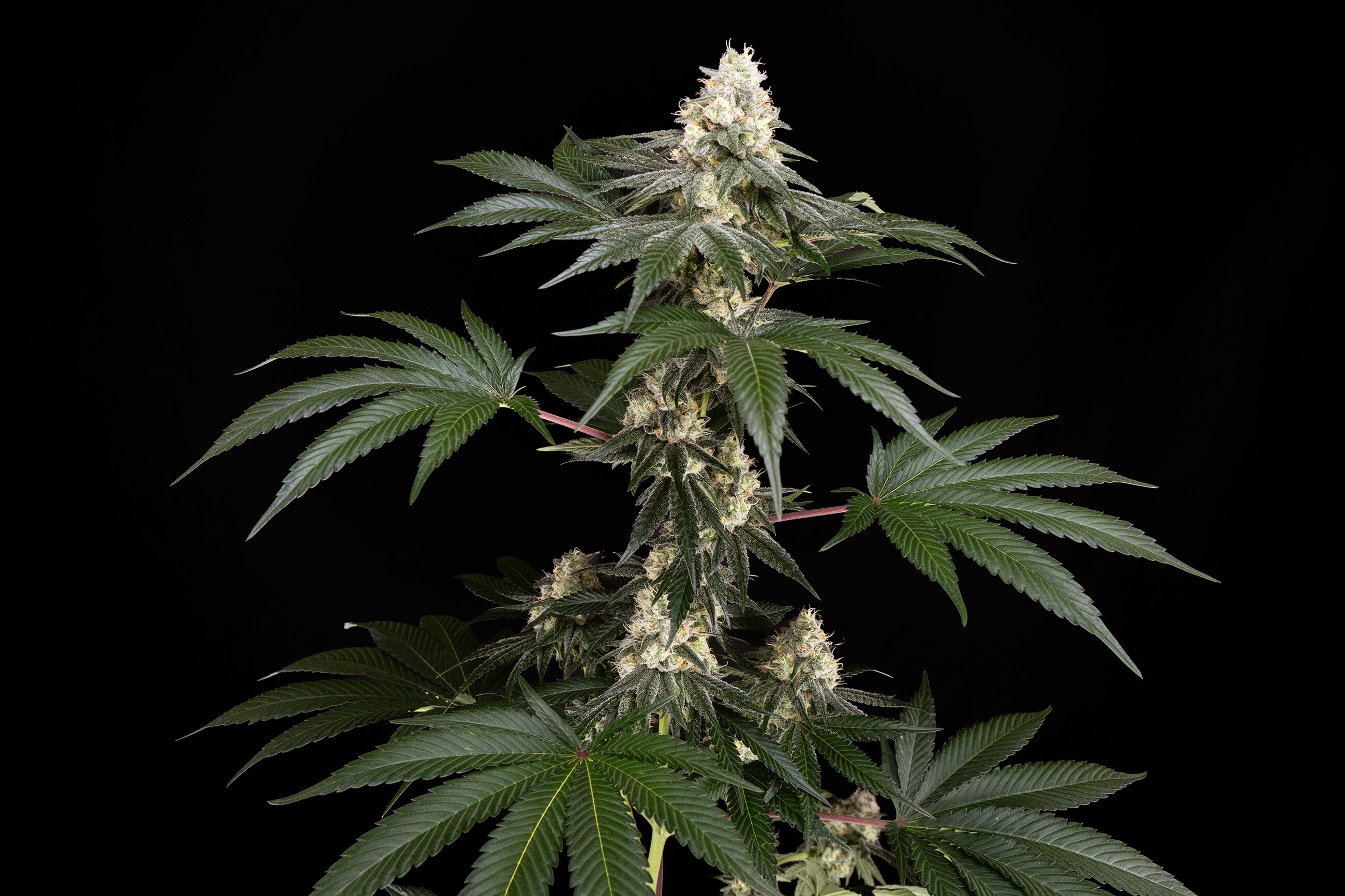
In weeks thirteen and fourteen, our plant reached its final height of 94 cm. As the buds continued to grow larger, nearly every branch, as well as the main stem, was at risk of buckling beneath the weight of the buds, with the lowest branches falling well past 90°.
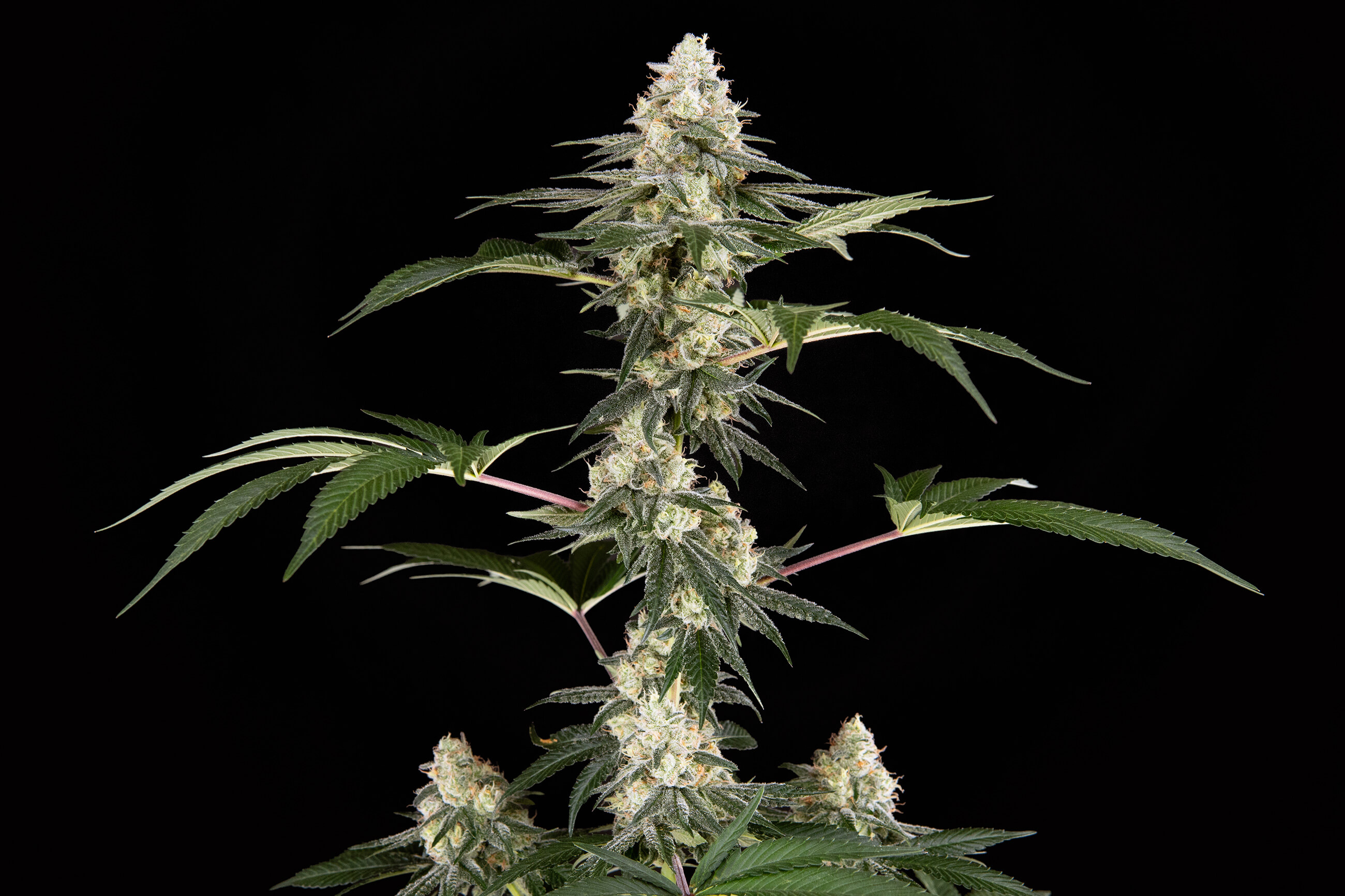
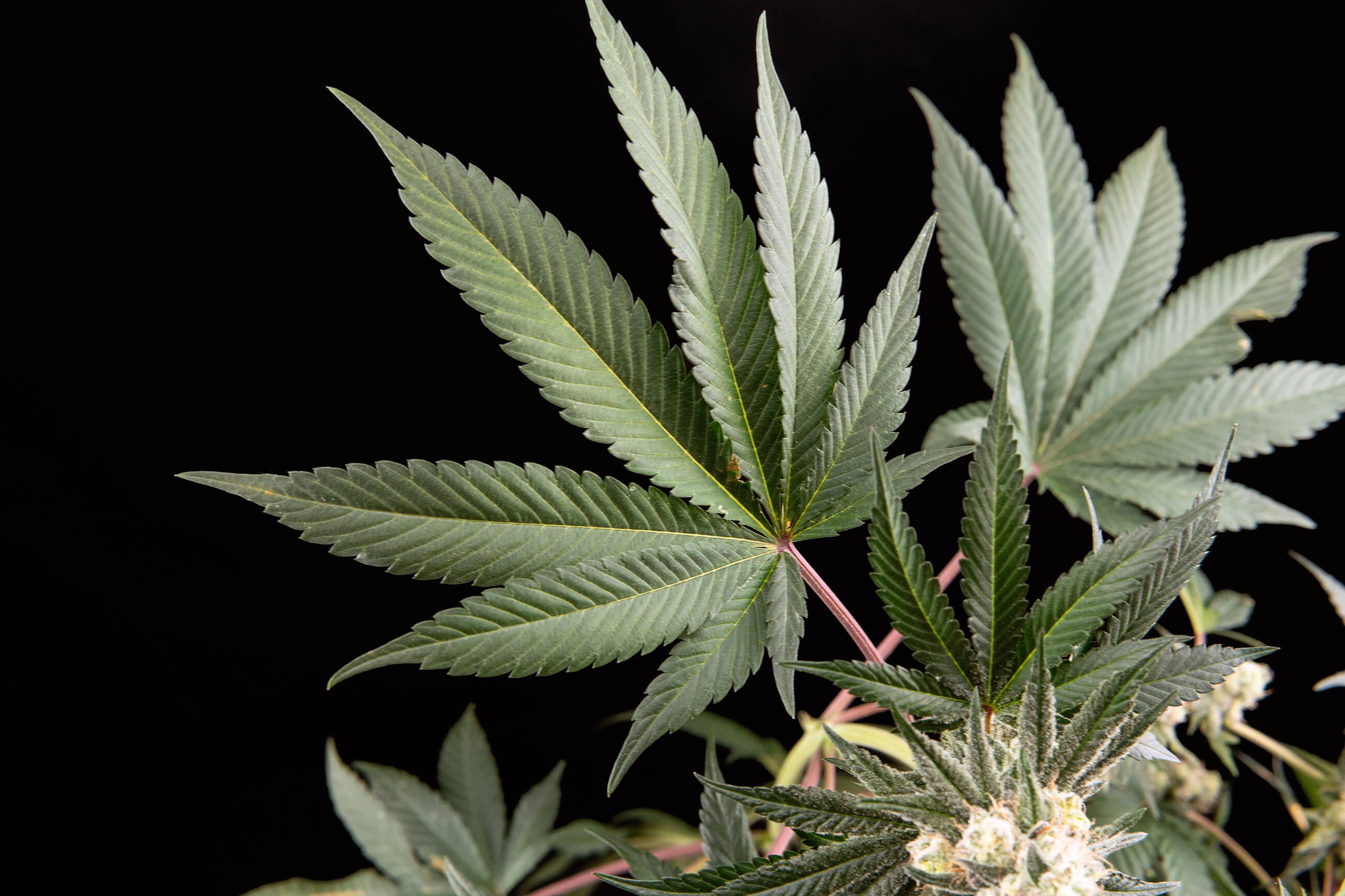
Finally, in week fifteen, it was time to harvest our Lemon Pavlova Feminized cannabis plant.
Harvest
Once our Lemon Pavlova Feminized cannabis plant was ready for harvest, we quickly cut it down at the base, trimmed off any large fan leaves, and hung the plant upside-down to dry in our drying room. This space is kept at a stable temperature of 15.5°C with a relative humidity of 50%, and we leave our plant hanging here until the smallest branches are dry enough to snap when bent; usually between 10 and 20 days.
After drying, we trimmed the flowers off the stems, removed any remaining leaves, and put the buds into glass jars for curing. Initially, these jars were left open for the first 24 hours to allow the bulk of the moisture to evaporate. After a day, the jars were sealed and then “burped” for about an hour at a time, a few times a day. Over the next several weeks, the frequency of these burps was reduced to only about 30 seconds once a day.
Once everything was properly cured, we ended up with a respectable 109 grams of dried flower with a THC content of 24.1%.
Related post
Terpene profile
As our Lemon Pavlova Feminized plant began to flower, we started to notice a complex, layered scent defined by a hard-hitting, fresh mint on top of distinct notes of sweet and fruity dessert, hints of zesty lime sorbet, and a subtle, gassy, musky depth.
After being dried and cured, the buds took on a sharper, though equally pleasant note, combining cool, fresh mint, layers of sweet fruit and dessert, and citrusy undertones. These notes were all layered on top of distinct hints of gas and a soft, earthy musk with a subtly fresh herbal finish.
After sampling, we found that Lemon Pavlova Feminized perfectly blends each of these complex notes into a single, mouthwatering package. Sweet and creamy dessert notes took the lead on the inhale, while notes of fruit and lime cream quickly followed, before things ended with a soft minty freshness that lingered long after exhaling.
The high from Lemon Pavlova Feminized was remarkably smooth and perfectly balanced a warm body buzz with a clear, uplifting, and cerebral high that was both euphoric and calming. This cosy, dessert-like high didn’t knock us out or cause any particularly heavy sedation, making it ideal for evening use or relaxed social sessions.
Related post
The outcome
With a bit of a slow start and a sudden, rapid burst halfway through flowering, these plants could surprise growers who aren’t ready for such rapid growth. However, the relatively short final height and impressive lateral branches make this strain a top pick for indoor growers who are looking for a highly trainable plant to fill out their space.
- Disclaimer:Laws and regulations regarding cannabis cultivation differ from country to country. Sensi Seeds therefore strongly advises you to check your local laws and regulations. Do not act in conflict with the law.
