


Chocolate Bananza Feminized is an indica-dominant hybrid with a distinctly sativa frame that won’t outgrow its space. Bred by Sherbinskis for the Sensi Seeds Breeding Grounds project, this remarkably well-balanced strain is an exceptional pick for growers who want to play around with advanced training techniques.
Total growing time: 98 days
Flowering time: 70 days
Final height: 72 cm
Final yield: 81 grams
THC content: 22.6%
Chocolate Bananza Feminized is a 65% indica hybrid developed for the 2026 Sensi Seeds Breeding Grounds lineup by Sherbinskis. This balanced hybrid of Banana Kush (OG Kush, Skunk, and Haze) and Chocolate Rainbow XXL (a Sensi Seeds original cross of GMO and Gelato #41) is loved for its short flowering period, potential for XXL yields, and soothing, balanced high.
We grew our Chocolate Bananza Feminized cannabis plant in an 8-litre plastic pot filled with BAC Lava Mix under a 1000 W lamp, initially set to an 18/6 schedule during vegetation. The room was kept at a stable daytime temperature of 23°C, with nighttime temperatures dropping to 21°C. The relative humidity was kept at 65% during early vegetation and was gradually lowered as flowering kicked off.
Germination & seedling
Before doing anything, we first needed to germinate our Chocolate Bananza Feminized cannabis seed. We just folded up a few paper towels, sprinkled them with just enough water so they were damp but not soaked, and set them on a plate. Next, we added our seeds and covered everything with another damp paper towel, before placing it all into an open plastic bag that we set in a warm place out of direct sunlight.
Within a day or two, the seed had cracked open and revealed a small white taproot, so we planted it taproot-down into a pre-soaked Rockwool cube and set it all under a 600 W LED lamp. Young seedlings are extremely delicate, and too much light, heat, or watering can slow early development or even stop a seed from sprouting entirely.
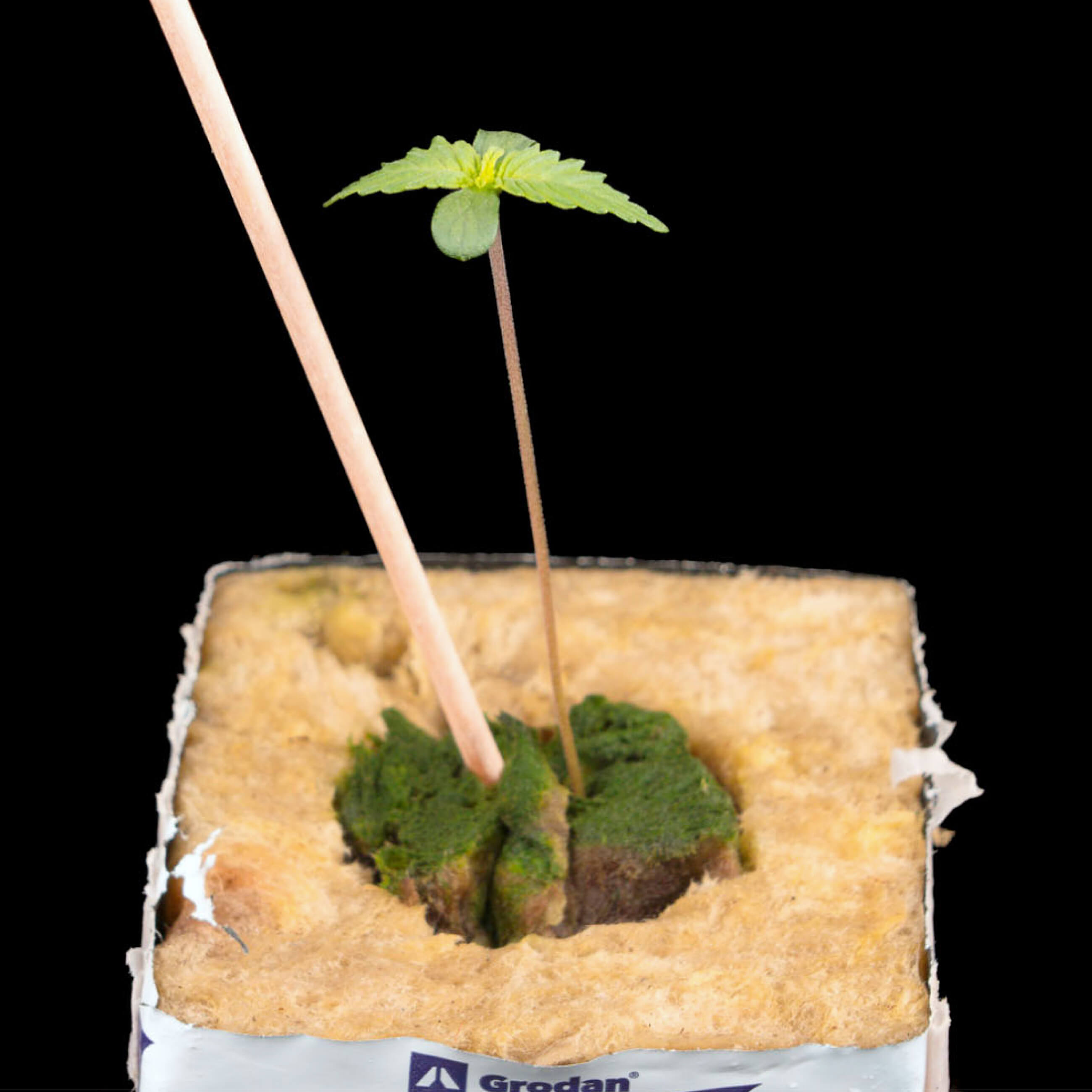
After three days, our seedling was ready for its first watering with 100 ml of pH-balanced water (pH 6.2; EC 0.8) combined with a dose of rooting hormone. By the end of the first week, the plant had grown to 8 cm tall and developed a set of small, healthy pre-leaves. We continued watering daily with 100 ml of water (pH 6.0; EC 1.4) mixed with Bio Grow liquid nutrients.
Vegetation
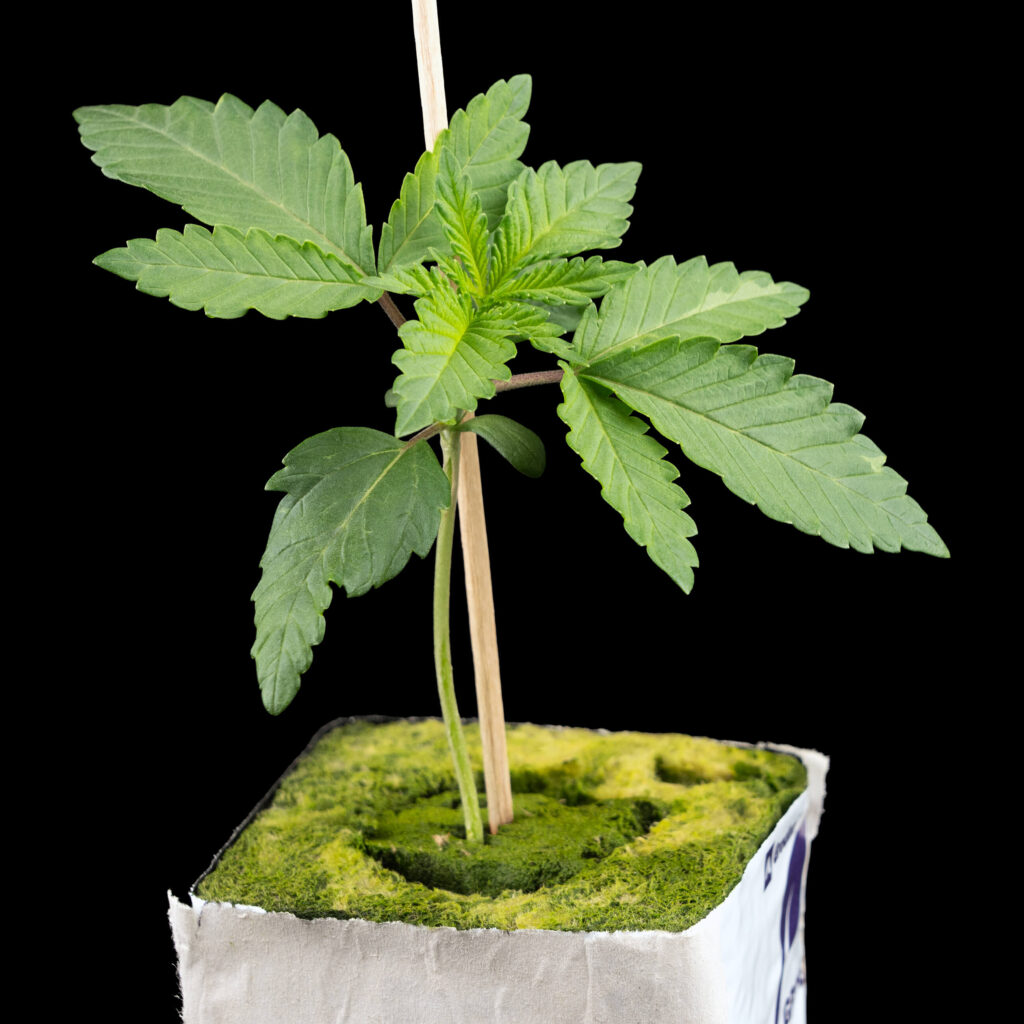
In week two, our plant grew only slightly to 8 cm, but it sprouted multiple new sets of leaves with moderate internodal spacing. The leaves were somewhat broad and a vibrant, healthy green. Looking forward to a week of robust growth ahead, we began feeding with 200 ml of water per day.
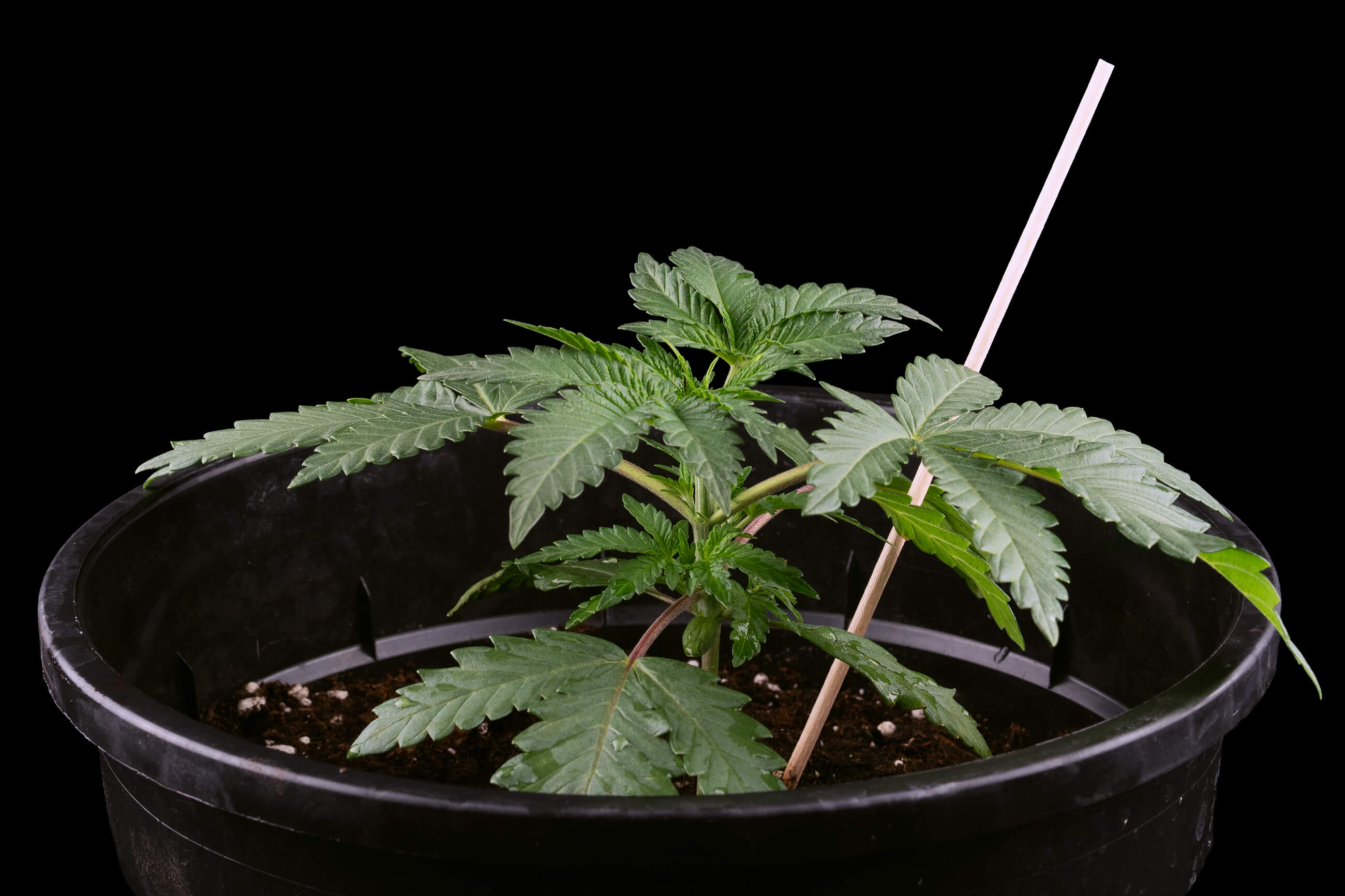
Over week three, our plant nearly doubled in height to 14 cm, and the leaves grew larger and heavier. Lateral branches were beginning to grow, but were little more than small shoots at this stage. Internodal spacing was already starting to stretch a bit, and with the switch to flowering approaching, we increased the volume of water to 400 ml per day.
Related post

Flowering
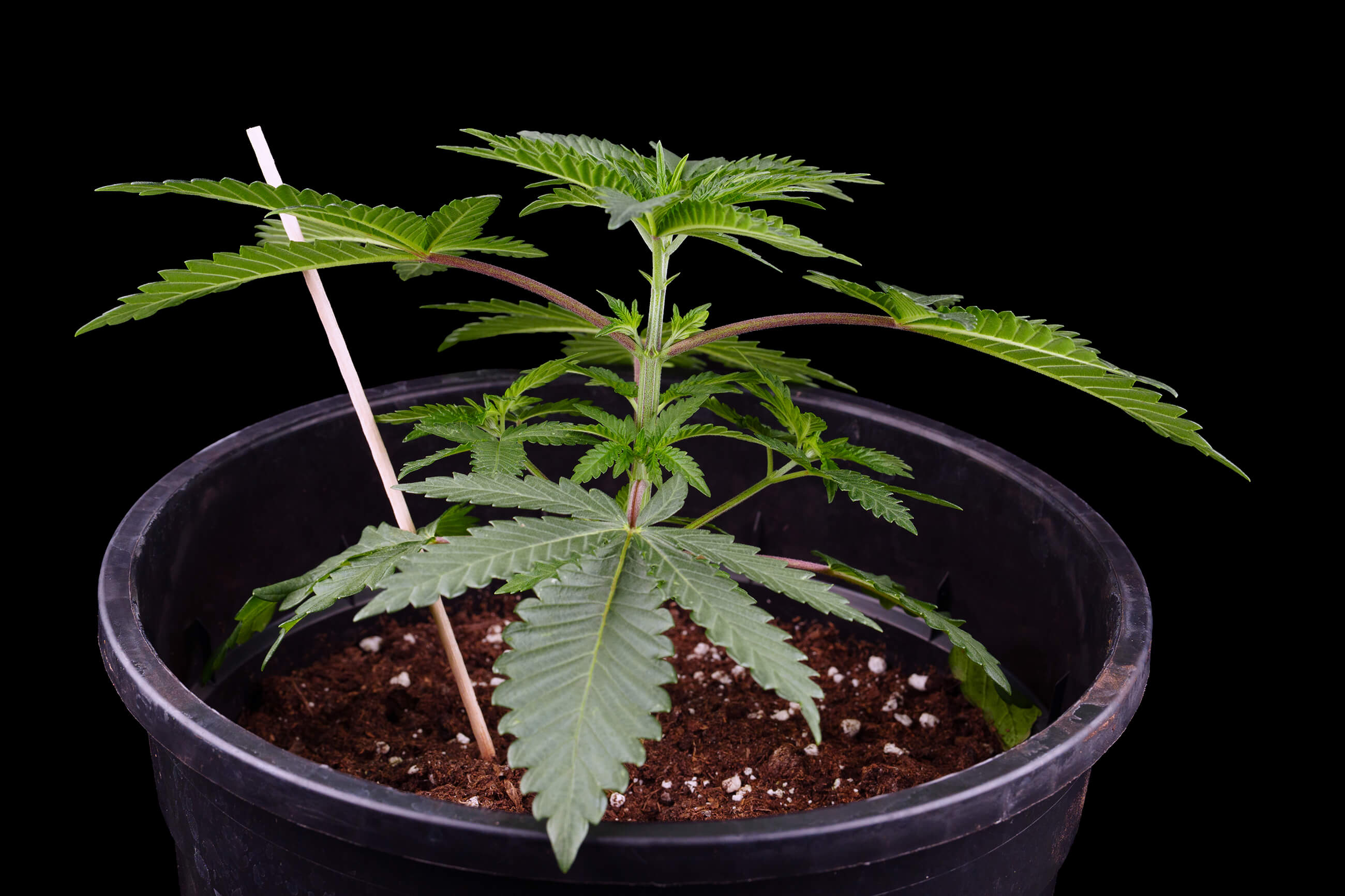
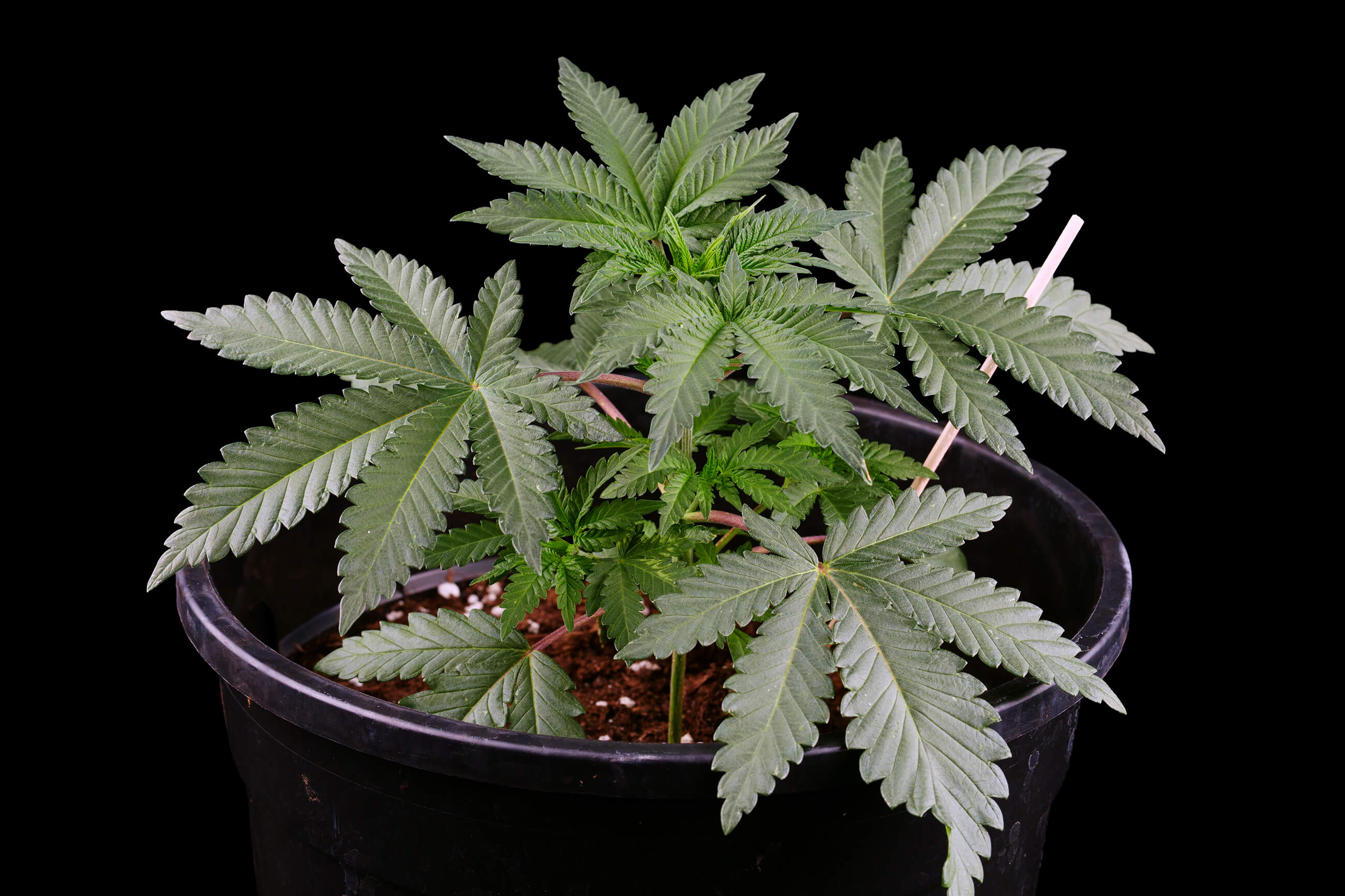
As we entered week four, we switched our plant to flowering by flipping our lights to a 12/12 schedule. On top of this, we lowered the humidity to 60% and began feeding with 800 ml of water (pH 6.0; EC 1.8) mixed with Bio Flower liquid nutrients. By the end of the week, our plant was 22 cm tall and stretching rapidly, as the lowest lateral branches were now properly developing.
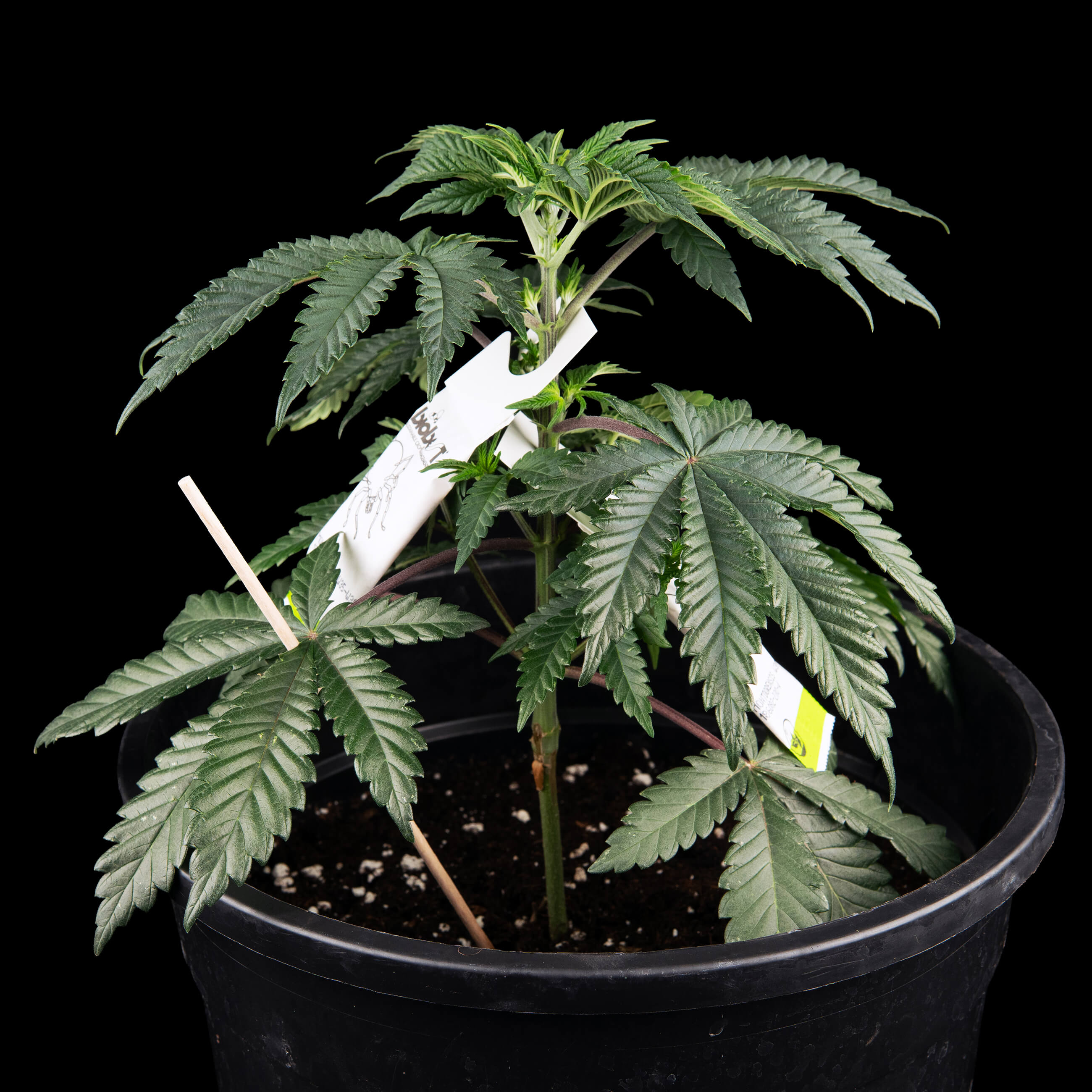
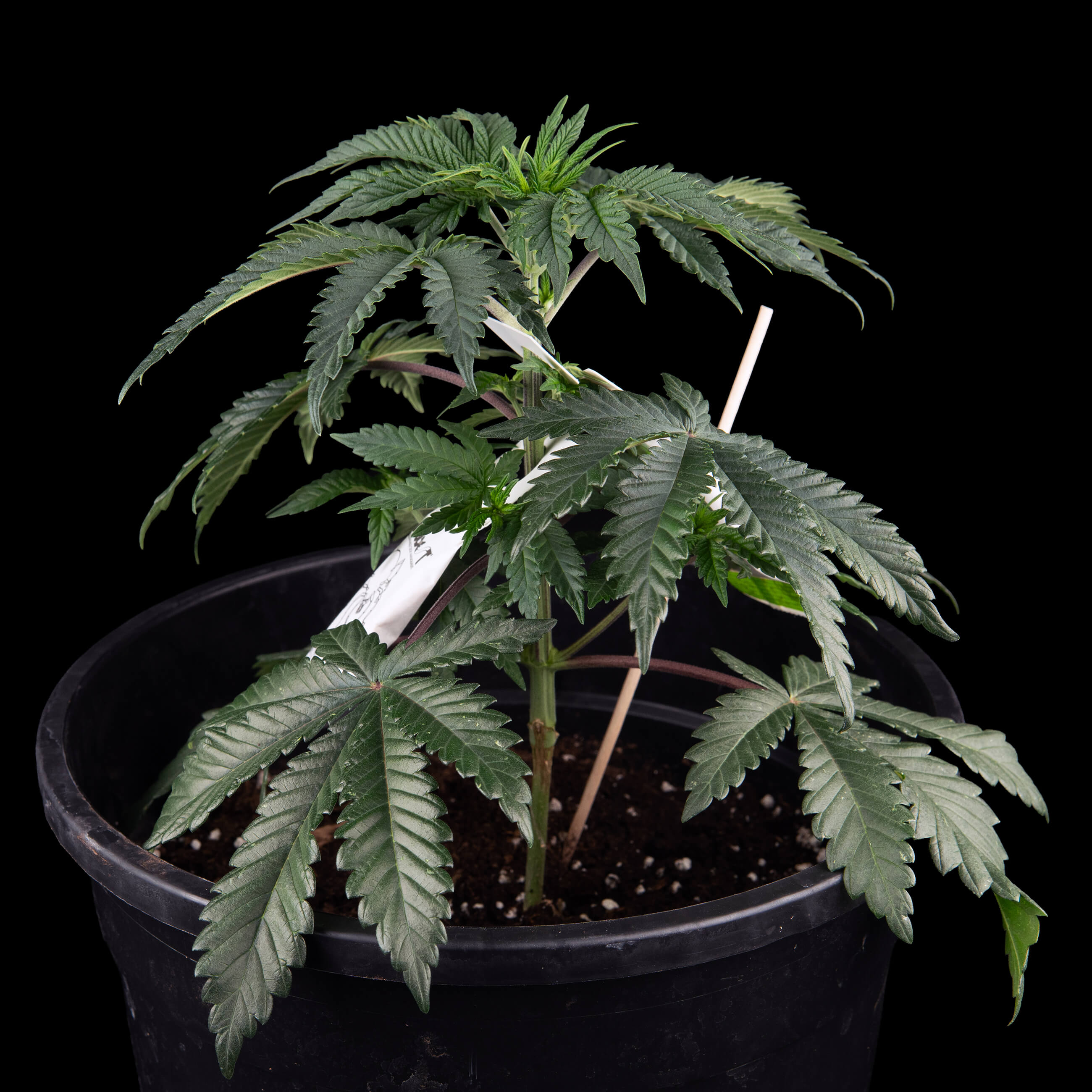
In week five, our plant continued its steady week-on-week growth, gaining 6 cm to reach a new height of 28 cm. The main stem was thickening considerably, and the lateral branches were growing nicely while the entire plant entered the pre-flowering stretch phase. At this point, we began watering with 1000 ml of water per day.
Before flowering fully kicked off, there was one last step to cover. We hung small packs of Neoseiulus californicus and Amblyseius swirskii on the plant’s lower branches to help fend off pests. Pests such as thrips and spider mites can quickly destroy a healthy plant, but these little pouches contain tiny bugs that feed on these pests without harming the plant at all. We replace these every four weeks to ensure a fresh supply.
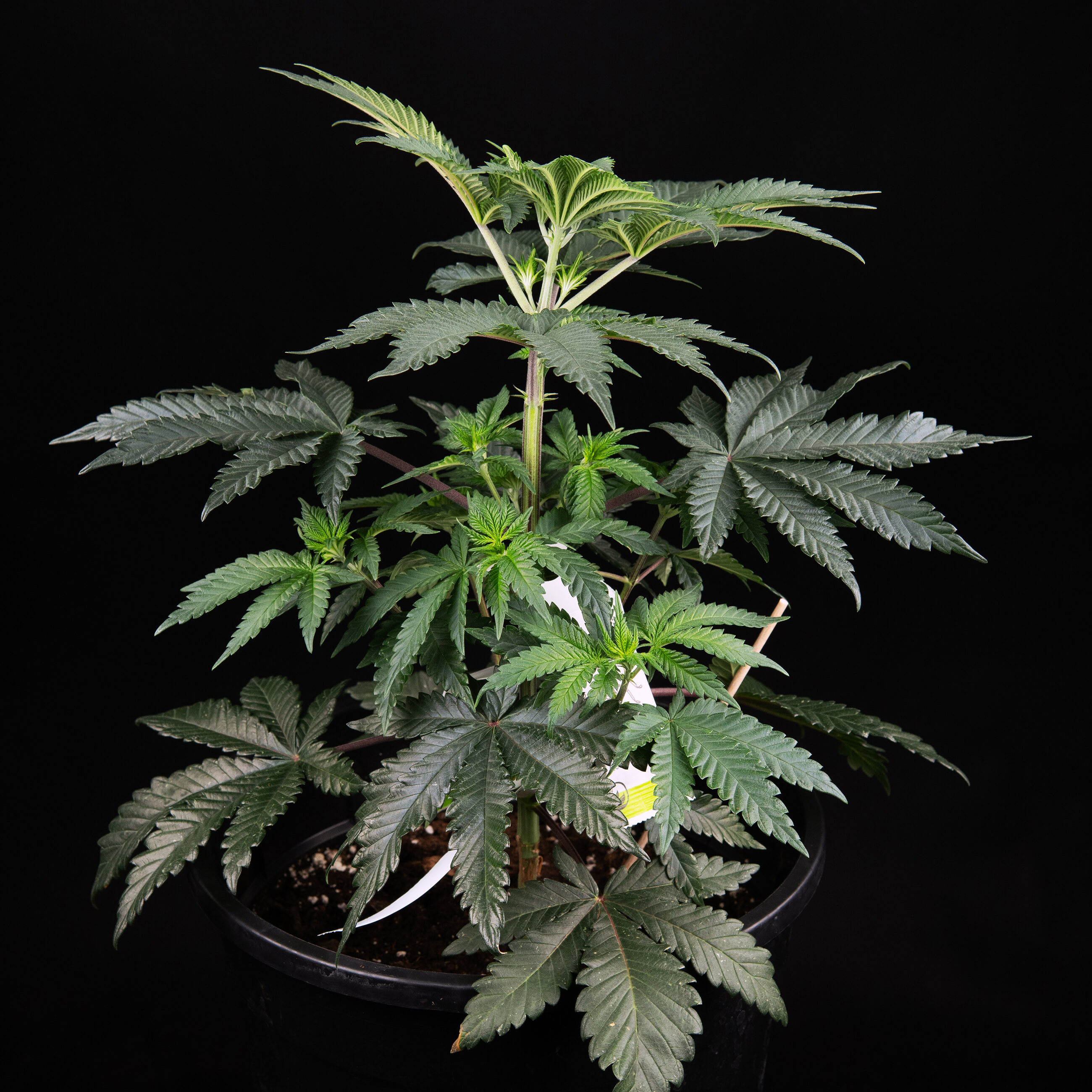
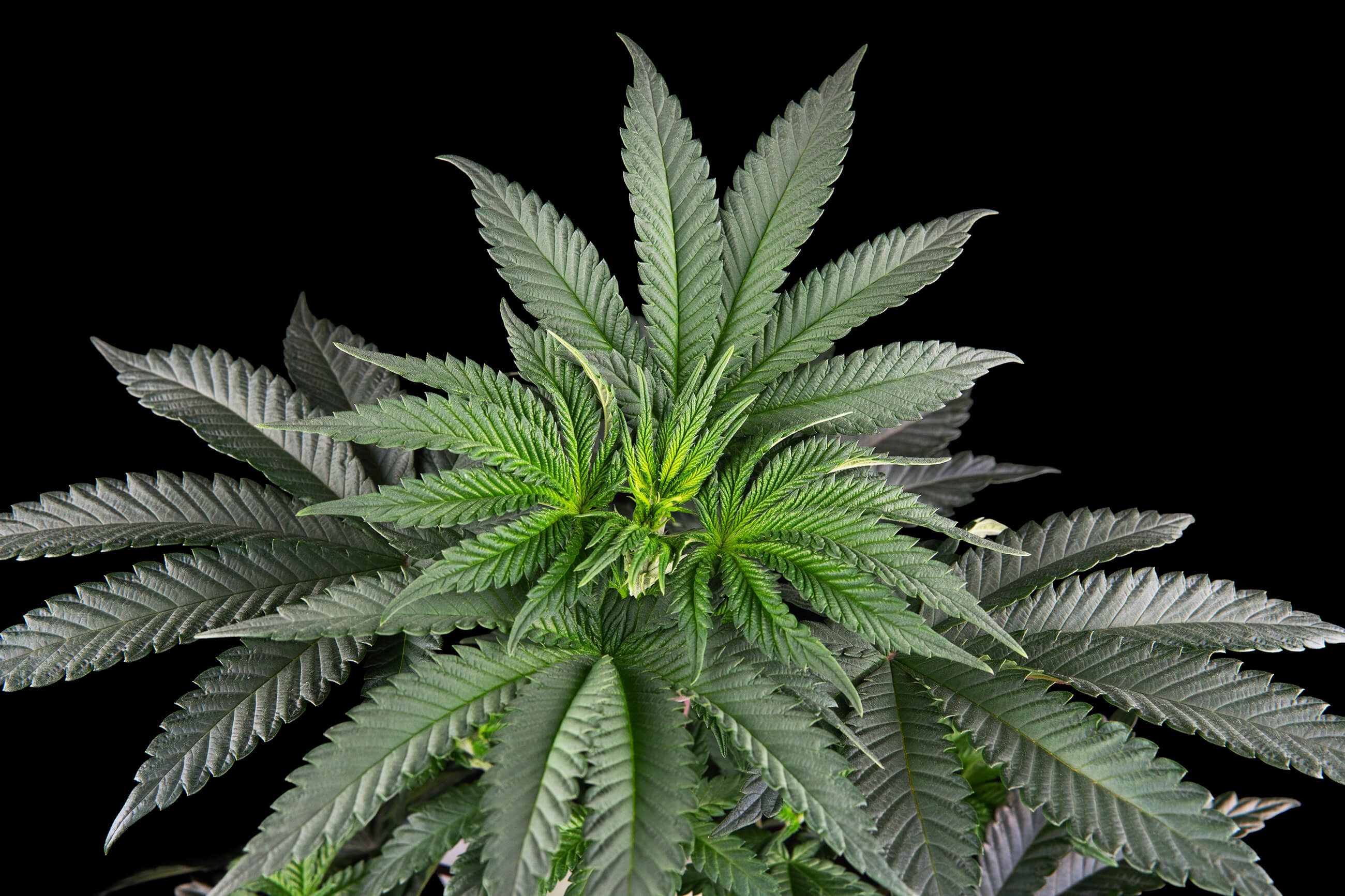
Week six saw another round of slow and steady growth, as our plant grew to 34 cm. Internodal spacing was continuing to slowly stretch, and the main stem was now climbing slightly above the lower canopy, which was filling in nicely. While we weren’t yet seeing much activity in the flowering department, we were expecting it any day now, and we began feeding with 1500 ml per day; an amount that would remain unchanged for the rest of the grow.
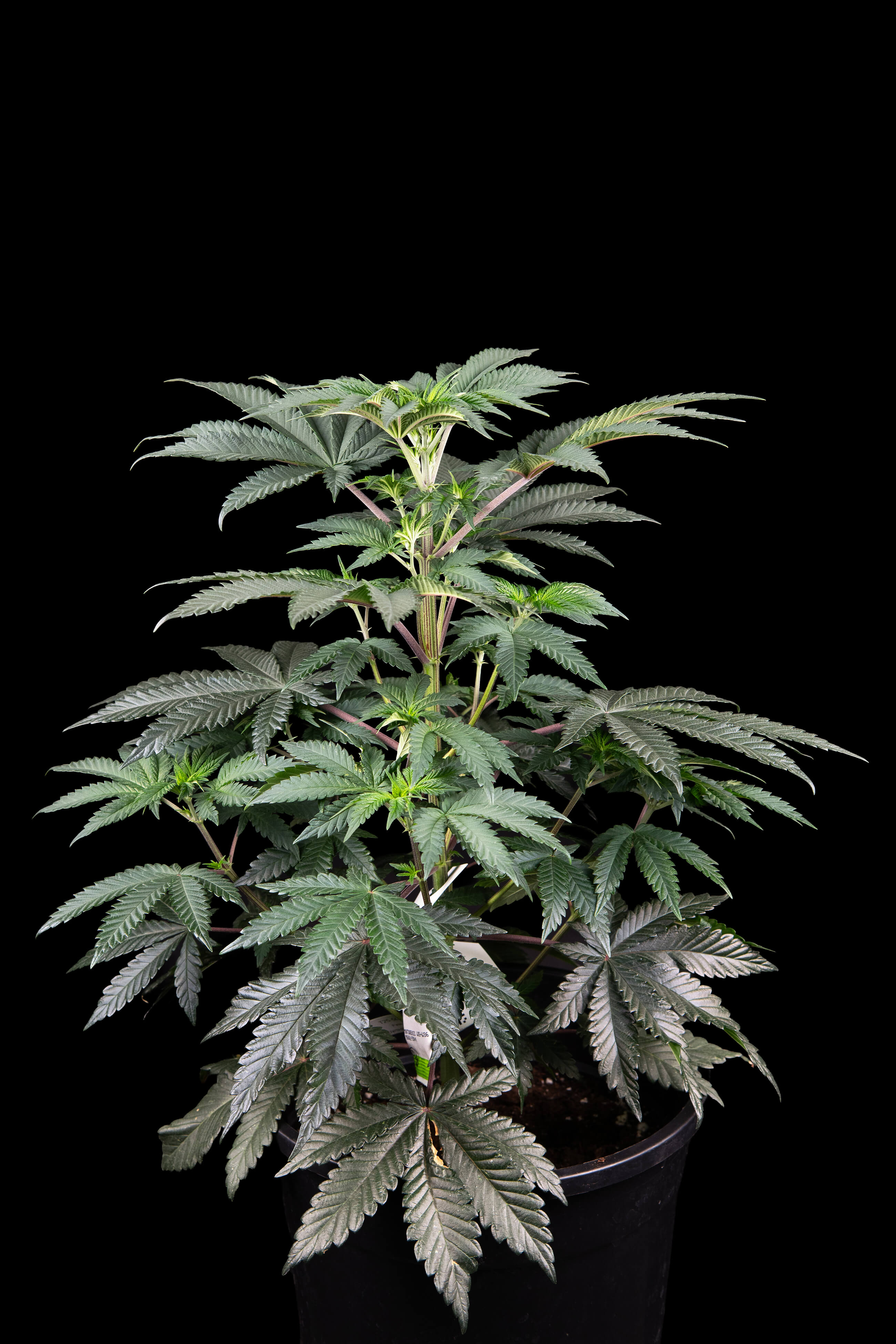
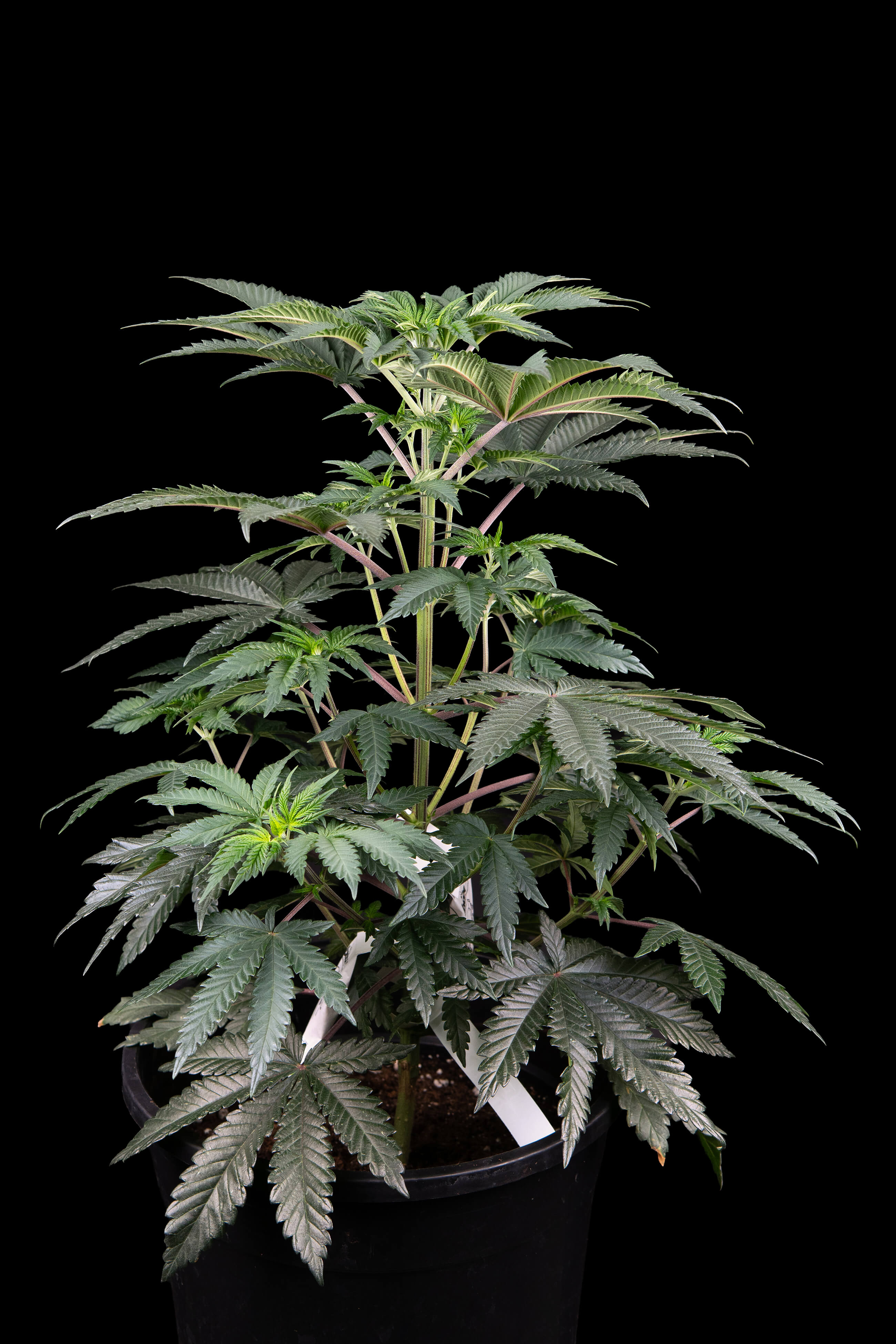
In week seven, our plant grew only 4 cm to reach a height of 38 cm, while the lateral branches grew considerably. The branches were growing nearly vertically, giving the entire plant a rather communal shape. The internodal spacing was still stretching, and the entire plant was a tangle of long, slender branches and leaves.
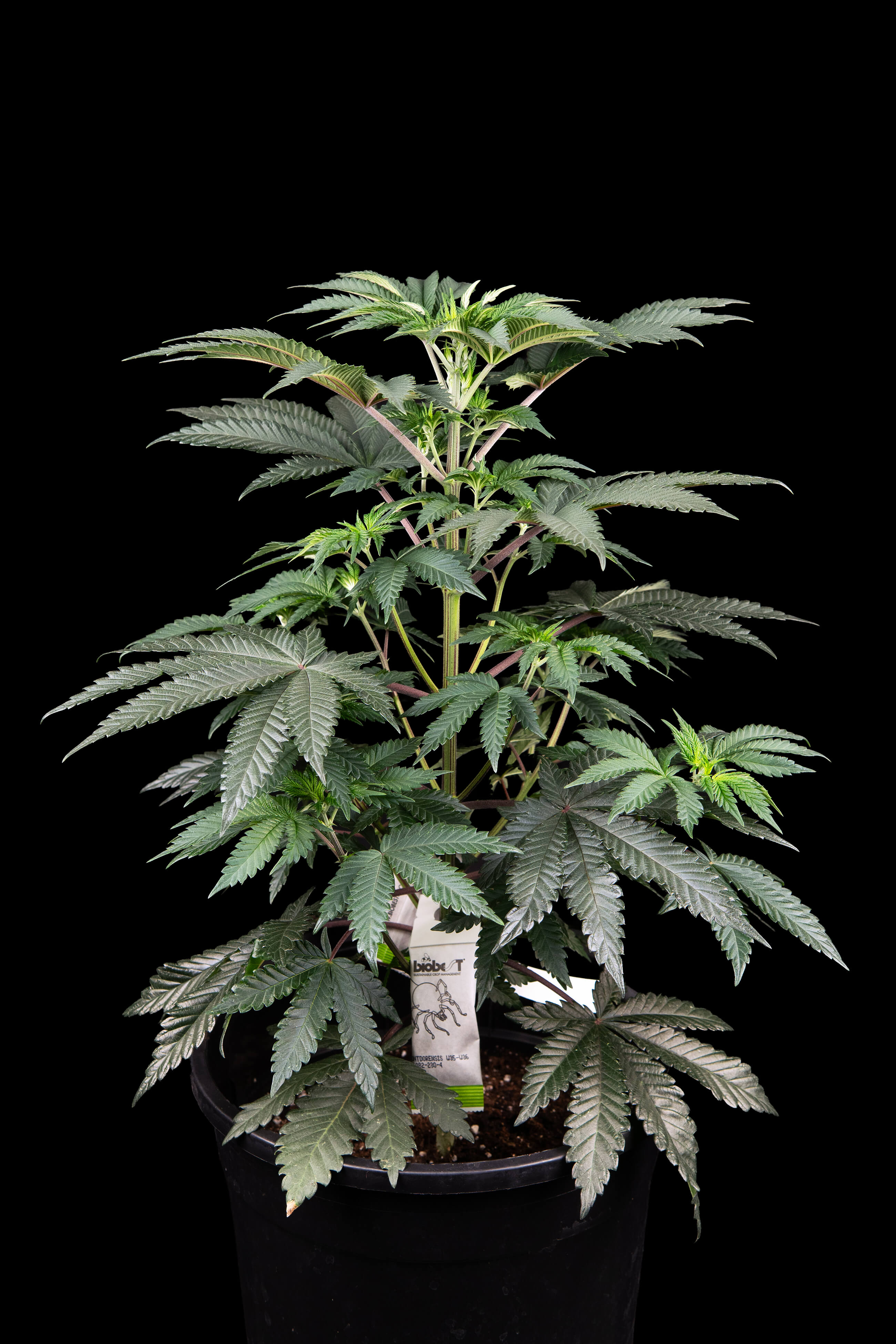
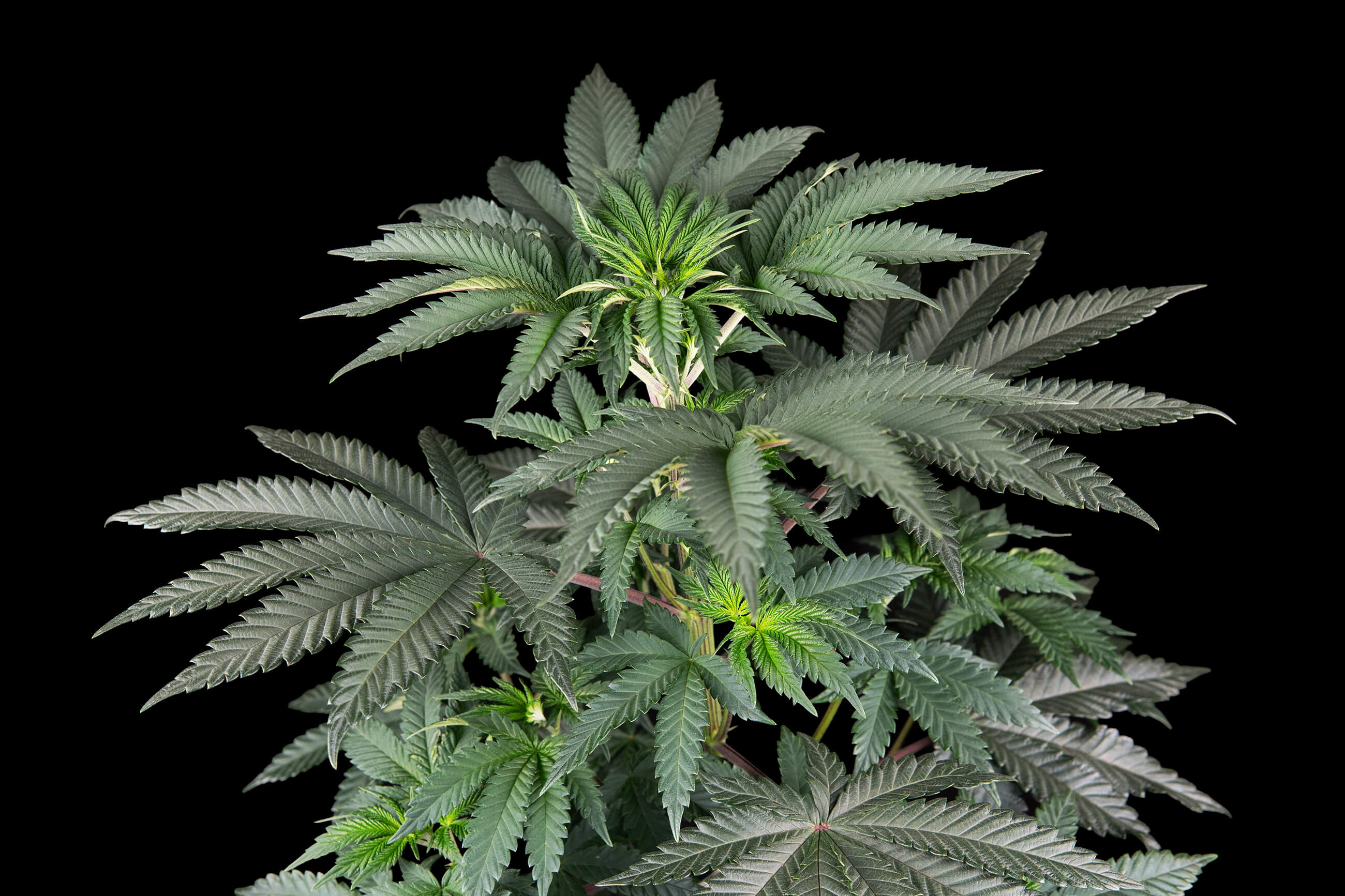
In week eight, our plant’s vertical growth suddenly showed no signs of slowing down, as it gained another 4 cm to finish the week standing 42 cm tall. The lower branches were now nearly three-quarters the height of the main stem, and the plant was still largely a vertical column. By now, we began seeing small clusters of white pistils appearing at the tops and inner nodes of every branch, indicating that flowering was finally at hand.
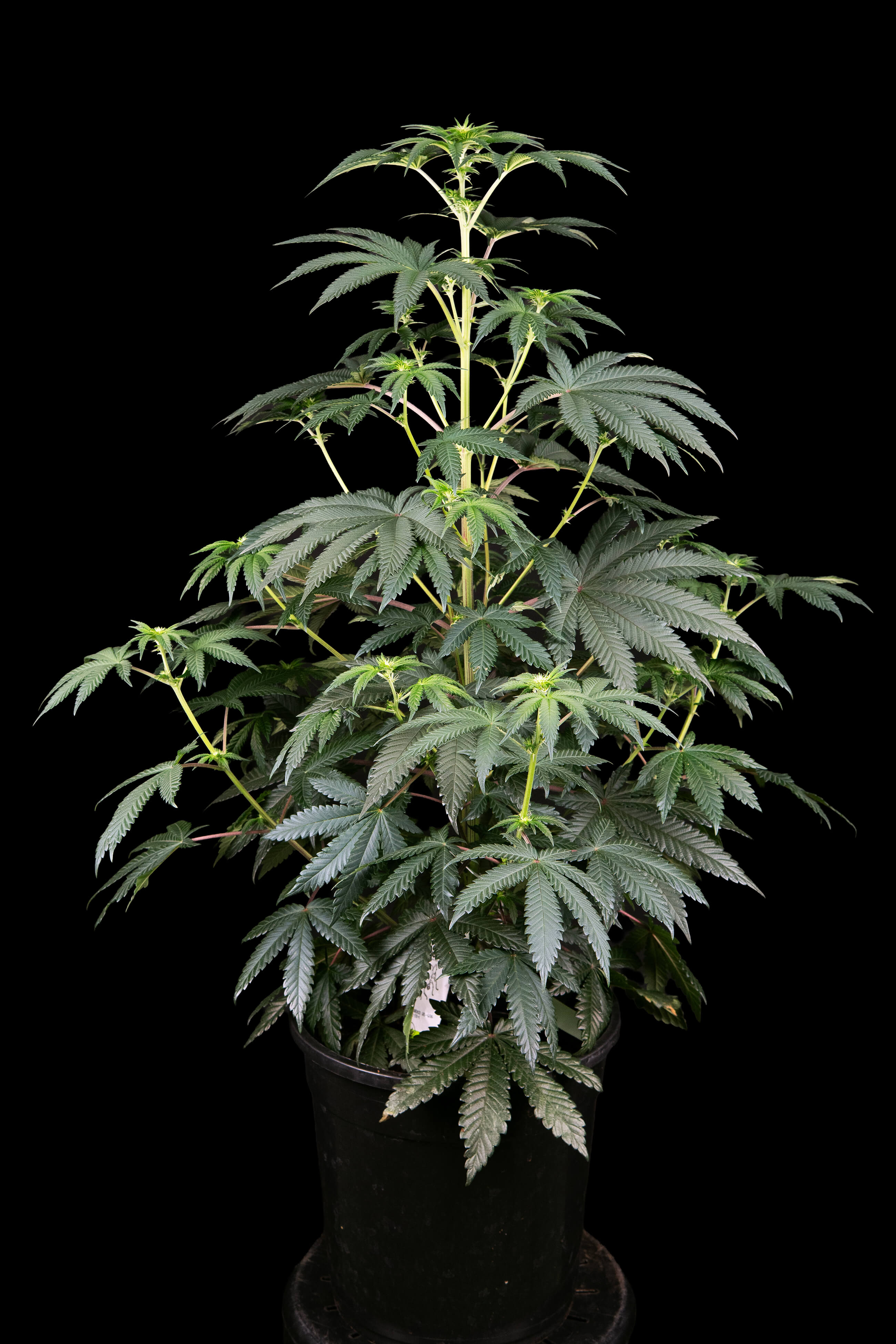
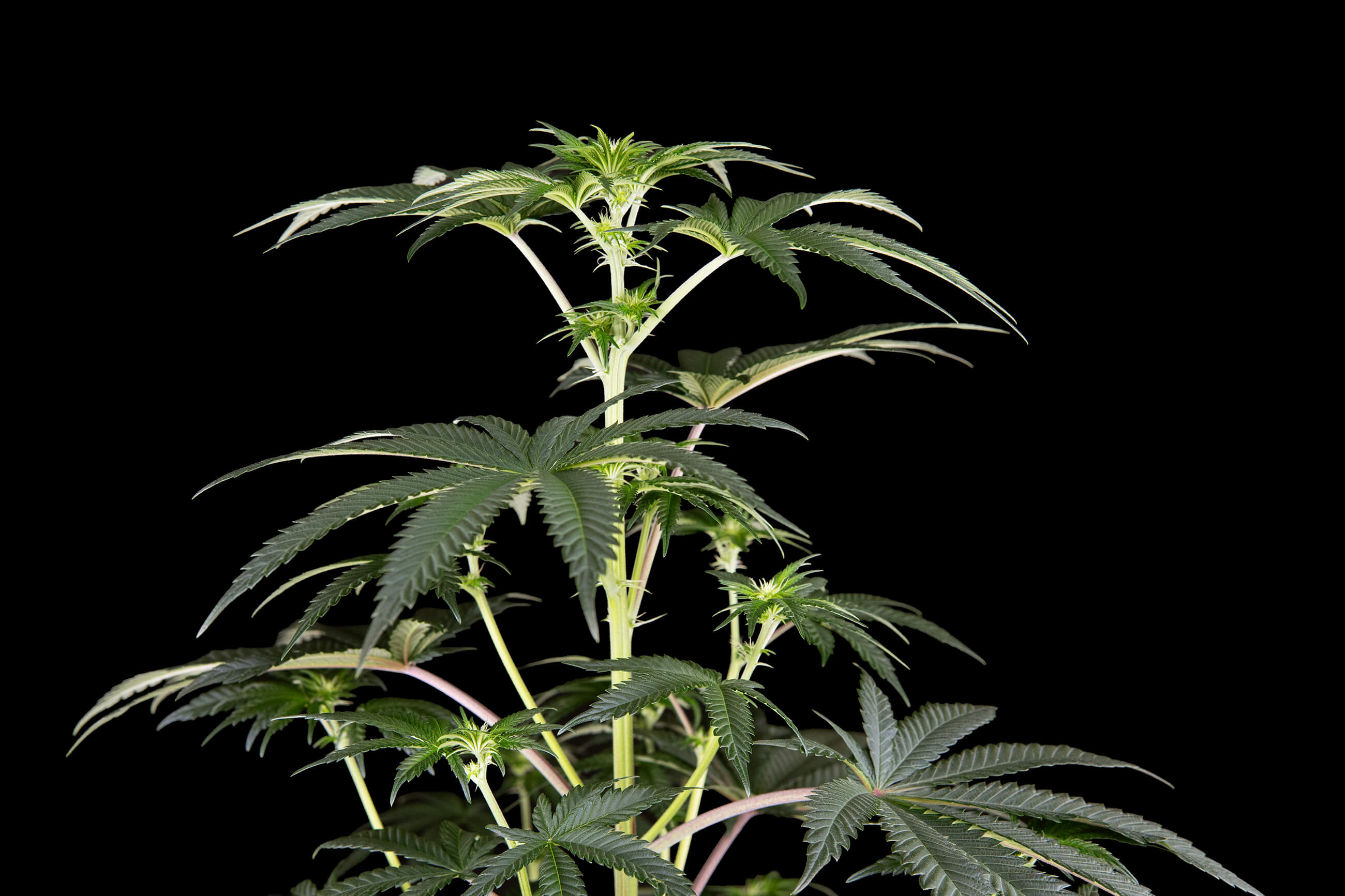
Week nine saw our plant’s growth speed up a bit, gaining 8 cm to reach a new height of 50 cm. This gain was almost entirely stretch, as the main stem rose above the lower canopy and the lateral branches began to grow a bit more outwards. Despite its genetics, the plant was taking on a classically sativa shape as flowering began to accelerate.
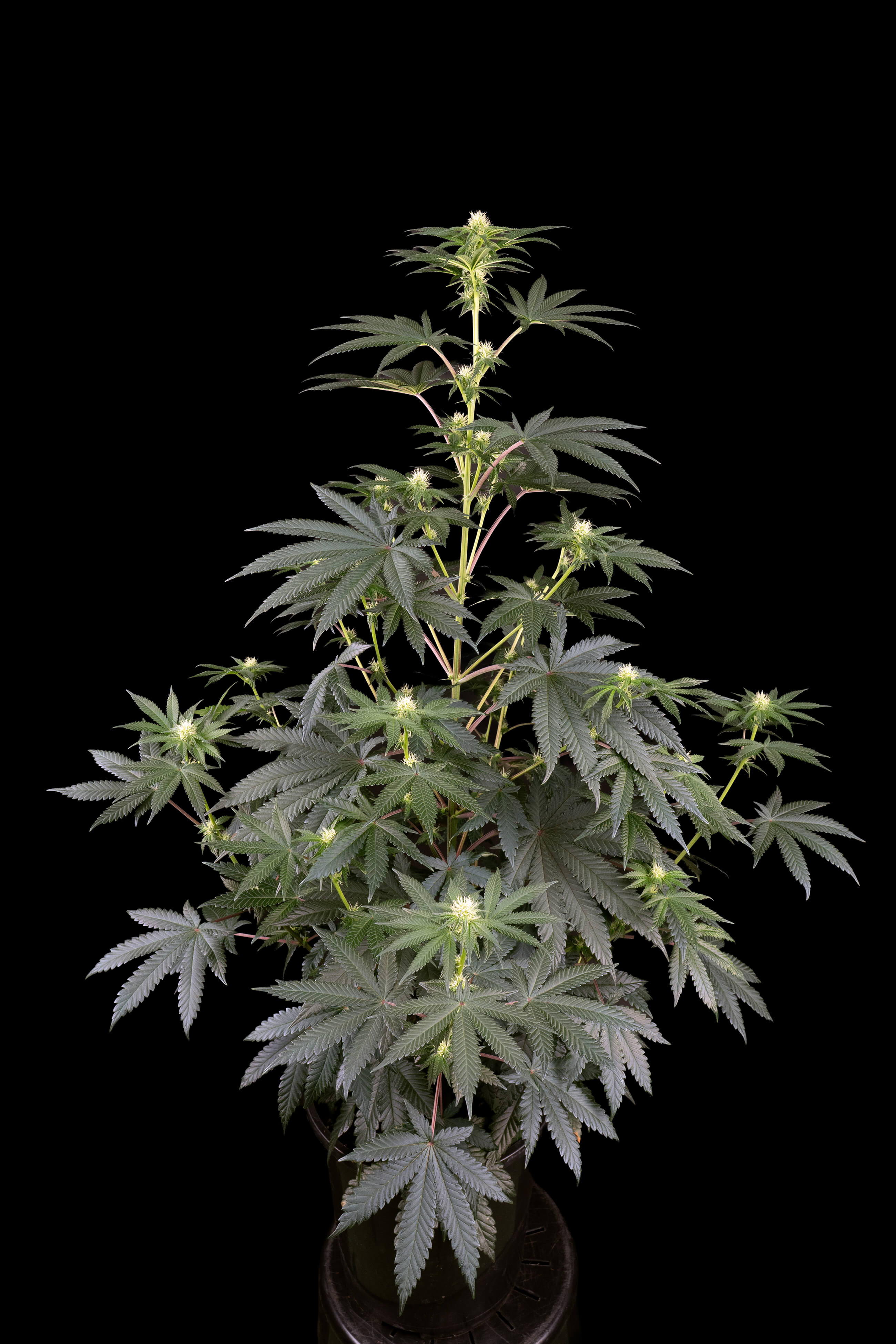
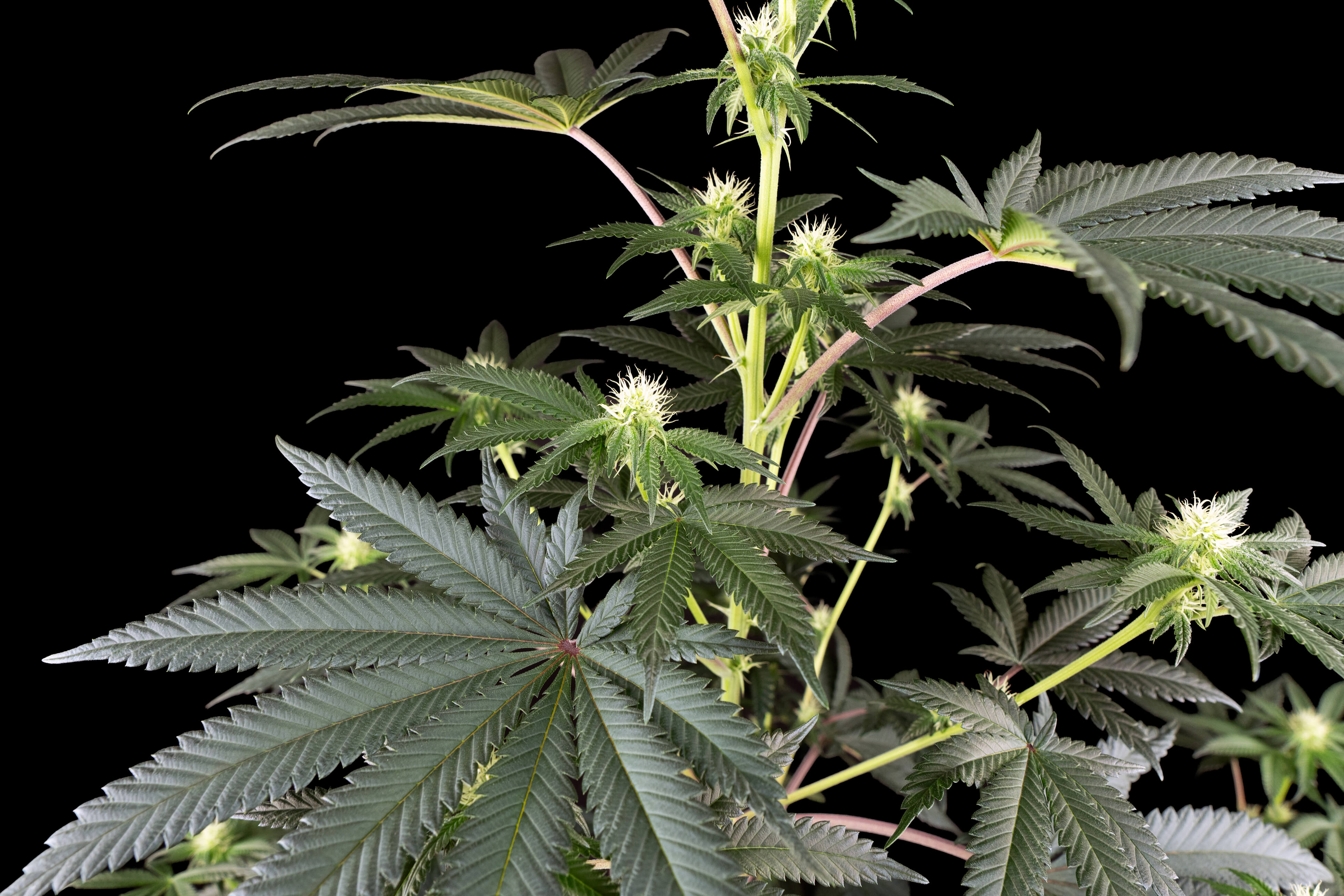
In week ten, our plant shot up to 58 cm. Over this week, the main stem continued to grow while the lower branches seemed to reach their maximum size. By now, every flowering site was sporting a small, though rapidly developing bud, and there was little left to do but wait.
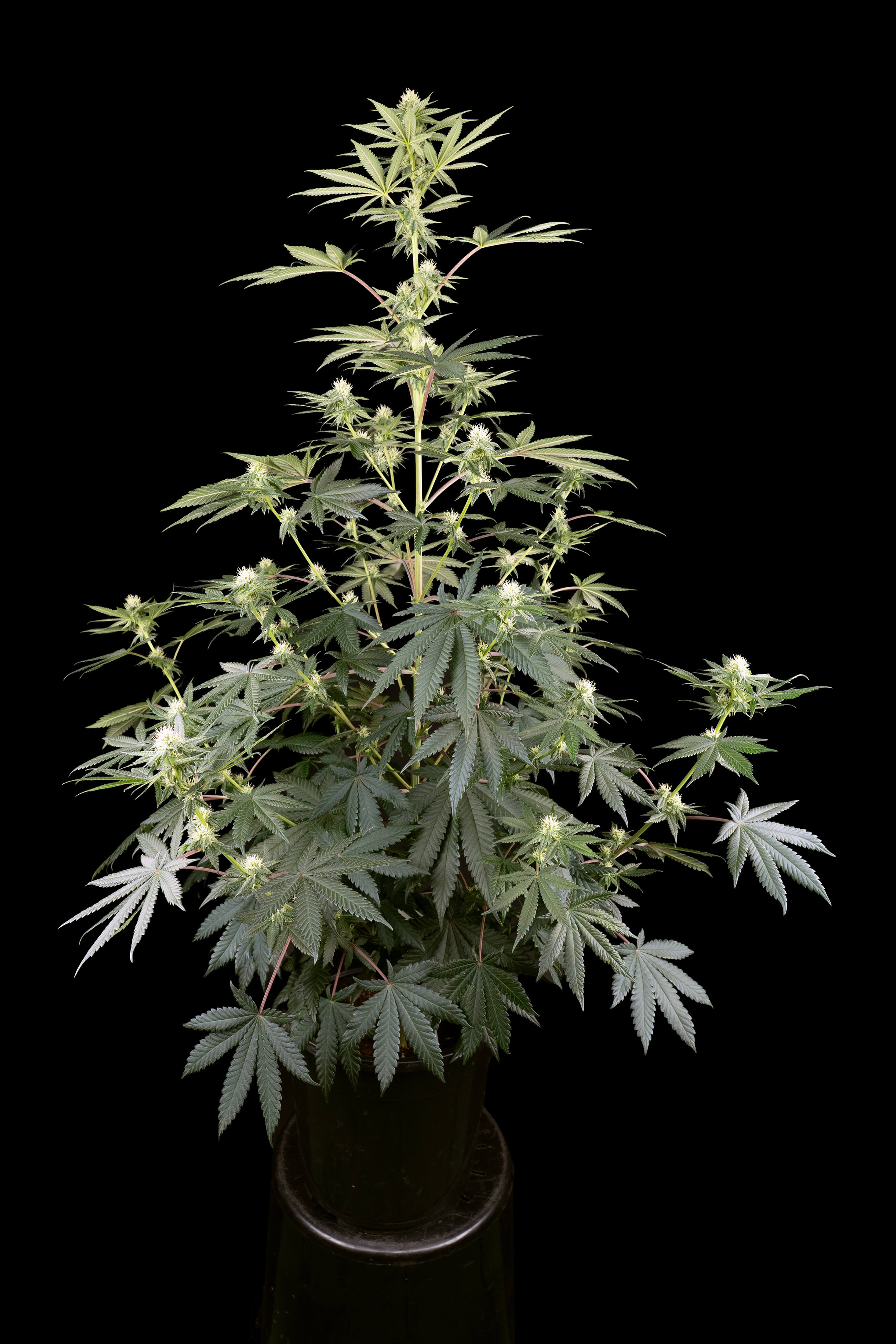
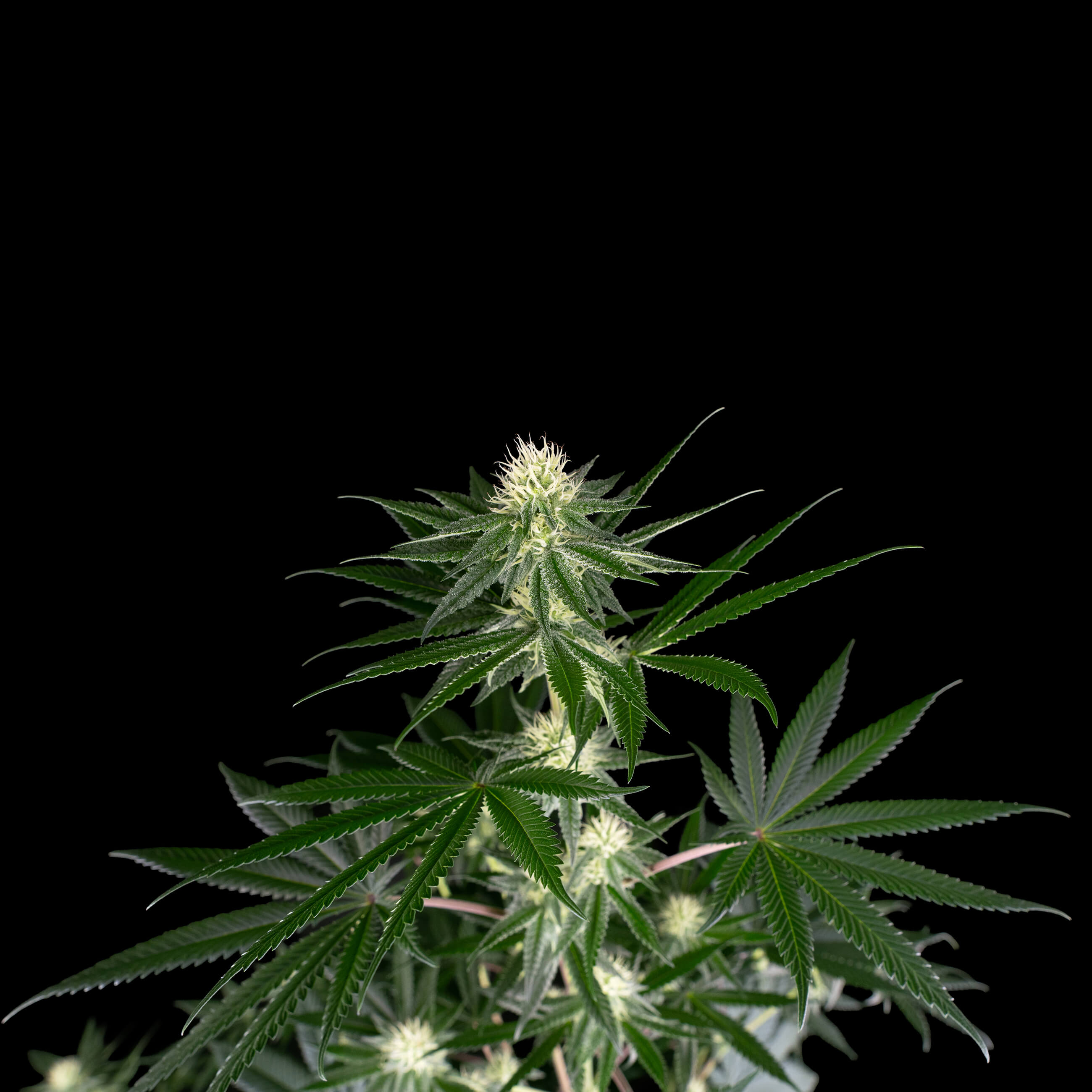
Week eleven saw our plant gradually begin to slow its vertical growth, as it finished the week standing 64 cm tall. While the main cola was beginning to run the uppermost part of the main stem, it was apparent that we were going to end up with a tremendous number of smaller popcorn buds, though they were growing noticeably denser with each passing day.
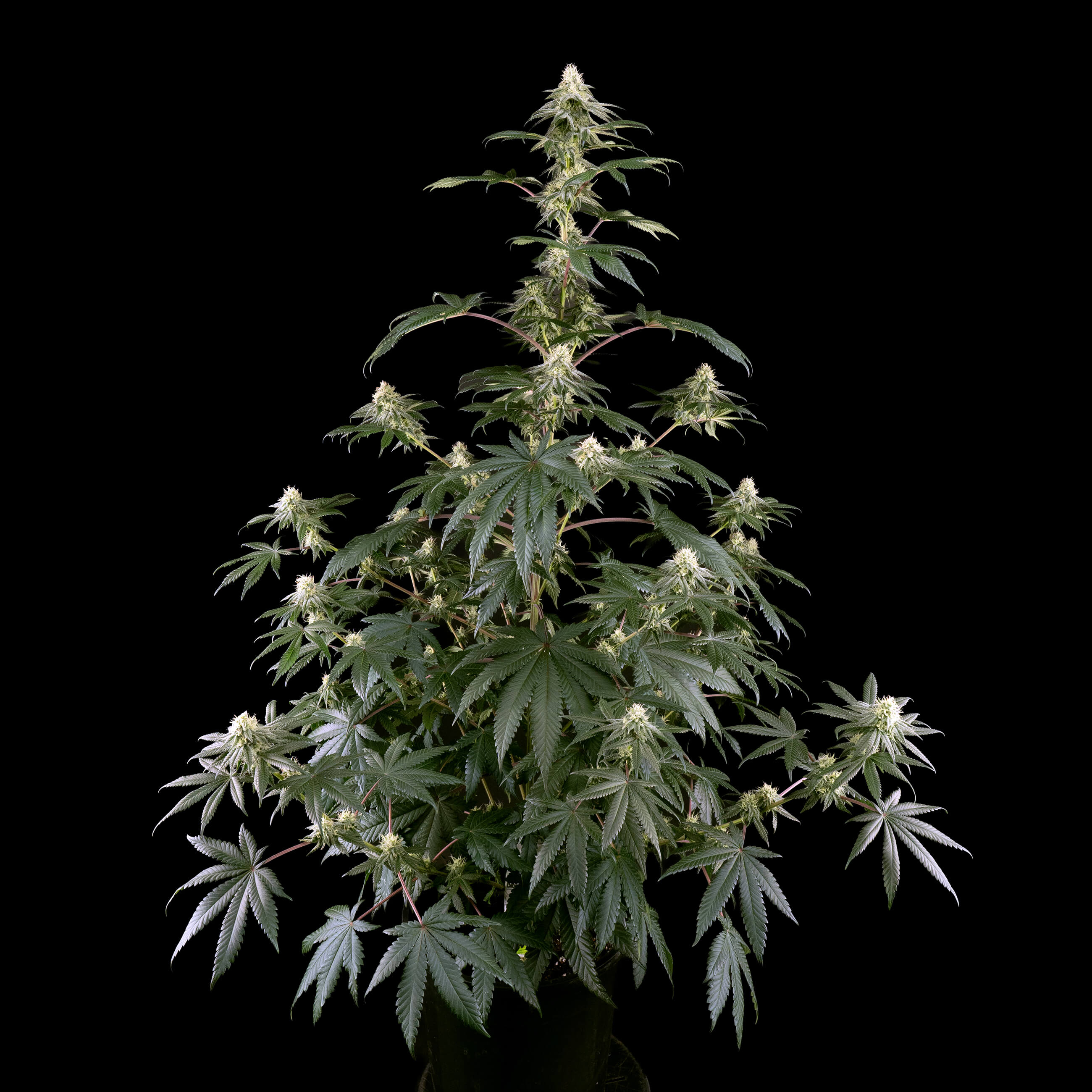
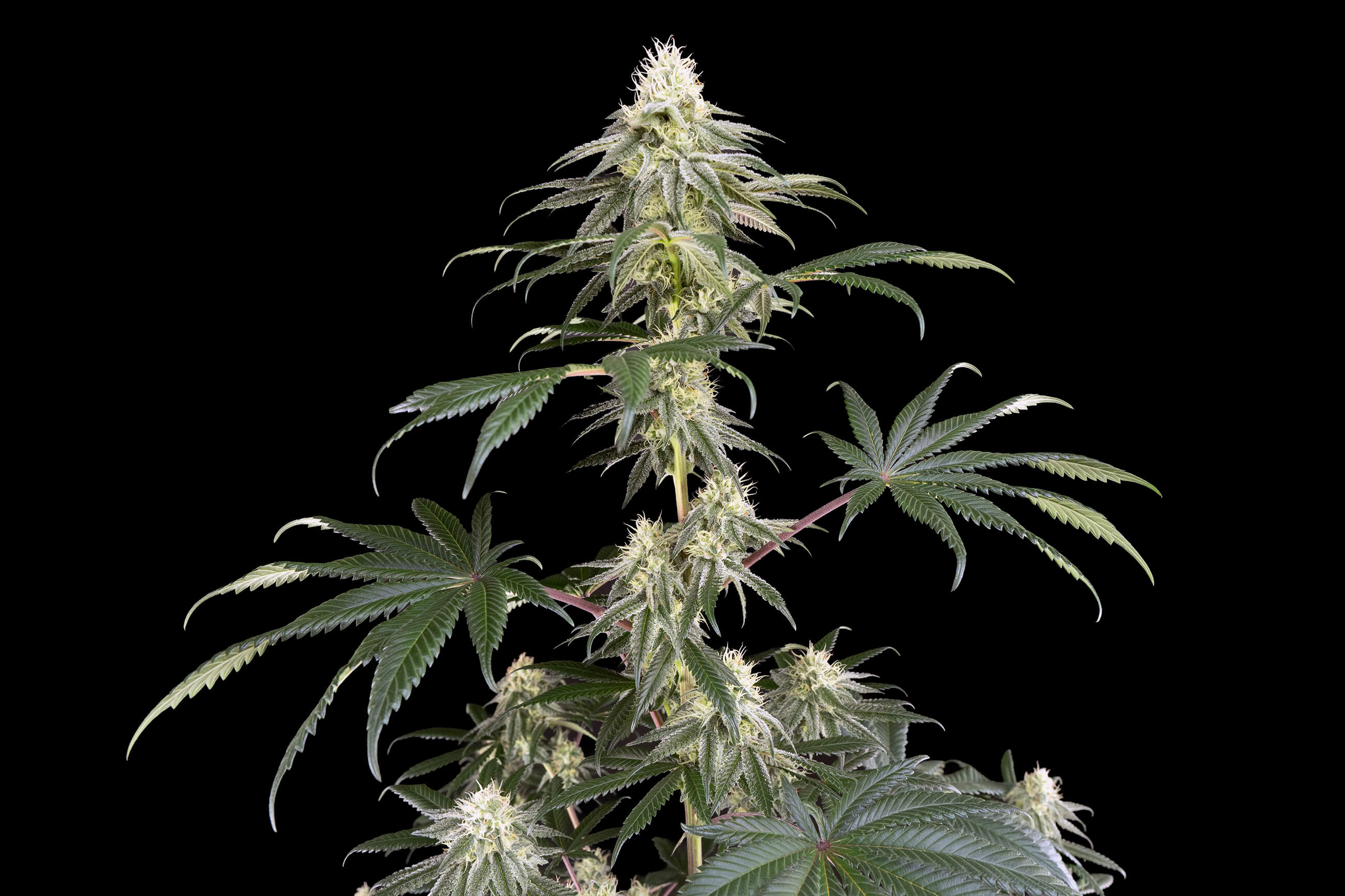
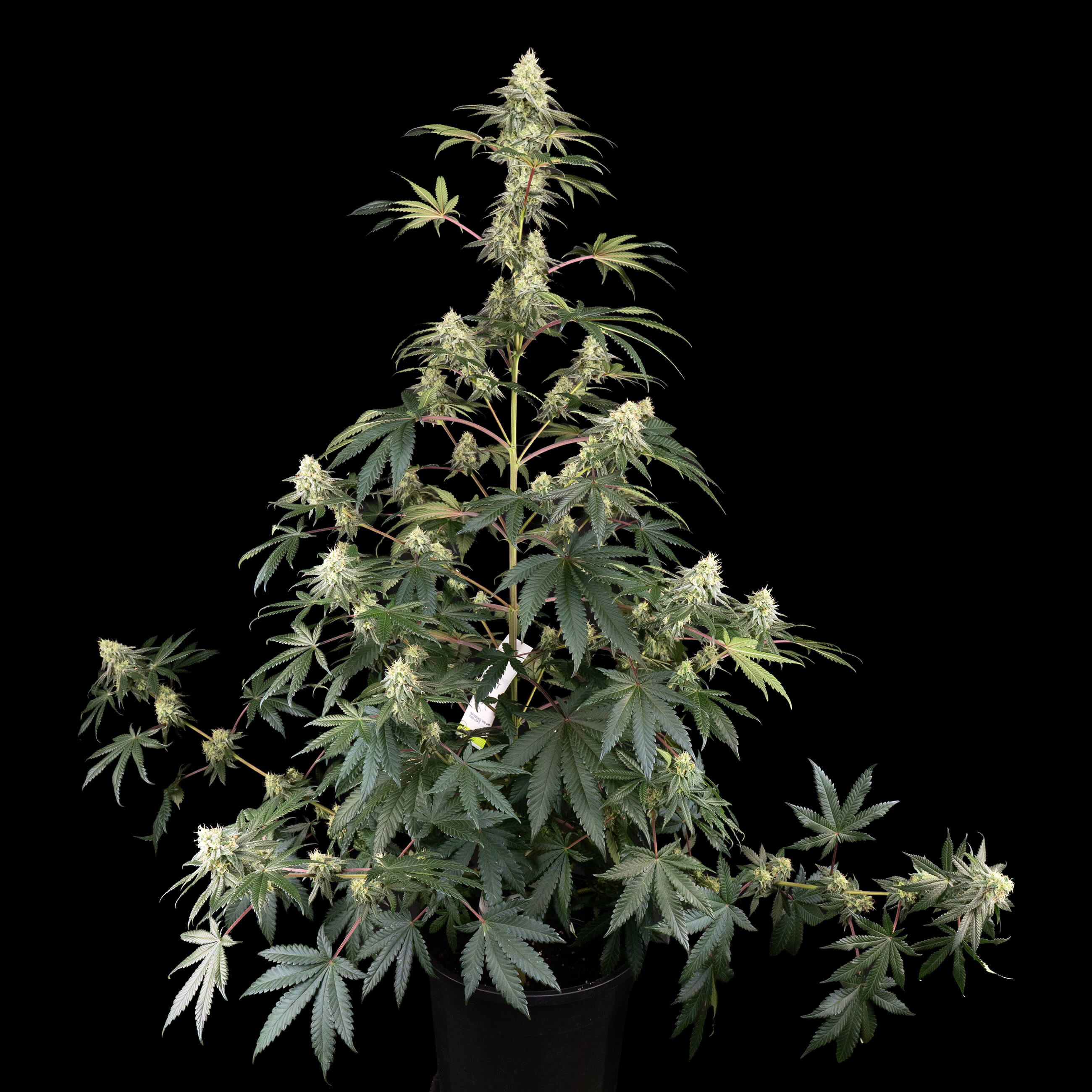
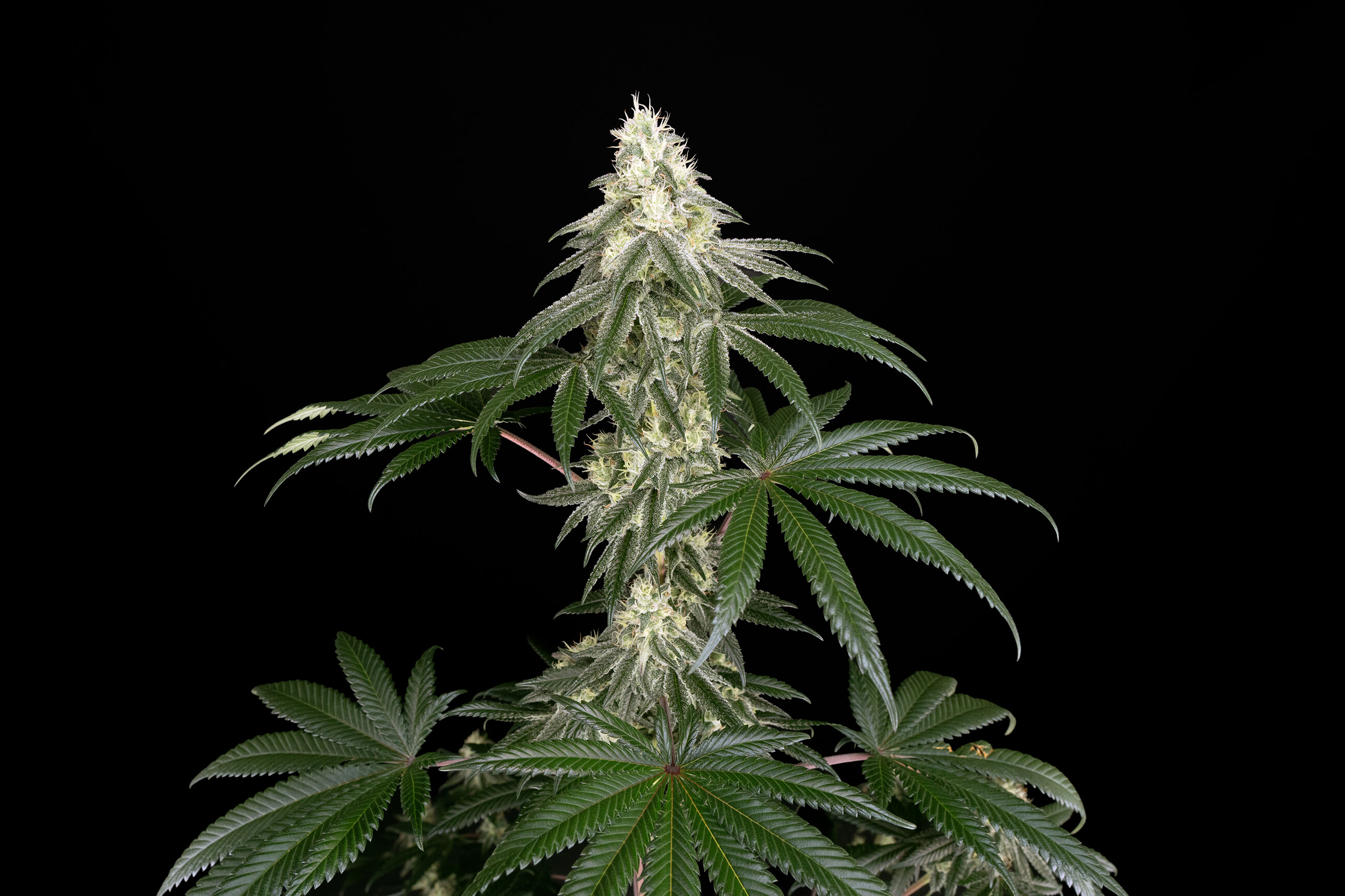
Throughout weeks twelve and thirteen, our plant reached its maximum height of 72 cm as flowering exploded from top to bottom. The lateral branches were being pulled outward by the weight of their buds, but were doing an admirable job of supporting the increased load. The main cola had developed into an impressive specimen, though much of the plant was still rather stretched out.
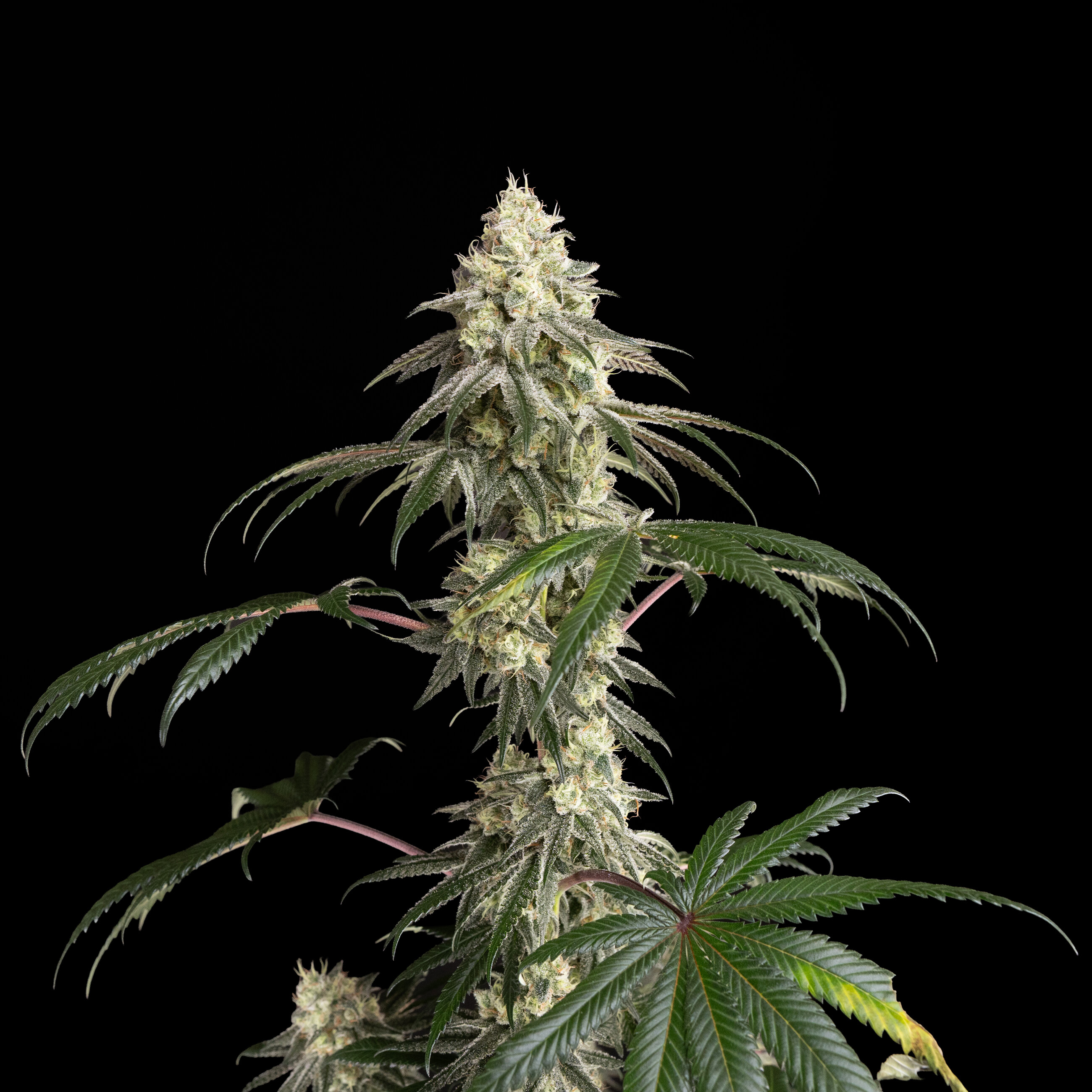
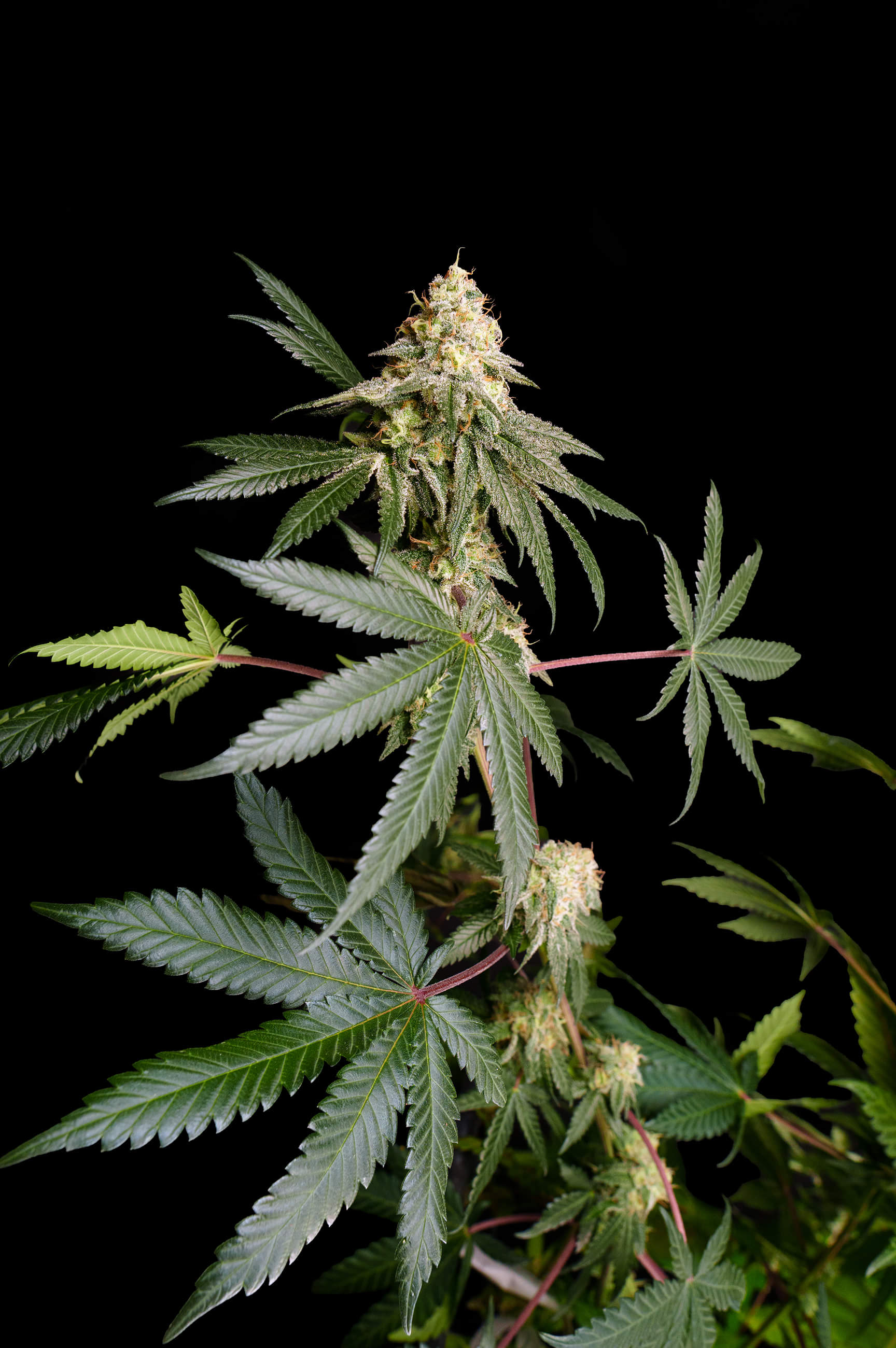
Finally, in week fourteen, it was time to harvest our Chocolate Bananza Feminized cannabis plant.
Harvest
Once our Chocolate Bananza Feminized cannabis plant was fully mature, we cut it down at the base, trimmed off the larger fan leaves, and hung it upside-down to dry. We kept our drying room at a consistent 15.5°C with a relative humidity of 50%, and our plant was left hanging there until the smaller branches were dry enough to snap when bent.
Once dried, we removed the flowers from the stems, trimmed away any remaining leaves, and put the buds into glass jars for curing. The buds were small to medium in size, somewhat dense, conical, and moderately leafy. These factors all combined to make trimming Chocolate Bananza Feminized relatively tedious work.
We left these jars open for about a day to give the bulk of any remaining moisture a chance to evaporate. Afterwards, we sealed the jars and proceeded to “burp” them several times a day. Over the next few weeks, this frequency was gradually reduced to only once per day. This process can take 3-6 weeks depending on the size and density of the flowers.
Once everything was dried and cured, we ended up with an impressive 81 grams of dried flower with a THC content of 22.6%.
Related post
Terpene profile
Once our Chocolate Bananza Feminized plant began flowering, we noticed a rich, sweet aroma dominated by notes of banana candy, cocoa, and dessert chocolate, layered over a faint, earthy background. After curing, each of those notes became more pronounced, with creamy tropical banana taking centre stage alongside chocolate fudge undertones and a subtle Kush spice.
The flavour was every bit as indulgent as the aroma suggested. Heavily influenced by its parents’ sugary Gelato and heavy Kush spice, the smoke opened with a soft banana custard sweetness, followed closely by richer chocolatey notes. Things wrapped up with a smooth, lingering, creamy dessert-like aftertaste.
The high was slightly more on the indica side, though it remained fairly balanced throughout. The first thing we felt was a mild cerebral euphoria that was uplifting and creative, but this was closely followed by a sense of profound physical relaxation. As things continued, we settled into a calming, deeply stoned feeling that was accompanied by a warm, cosy sense of ease and joy. Overall, the high was smooth, long-lasting, and distinctly calming, making Chocolate Bananza Feminized an excellent choice for quiet evenings, stress relief, or just chilling out on the couch.
Related post
The outcome
In the end, we were genuinely impressed by our time with Chocolate Bananza Feminized. Slow and steady with respectable yields, this strain is a great blend of indica size with sativa shape and a balanced high. If you’re looking for a good strain for advanced training (screen of green, low-stress training), this is a top pick.
- Disclaimer:Laws and regulations regarding cannabis cultivation differ from country to country. Sensi Seeds therefore strongly advises you to check your local laws and regulations. Do not act in conflict with the law.
