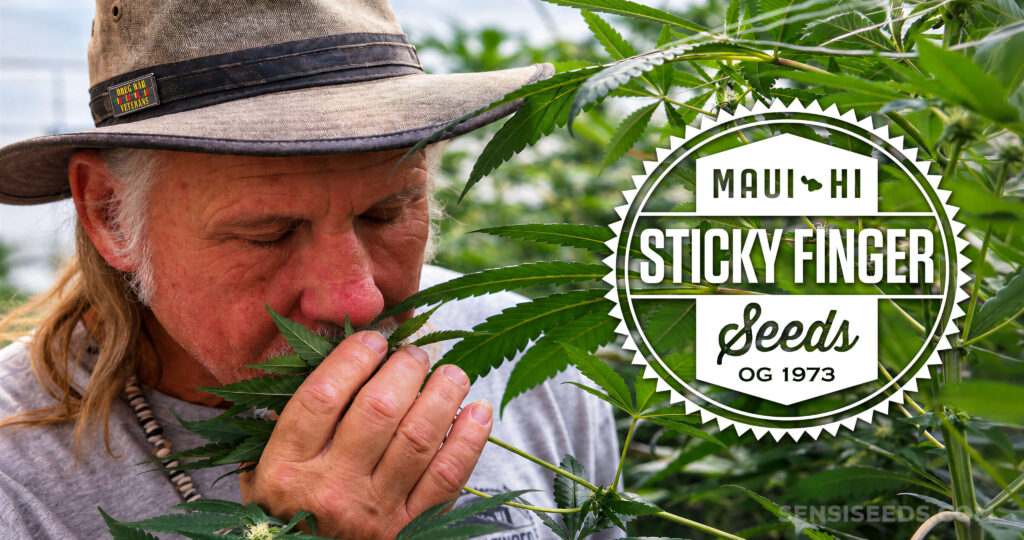
We interview Will Grinnell, founder of Sticky Finger Seeds, who has been growing cannabis since 1973. He tells us how a long-rumoured Hawaiian bloodline of bleeding cannabis became the foundation of his garden on Maui, and how his collaboration with Sensi Seeds brought two new bleeding strains to life.
Will Grinnell remembers the first time he smoked cannabis like it was yesterday. “I stole some weed from my sister, tried smoking it, and made a mess,” he laughs. “Her boyfriend of the time caught me, and my sister wasn’t around, so he was like ‘alright you little brat.’ He loaded me up with a bunch of hash and I got STONED!” he says, wide-eyed. Will was nine at the time.
And the boyfriend’s strategy worked, because Will didn’t try cannabis again for another two years. But some things are meant to be; Will eventually started lifting weed off his sister again around age 11. And, surprise surprise, he loved it. Almost immediately, he started taking the seeds he’d find at the bottom of his sister’s stash and planted them in his family’s backyard. In 1973 came his first harvest.
“Lo and behold… I grew some pot that I could harvest and smoke, and I actually sold some to my buddies.” Will smiles. Even through a webcam, the twinkle in his eye is clearly visible as he takes a trip down memory lane.
Today, aged 65, Will is the founder of two proprietary genetic brands, Sticky Finger Seeds and Deep Green Genetics, and the latest breeder to collaborate with Sensi Seeds. Just in time for Halloween 2026, the fruit of that collaboration will bring new bleeding cannabis varieties to gardens everywhere.
Getting hold of a legend: The bleeding cannabis plant
Long before Will ever grew a bleeding cannabis plant, he’d heard stories about Hawaiian Blood. “It was one of those mythical things,” Will says. “We’d heard the OGs talking about the Hawaiian blood that would put out this red sap, but that was it.”
By the mid-1990s, Will was regularly visiting Hawaii as a tour manager through the international artists he was booking through his agency, Origins Music International. By then, he was deeply connected to the local community. “There were a couple times backstage when some Heads would bring some really interesting pot and say it was The Blood,” he recalls. But looking at a dry flower, there was no way of knowing if that was true.
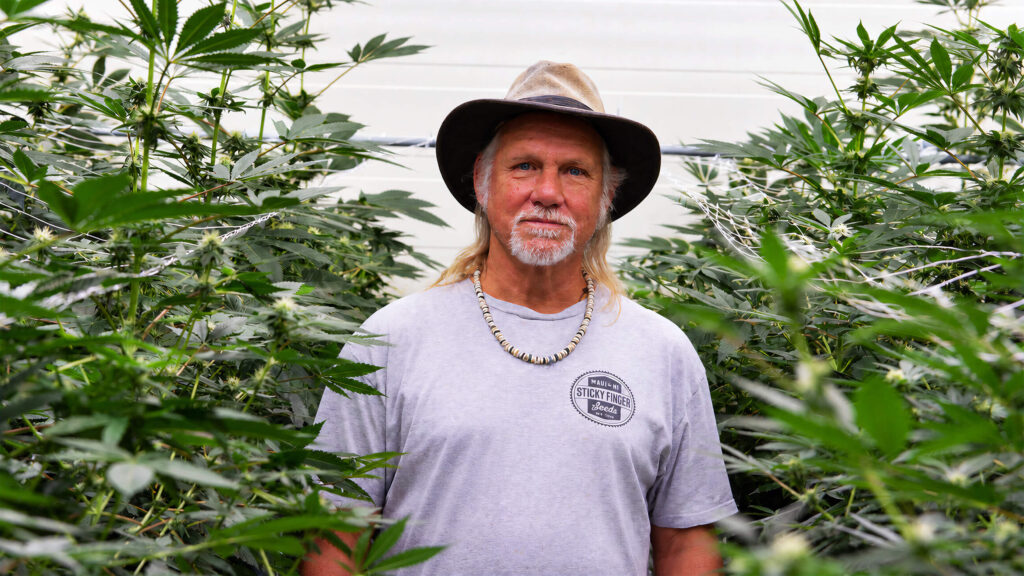
Will eventually moved to Maui in 2010, but even then, those old-school bleeding plants stayed elusive. In 2016/2017, however, that all changed. “All of a sudden, I had two Blood lines in my garden,” he says. The first was a gift he got at the inaugural Harvest Cup in Worcester, a seed he almost ignored.
“Usually, I come back from events with a lot of gifts and so forth and never pay attention,” Will admits. “I have such a huge backlog of seeds that I want to start anyways. But something told me to start these.” That strain was Royal Blood by House of Orange.
At the same time, one of Will’s best friends and legacy Hawaiian grower Papaya John had acquired an old cut of Durban, which Will says is rumoured to have been one of the first Blood lines. While Will personally calls it ‘the PJ Cut’ in honour of his friend, he also uses the more official name they’ve given the strain: Family Secret.
Papaya John was also the person that helped Will secure one of his most prized genetics: Hawaiian Dream, an heirloom variety preserved by a Hawaiian family for over 50 years. In fact, it was this strain that saved Will’s grow after he lost it to pests following his move to Maui. He recalls that experience like it was yesterday.
“When I moved out here, I’d been growing both indoor and outdoor my whole life back in the East. I thought I was a pretty fancy grower,” he says smiling. But his experience proved no match for Hawaii’s unique climate. “I got slaughtered. It was the first time I really knew what powdery mildew was,” he laughs. Alongside the mildew, root aphids also settled in his garden, and Will lost all his plants, with no backup seeds to grow with. Among the losses was his prized Sensi Super Skunk.
“And then here comes John,” Will remembers. Though they’d only recently been acquainted, Papaya John brought Will a plant. “You’ll do well with this,” Will recalls his friend saying. Sure enough, even in a fully contaminated garden, the plant thrived. “And the rest is history… Thank you John,” Will says, sincerely remembering his late friend.
Will named the strain Hawaiian Dream because “that thing brought the hope back” after his garden crashed. “Now I was living the Hawaiian Dream again,” he says. Together with Royal Blood and John’s Family Secret Durban Cut, this heirloom strain created Will’s beloved Maui True Blood. And the cross happened purely by accident:
Will and his friends were taking turns watering a garden whose owner was away. And while they were keeping the plants hydrated, they weren’t checking them closely enough, and an unnoticed Royal Blood male ended up pollinating nearby Hawaiian Dream females.
Up until then, Will’s Royal Blood x Family Secret plants had only produced a light pink sap. The accidental cross with Hawaiian Dream changed that: the offspring, carrying all three, bled the deep red sap that now defines his Maui True Blood. Suddenly, the bleeding plants Will had heard about so many years earlier were much more than a myth: they were the foundation of his garden.
Related post
Blood on your hands
Seeing a plant bleed was exciting, but Will wasn’t eager to build his reputation around a party trick. “I don’t like to seem like I’m pushing a gimmick, so I’ve never really promoted hard,” he says. A grower at heart, and one used to working in tricky environments, he wanted nothing more than to see how these plants performed in the garden and the bud they produced. And turns out his home in Hawaii was the perfect testing ground.
“In a lot of climate zones it’s very tropical, rich air with pathogens. Anything and everything that’s going to attack your plant is here,” he says. Quickly, he noticed that the parent plant of his Maui True Blood always survived. “It didn’t get the mildew the other plants were getting… it just sort of stayed steady.” And the flavour wasn’t lacking, either.
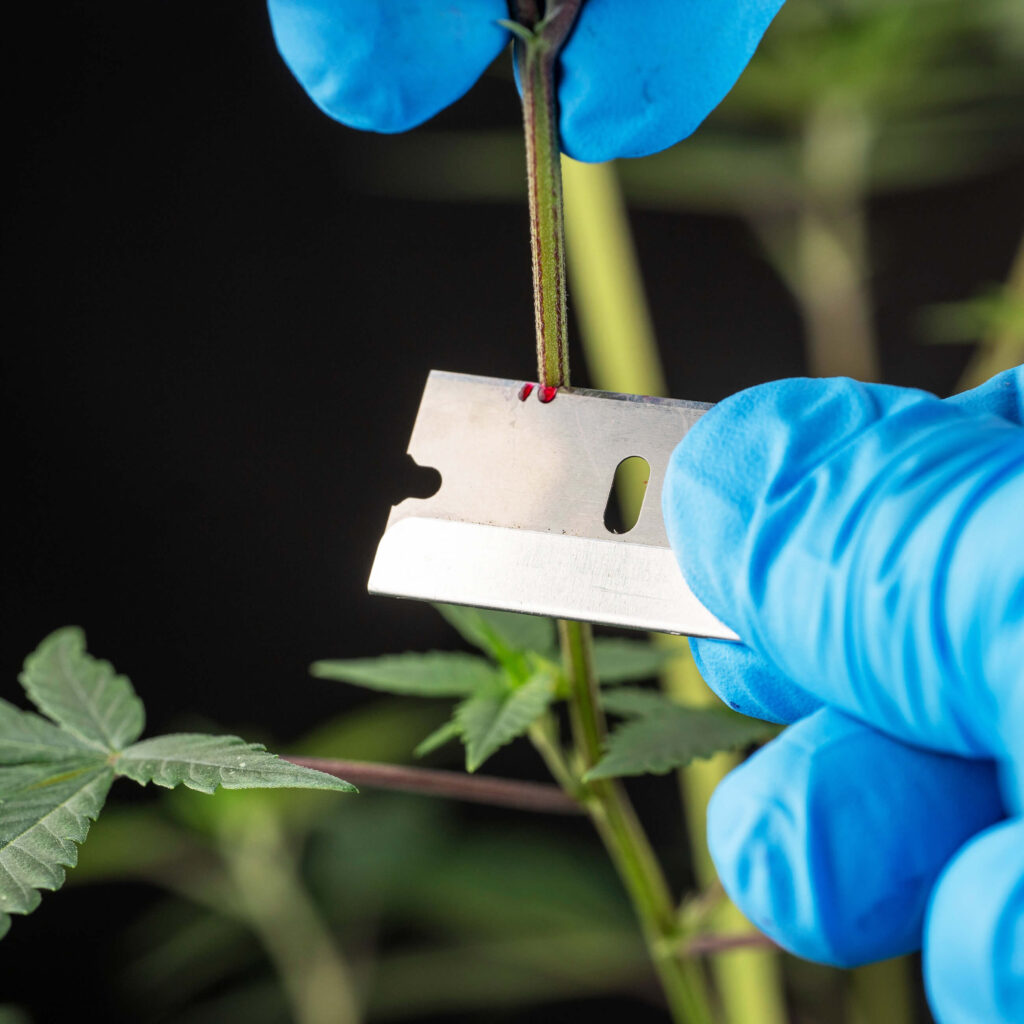
Though he admits that elaborate flavour descriptions aren’t his strong suit, Will describes Maui True Blood as having rich notes of fruit and gas, sometimes with lingering notes of pine. “It’s that lingering taste that you’d get with hash in the old days,” he says. Then, of course, there’s the bleeding trait itself, which Will demonstrated live over webcam.
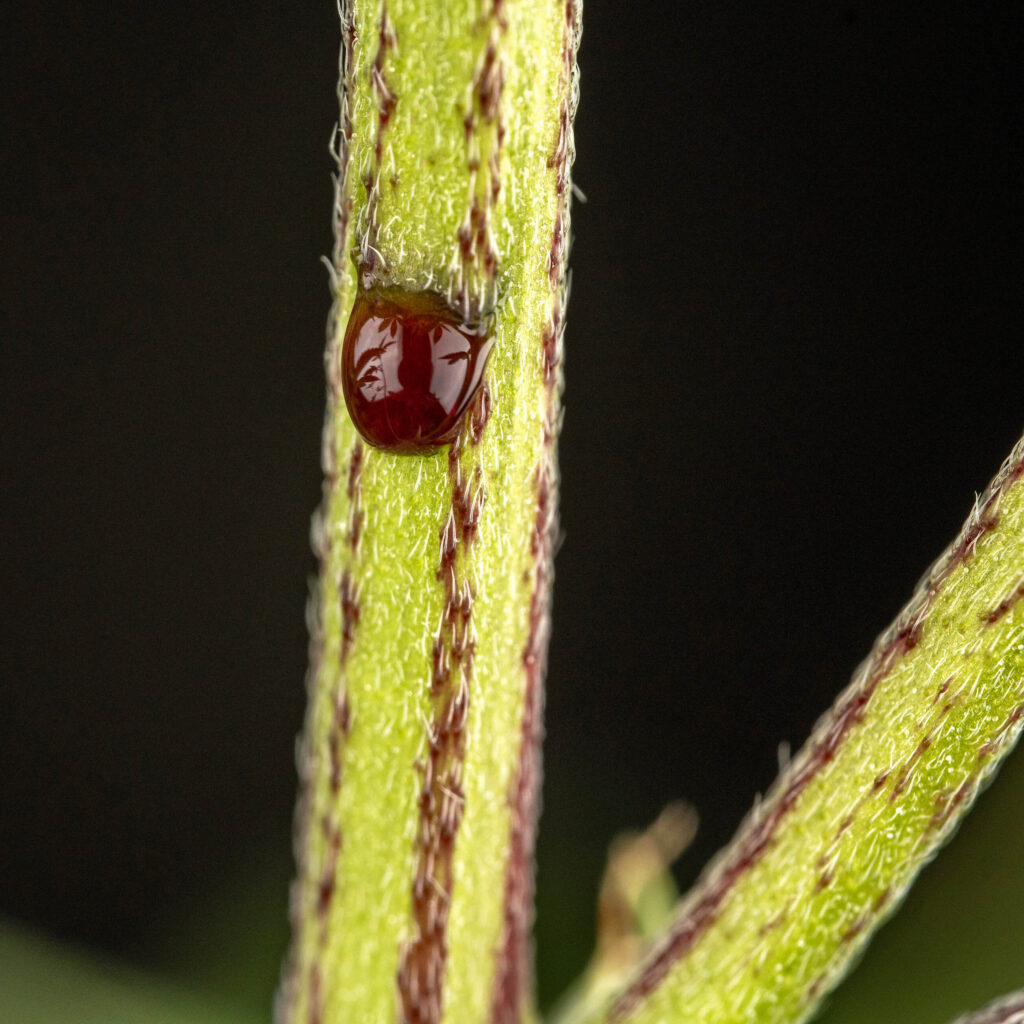
Will attributes the bleeding phenomenon to anthocyanins: the compounds responsible for the purple colouration of blueberries, black cherries, red cabbage and, of course, your favourite purple cannabis varieties. Weirdly, Maui True Blood and its descendants don’t usually produce purple flowers. “I’m still trying to crack that code,” Will admits, though his strains (and those he created with Sensi Seeds) often develop pink hues.
Besides giving fruits, vegetables and flowers their distinctive colours, anthocyanins are powerful antioxidants. This group of around 400 water-soluble pigments changes colour depending on pH: more red in acidic conditions, purple in neutral ones and more blue in alkaline ones. In many cannabis strains, they only show up as purple flowers when night temperatures drop below 13 °C during flowering.
The sap is very sweet to taste, he explains as he sucks on the leaf he cut from one of his plants. He says that some of his friends love juicing these bleeding strains, and also believes the natural antioxidant effects of anthocyanin contribute to the vigour of the blood line. “We’d love to think that we can smoke our vitamins,” he jokes.
Some of the lucky growers who have dabbled with bleeding strains in their garden also share Will’s anthocyanin explanation. Others debate whether the fluid comes from the phloem or xylem, and believe it is rich in sugars. Of course, these are the growers’ own interpretations; the precise explanation for bleeding is still open to further investigation.
Are you a botanist with a perspective on what might be happening inside these plants? Share your thoughts in the comments below. We’d love to hear your thoughts!
From Maui to Amsterdam
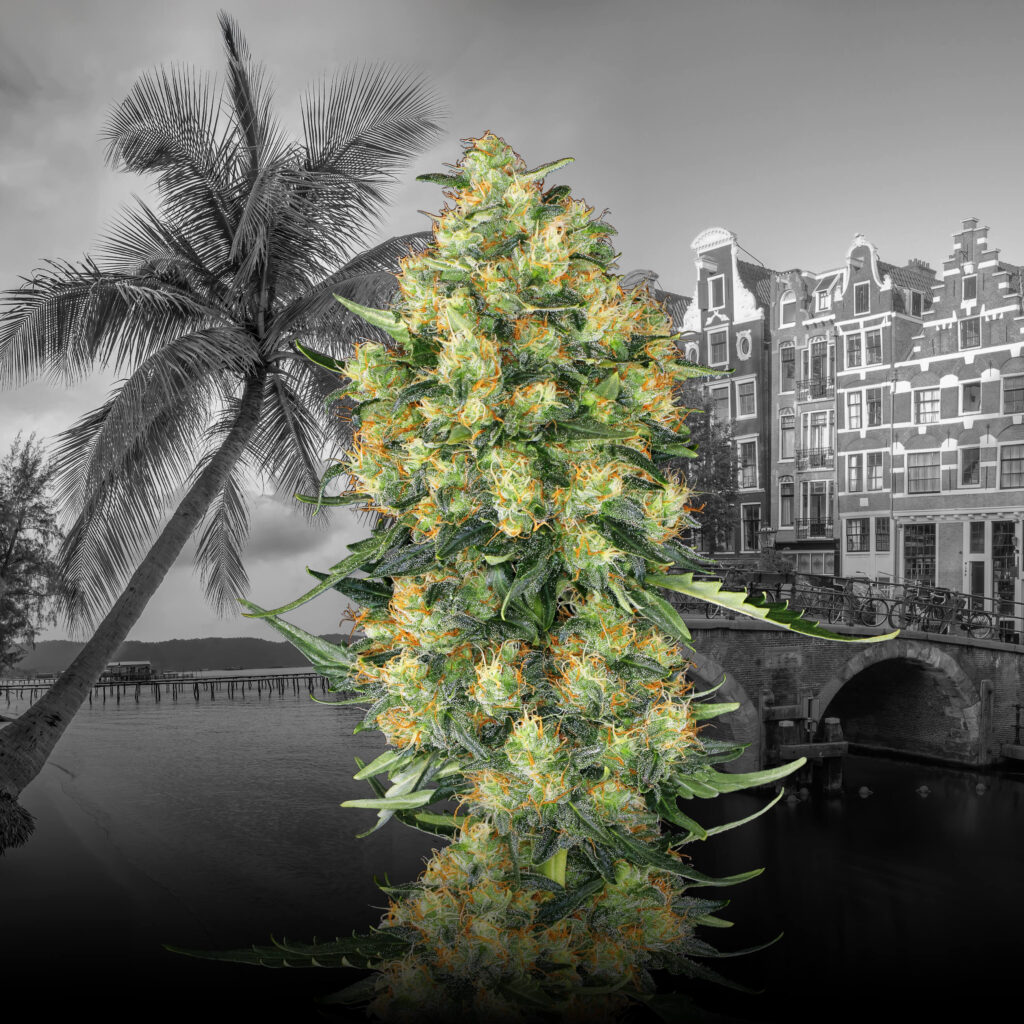
Will’s collaboration with Sensi Seeds might be a recent achievement, but his connection to the legendary seedbank dates back to the 1980s, when he saw the first The Seed Bank and Sensi Seeds ads in the back pages of his High Times magazines. At the time, the idea of ordering genetics via mail seemed ludicrous.
“It was very exciting, but it was also scary,” Will says. “We were all using our parents’ addresses.” For growers accustomed to keeping their activities quiet, the process of sending money to Europe for seeds took some nerve. But a few of Will’s friends did successfully place orders, and new genetics began finding their way into their gardens.
“The Super Skunk was really the first one I remember,” Will says. “That one was amazing. The problem with that one was just that we had friends that got busted because of its smell,” he adds. Back in the 1980s, the idea of contributing his own genetics to Sensi Seeds wasn’t even in Will’s mind. Today, however, it’s a reality.
The Sticky Finger Seeds x Sensi Seeds collab came to be after Sensi Seeds’ Tim Hoebee visited Maui for his honeymoon. Will and his wife were quick to show the newlyweds around to some of their favourite beaches, and the connection between the two couples has long outlived that brief holiday.
When Tim met Will, he was already well aware of the work of Sticky Finger Seeds, Deep Green Genetics, and Will’s connection to fellow Breeding Grounds collaborator, Shanoah Stanley from Ziplock Seeds. At events like Spannabis and MJBizCon, Will also met Sensi Seeds’ CEO Gio, Sander and other members of the Sensi Seeds team. It wasn’t long before the group was hashing out the details of a collab.
Related post

Fresh blood from Sensi Seeds
Today, having unrestricted access to the Sensi Seeds genetics locker and sharing his cultivars with the brand still seems unreal. “I consider it a lifetime accomplishment,” Will says proudly. He remembers shyly selecting some of the legacy strains he knew and loved from the Sensi Seeds genetics locker.
Will was quick to propose extending the blood line into the Sensi Seeds catalogue. Again, not because of the novelty of the bleeding trait, but because of the superior resilience and smoke quality of these strains.
Meanwhile, the Sensi team suggested working with two varieties that simultaneously capture both the bank’s 40+ year legacy and ability to stay relevant via modern genetics: Maple Leaf Indica which is one of Gio’s favourites, and the modern Banana Kush Cake.
Together, the two breeding teams created the Sensi Seeds Bloodline just in time for Halloween ’26:
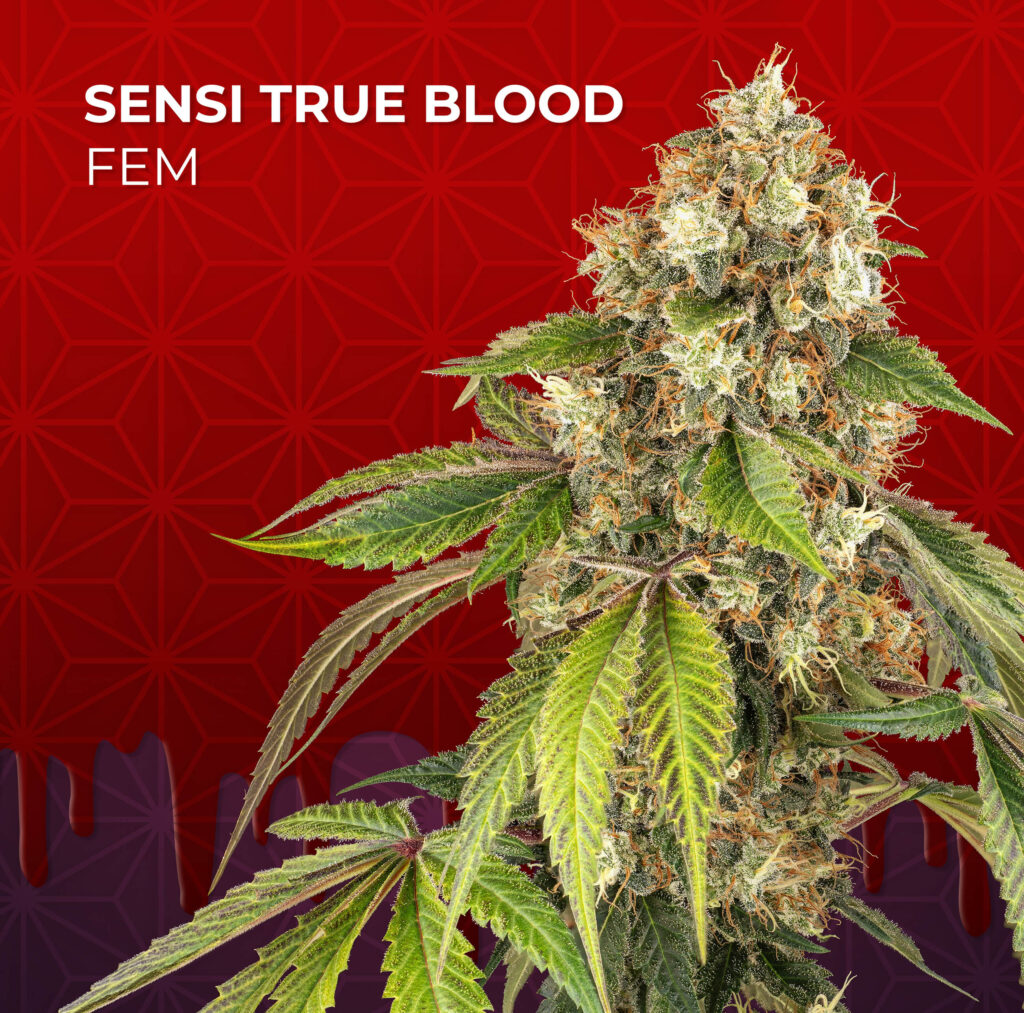
- Sensi True Blood. The combination of two legends, Sensi True Blood combines Maple Leaf Indica with Maui True Blood and has created a 60% indica cross with a 55-65-day flowering time. Expect average-sized plants (70-110 cm indoors, 175-200 cm outdoors) with large internodal spacing, a well-balanced structure, and excellent lateral branching. Come harvest time, Sensi True Blood will reward you with big, conic flowers with aromas ranging from tropical sweetness to earthy hash. Its flavours are similar, though with a distinct berry-like sweetness, while its effects combine an energetic cerebral rush that gradually subsides into a deep physical stone.
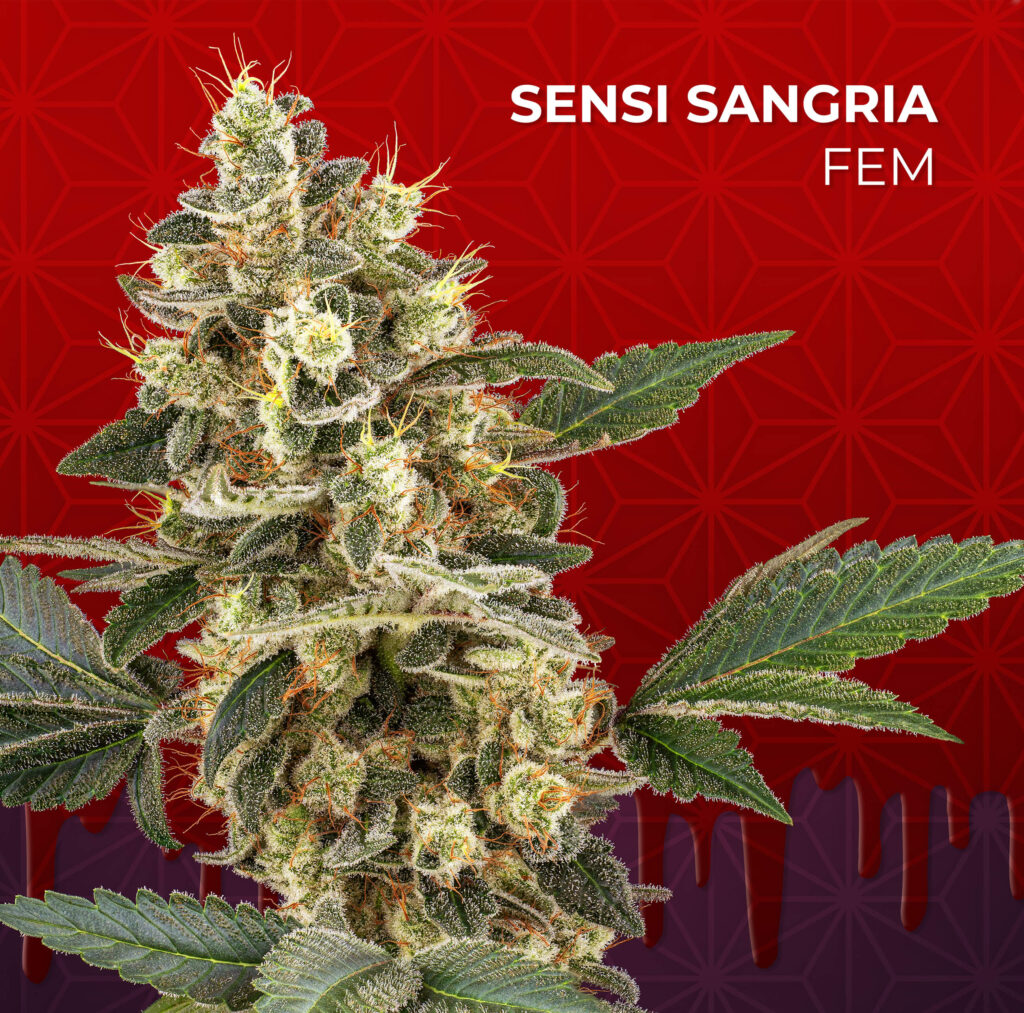
- Sensi Sangria. A cross of Tiger’s Blood x Banana Kush Cake, this strain is slightly (60%) sativa dominant and has all the corresponding growth traits that come with those genetics, including a 65-70-day flowering time. Indoors, expect tall plants of 100-160 cm, while outdoor specimens can reach 175-300 cm, and we’ve seen instances of them towering 4 metres tall!
In either setup, Sensi Sangria produces dense, golf-ball-sized buds that stack closely along the main stem and branches for an impressive harvest. Expect a complex terpene profile and flavours reminiscent of a fresh tropical fruit salad loaded with ripe mango, pineapple, and sour papaya layered atop an underlying creamy banana base. In terms of effects, Sensi Sangria delivers long-lasting, well-grounded relaxation.
Both strains boast excellent resilience and are built to thrive outdoors, in greenhouses, or even inside under lamps. Roughly 50% of the plants grown from seeds actually bleed, and the process occurs mostly during veg; flowering plants oftentimes do not show the bleeding trait. Sometimes, the cured buds from these varieties can produce a red, sticky resinous sap when rubbed or ground.
The colour of the sap of these strains also varies. Will describes some plants as producing “lipstick red” sap, while others bleed more purple-red. He says he prefers the latter for its sweet smell and taste, which he believes is indicative of a higher anthocyanin count.
Breeding Grounds: Sensi Seeds × Sticky Finger Seeds
Besides the new Sensi Seeds Bloodline, the Sticky Finger Seeds x Sensi Seeds collaboration also produced four new Breeding Grounds strains that combine Will’s unique varieties with both classic and modern Sensi Seeds genetics.
The collection includes both bleeding and non-bleeding varieties, which reflects Will’s passion for creating strains that go beyond hype. They provide prime performance that’s been tested in his own garden, as well as top-shelf aromas and flavours.
We’ll reveal all four strains and their lineages in January. Check back then to meet the full Sticky Finger Seeds x Sensi Seeds Breeding Grounds collection!
Related post
The work behind the genetics
Choosing a mother and a father plant is just the beginning of making a cannabis cross. The process involves hunting phenos, growing them out to flower, and analysing a broad spectrum of results; from growth traits like vegetative structure and overall vigour to bud formation and terpene development.
For the creation of Sensi True Blood and Sensi Sangria, that process was carried out simultaneously by Will and Sensi Seeds: Will flew into the Sensi Seeds headquarters in Amsterdam, and the Sensi team also flew out to Maui. Together, both breeders honed in on traits they could stand by; resilience, excellent structure and, of course, exceptional aromas and flavours.
Will reports completing two flowering test crops in Hawaii during the project, while Sensi Seeds also ran its own tests. That gave them results to compare from Maui’s growing conditions and Sensi Seeds’ Research & Development facility.
When working from seed, Will describes the process as “a blind date.” Even when working with familiar or well-known genetics, you never really know what you’re going to get and how different strains will combine. Sometimes, the process of finding exactly what he is looking for and stabilising those traits can take well over a year, Will explains.
Other times, however, working crosses make themselves evident right from the start. Sensi True Blood is a prime example: Will started his side of the project with little over 30 Maple Leaf Indica seedlings. Observing them closely, he picked out prime phenos based on their vigour and, above all, their ability to adapt to Maui’s unique growing conditions. Crossing it with Maui True Blood only intensified that vigour.
Will considers the blood line capable of creating what he calls Super Plants. “The plants have their own antioxidant defence system built in,” he says, again referring to the high concentration of anthocyanins they carry in their blood-red sap. “And it really shows in the garden. These plants come right out of the gate really resistant and robust,” he adds.
“I’m obsessed with stability,” he continues. And to secure it, he often has to look beyond the plants in his own greenhouse: Will regularly asks other growers, including indoor growers on Maui or the mainland, to run his crosses, then compares their observations with his own. Seeing how a plant behaves in different gardens is an important part of deciding which pairings he wants to keep working with.
Related post
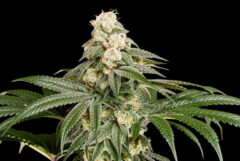
Always more seeds to sow
It’s reasonable to expect a grower and breeder with over 50 years of experience to consider the idea of slowing down. But Will does exactly the opposite; he shows no signs of stopping. This October, he travels to Buenos Aires for Expo Cannabis Argentina, and back on Maui, he’s clearing out several of his garden spaces for a fresh round of seed starts: Sensi Seeds classics, new collab projects and rarities from his own archive.
That archive is quite something. “What’s next is seeing what I can find in the fridge,” Will laughs. He has two seed refrigerators: one for Sticky Finger Seeds and Deep Green Genetics stock, and another for his private collection, which sounds like a treasure chest of old-school genetics.
“Sock drawer delights, I call them,” he laughs again, recalling how he discovered Maui Wowie in a seed someone found at the back of their dead uncle’s sock drawer. Will loves these strains because he finds they haven’t been overbred and retain more of their essence. “I’m always hunting those, way more than like the newer stuff,” he says.
Meanwhile, accessing the Sensi Seeds archive offered a different kind of discovery. Despite being invited to choose what he wanted to work with, Will remembers feeling shy about taking too much. “I guess I was being bashful,” he says. Even so, he came away with around 25 strains.
“I just felt that it was such a sacred place,” he recalls. Since returning home, he’s been revisiting the catalogue and putting together a wish list for his next visit. Sensi Amnesia, Mr Nice G13 x Hash Plant, and Ed Rosenthal Super Bud are on it, along with more Silver Haze, a variety already growing enthusiastically among his mother plants.
These are plants he’d like to explore, with plenty of selection and testing still ahead. His aim is to keep the character that makes a familiar variety worth returning to, while adding something of his own.
“I don’t want to change those characters a lot, but I want to bring something, add something to it,” he says. After years working with musicians, his description of that ambition seems fitting: “turn the volume up just a touch and equalise it.”
- Disclaimer:Laws and regulations regarding cannabis use differ from country to country. Sensi Seeds therefore strongly advises you to check your local laws and regulations. Do not act in conflict with the law.