


Vienna Cotta Feminzied was slow to get going, but once flowering kicked off, we were genuinely impressed. Despite their shorter size, these plants require a fair amount of space, owing to their long, wide-reaching branches. Growing this strain was a breeze, and growers short on space will appreciate how well these plants respond to training.
Total growing time: 98 days
Flowering time: 70 days
Final height: 83 cm
Final yield: 87 grams
THC content: 22.78%
Vienna Cotta Feminized is a 65% indica created alongside the team at Aficionado French Connection for the 2026 Sensi Seeds’ Breeding Grounds project. Breeders at Aficionado’s outdoor facility in Colombia took the classic Garlic Bud (a Seed Bank of Holland original bred from Afghan landrace strains) and crossed it with a hybrid of Strudel (a Biscotti BX1 phenotype) and Pianono (Key Lime Pie & Sorbetto).
We grew our Vienna Cotta Feminized cannabis plant in an 8-litre plastic pot filled with BAC Lava Mix beneath a 1000 W light set to an 18/6 schedule. Throughout the grow, the space was kept at a stable 23°C during the day with nighttime temperatures falling to 21°C. Initially, we maintained a relative humidity of 65%, which would be gradually lowered throughout the grow.
Germination & seedling
To start our Vienna Cotta Feminized plant, we used the paper towel method of germination. To start, we simply placed a couple of thoroughly dampened paper towels on a plate, sprinkled our seeds on top, and covered them with another damp paper towel. This was then lightly covered, placed inside an open plastic bag and left in a warm place out of direct sunlight.
After a few days, the seed had cracked open to reveal the taproot, meaning that it was time to plant. From here, we placed the seed, taproot down, into a presoaked Rockwool cube and put that under a 600 W lamp hung 80 cm above. This would make sure that the plant had enough light to thrive without getting burned in its fragile state. After three days, we fed it for the first time with 100 ml of pH-balanced water (pH 6.2: EC 0.8) mixed with a small amount of rooting hormone.
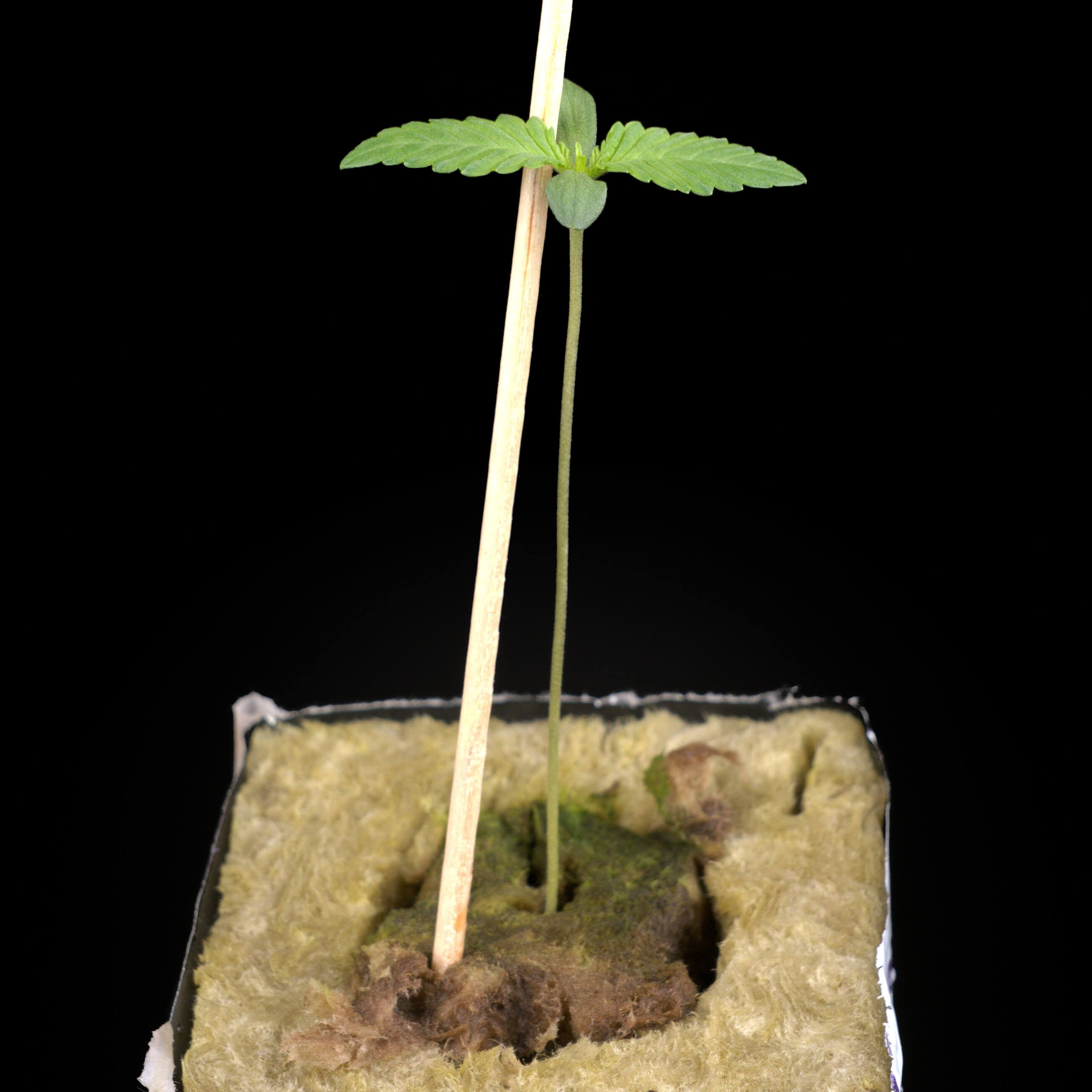
At the end of week one, our plant was already an impressive 10 cm tall, and its roots were growing out of the bottom of the Rockwool cube. At this point, it was time to move our seedling to its new home in an 8-litre plastic pot, placed under our 1000 W light. We also began daily feedings with 100 ml of water (pH 6.0: EC 1.4) mixed with Bio Grow liquid nutrients.
Vegetation
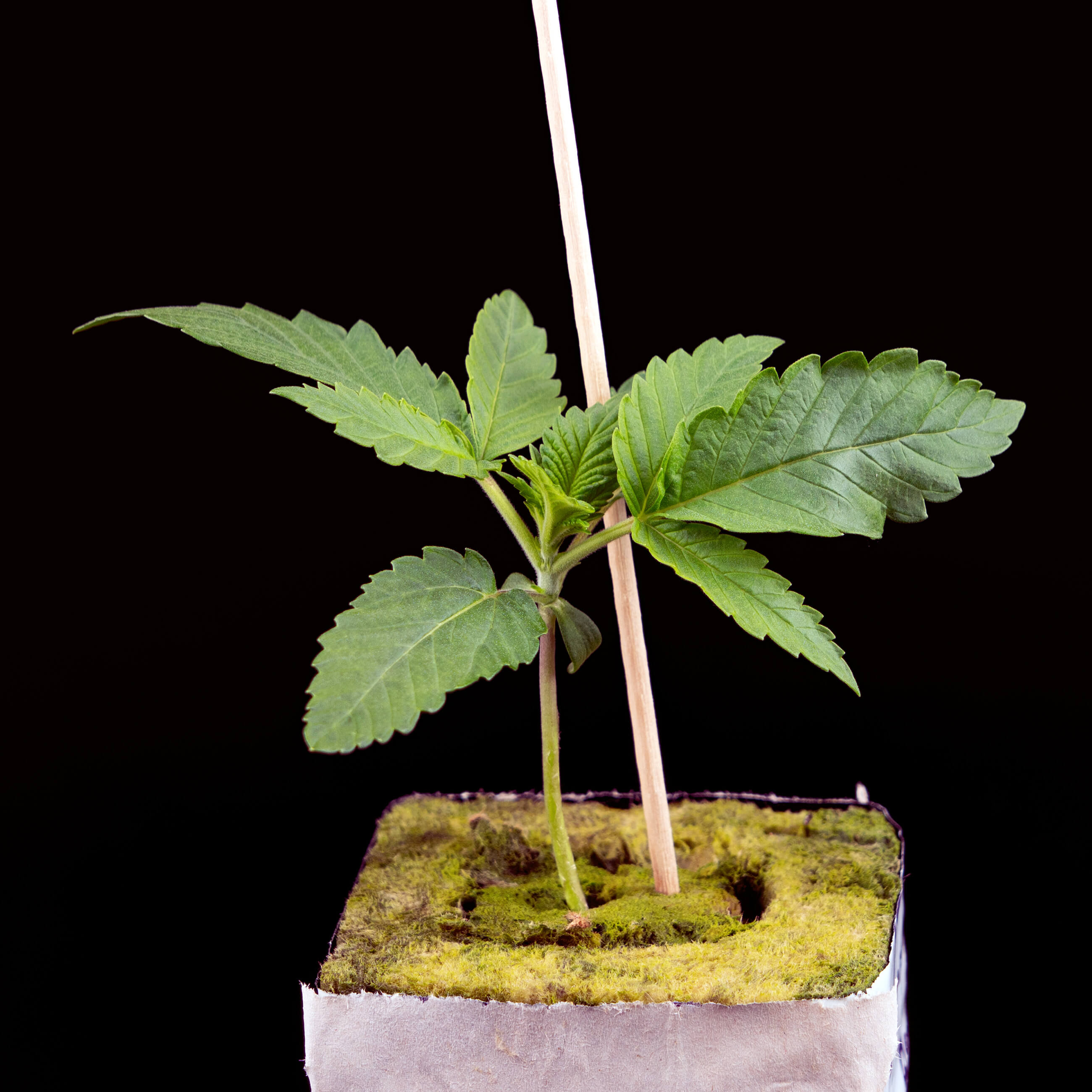
In week two, our plant nearly doubled in height to reach 17 cm and developed its first set of short, broad leaves with a second set on the way. The stem was fairly robust, and the plant had no trouble standing on its own. With another week of vigorous growth ahead, we started daily feedings with 200 ml of water.
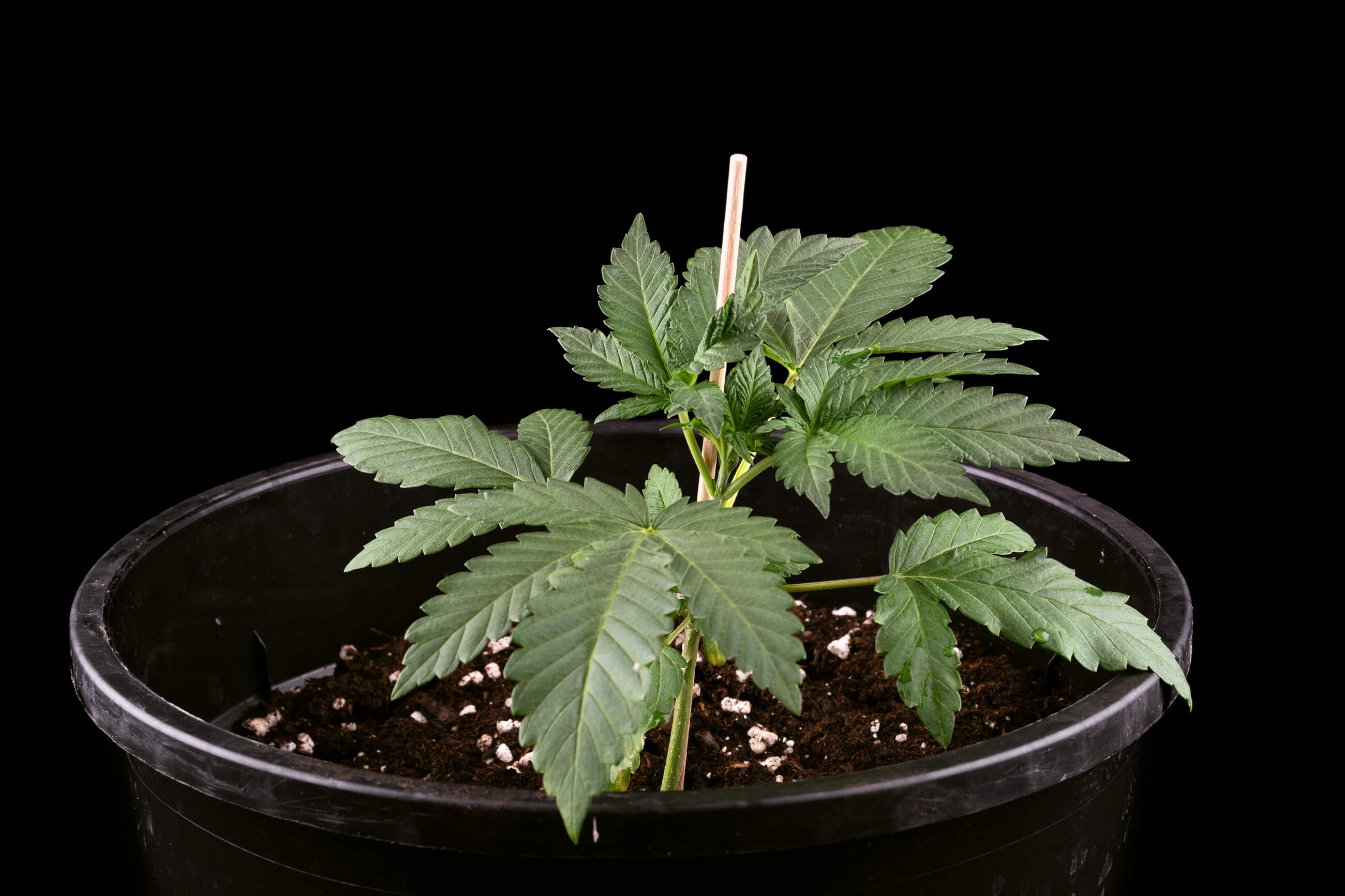
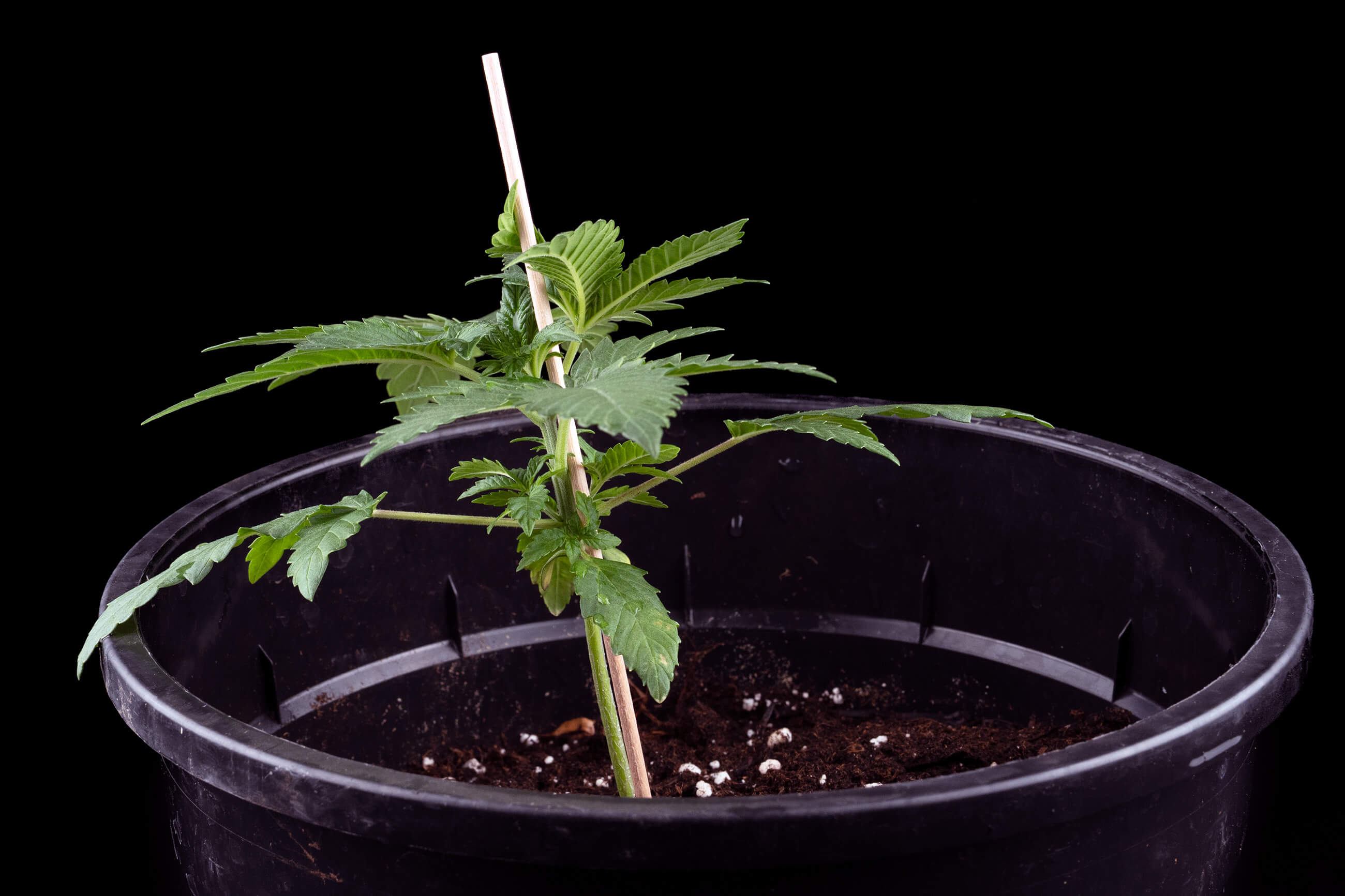
In week three, our plant sped up its growth a bit, gaining 9 cm to finish the week at a height of 26 cm. This vertical growth was paired with the development of multiple new sets of leaves and the very first signs of lateral branches. Internodal spacing was somewhat tight, though we could already see it expanding with each passing day. With flowering just around the corner, we began daily feedings with 400 ml of water.
As one last step before flowering, we hung small satchels of Neoseiulus californicus and Amblyseius swirskii from the plant’s lowest branches. Each of these satchels contains hundreds of tiny bugs that feed on harmful parasites like thrips and spider mites. These helpful bugs have a symbiotic relationship with cannabis and won’t do any damage to the plant, and we replace the satchels every four weeks to ensure a constant supply.
Related post

Flowering
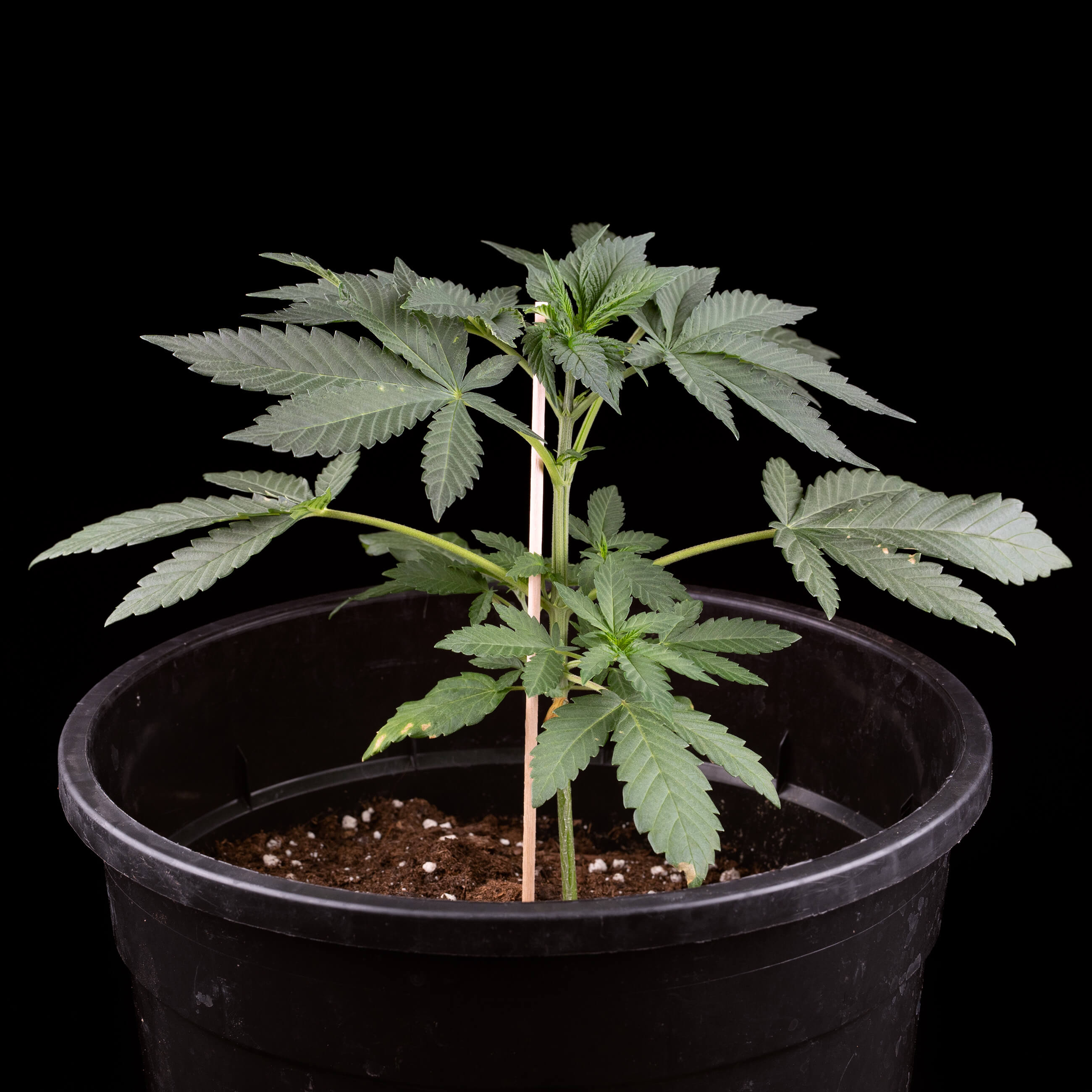
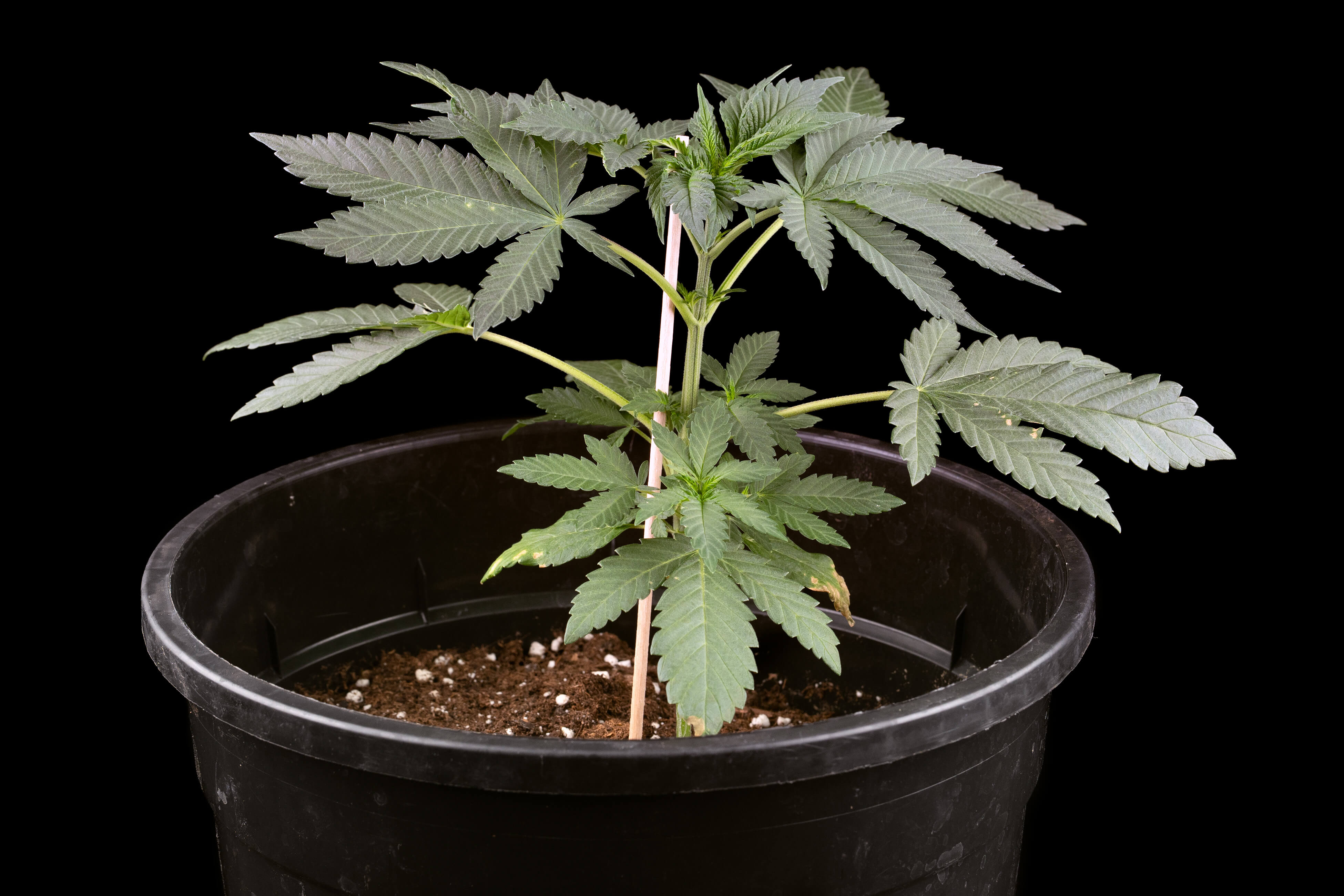
As we entered week four, our plant was 33 cm tall, and it was time to switch to flowering by setting our lights to a 12/12 schedule and adjusting our daily feedings to use 800 ml of water (pH 6.0; EC 1.8) mixed with Bio Flower liquid nutrients. Lastly, we reduced the humidity to 60% to help prevent mould. Our plant was already beginning to stretch out, and the internodal spacing was on the longer side. The leaves were broad and healthy, and the lateral branches were slowly growing from the lowest nodes.
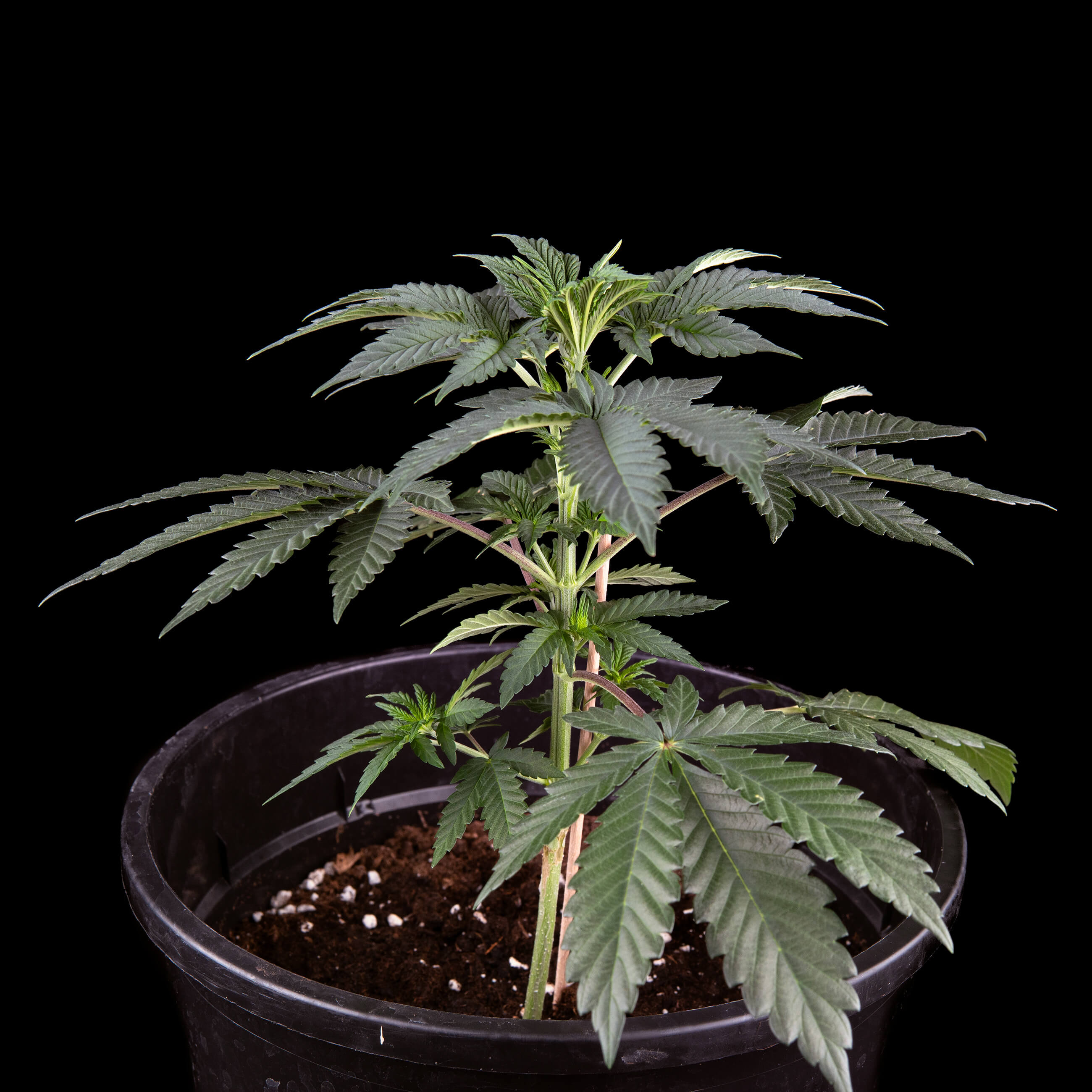
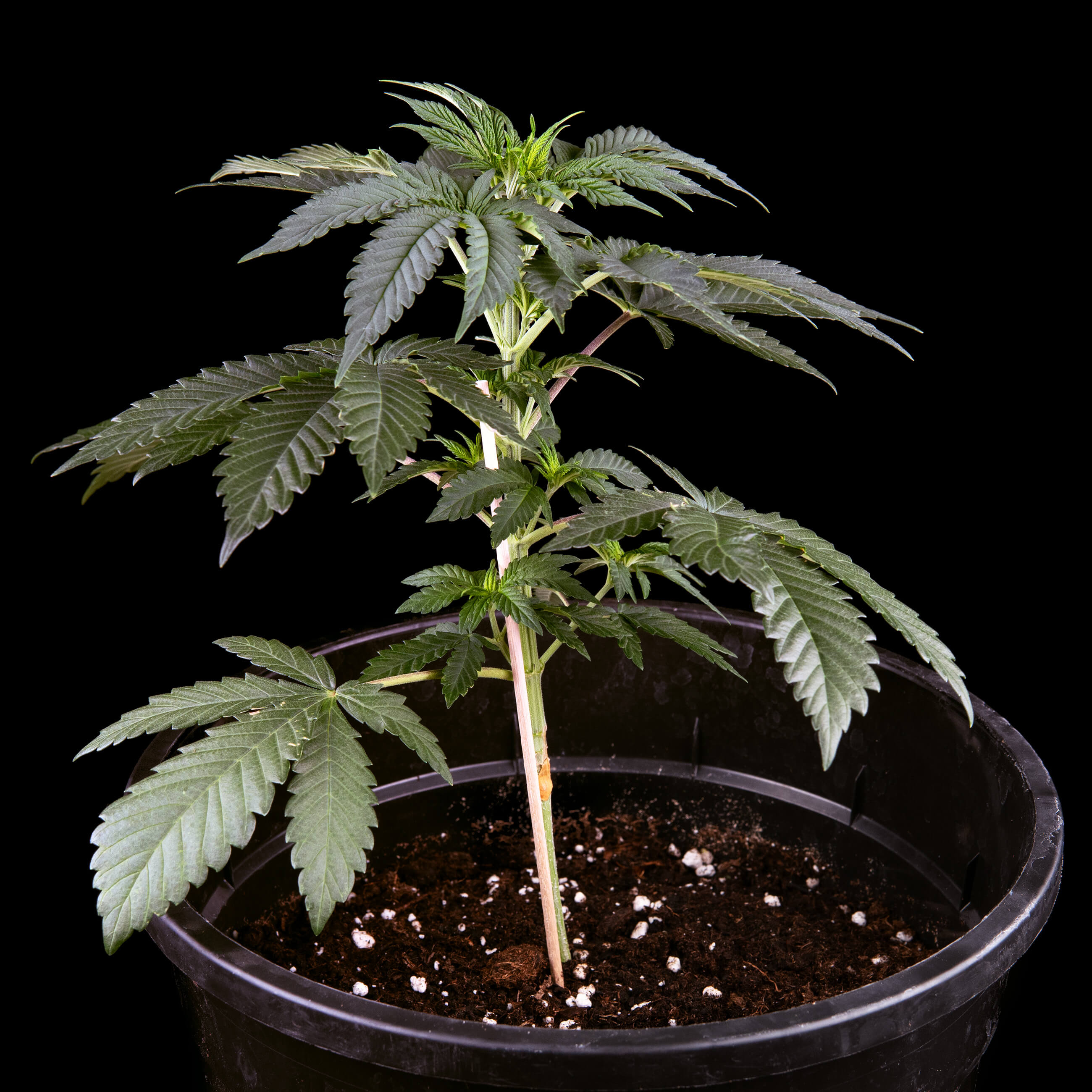
In week five, our plant grew only 5 cm, to a height of 38 cm. This saw the internodal spacing slow down a bit, as the plant continued to grow new leaves, while the lateral branches began to grow higher up the plant. The frame was open and airy with a robust stem. While we weren’t seeing any signs of flowering yet, we upped the volume of water to 1000 ml per day.
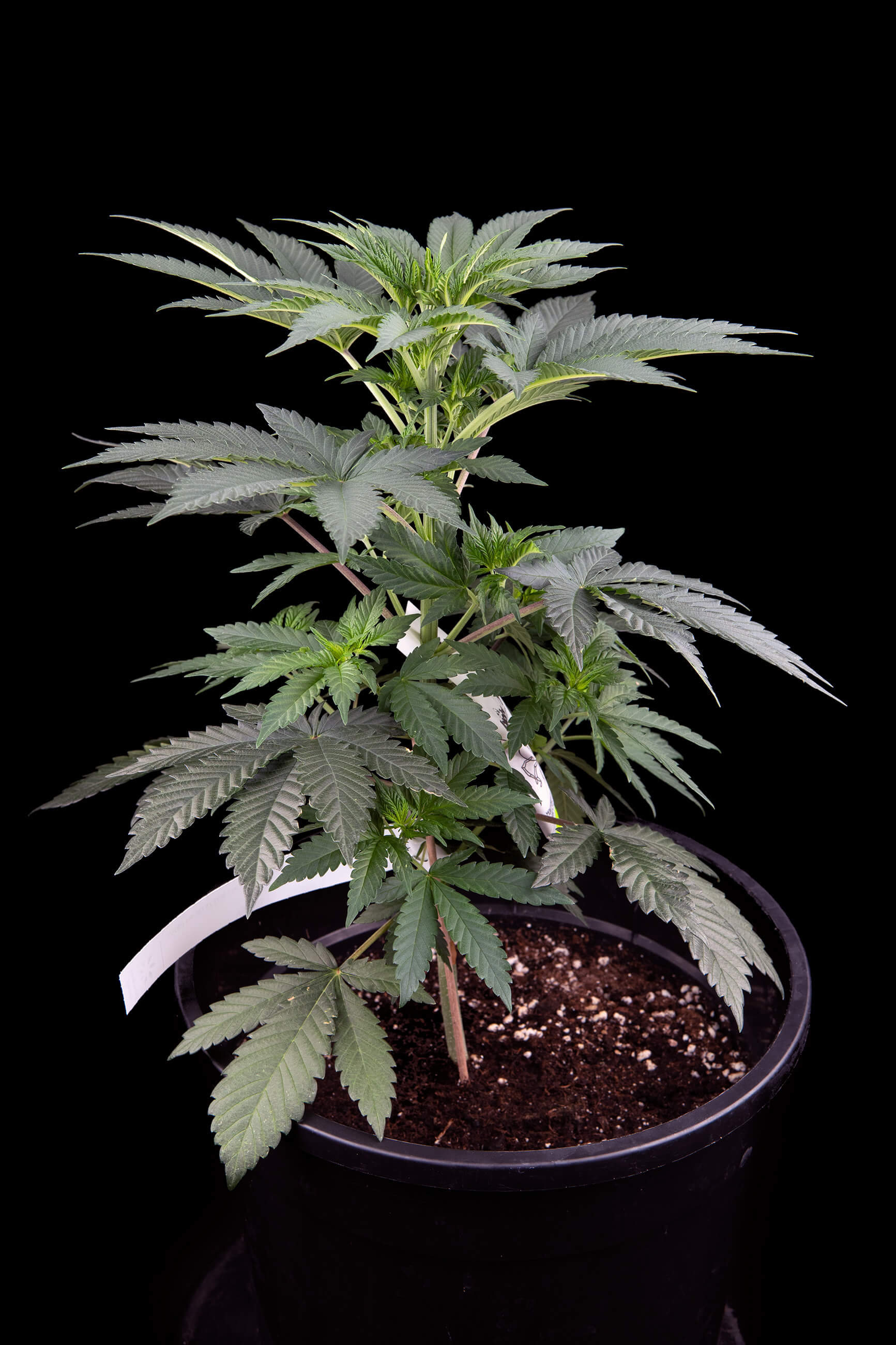
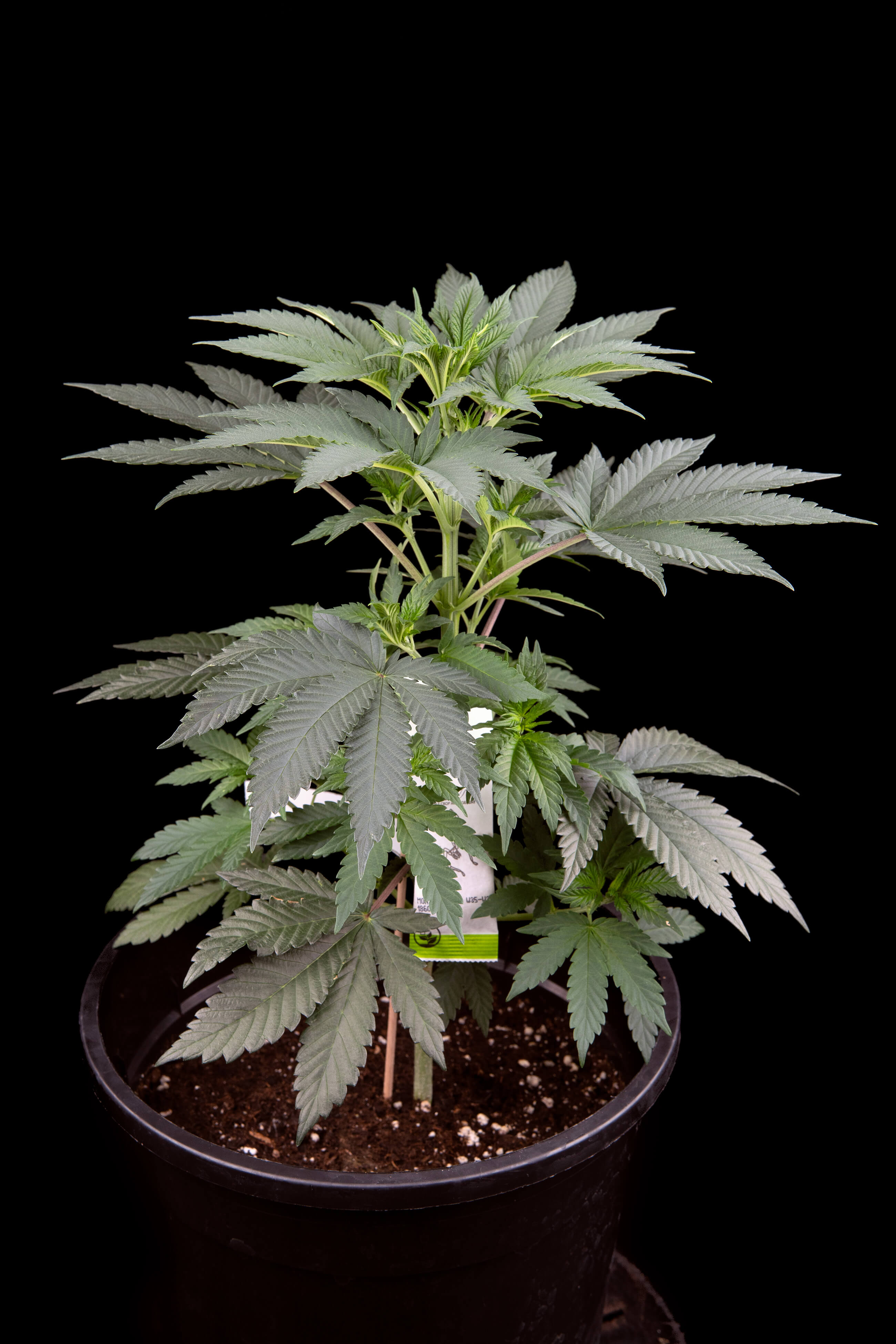
Week six saw the largest week-on-week growth of the whole grow, gaining 14 cm to reach a new height of 52 cm. While the internodal stretch slowed, the growth of lateral branches exploded, and they were growing outwards and upwards, creating a bushy, cylindrical plant. The lateral branches and internodal spacing continued to sketch considerably. With flowering set to kick off, we increased daily feedings to 1500 ml per day and maintained this amount until harvest.
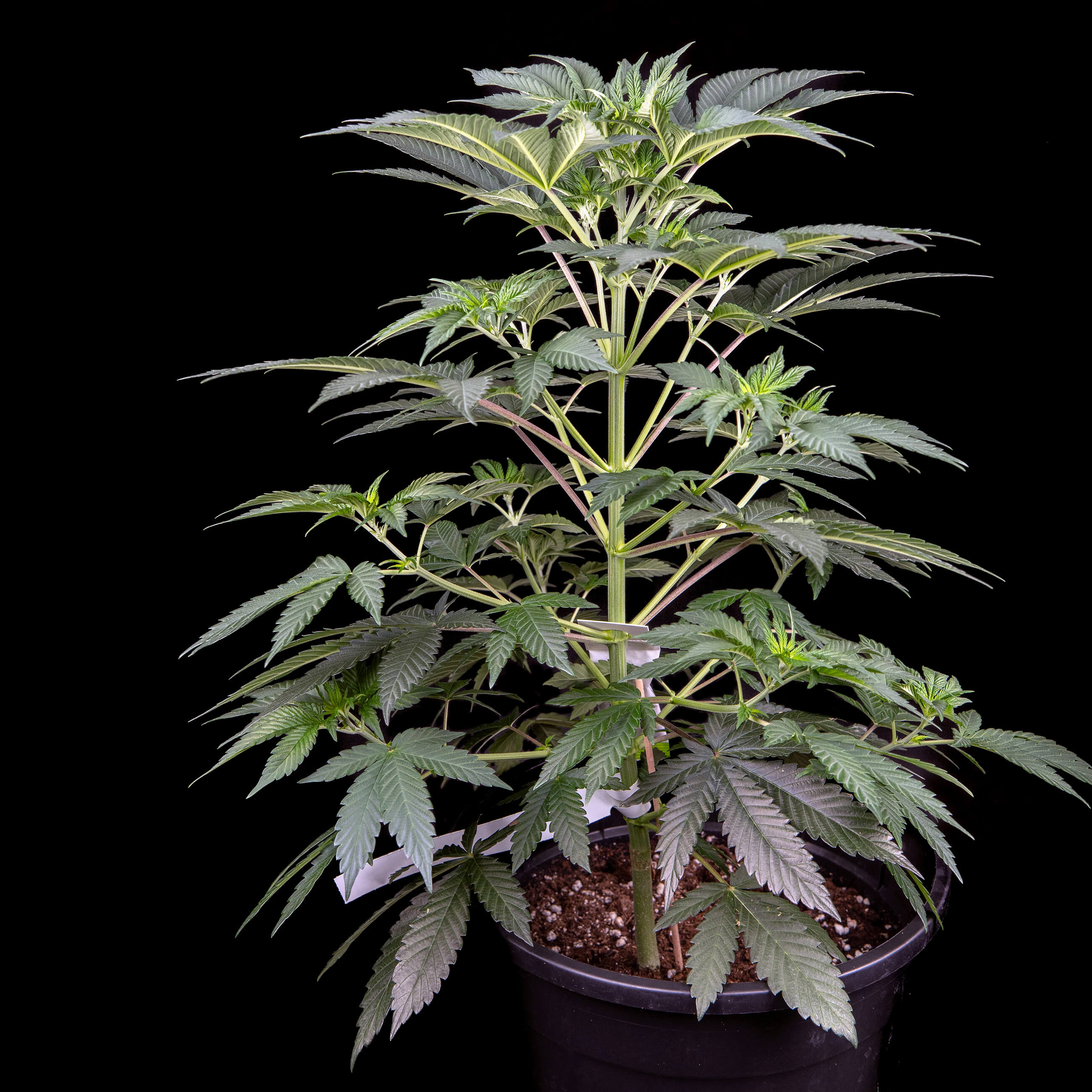
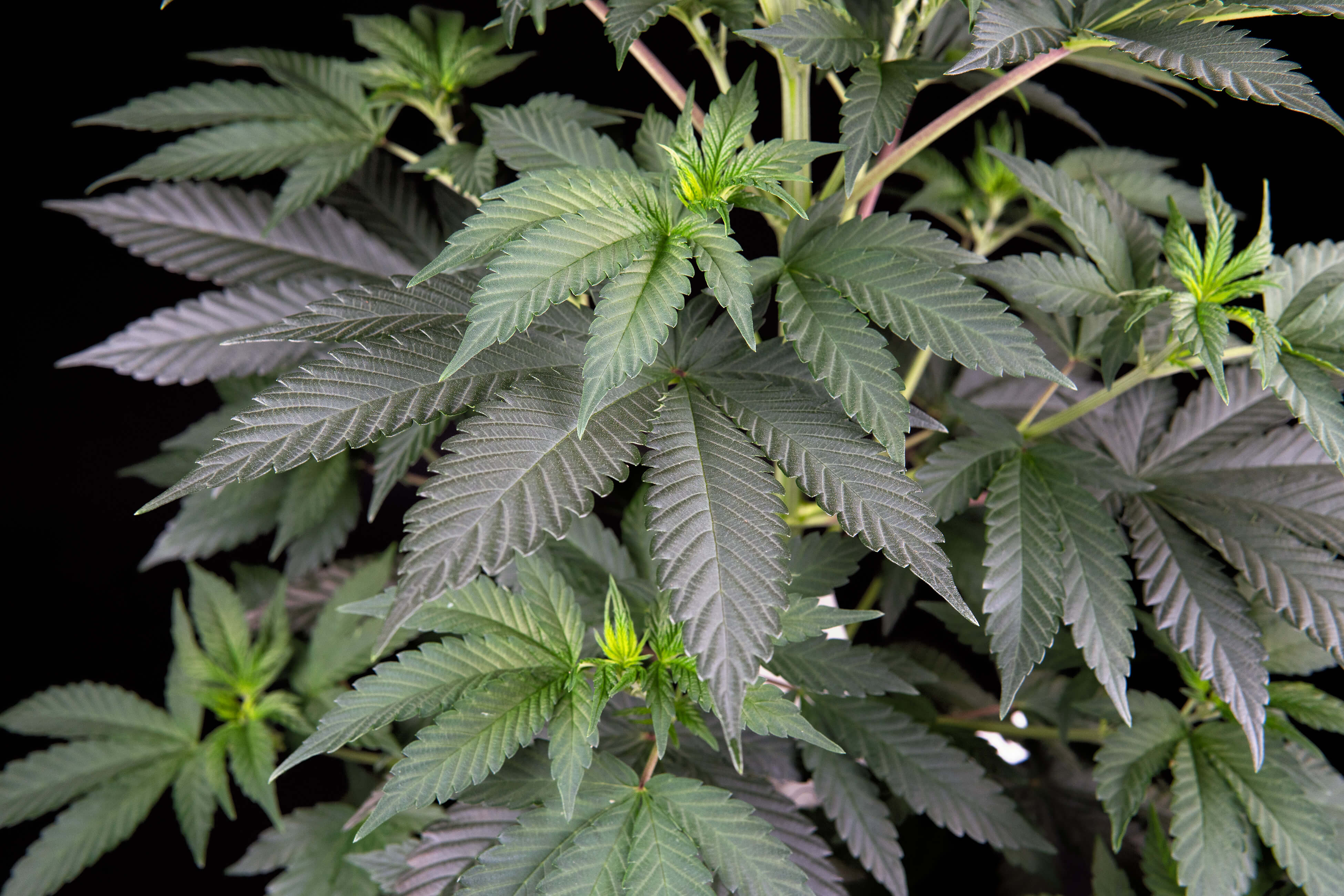
In week seven, our plant grew to 61 cm. While internodal spacing remained relatively long, the plant was rather bushy with fairly large, dense vegetation. We still weren’t seeing any signs of flowering, though we could see that the plant’s vertical growth was gradually slowing, and we expected to see the first pistils any day now.
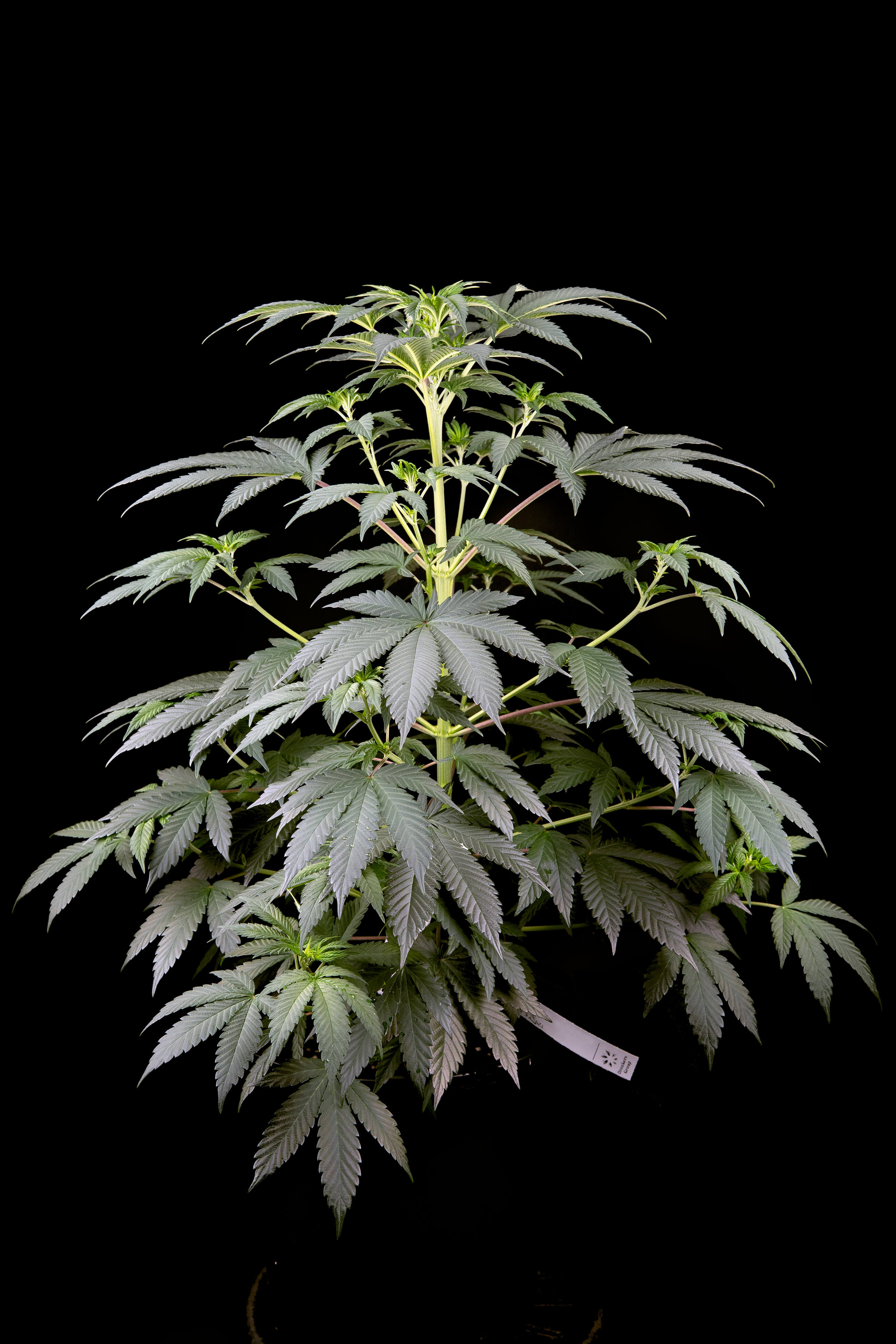
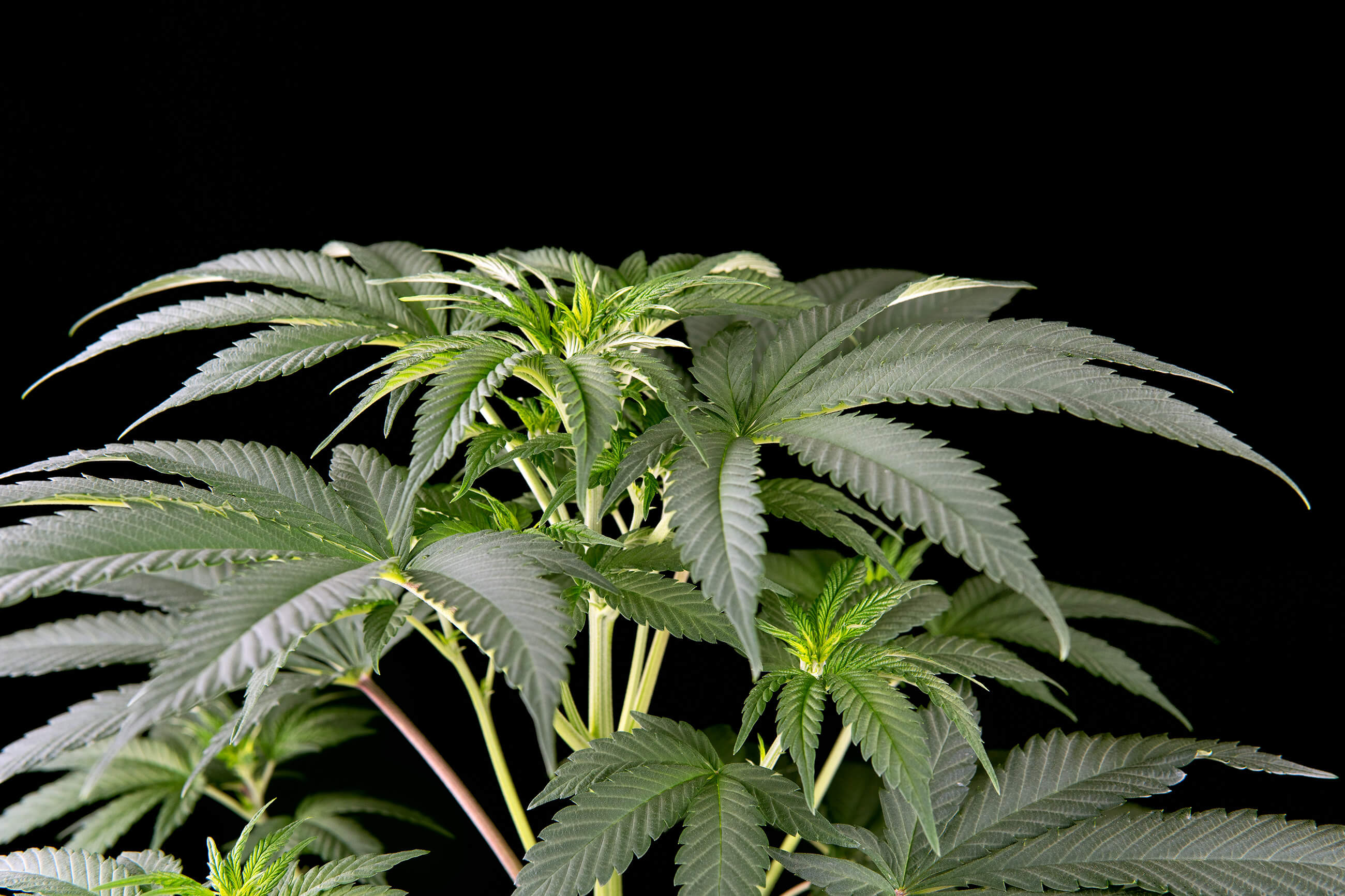
By the end of week eight, our plant had grown to 67 cm, and we were seeing the very first signs of flowering appearing at the tops of branches. The lateral branches were continuing their rapid growth, and the plant was taking on a classic Christmas tree shape, with an open, airy frame ideal for airflow and light penetration.
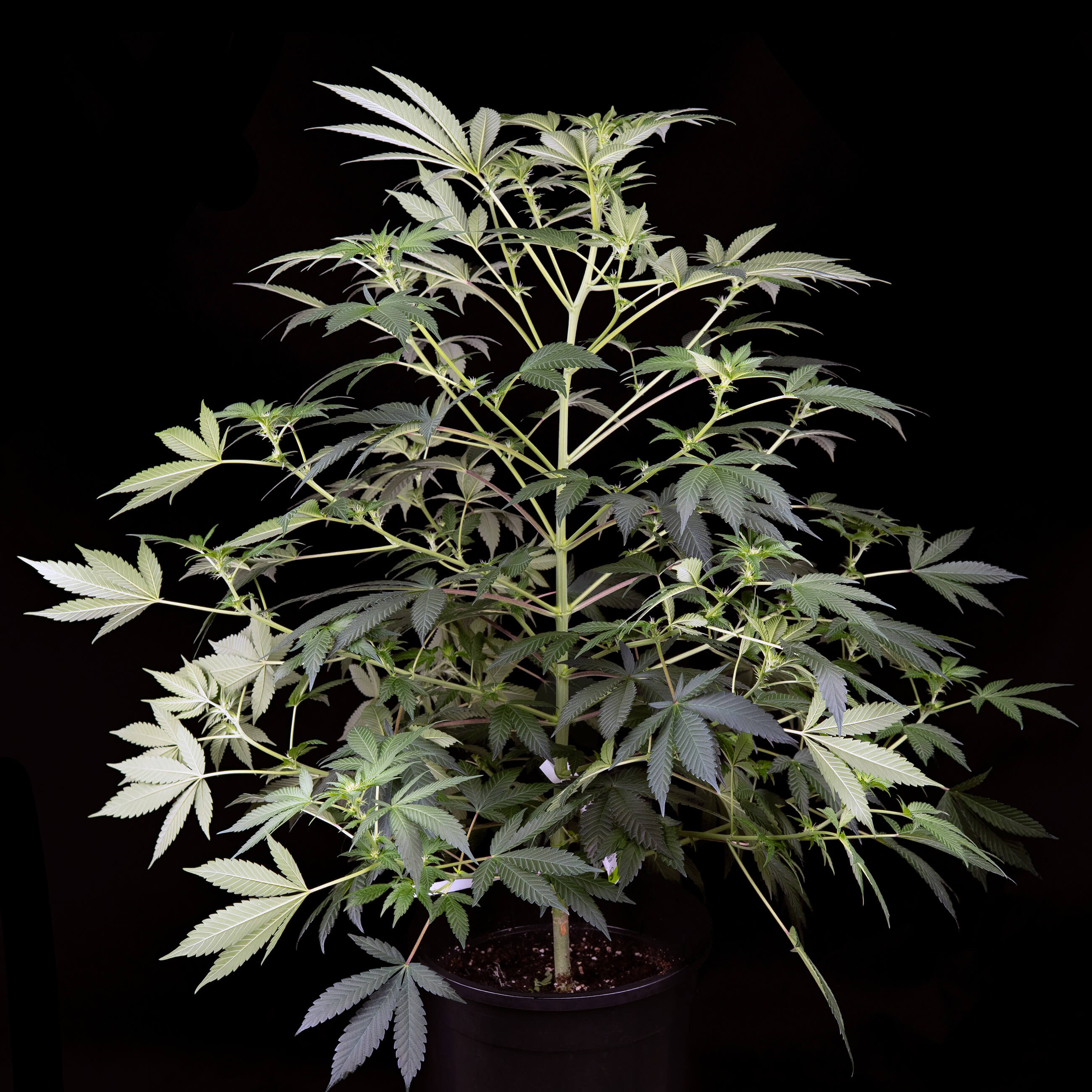
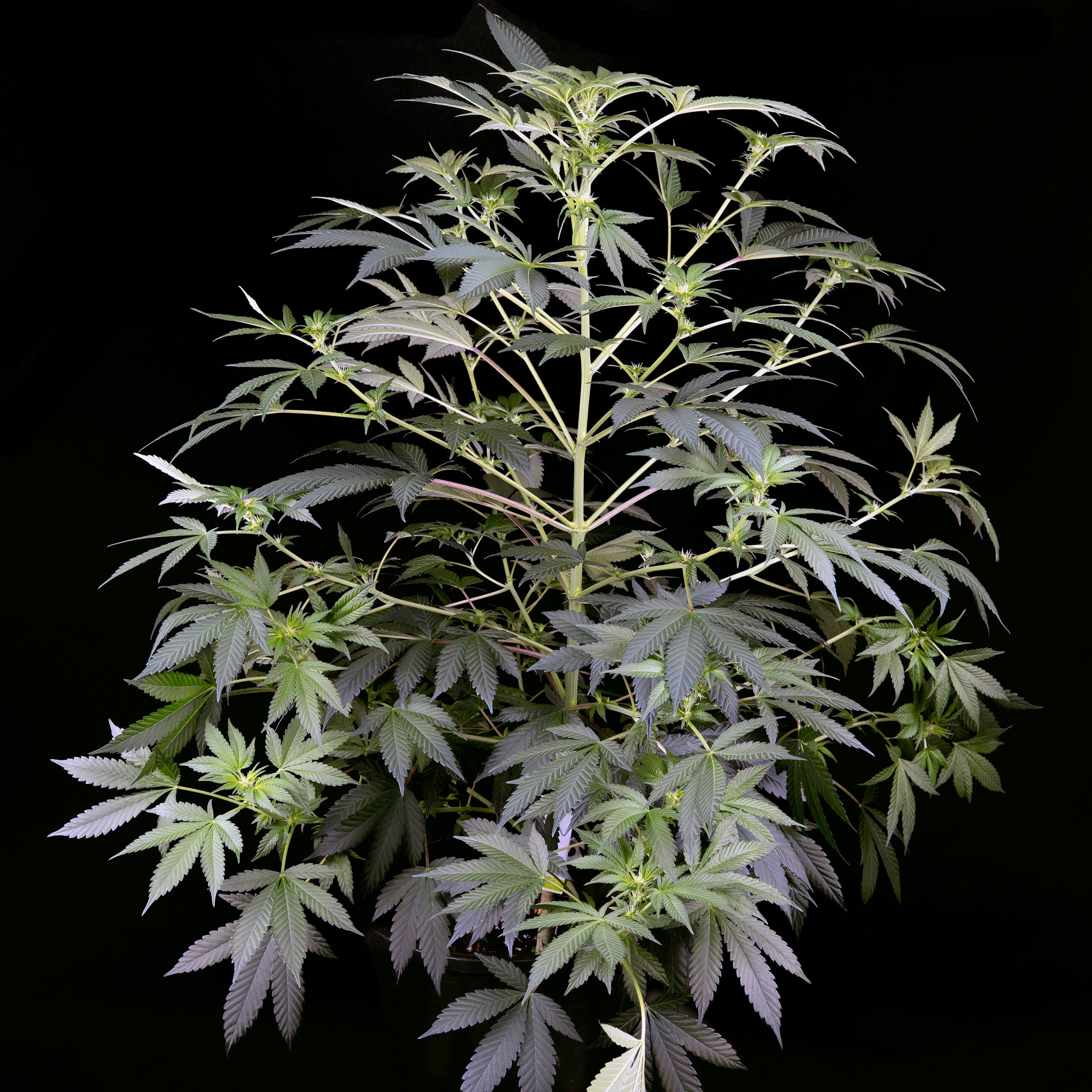
Week nine finally saw flowering kick off as each flowering site was now topped by a small cluster of pistils. The Lateral branches continued to grow outwards and upwards, and they were largely even with the main stem, creating a uniform canopy. By the end of the week, our plant was standing 73 cm tall.
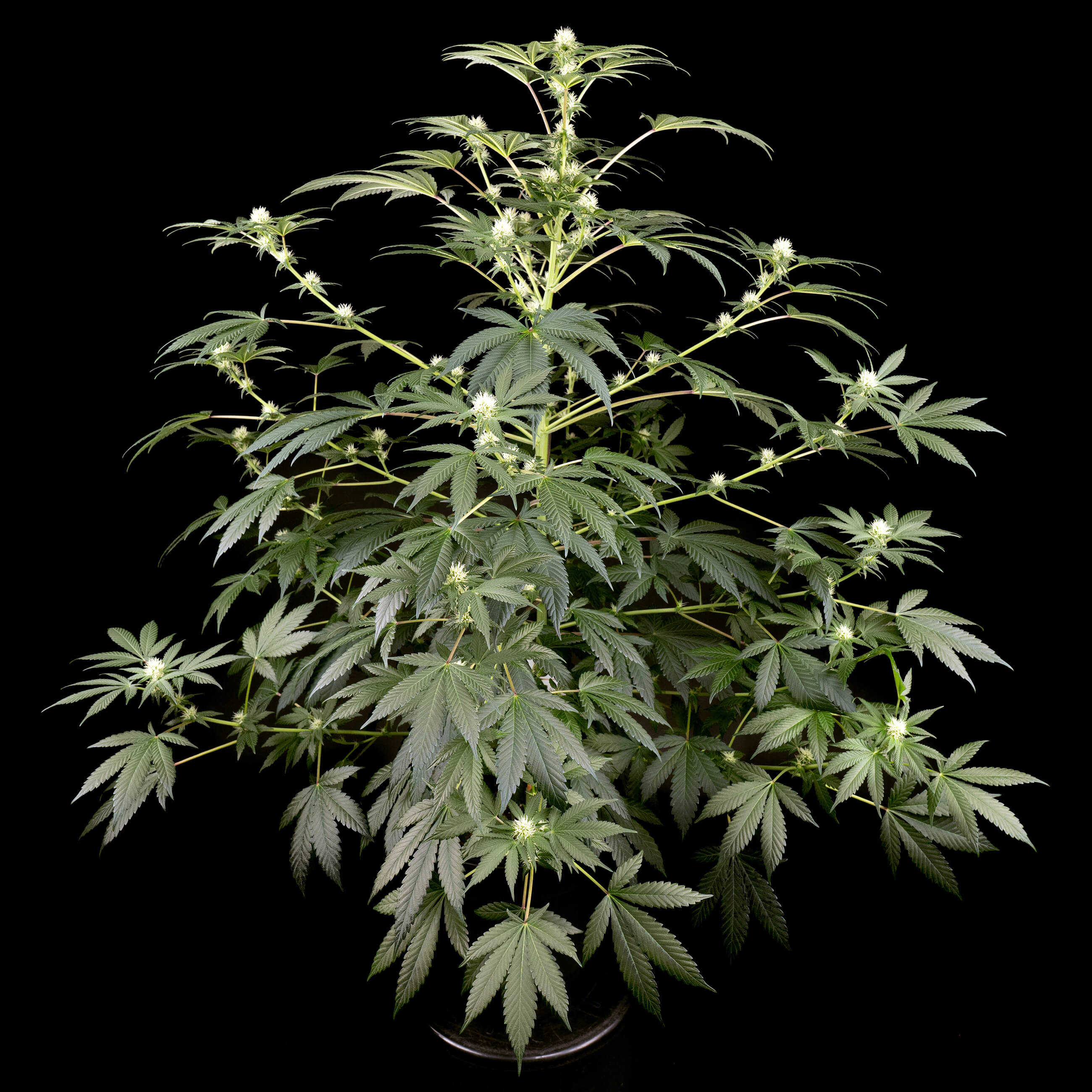
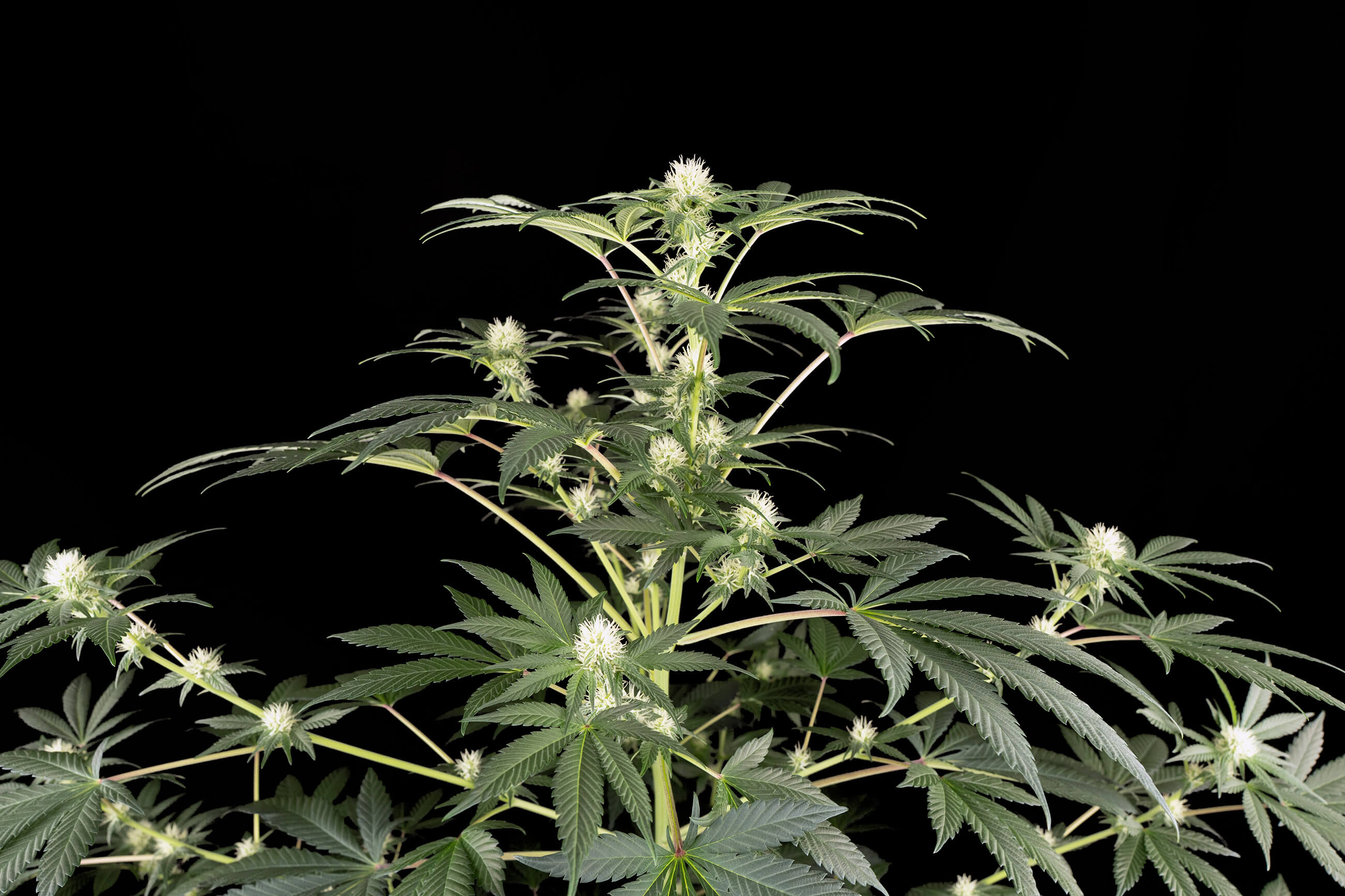
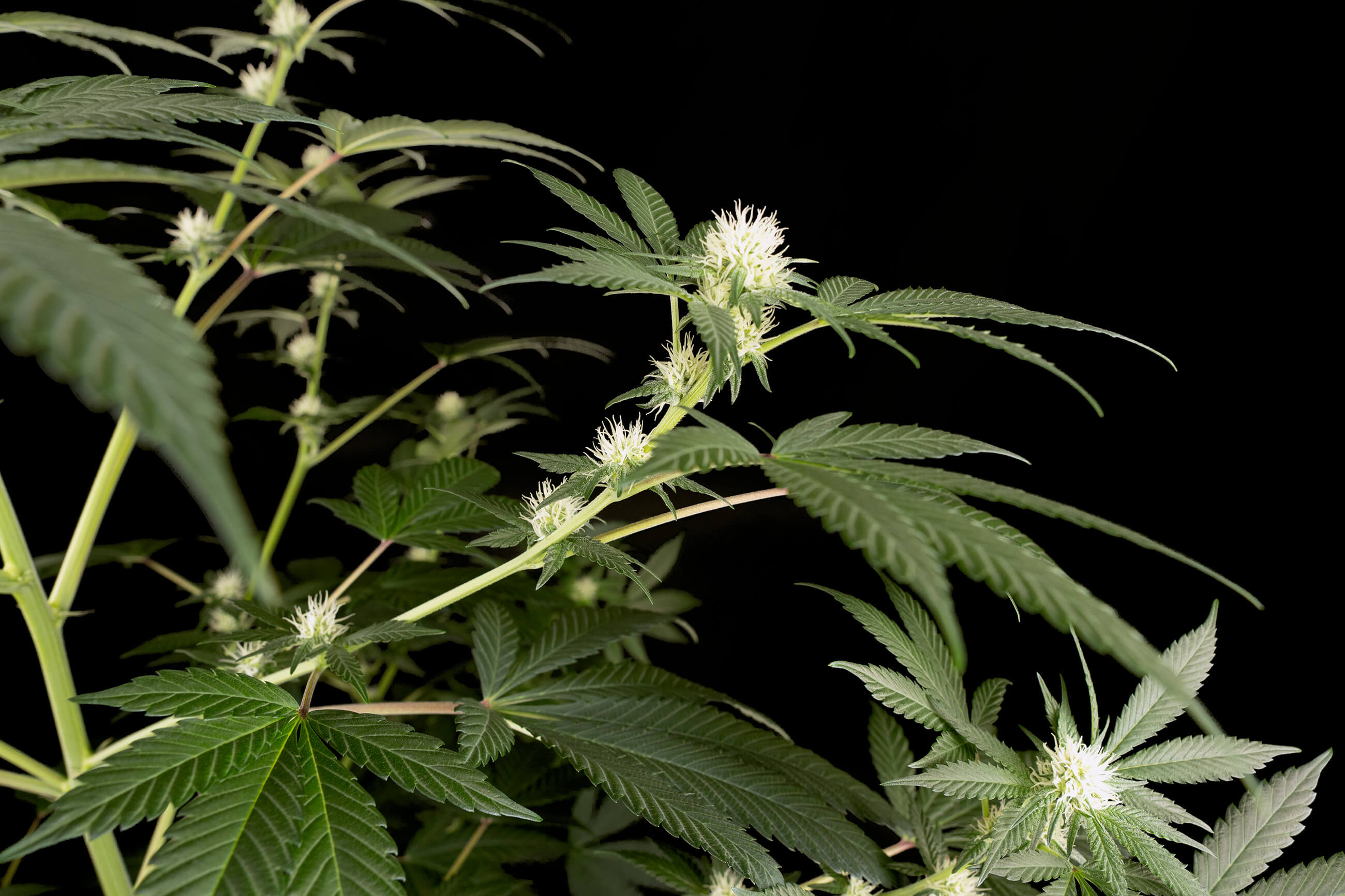
Over week ten, our plant’s growth slowed immensely, gaining only 5 cm to finish at 78 cm tall. The lateral branches were growing almost horizontally outward, creating a wide, open, and space-invasive frame. Flowering was accelerating nicely, and each branch was covered with several small popcorn buds whole the main cola began to fully develop.
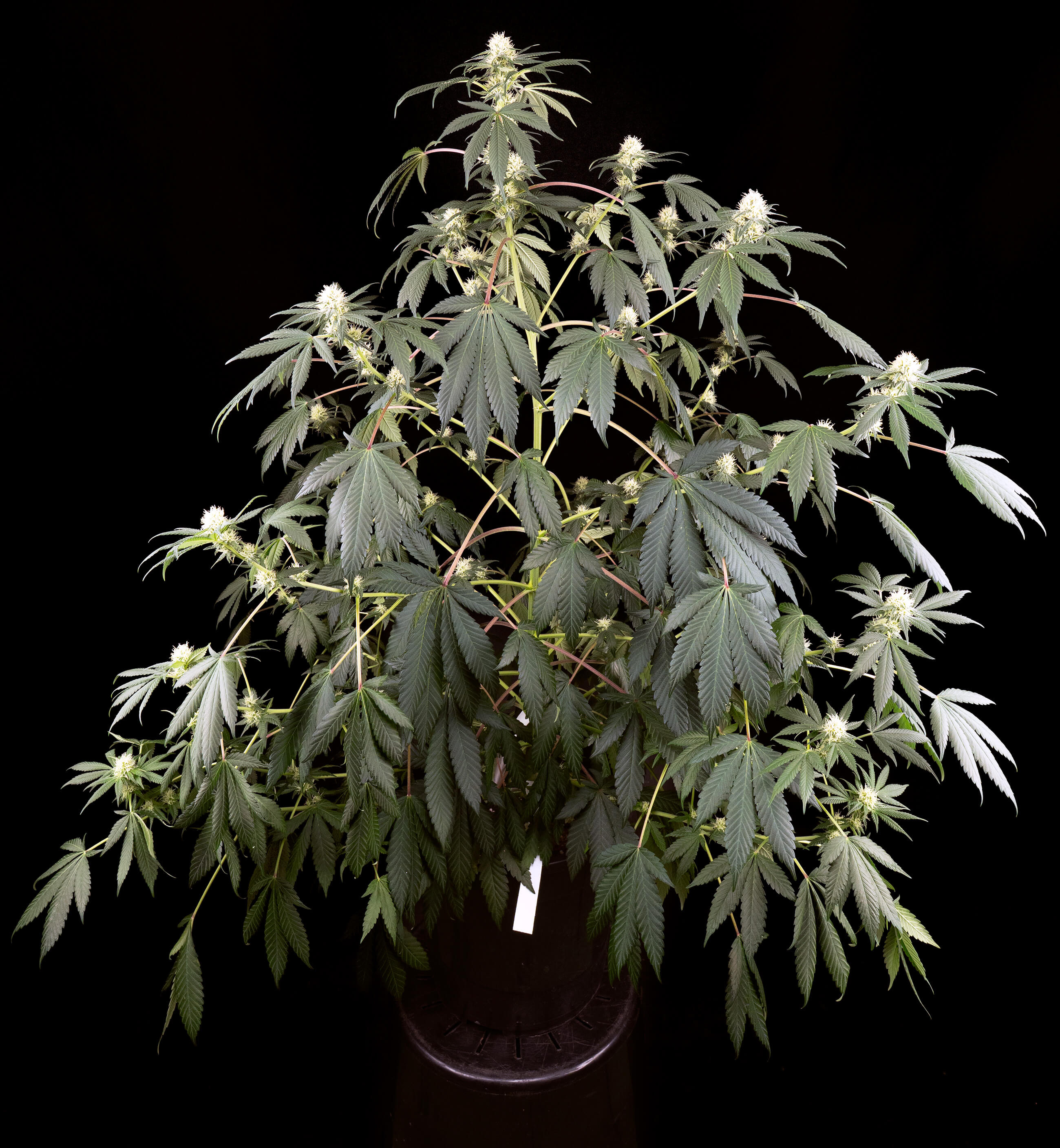
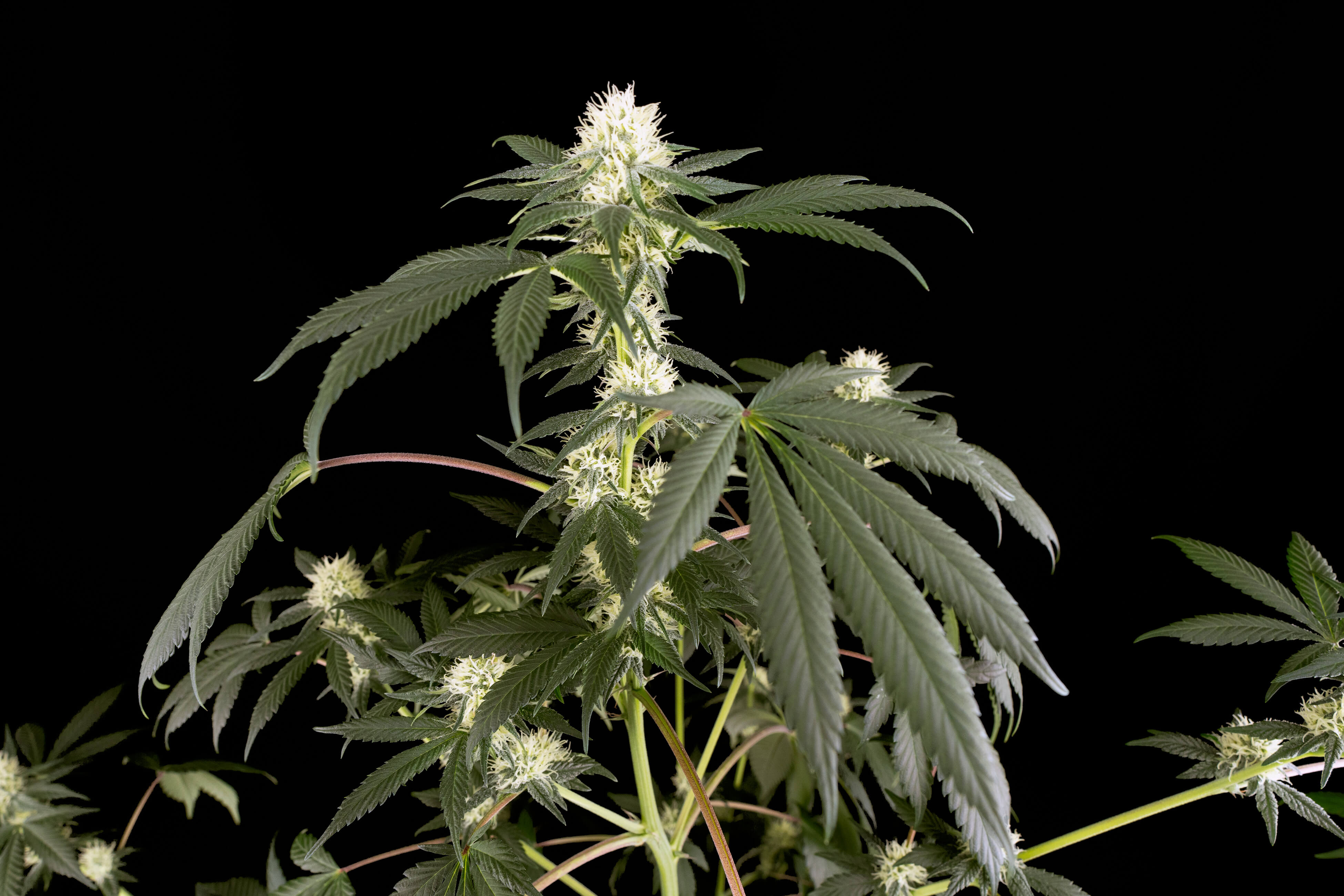
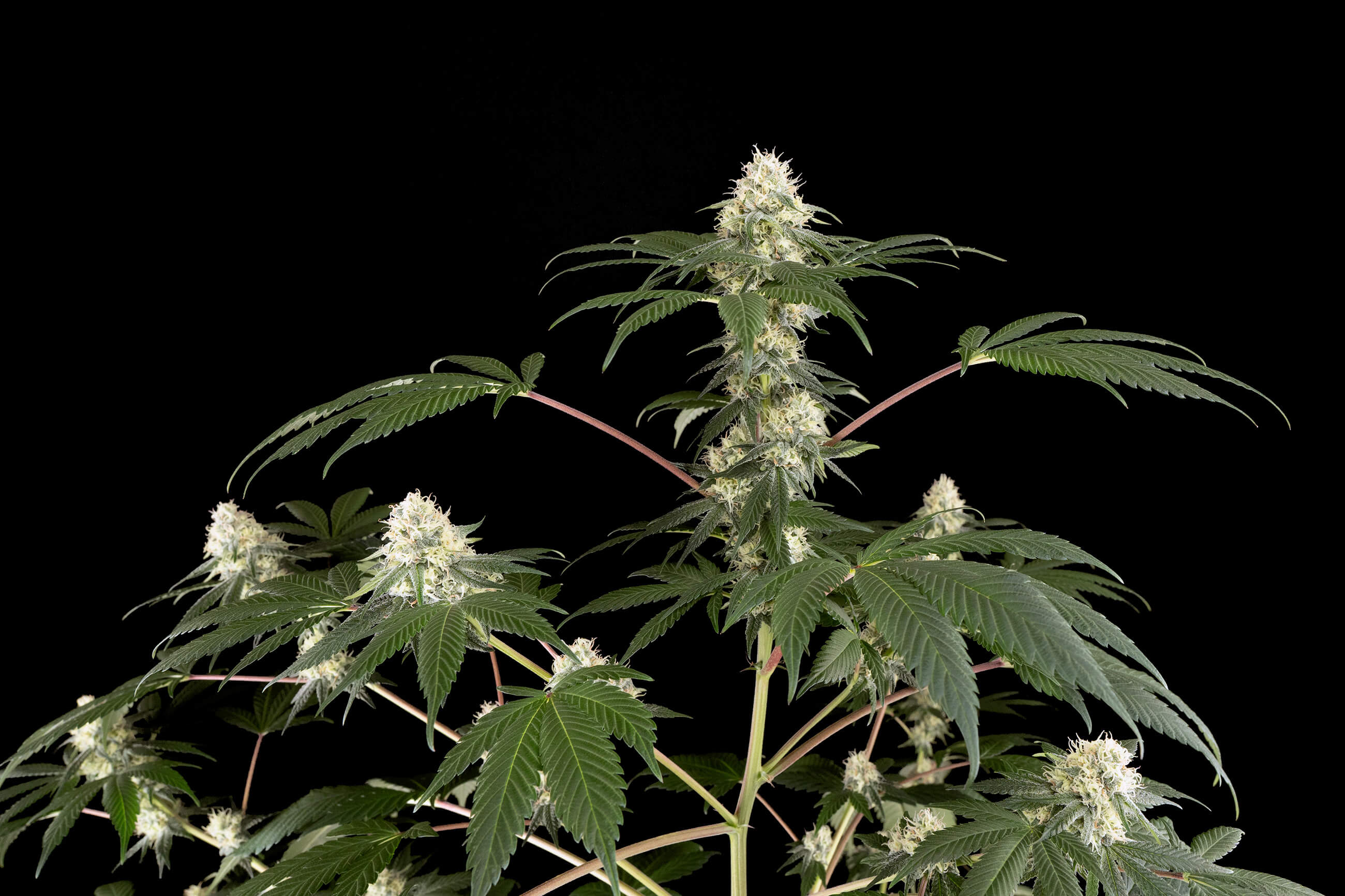
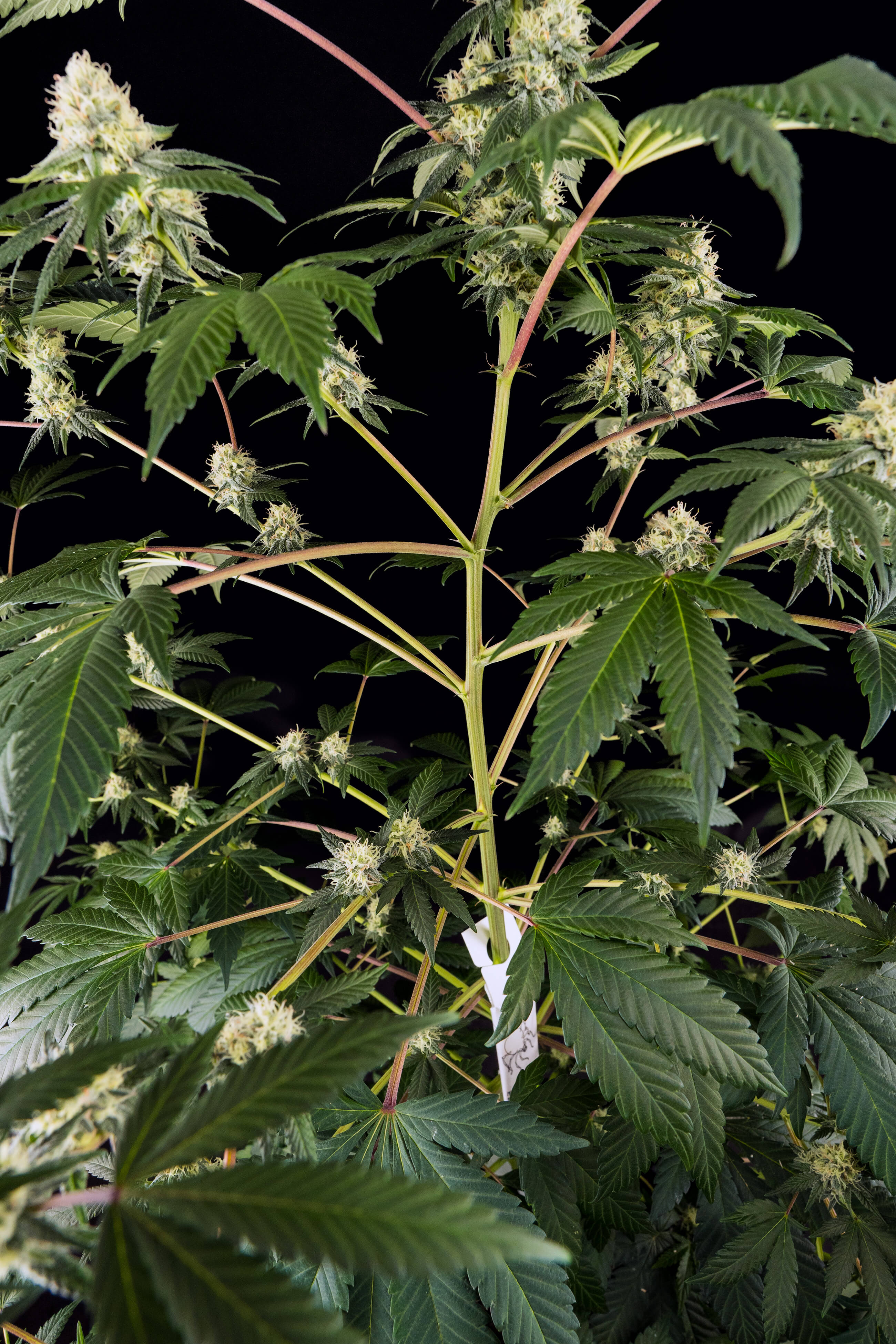
Weeks eleven and twelve saw our plant reach its final height of 83 cm while flowering continued to speed up. The main cola had developed into an impressive specimen, and lower branches were beginning to be weighted down by their flowers.
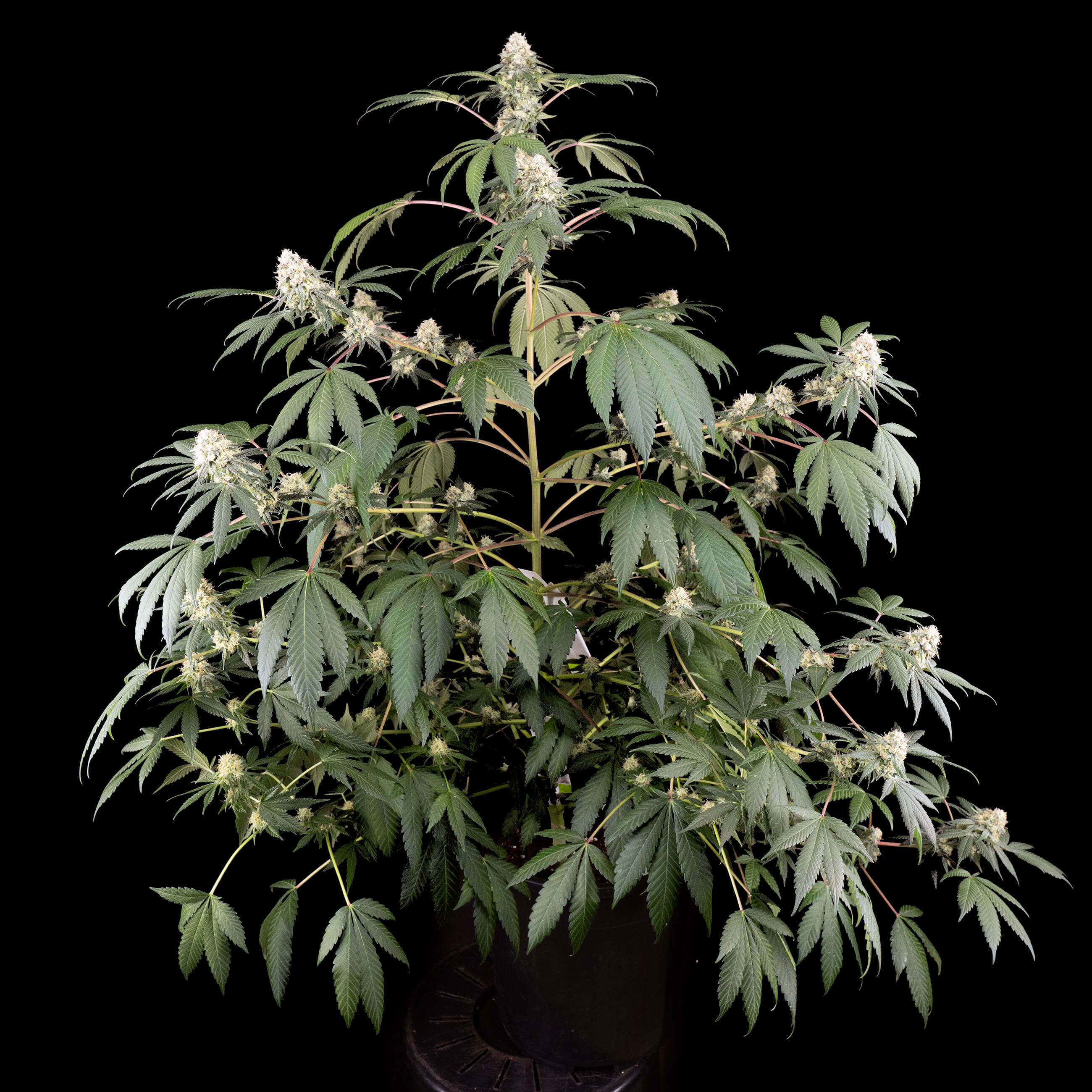
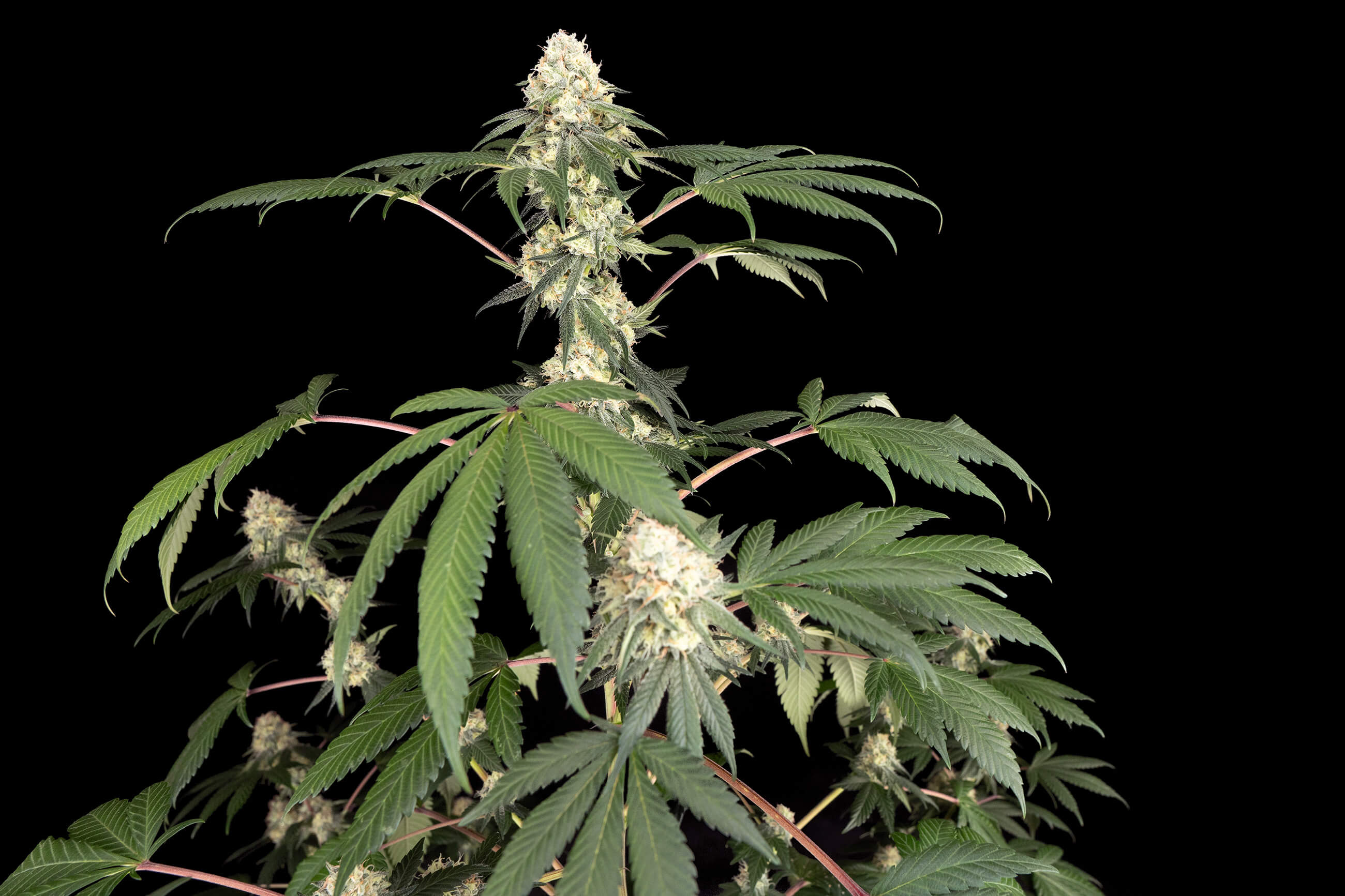
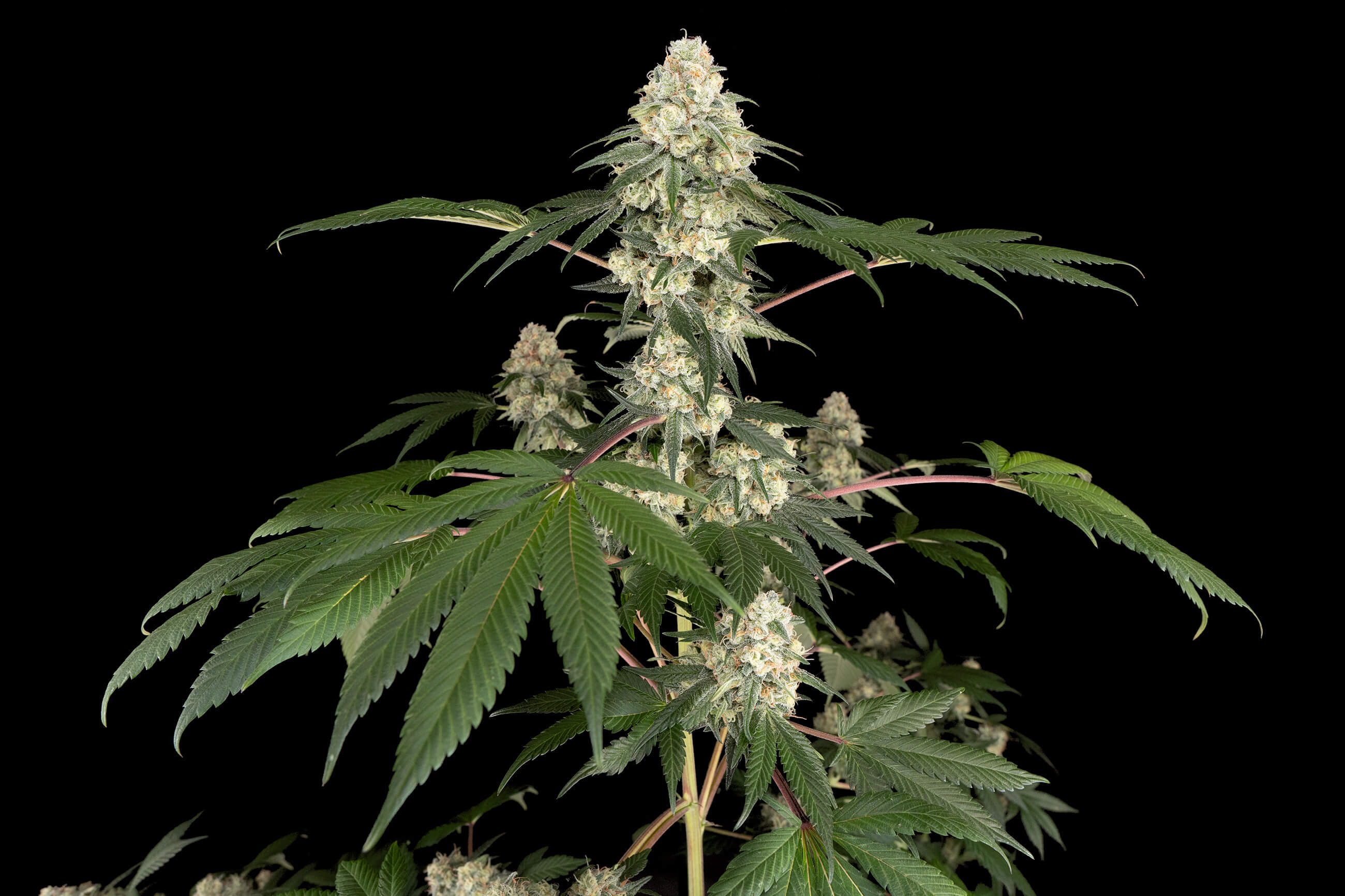
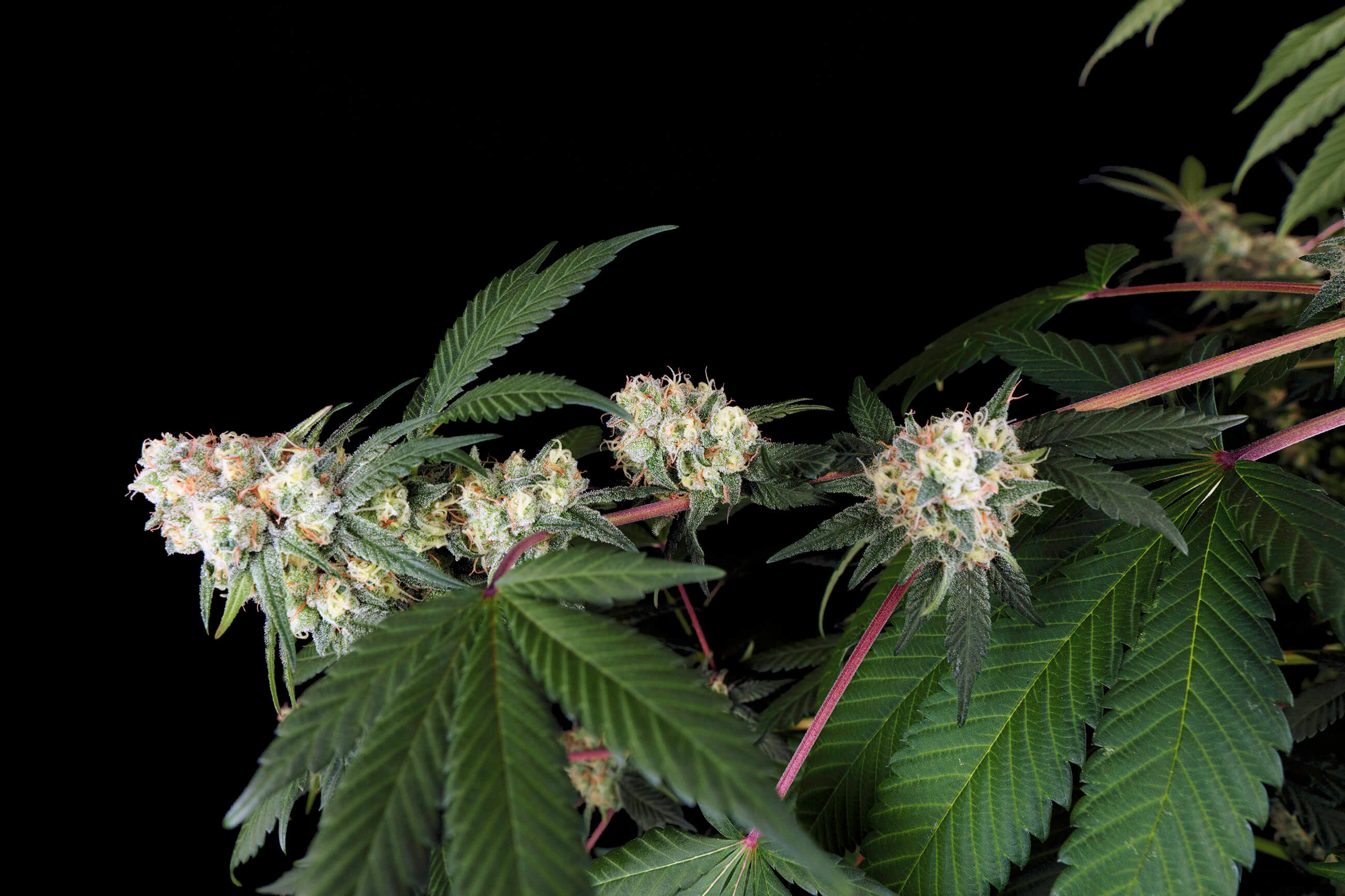
Weeks thirteen and fourteen were marked by a final burst of flowering, as the main and secondary colas ripened into large, dense buds while the lower flowers finished as dense, grape-sized buds. Most of the pistils had changed from white to a pale orange, and harvest was nearly at hand.
Lastly, in week fifteen, we harvested our Vienna Cotta Feminized cannabis plant at a final height of 83 cm.
Harvest
Once our Vienna Cotta Feminized cannabis plant was ready to harvest, we cut it down at the base, trimmed off the fan leaves, and hung it upside down to dry. We dry our plants in a climate-controlled room with a constant temperature of 15.5°C and a relative humidity of 50%. The plant was left hanging like this until the smaller branches were dry enough to snap when bent; typically, 10-20 days.
Once it had dried, we cut off the buds and trimmed away any remaining leaves. These small, popcorn-sized buds weren’t terribly leafy, though they were rather dense. While trimming each bud took no time at all, this plant produced a great deal of them, and the trimming process was quite tedious. Once done, everything was put into glass jars for curing.
For the first 24 hours, the jars were left open to allow any remaining moisture a chance to evaporate. After a day, everything was sealed up and set in a dark and cool place. At first, these jars were “burped” several times a day for an hour each, but over the next few weeks, the frequency was lowered to only once per day until they were ready. In total, this process lasts 4-6 weeks and cannot be rushed.
Overall, we harvested an impressive 87 grams of dry flower with an equally satisfying THC content of 22.78%.
Related post
Terpene profile
As our Vienna Cotta Feminized plant began to flower, we started to notice a potent and sweet aroma with highlights of fresh-baked biscotti, roasted almonds, and flaky pastry crust. These were accented by a more subtle, earthy musk, herbal spiciness, and vanilla. The dried buds featured the same creamy almond, sweet biscotti, and buttery pastry notes, alongside a limey, zesty citrus scent from the strain’s Pianono background.
The flavour is what truly stood out for us, though: a smooth, sweet, dessert-forward profile that captured the same almond, lime, and pastry notes promised by the aroma. These flavours are perfectly balanced by herbal, earthy notes that provide a lingering, creamy aftertaste.
Overall, we found the effects of Vienna Cotta Feminized to be fairly well-balanced. Things kicked off with a relaxing body stone that was paired with a dreamy mental uplift perfect for creative work. The effects were deeply calming, though euphoric, making these buds a top pick for an evening working on a project. Thanks to the strain’s sativa genetics, the high didn’t lock us to the couch.
Related post
The outcome
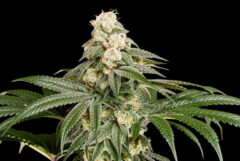
For such a short plant, our Vienna Cotta Feminized was surprisingly large, thanks to its wide, far-reaching lateral branches. This could make growing these in confined spaces tricky, but these impressive branches are ideal for low-stress training. If you’ve got the time and space, this strain is areal winner.
- Disclaimer:Laws and regulations regarding cannabis cultivation differ from country to country. Sensi Seeds therefore strongly advises you to check your local laws and regulations. Do not act in conflict with the law.
