


In this report, we’ll outline our time with Blue Porcelain Feminized. Highlighted by slow and remarkably steady growth, these plants are an ideal pick for playing around with new growing techniques. In the end, we were genuinely impressed with this strain’s consistency, ease of growth, and heavy yields of patent, sticky buds.
Total growing time: 98 days
Flowering time: 70 days
Final height: 70 cm
Final yield: 93 grams
THC content: 24.66%
Blue Porcelain Feminized is a 70% indica launched in 2026 as part of the Sensi Seeds Breeding Grounds project by Aficionado French Connection. This strain is a cross of Black Domina, mixed with a blend of Ivory Breath and Pianono; two Aficionado original strains known for their robust genetics and impressive potency.
To give our plant the best shot at success, we decided to grow it in an 8-litre plastic pot that we filled with BAC Lava mix and placed beneath a 1000W Philips GreenPower light. During vegetation, we kept our light on an 18/6 schedule, and the grow space was kept at a stable 23°C during daylight hours, dropping down to 21°C when the light switched off, as well as a relative humidity of 65%, which would be gradually lowered as the plant matured.
Germination & seedling
As always, the first step in growing our plant was to germinate our Blue Porcelain Feminized cannabis seeds. For this, we turned to the time-tested paper towel method; the fastest, cheapest, and most reliable germination technique out there.
To begin, we simply folded up a few paper towels, set them on a large plate, and wetted them just until they were wet the whole way through, but not dripping. Next, we carefully placed our seeds on top and then covered them with another damp paper towel before placing everything into an open plastic bag and leaving it in a warm place out of direct sunlight.
After about a couple of days, our seeds had cracked open, revealing a small white taproot that meant it was time to move these seeds to the next stage. Lastly, we planted our seed (taproot pointing down) into a pre-soaked Rockwool cube and put that beneath a 600W lamp.
At this point, we didn’t give our fresh seedling any extra water or nutrients, as plants at this stage are extremely fragile and an excess of light, heat, water, or even nutrients can kill them before they’ve sprouted. After three days, our plant got its first feeding with 100 ml of pH-balanced water (pH 6.0; EC 0.8) mixed with a small dose of rooting hormone.
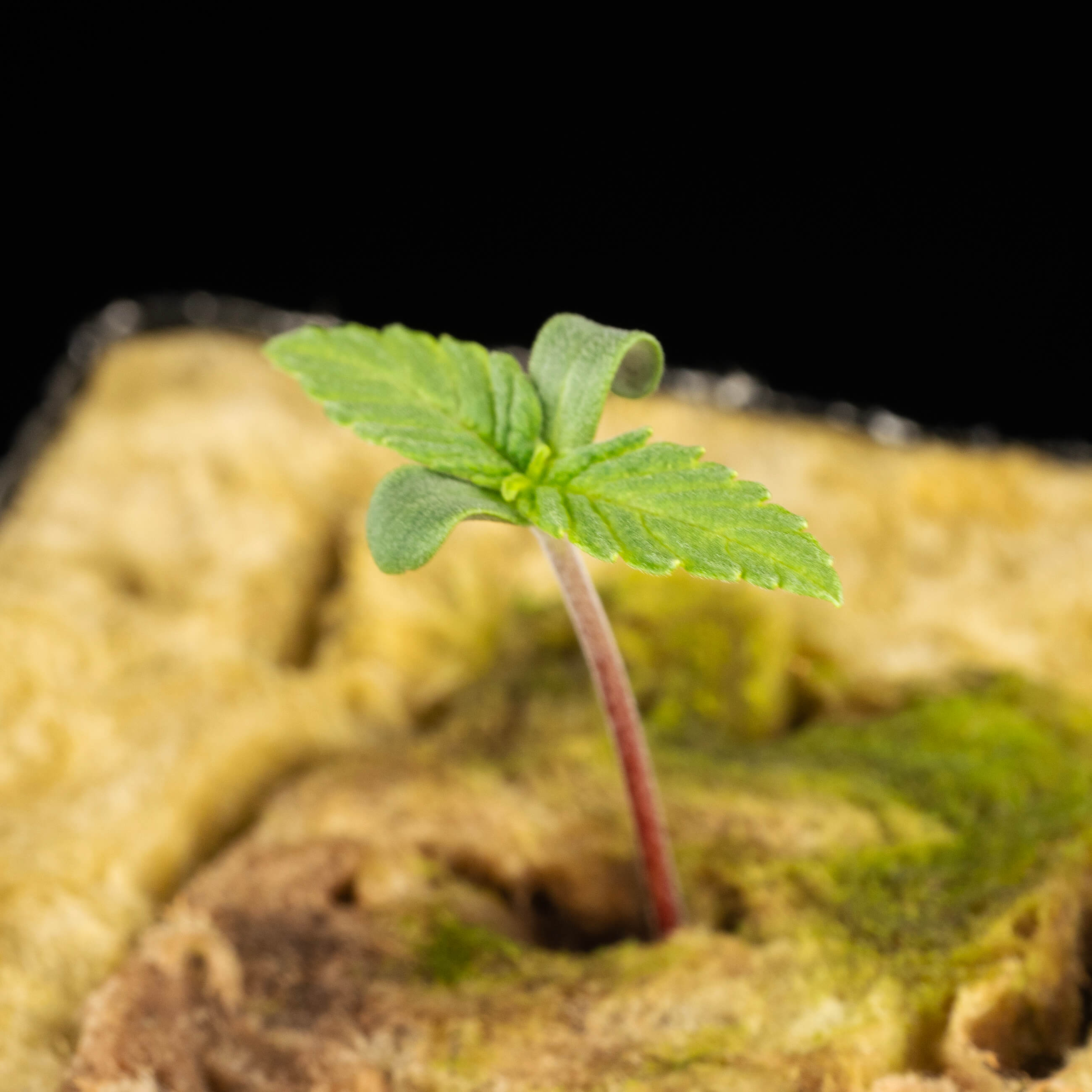
By the end of week one, our young plant was already standing 8 cm tall with a slender stem supporting two pairs of small cotyledons. The stem was incredibly thin and required support in these first weeks. At this stage, we were feeding our plant daily with 100 ml of water mixed with Bio Grow liquid nutrients (pH 6.0; EC 1.4).
Vegetation
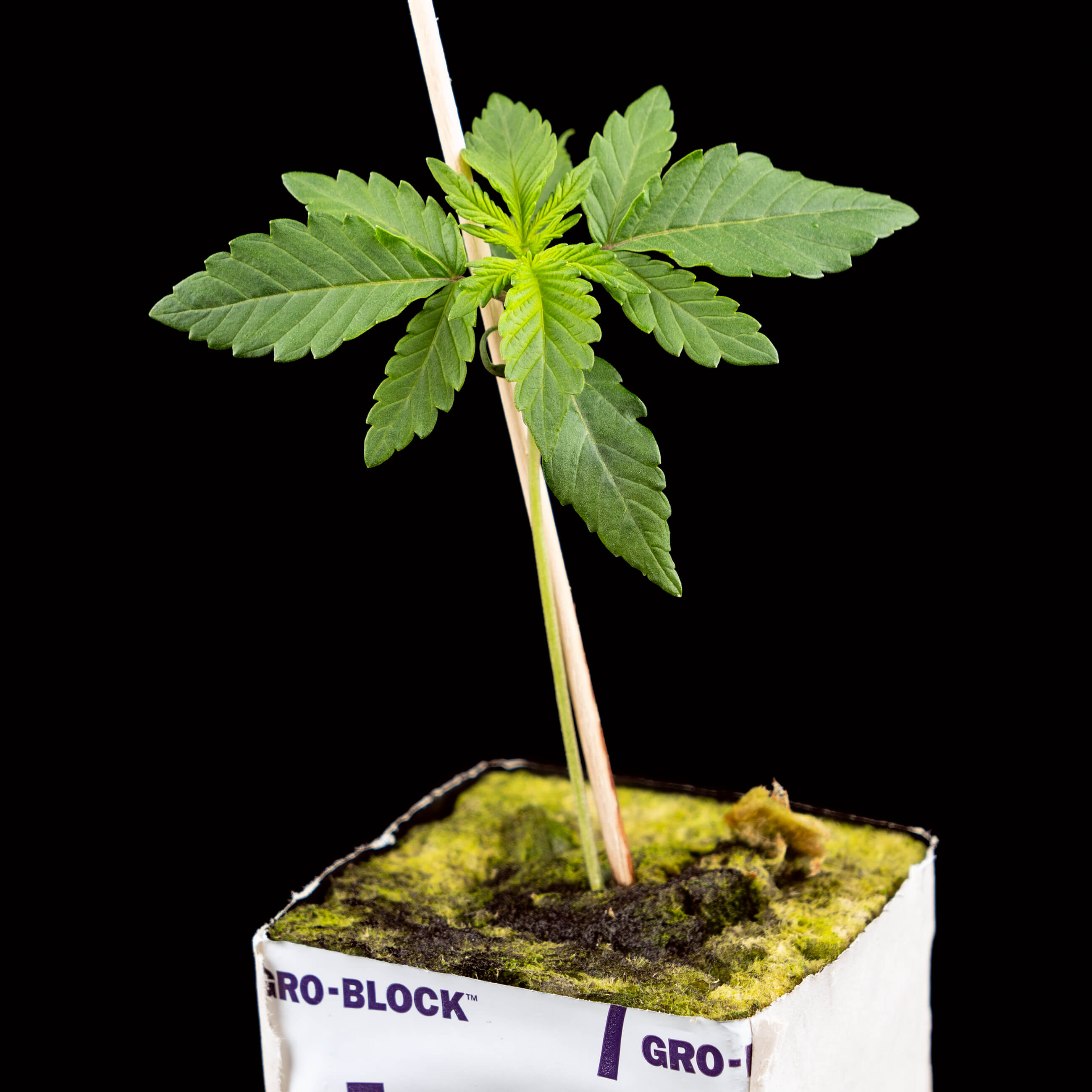
As week two kicked off, our Blue Porcelain Feminized cannabis plant had nearly doubled in height to reach 15 cm in height and had grown its first set of true leaves. The stem was still quite thin, and even though these leaves were fairly small, the plant still required additional support. At the start of the week, we moved our plant to its new home, an 8-litre plastic pot set beneath our 1000W lamp. With more rapid growth expected over the next week, we doubled the volume of water to 200 ml per day.
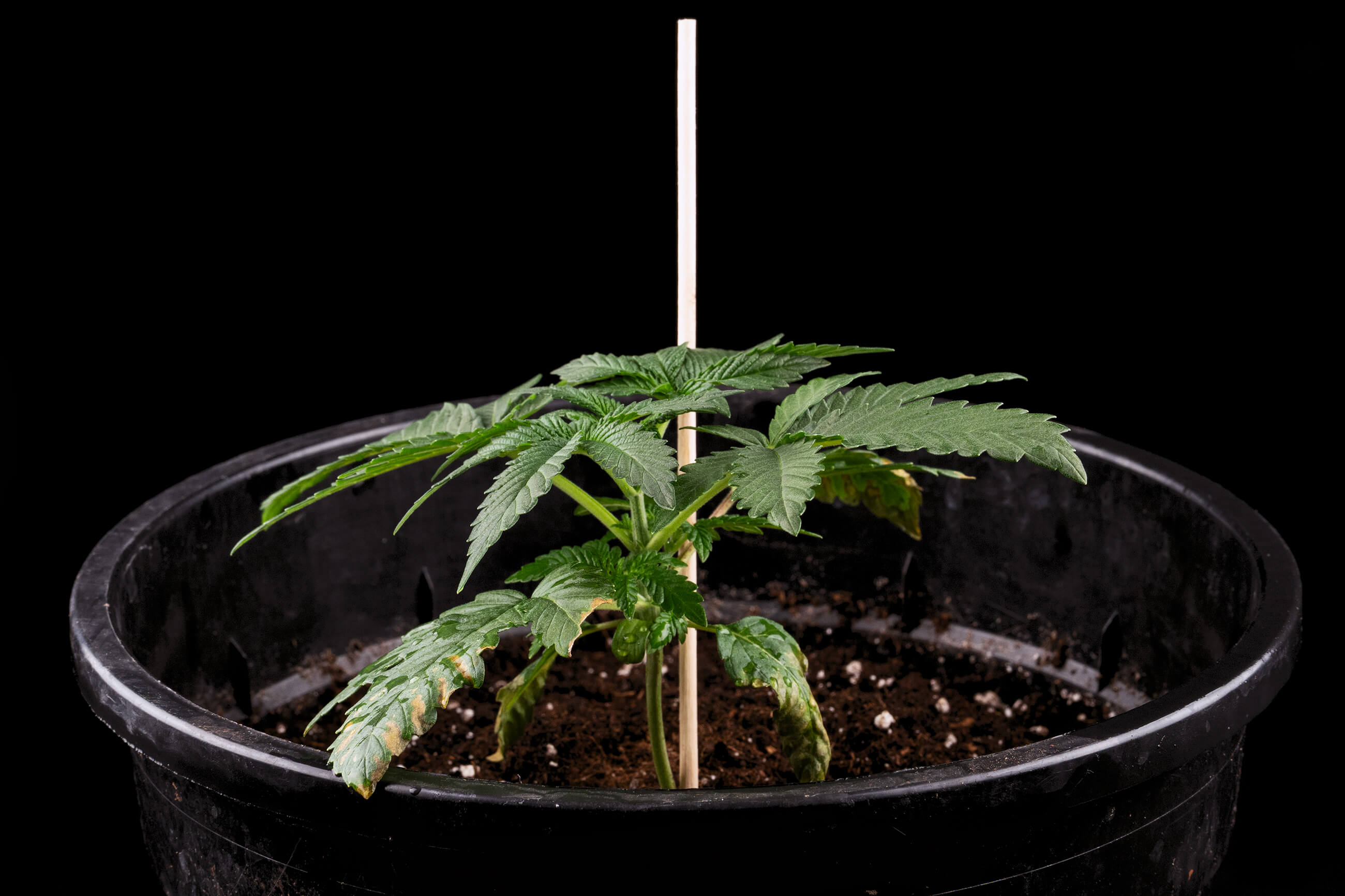
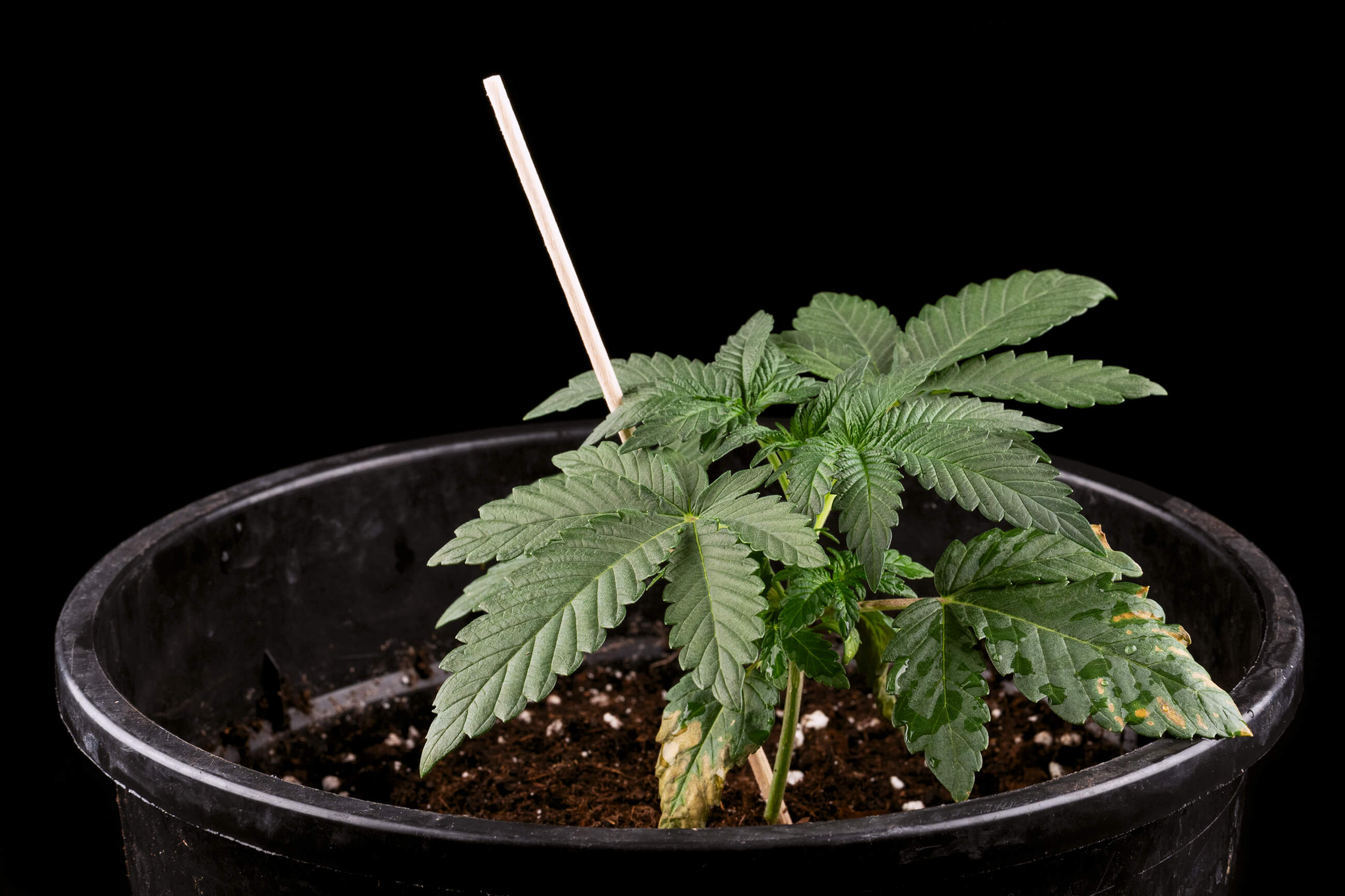
In week three, our plant’s growth slowed slightly, gaining 6 cm to finish at a height of 21 cm. This week also saw the growth of a couple of new sets of leaves along extremely tight internodal spacing, as well as the very first signs of lateral branches. By now, the plant’s stem was thick enough to support itself, and the plant would have no future issues with support. Since we were set to make the switch to flowering next week, we increased the volume of water to 400 ml per day.
Before we flowered our plant, we hung some small satchels of Neoseiulus californicus and Amblyseius swirskii from the plant’s lowest branches. These small white packets are each filled with hundreds of tiny bugs that have a symbiotic relationship with cannabis plants. These little helpers won’t harm cannabis plants at all, but will instead hunt down and eat pests like spider mites and thrips, which can destroy even the healthiest plant. We replace these every four weeks to maintain a fresh supply.
Related post
Flowering
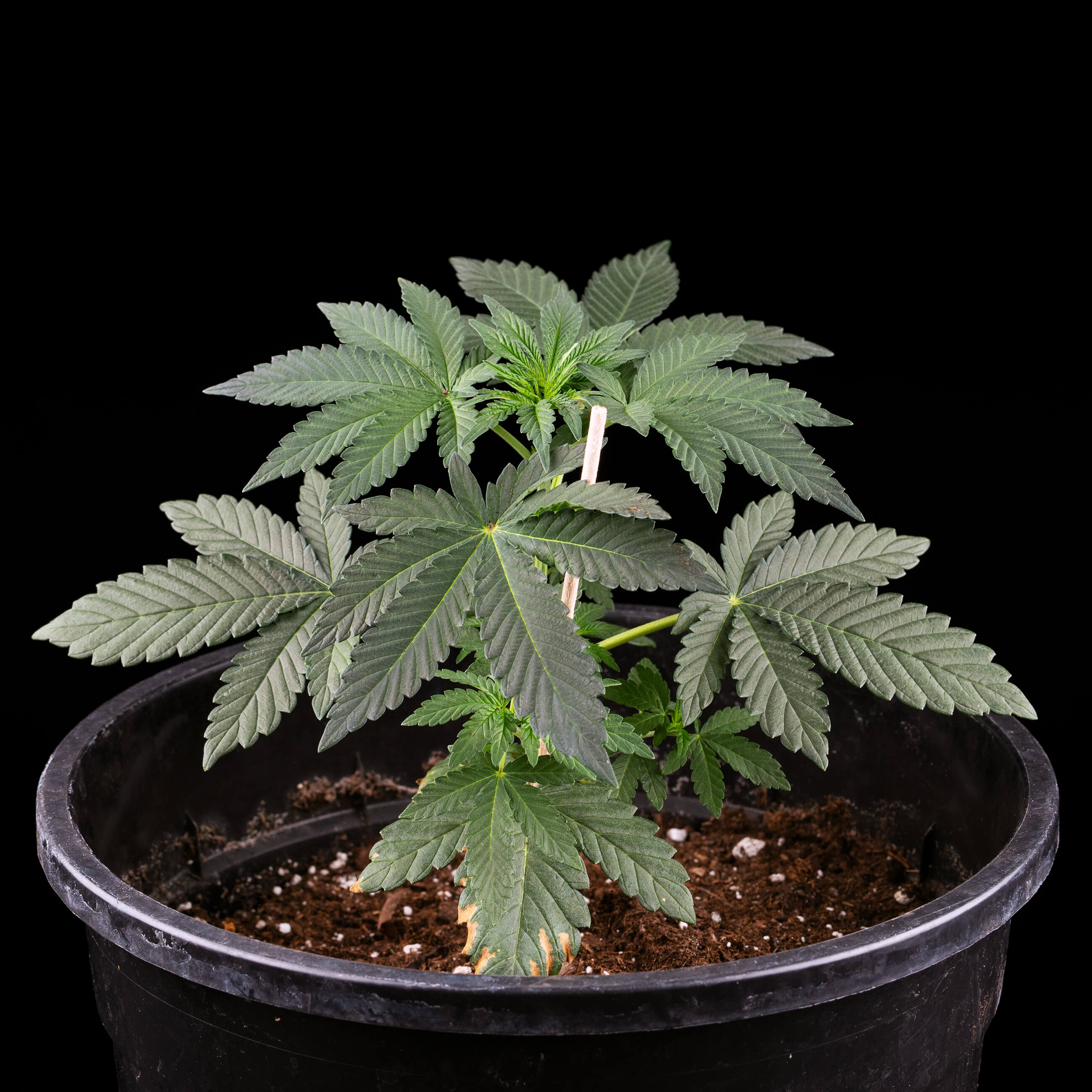
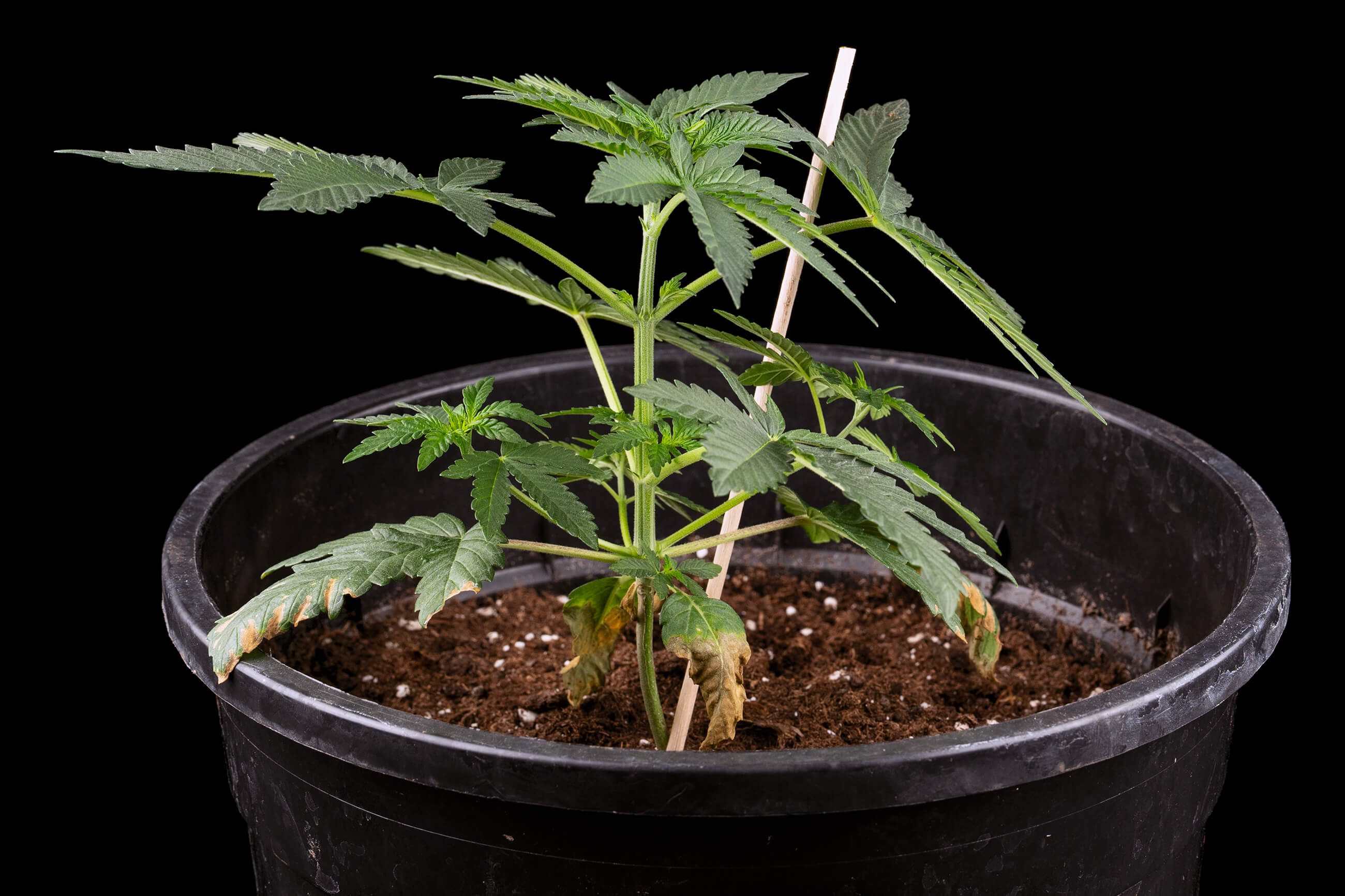
As we entered week four, it was time to start flowering our plant, so we switched our lights to a 12/12 schedule and began daily feedings with 800 ml of water mixed with Bio Flower liquid nutrient (pH 6.0; EC 1.8). By the end of the week, our plant had grown to a height of 27 cm with multiple new sets of leaves growing out of increasingly stretched-out internodal spaces. Lateral branches were still only beginning to grow in, but the plant was developing rapidly.
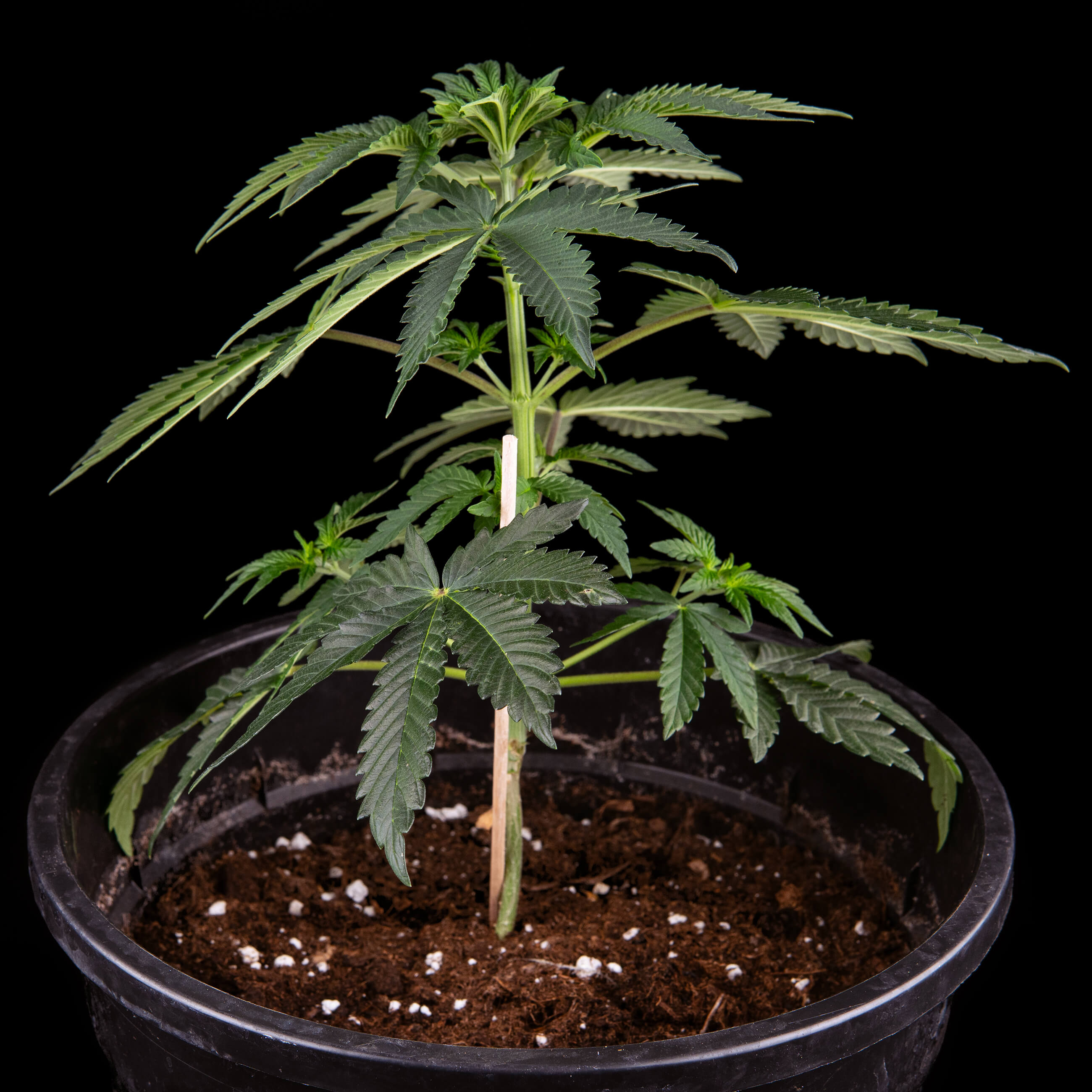
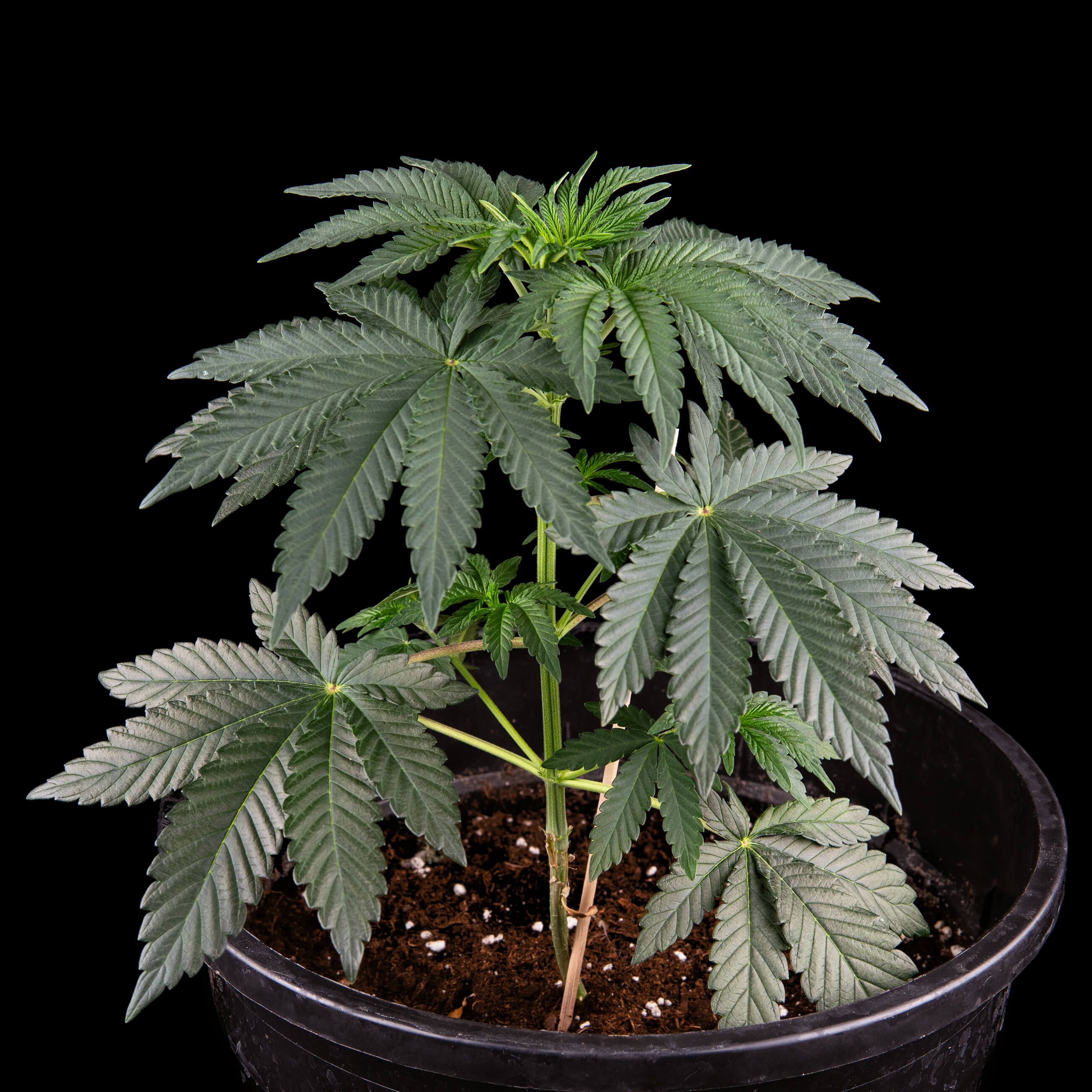
In week five, our plant continued its slow and steady climb, gaining 4 cm to reach a new height of 31 cm. By now, the internodal spacing was incredibly long for such a short plant, and the lateral branches were finally starting to grow outwards, giving the plant an open, airy, cylindrical shape. With flowering set to kick off any day now, we once again increased the water to 1,000 ml per day and reduced the relative humidity to 60%.
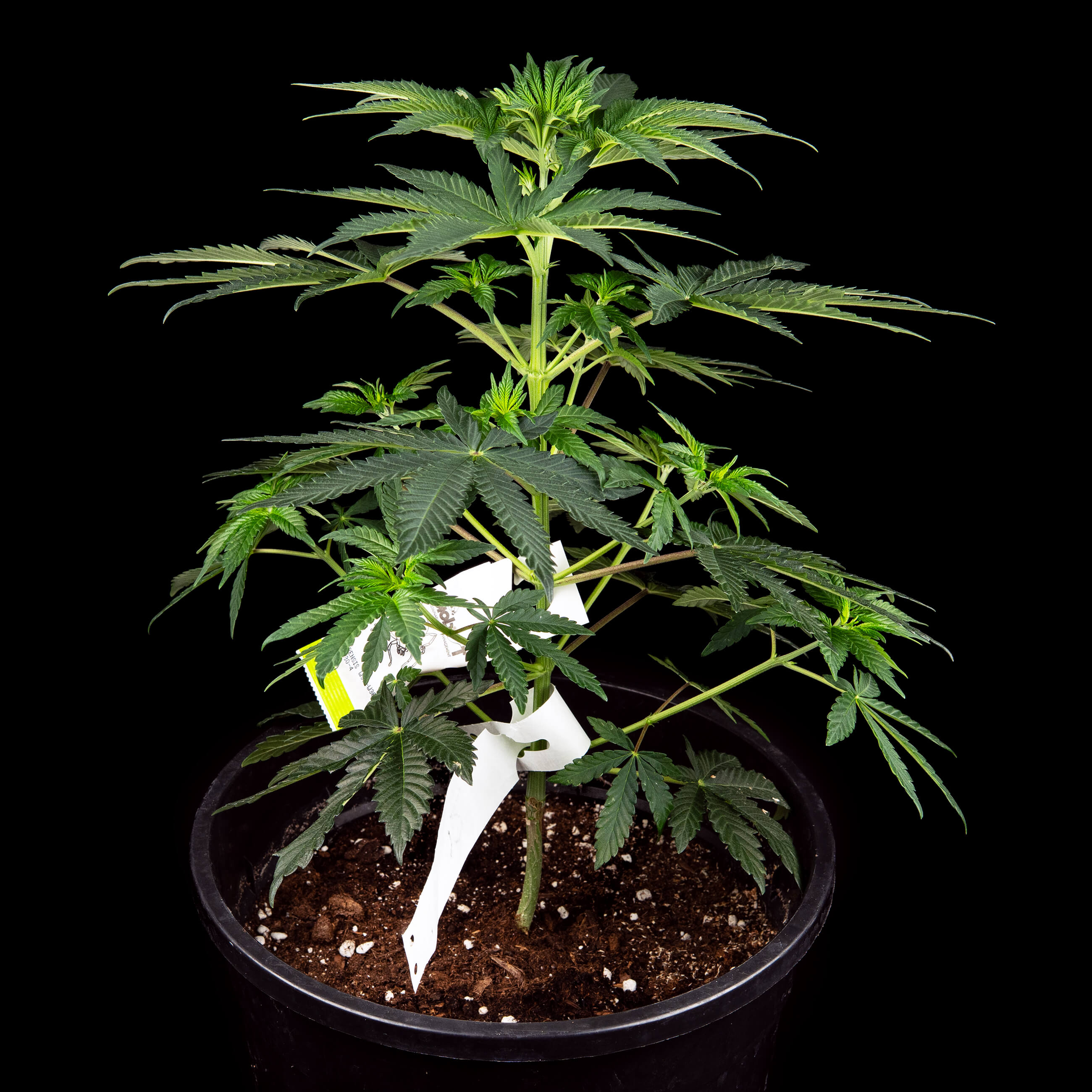
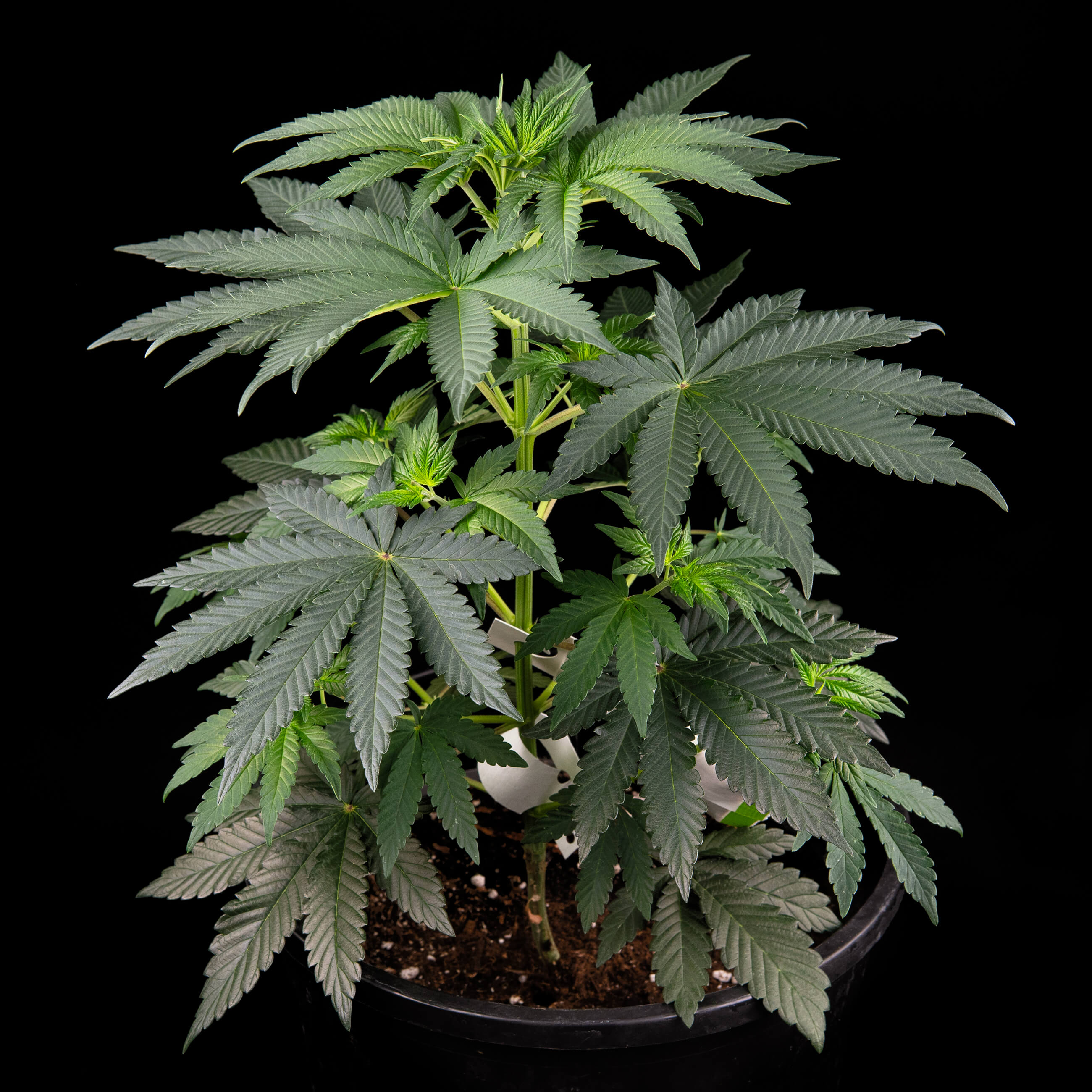
Week six saw another week of consistent growth, with our plant growing another 4 cm to finish the week standing 35 cm tall. By now, the lateral branches were growing rapidly and were beginning to form a fairly even canopy just below the main stem. There were no signs of flowering yet, but the plant’s frame was ready to bloom any day now.
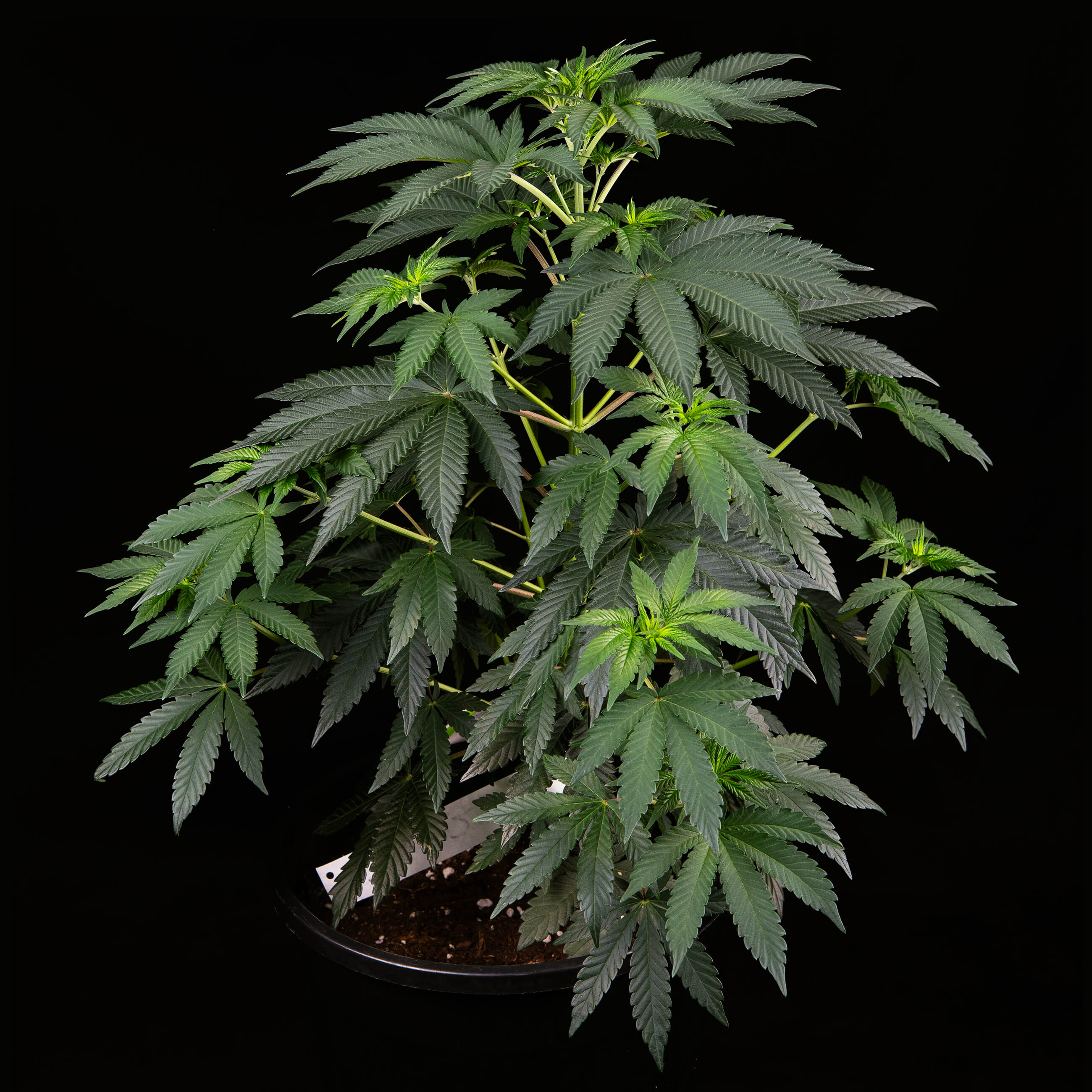
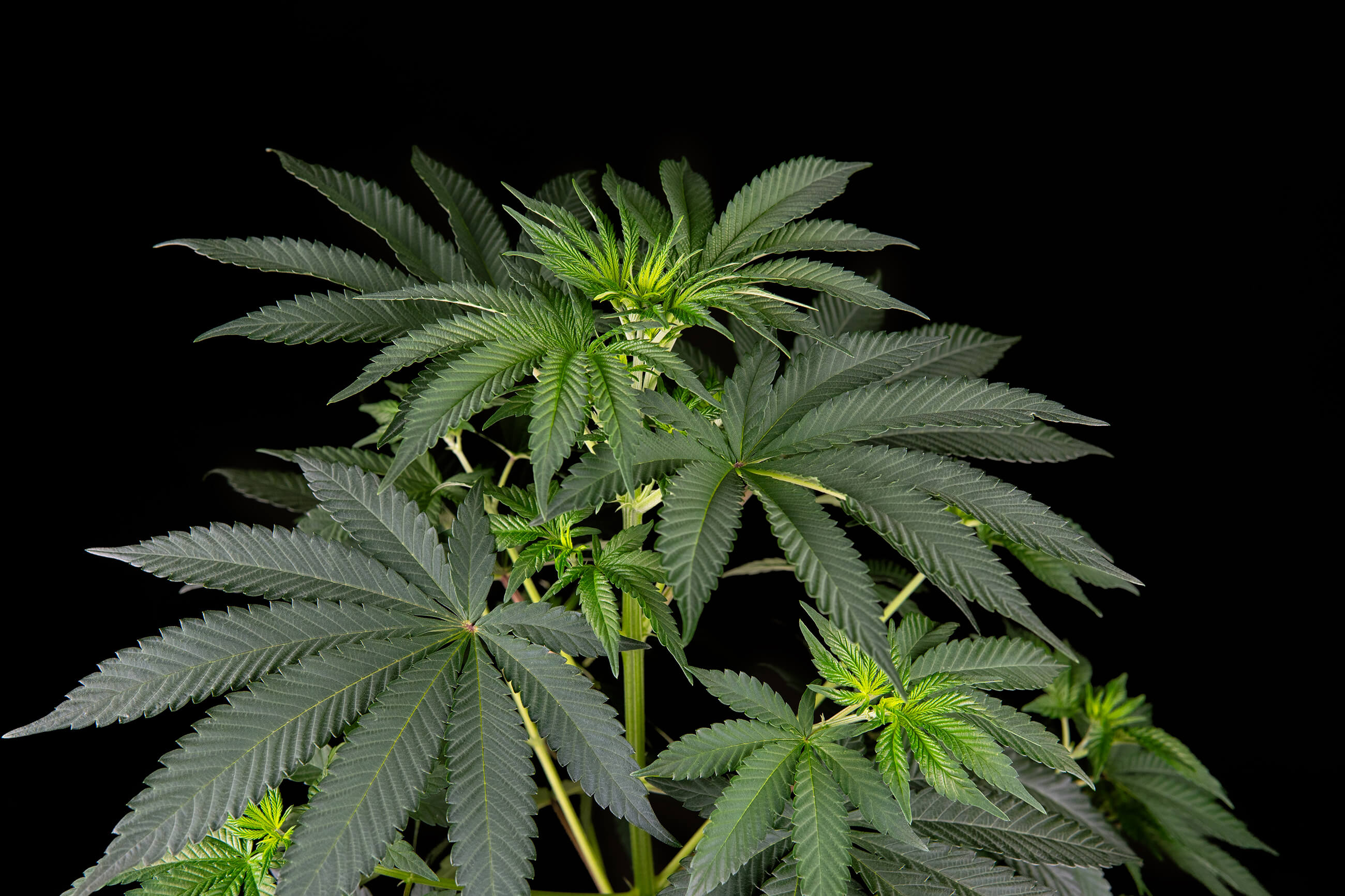
Over the course of week seven, our plant reached a new height of 41 cm tall, the largest week-on-week height gain of the grow, and the main stem was gradually climbing above the lower canopy. This week saw our plant begin to show the earliest signs of flowering as small white pistils began to grow in at the tops of branches. With flowering now underway, we upped the water to 1500 ml per day.
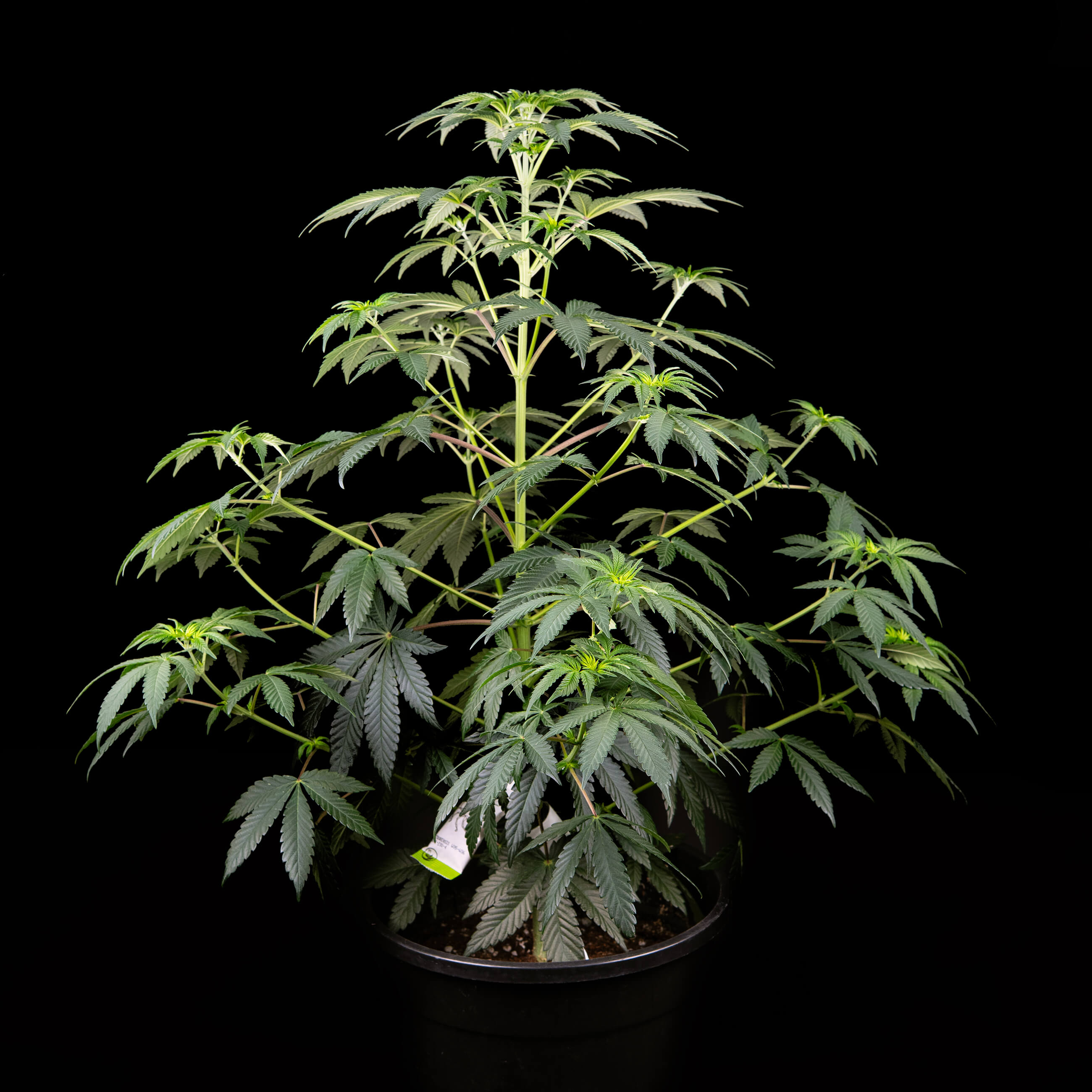
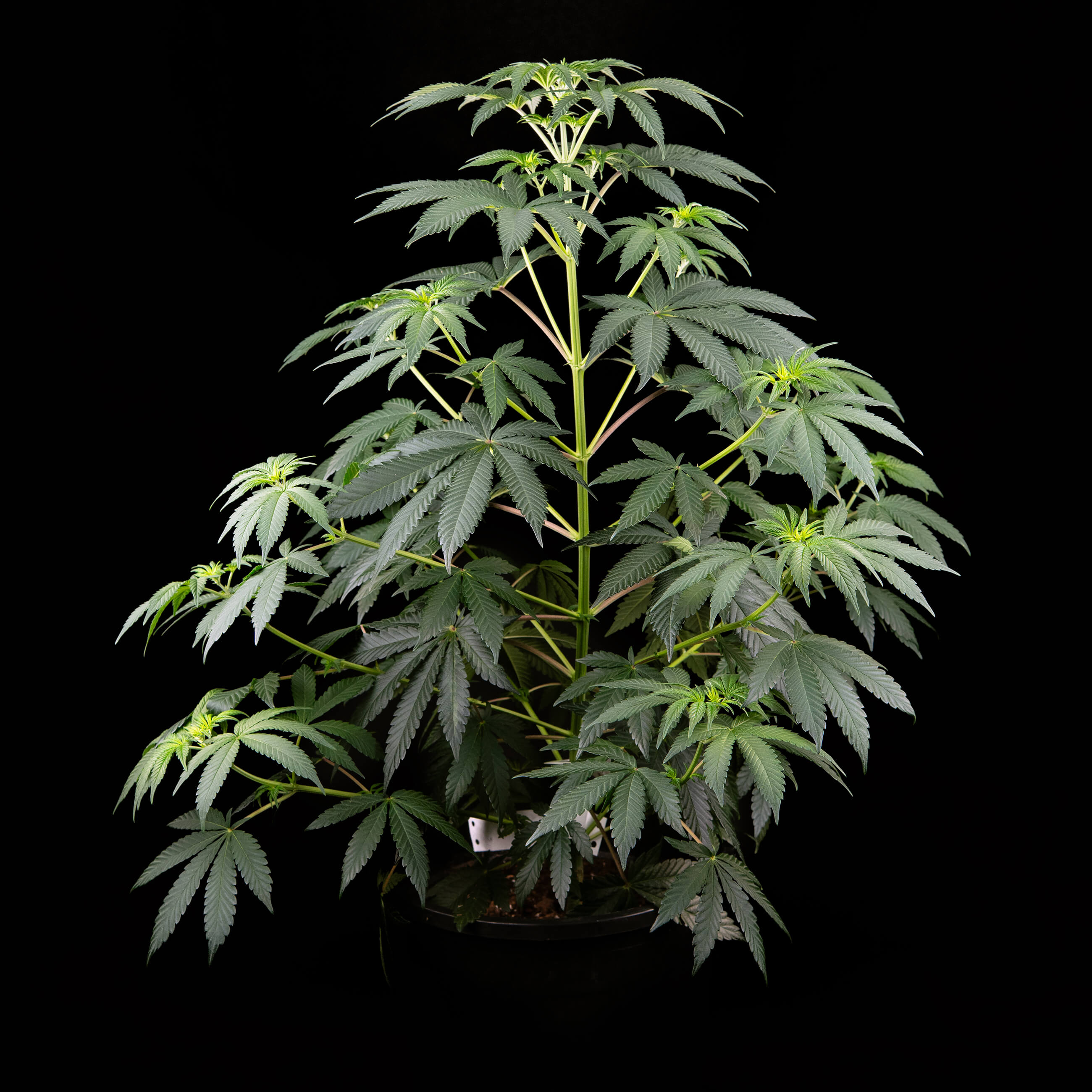
Week eight saw our plant reach 46 cm tall. This slow vertical growth was accompanied by an explosive burst of growth among the lateral branches, which were now growing rather far outwards, giving the plant a rather bushy shape. By now, the plant had stretched considerably, giving it an almost sativa-like frame, despite its short height. Flower development was moving along, though slowly. Lastly, at this point, we lowered the humidity to 55% to help combat mould.
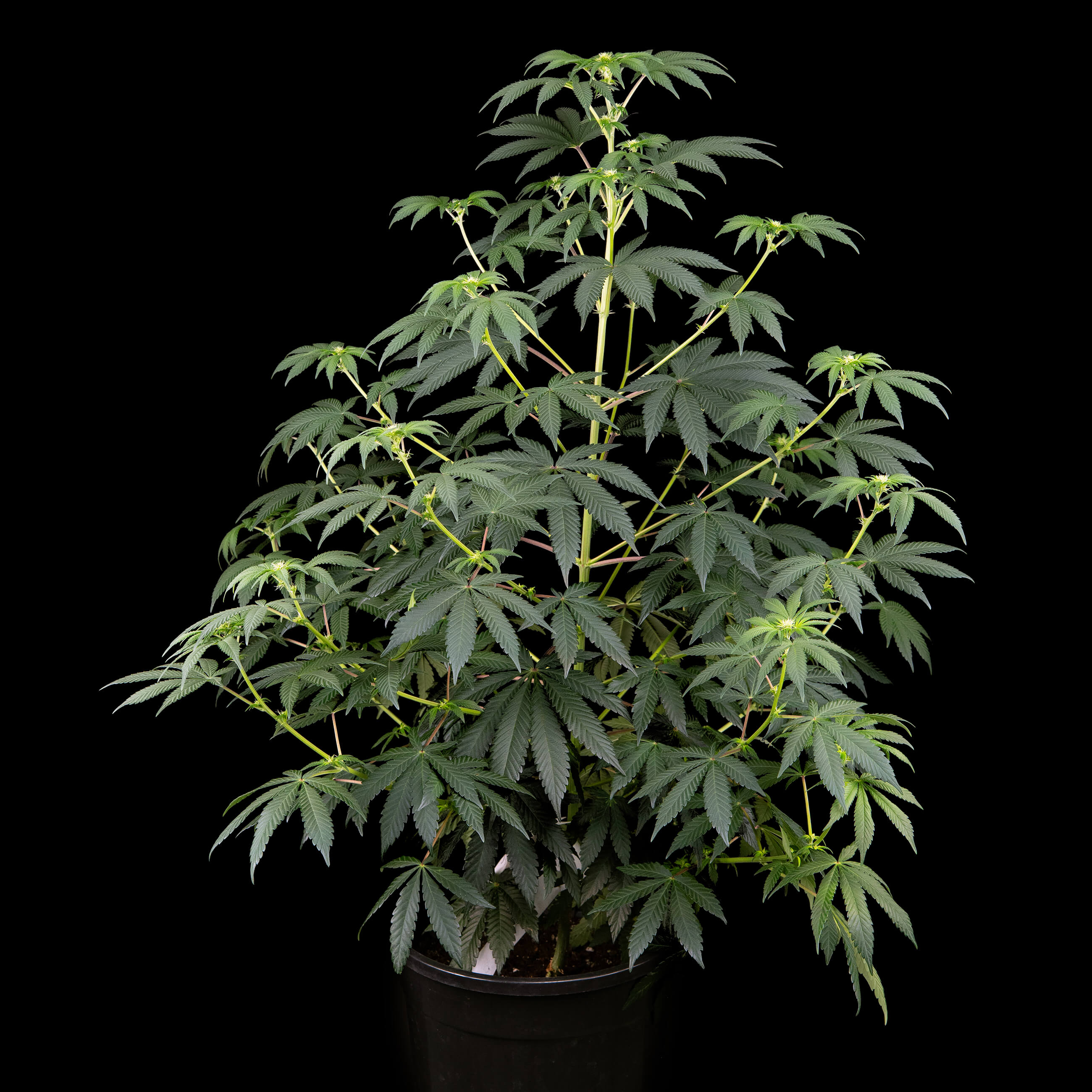
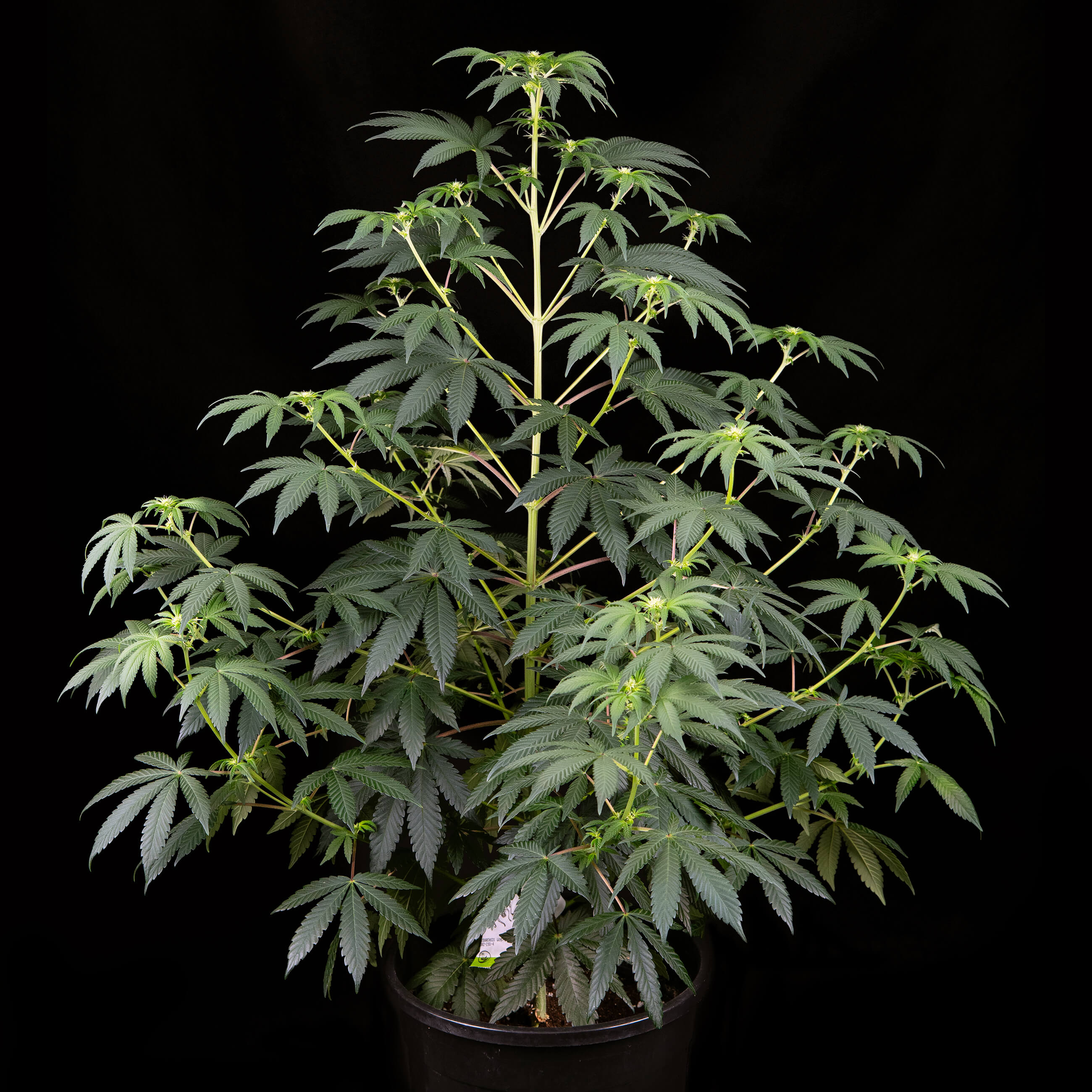
In week nine, our plant continued its remarkably consistent, if rather slow, growth, gaining another 5 cm to finish the week at 51 cm tall. The lateral branches continued to grow outward, giving the plant a distinct Christmas tree shape. Flowering was progressing slowly, but was beginning to accelerate as the single white pistils were growing into small pre-flowering clusters.
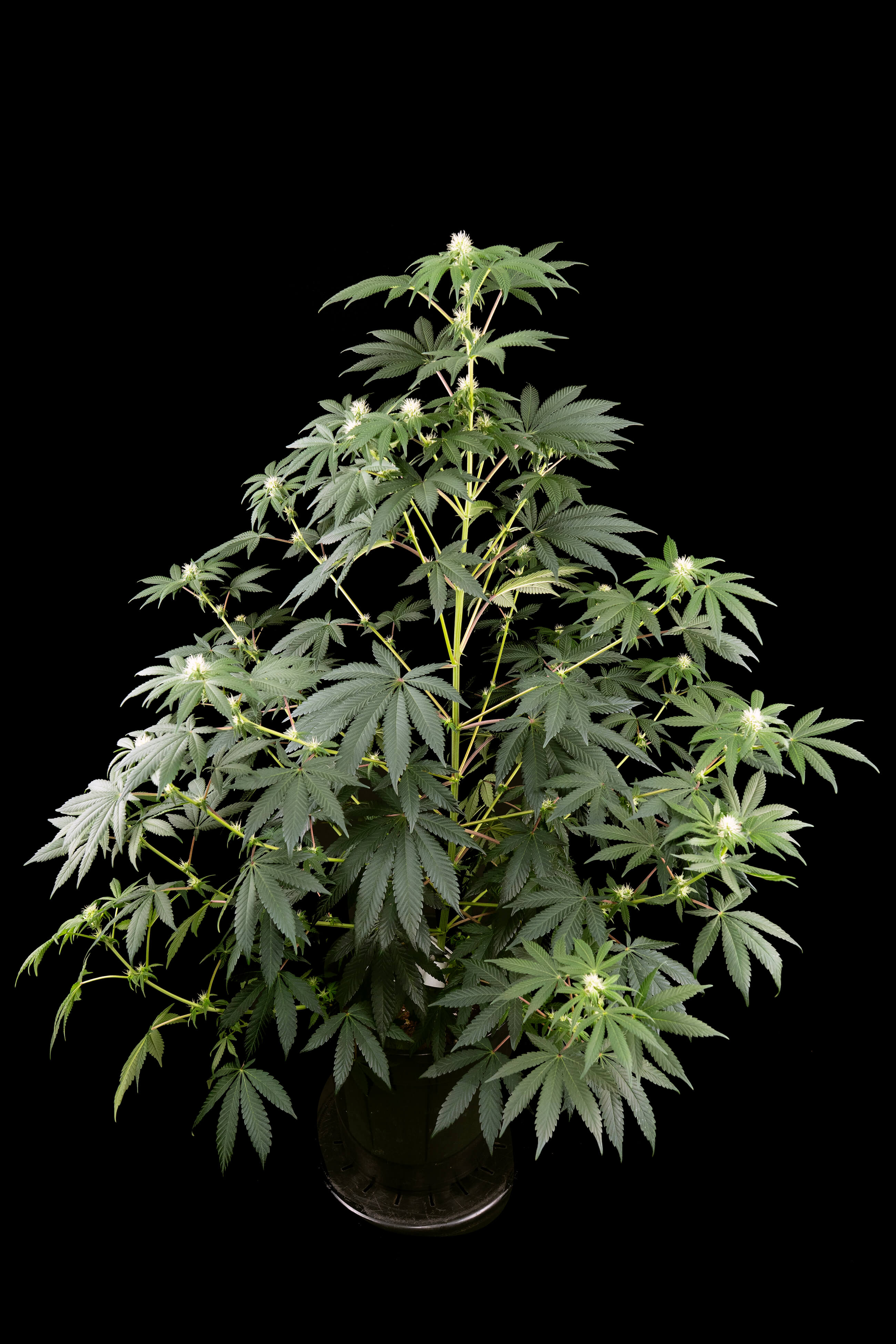
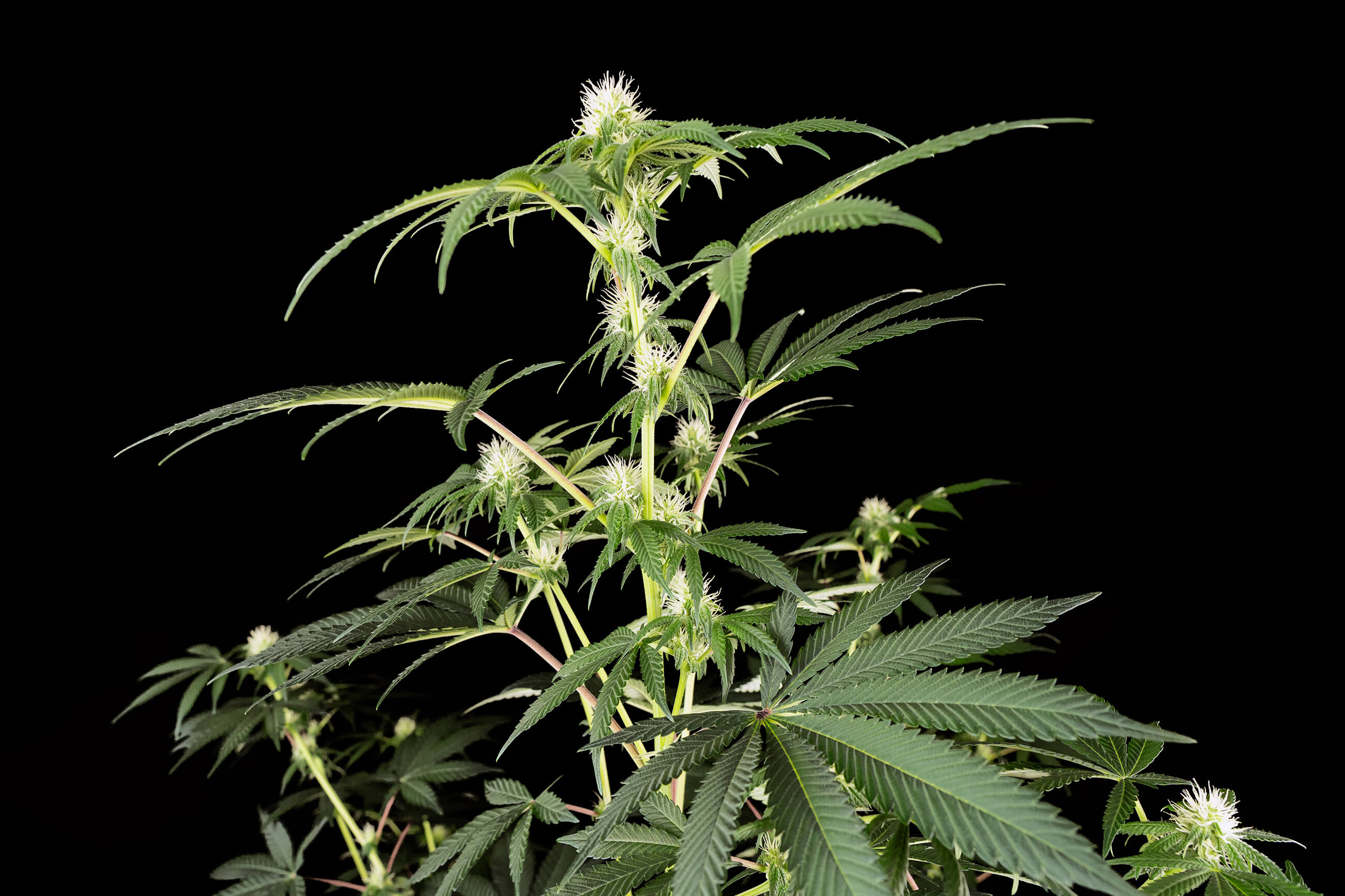
Week ten saw our plant finally enter full bloom as each flowering site was now sporting a rapidly developing bud. The growth of the lateral branches slowed considerably, and the main stem stretched a bit more to reach a height of 55 cm.
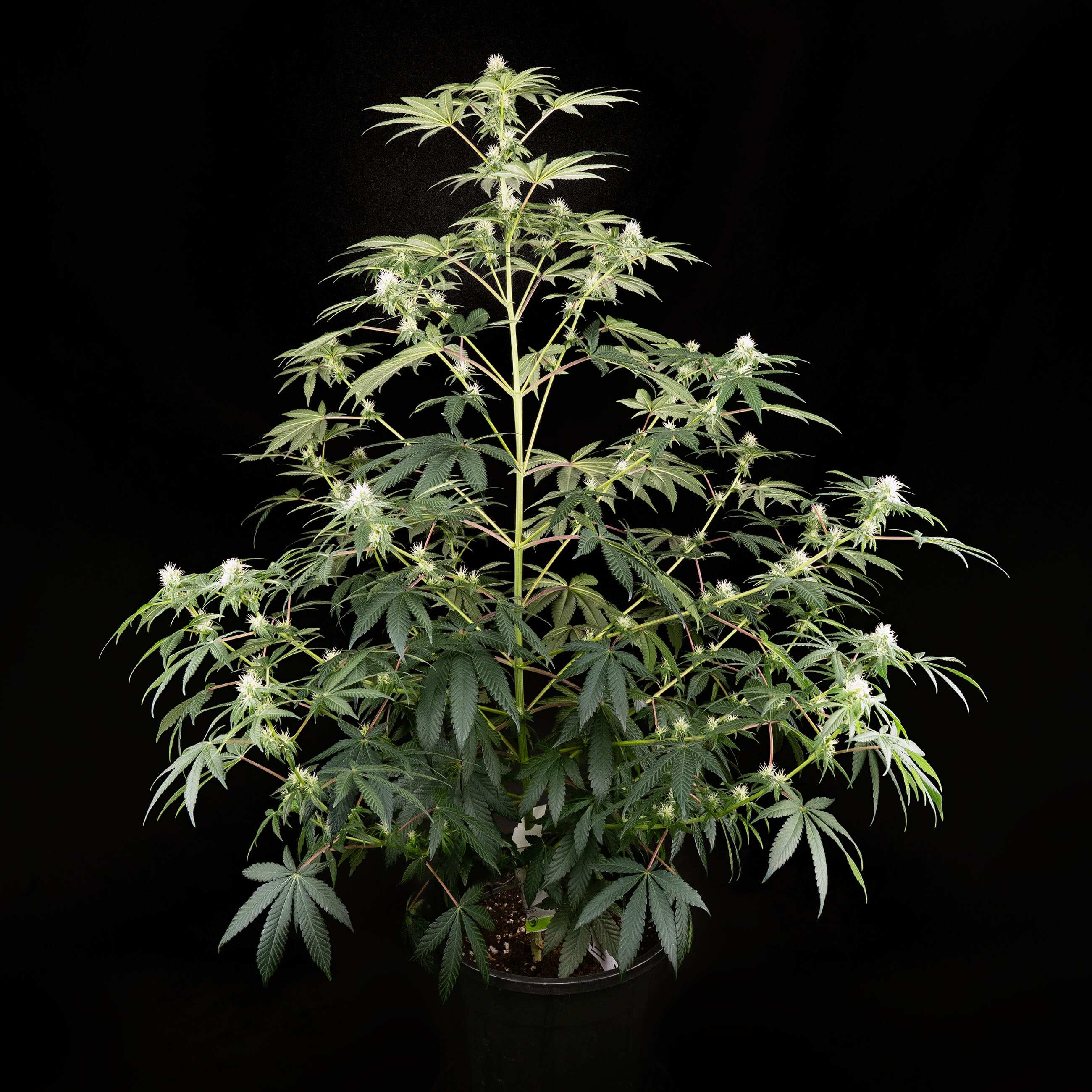
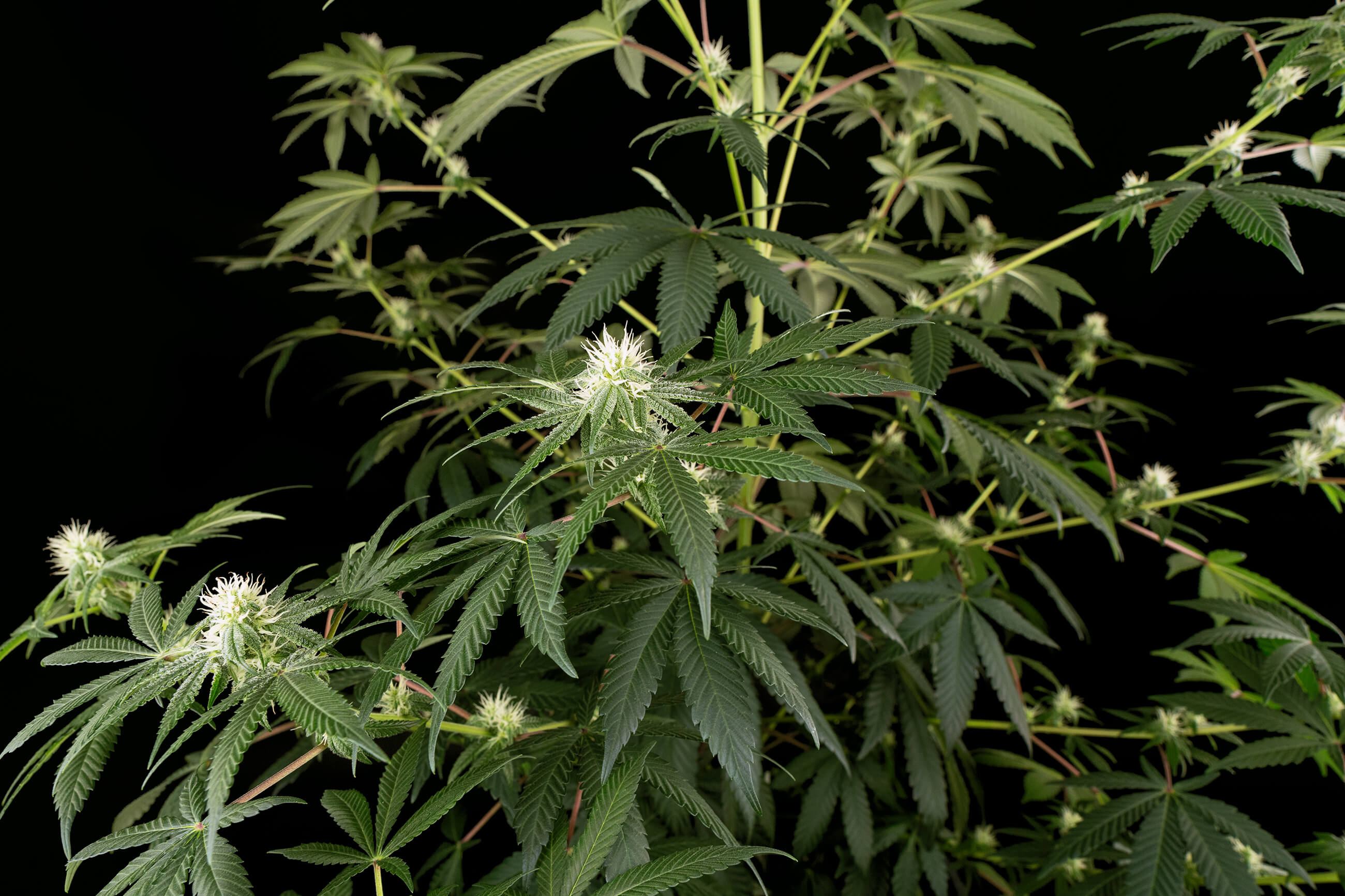
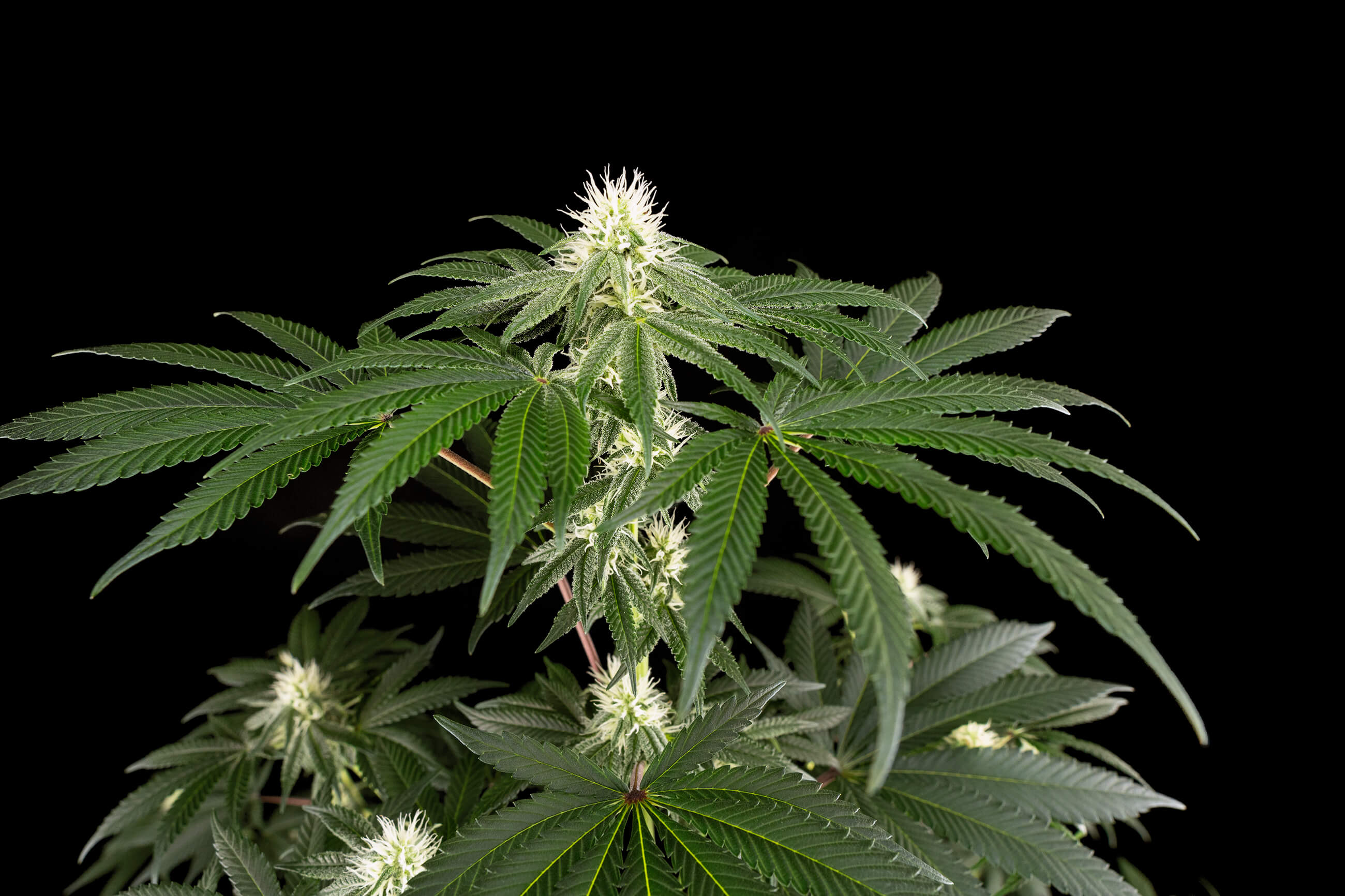
Over week eleven, our plant grew to 59 cm tall, and the buds continued to develop at an impressive pace, growing noticeably larger with each passing day. The lateral branches were still incredibly thin and were already beginning to get weighed down somewhat by the buds, while they would never completely buckle under the weight, some growers may find the need for extra support in the final weeks of flowering.
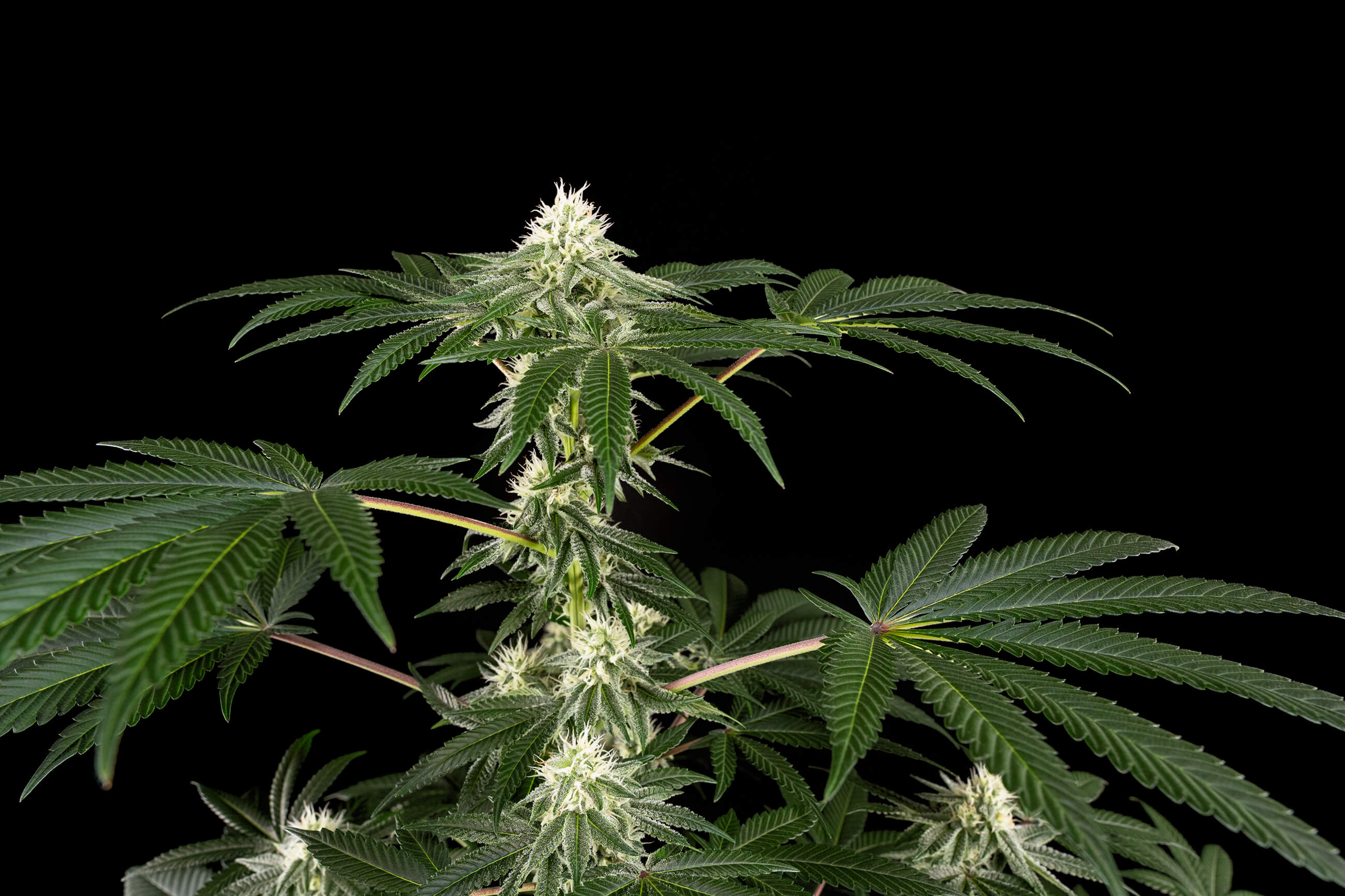
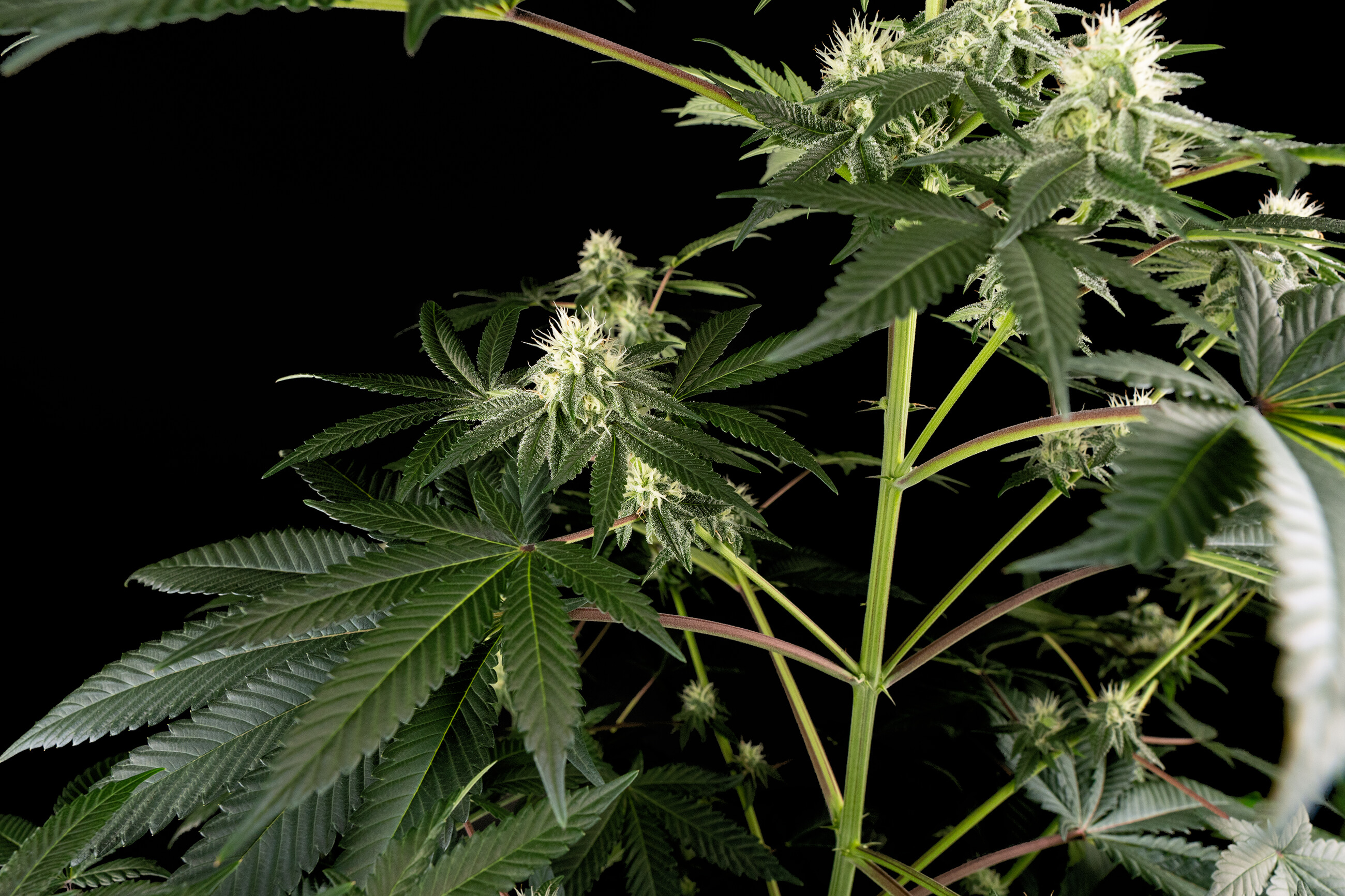
Week twelve was more of the same as the plant grew another 3 cm to finish the week at 62 cm. The flowers were continuing to grow nicely, and the main cola was developing into a fairly large and dense cluster of flowers. There really was nothing more to do than wait for nature to run its course over the next few weeks.
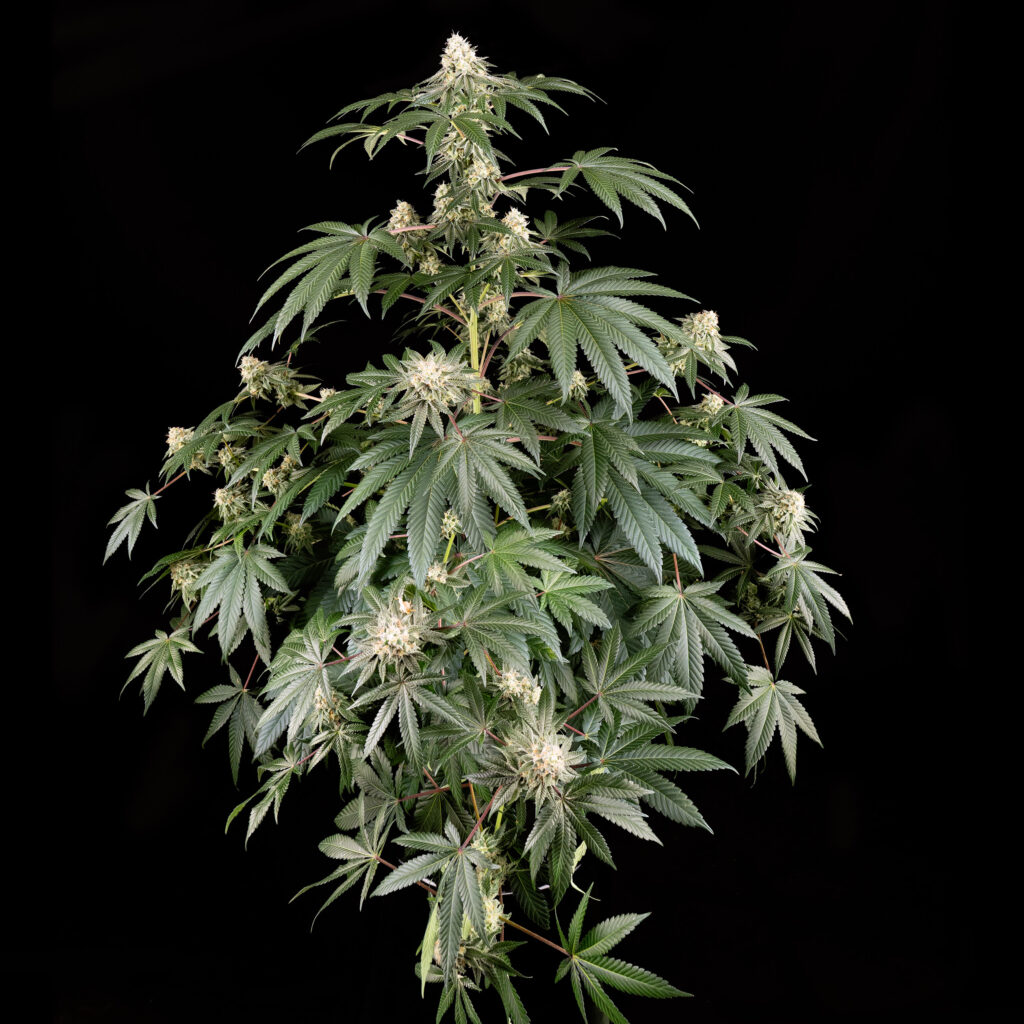
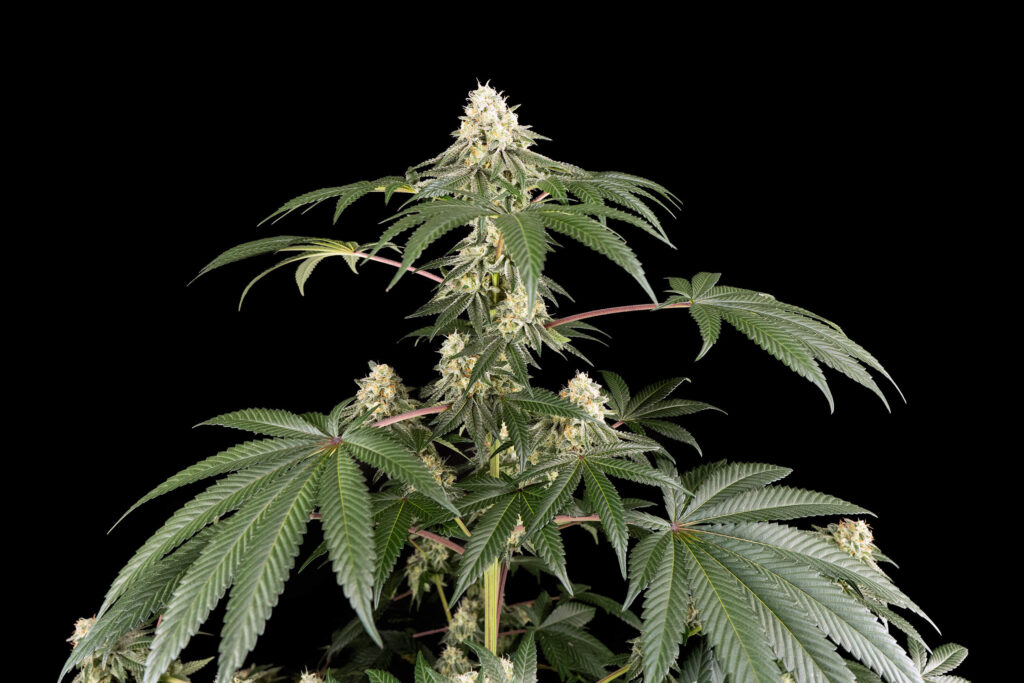
In weeks thirteen and fourteen, our plant grew to 68 cm, and the flowers continued to grow ever larger. By now, we were seeing the pistils shift from white to a pale amber/orange, indicating that it was very nearly time to harvest.
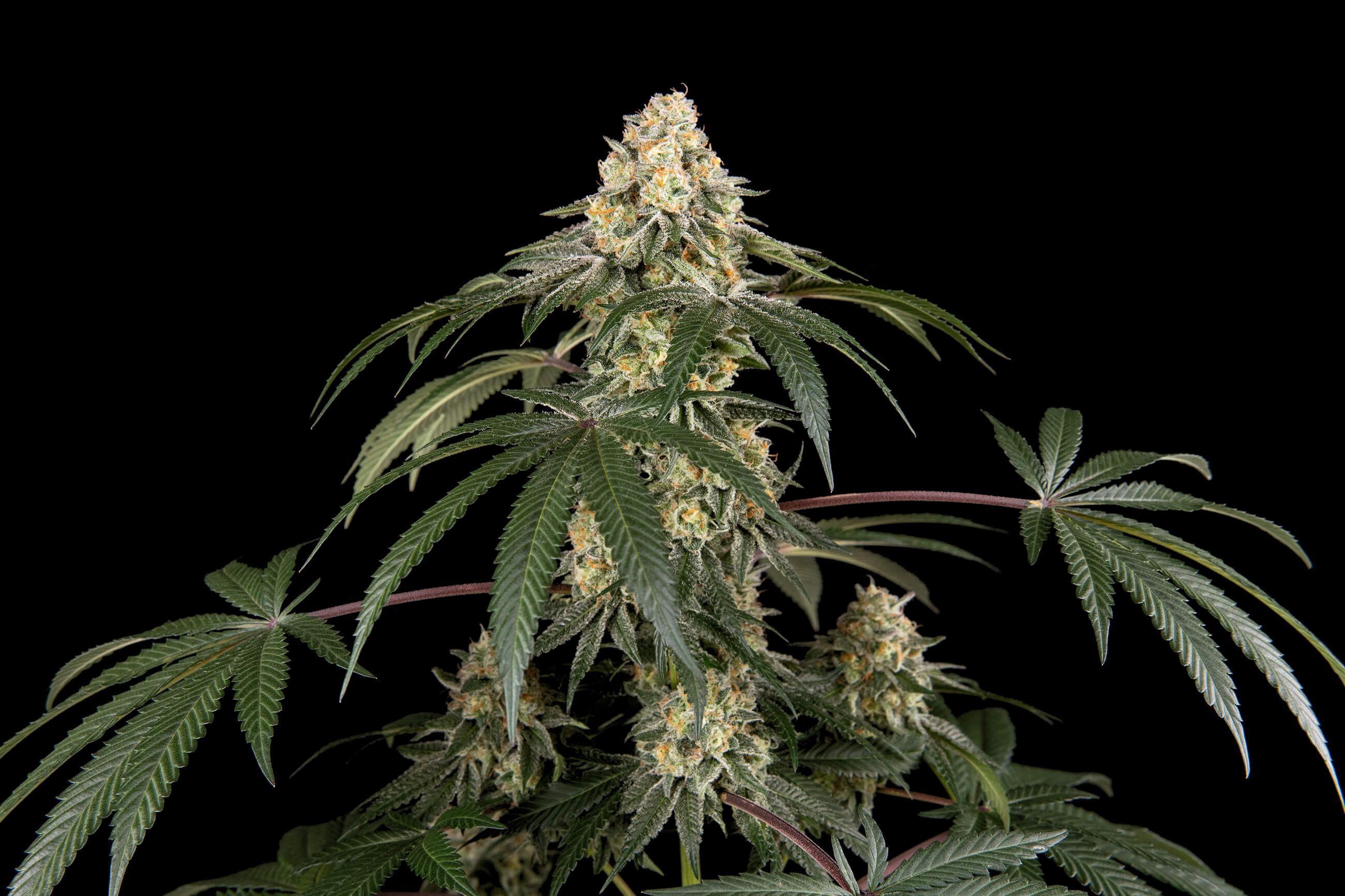
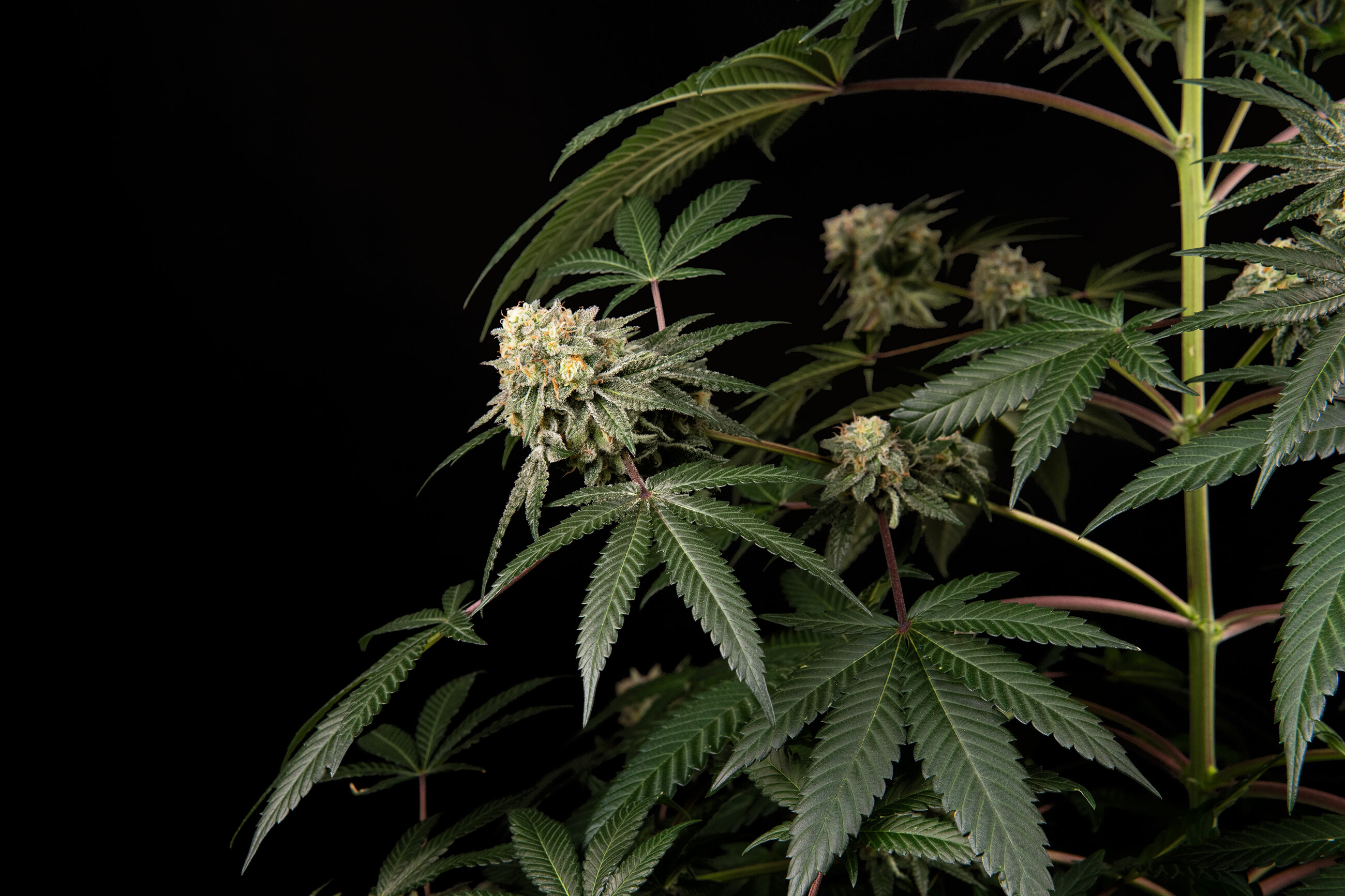
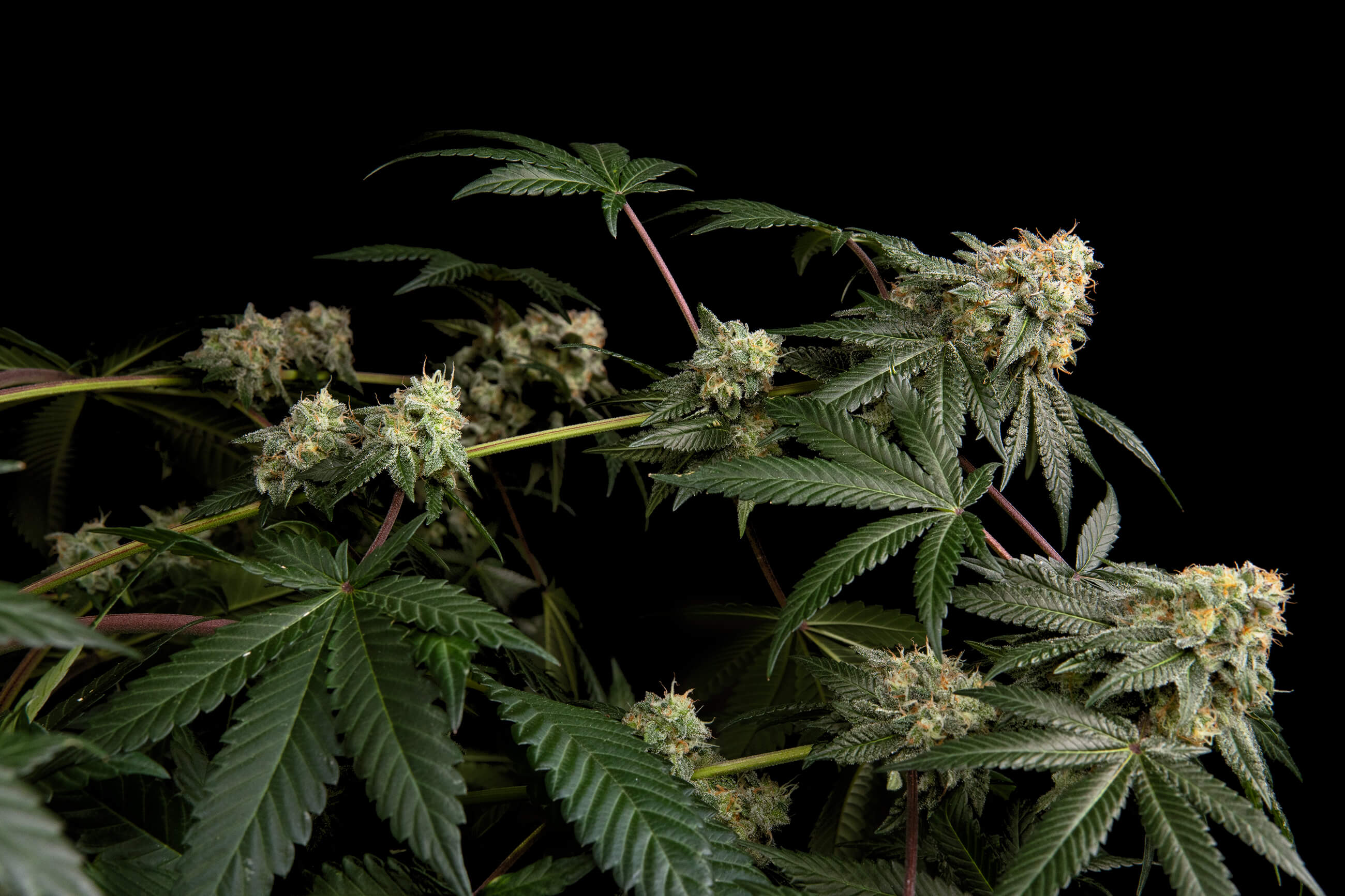
Finally, in week fifteen, we harvested our Blue Porcelain Feminized cannabis plant at a height of 70 cm.
Harvest
Once it was time to harvest our Blue Porcelain Feminized cannabis plant, we cut it down at the base and cut off the fan leaves before hanging it upside-down to dry in a climate-controlled space (15.5°C; 50% humidity) until the smaller branches snapped when bent. Generally speaking, this typically requires 10-20 days.
After a couple of weeks, our plant had dried, and it was time to remove the buds and trim away any remaining leaves. These buds weren’t overly leafy, but the plant produced dozens of smallish, dense nuggets which were easy to trim, if rather time-consuming. This, combined with this strain’s impressive resin production, made trimming Blue Porcelain Feminized a bit more of a chore than some other strains.
After everything was trimmed, we placed the buds into glass jars for curing, leaving them unsealed for the first 24 hours to allow the bulk of the remaining moisture to evaporate. After the first day, we sealed the jars and “burped” them several times a day for an hour, and gradually reduced the frequency to only once per day over the next several weeks. On average, the curing process requires 4-6 weeks and is key to creating a smooth flavour in your final product.
In the end, we were able to harvest a respectable 93 grams of dried flower with a very satisfactory THC content of 24.66%.
Related post
Terpene profile
As harvest approached, our Blue Porcelain Feminized plant began to give off a truly powerful aroma, dominated by incredibly loud notes of grape gelato, sweet, syrupy berry, creamy key lime, and a subtly floral candy flavour. All of this was layered on top of more pungent hints of gas, musk, and turpentine, creating a rich and complex odour.
After they had finished curing, the aroma of the flowers was bold and sharp, with the same bubbly grape soda, blueberry gelato, creamy, zesty lime, and sweet sorbet scents all sharpening into focus. Just beneath those scents, there was an underlying bouquet of incense, floral candy, and a sharp, gassy musk.
The flavour here is something truly special, dominated by the same deep grape and lime sorbet notes on the inhale, with the exhale delivering a musky, gassy flavour that left behind a vaguely floral, perfumy aftertaste.
After sampling our Blue Porcelain Feminized flowers, we were treated to a warm and euphoric high with a powerfully indica body stone. Almost instantly, we were met with a slight mental boost that was soon followed by a physical relaxation, which was quite powerful without being overly sedative. Overall, the high was incredibly creative and dreamy, leading to a long-lasting and almost narcotic finish.
Related post

The outcome
We were seriously impressed by our time with Blue Porcelain Feminized. These slow and steady plants are small enough to grow in nearly any space, and the yield was fantastic for something this size. Additionally, the stretched-out frame and long lateral branches are an incredible fit for more advanced growing techniques, making these plants a great pick for growers of any level.
- Disclaimer:Laws and regulations regarding cannabis cultivation differ from country to country. Sensi Seeds therefore strongly advises you to check your local laws and regulations. Do not act in conflict with the law.
