


Our experience with Cherry Gas Feminized was incredible. While the plant took a bit longer than usual to flower, it used that extra time to build a truly impressive frame that perfectly balanced a sativa’s open, airy structure with an indica’s manageable height to deliver a respectable yield of dense, uplifting buds.
Total growing time: 105 days
Flowering time: 77 days
Final height: 75 cm
Final yield: 78 grams
THC content: 22.8%
Cherry Gas Feminized is a 50/50 hybrid bred for the Sensi Seeds Breeding Grounds 2026 catalogue by the team at Sherbinskis. This perfectly balanced strain is a cross of Cherry Bacio and White Runtz, providing genetics from Kush, Gelato, and The Original Z, among others. These somewhat-tall plants are incredibly manageable while still providing XXL yields of sticky, resinous buds.
We grew our Cherry Gas Feminized plant under a 1000 W lamp set to an 18/6 schedule, in an 8-litre pot filled with BAC Lava Mix. The temperature of our grow room was kept at 23°C during the “day” and was allowed to drop down to 21°C at “night”, while we maintained a relative humidity of 65% during vegetation.
Germination & seedling
To make sure that our Cherry Gas Feminized cannabis plant got off to the best possible start, we germinated it using the industry-standard paper towel method. We started by placing a slightly damp paper towel onto a plate, dropping the seed on top, and covering it with another damp paper towel. Next, we set the entire setup inside an open plastic bag and put it in a warm place out of direct sunlight. After a day or so, we noticed the seed had cracked open to reveal a small white taproot.
Once the seed was open, we planted it into a presoaked Rockwool cube (taproot down) and then placed it under a 600 W LED light. Cannabis seedlings are rather fragile, and too much light, heat, or water can cause lasting damage.
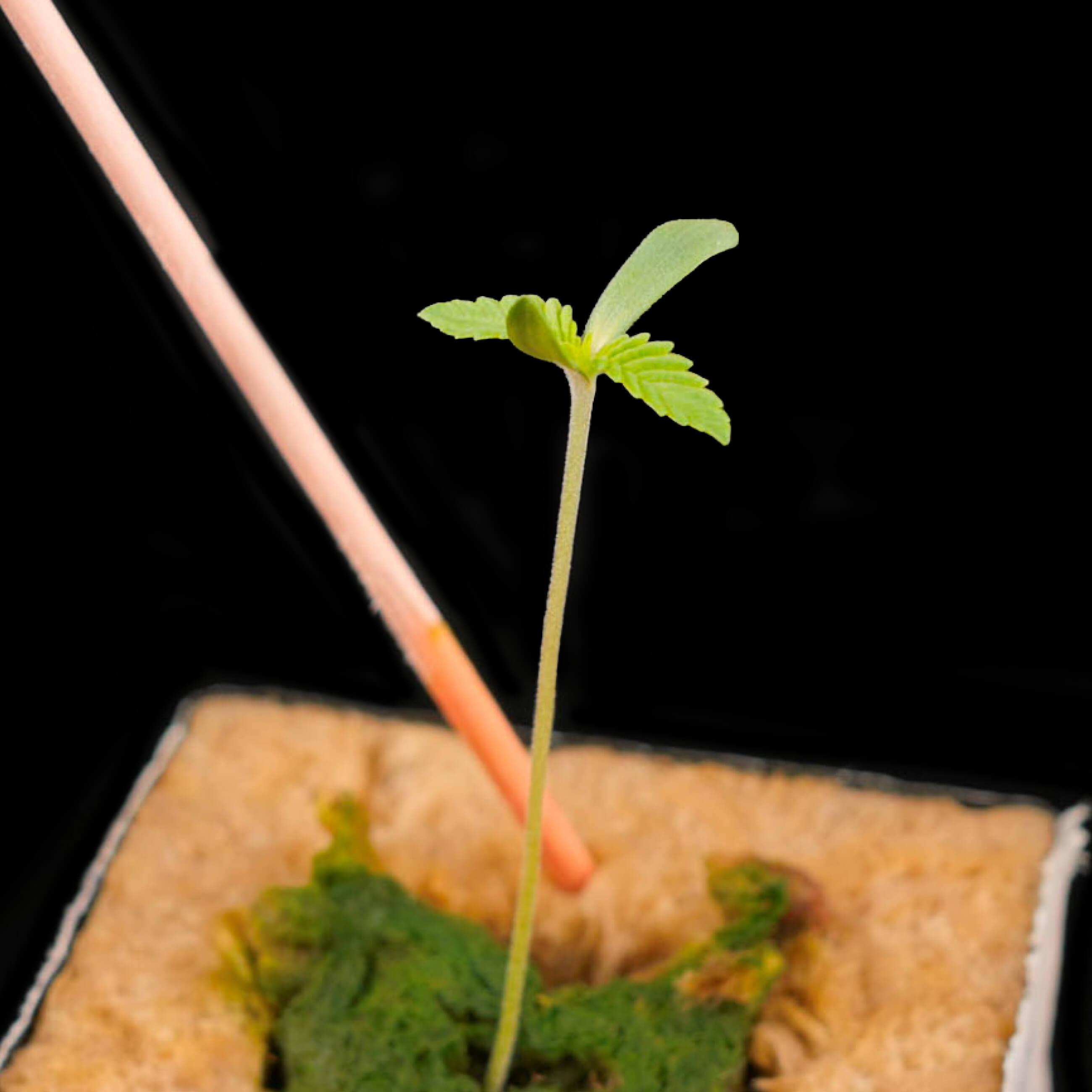
After a day or so, the plant sprouted, and after three days, it was time for the first feeding with 100 ml of pH-balanced water (pH 6.0; EC 0.8) and a small dose of rooting hormone. By the end of the first week, our plant was standing 7 cm tall with a few healthy pre-leaves on a slender stem.
Vegetation
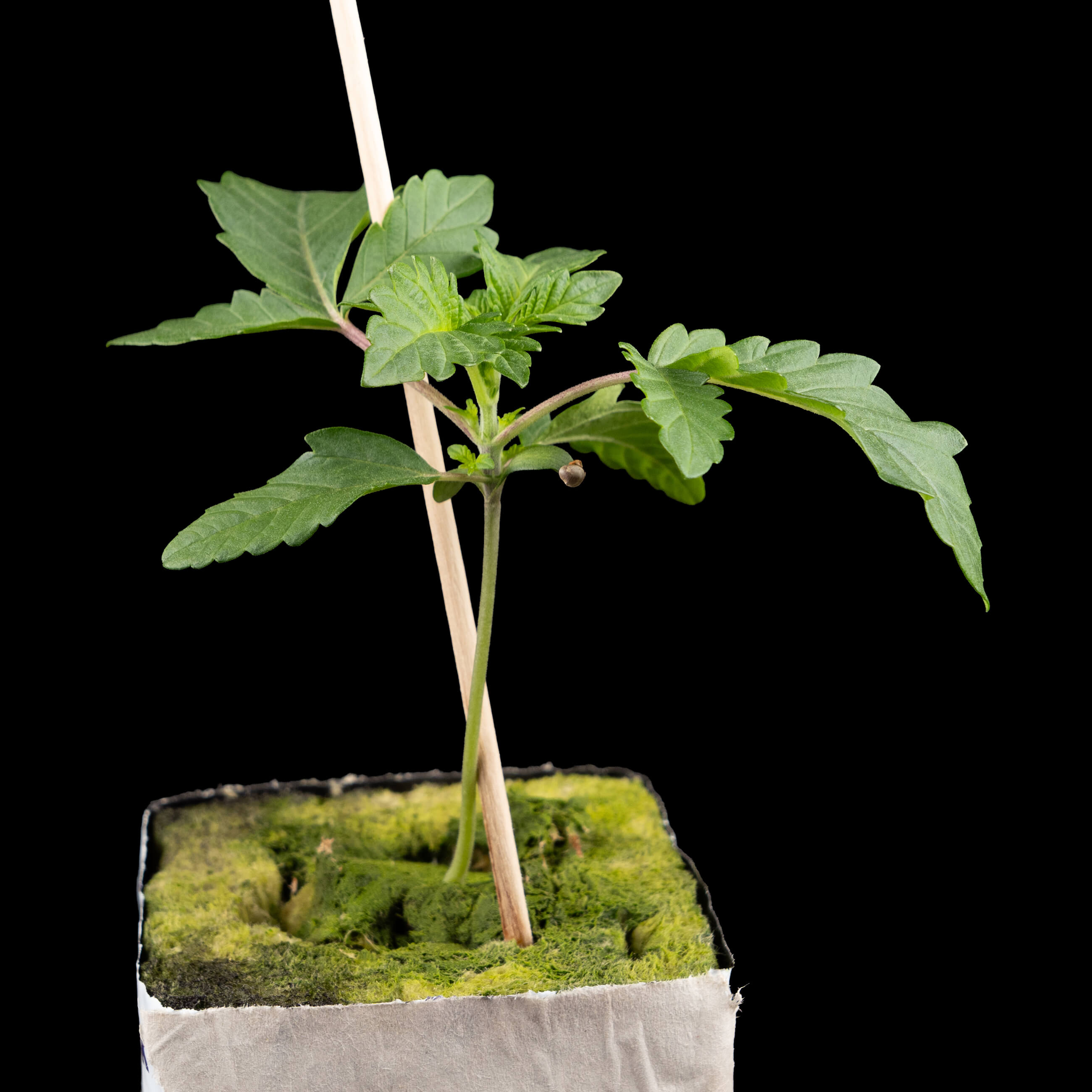
In week two, our plant grew modestly to 11 cm and sprouted a few new sets of slightly crinled leaves. Internodal spacing was moderate, though the seedling did require a bit of support. Anticipating significant growth ahead, we doubled the daily feedings to 200 ml of water.
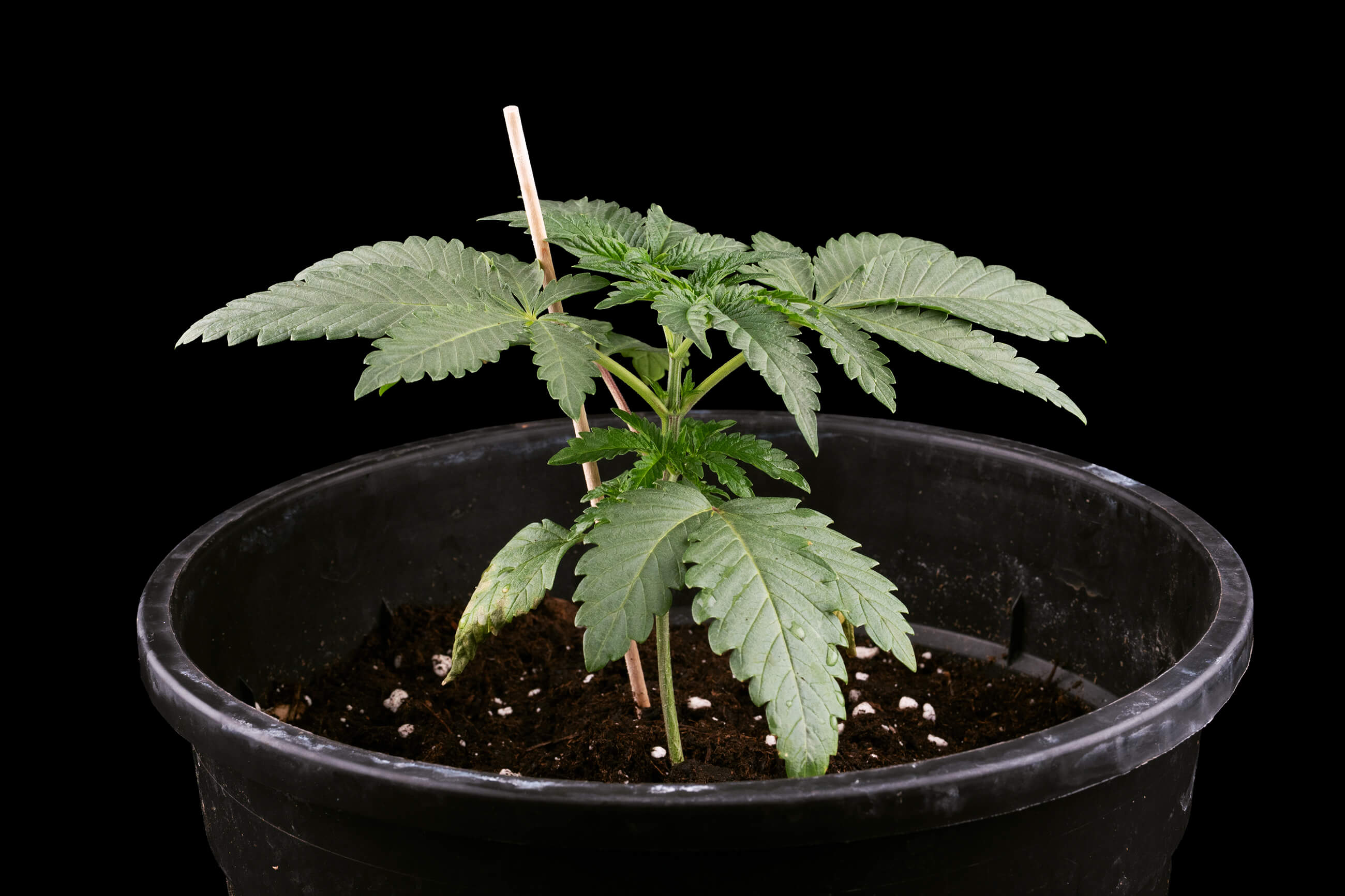
Week three was a week of rapid growth with our plant reaching 18 cm tall while multiple new sets of somewhat broad leaves grew in along the slowly expanding internodal spacing. Overall, the plant was lush and healthy, and was ready for the switch to flowering next week. To help our plant get all it needs, we again doubled daily feedings to 400 ml of water.
Related post

Flowering
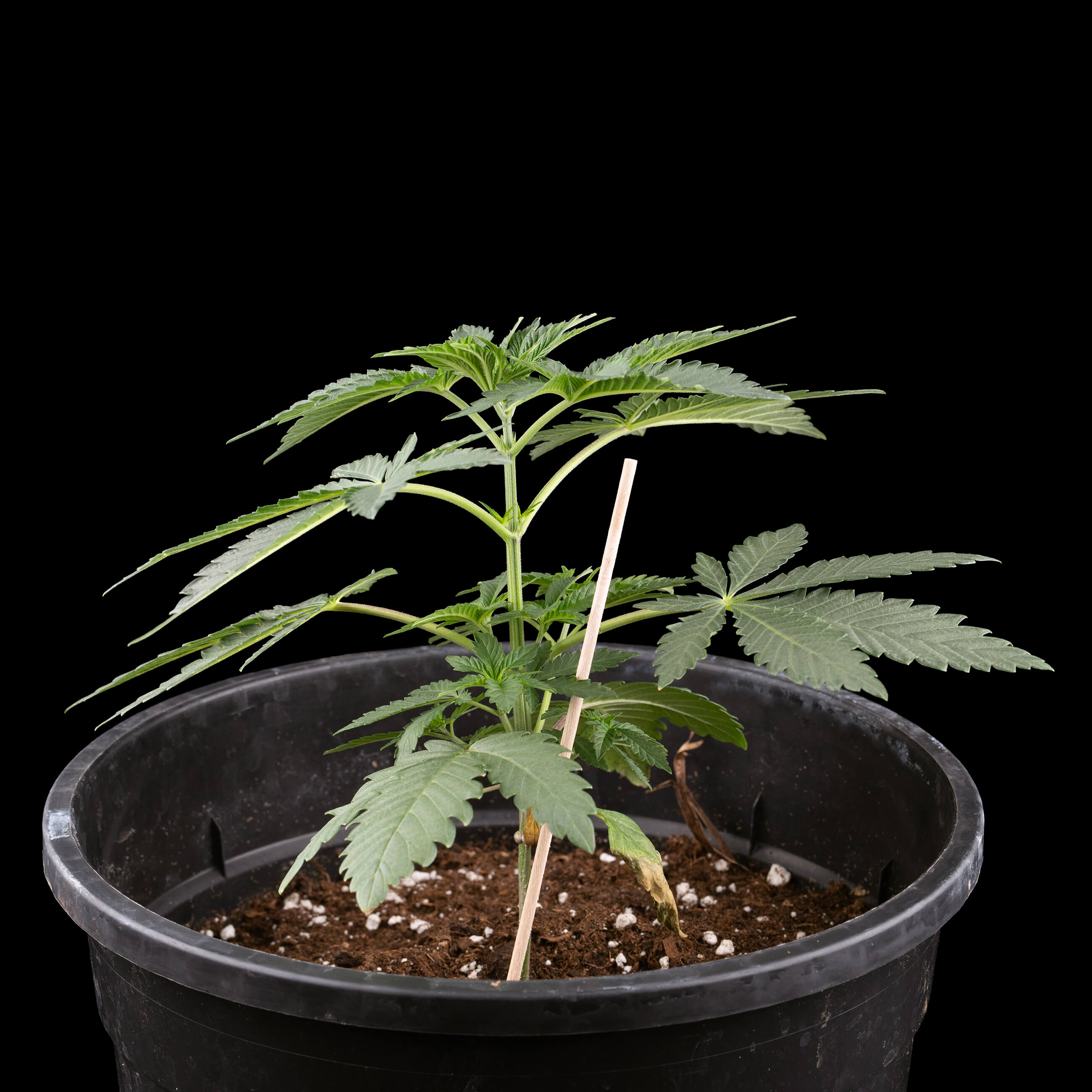
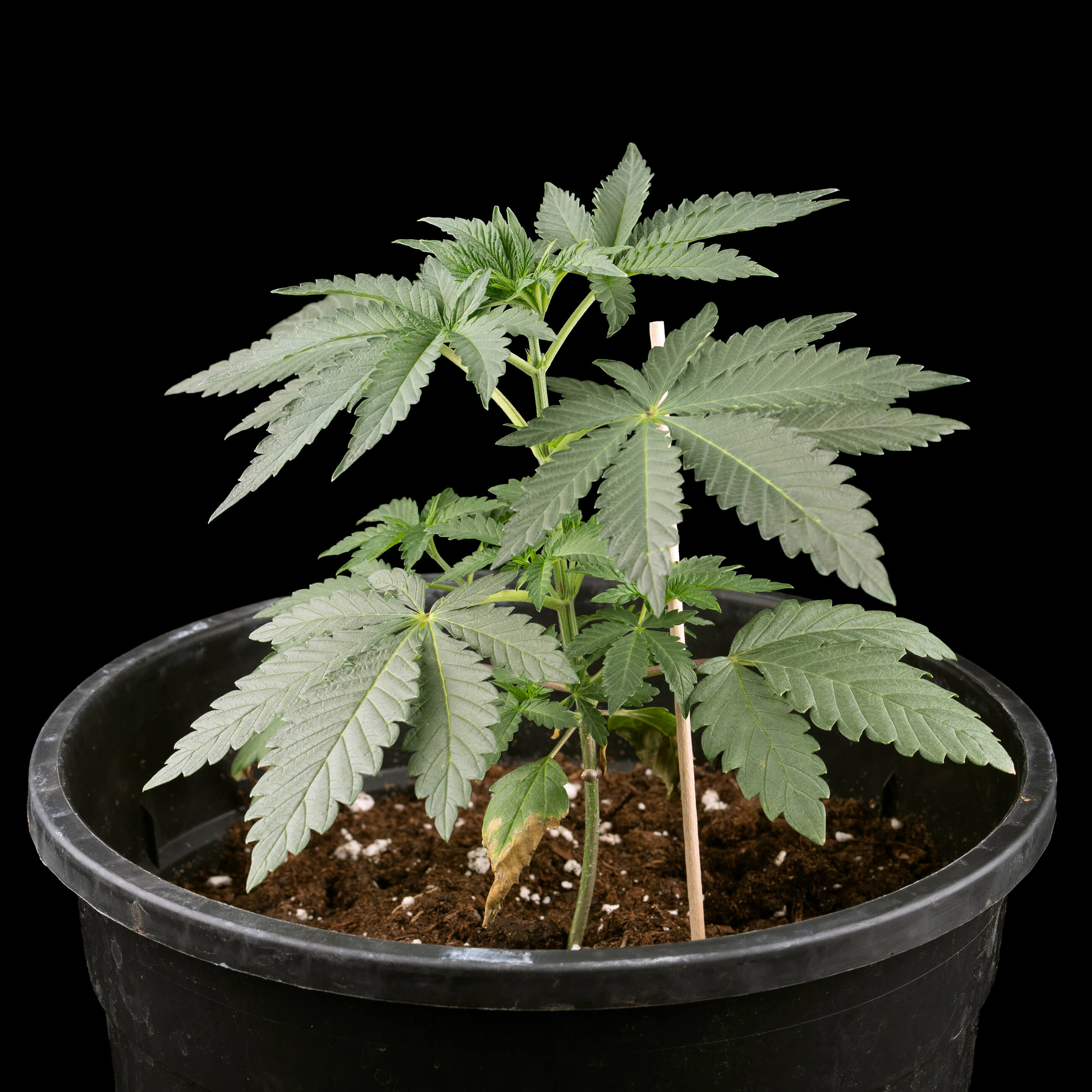
At the start of week four, we switched our plant to flowering by simply flipping our light to a 12/12 schedule, lowering the humidity to 60%, and beginning daily feedings with 800 ml of water (pH 6.0; EC 1.8) mixed with Bio Grow liquid nutrients. By the end of the week, our plant had grown to 24 cm and was continuing to stretch out as the internodal spaces expanded considerably while the lowest lateral branches began to develop.
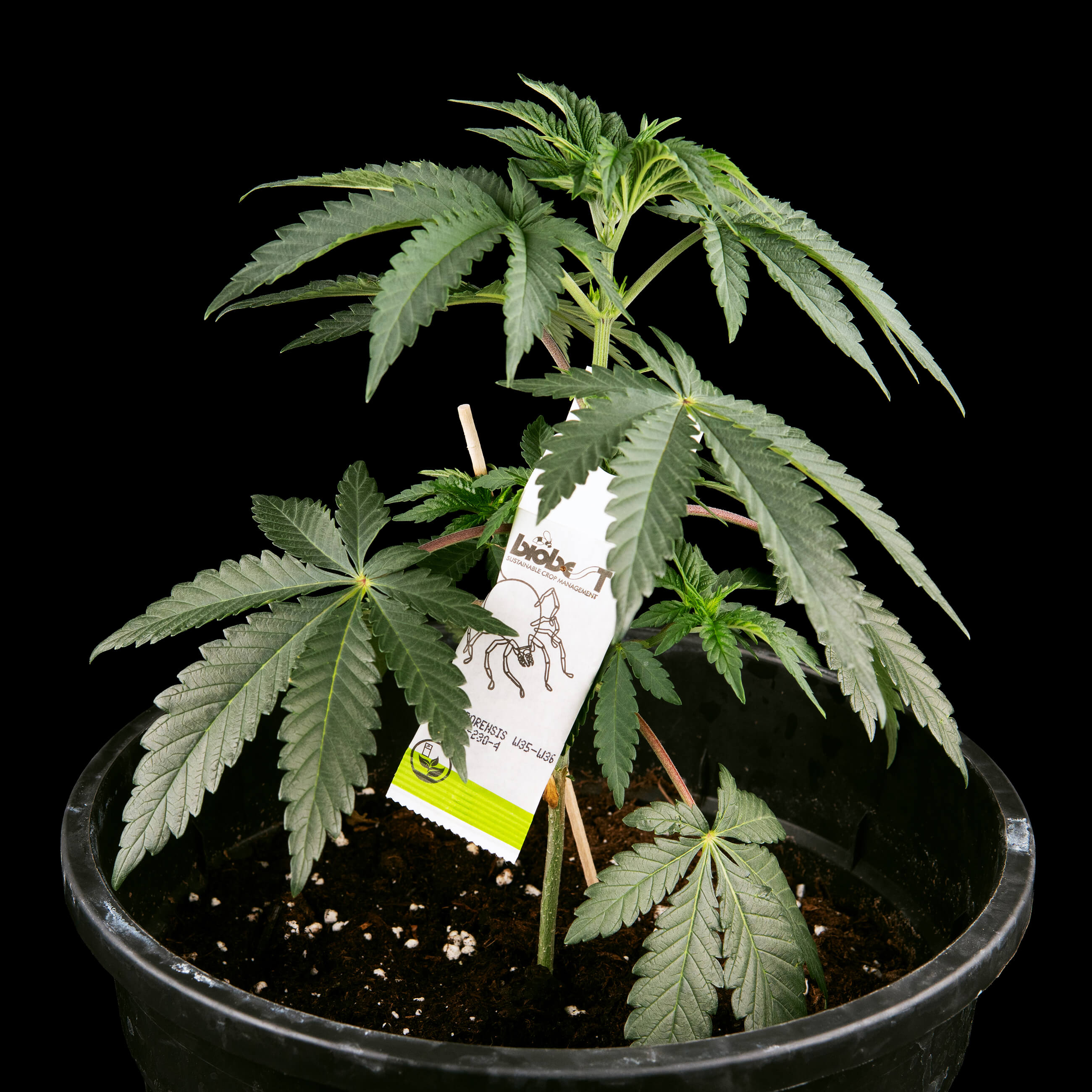
Week five saw another round of significant growth, as our plant grew 7 cm to a new height of 31 cm. Internodal spacing was still expanding while the lateral branches were developing fairly slowly. Expecting explosive growth in the weeks to come, we upped the water to 1000 ml per day,
At this stage, we hung small sachets of Neoseiulus californicus and Amblyseius swirskii among the plant’s lower branches. These little white pouches contain hundreds of tiny symbiotic creatures that don’t harm cannabis plants at all. Instead, they prey on devastating pests like spider mites and thrips, which can easily kill off entire harvests if left unchecked. We replace these every four weeks to keep a fresh supply.
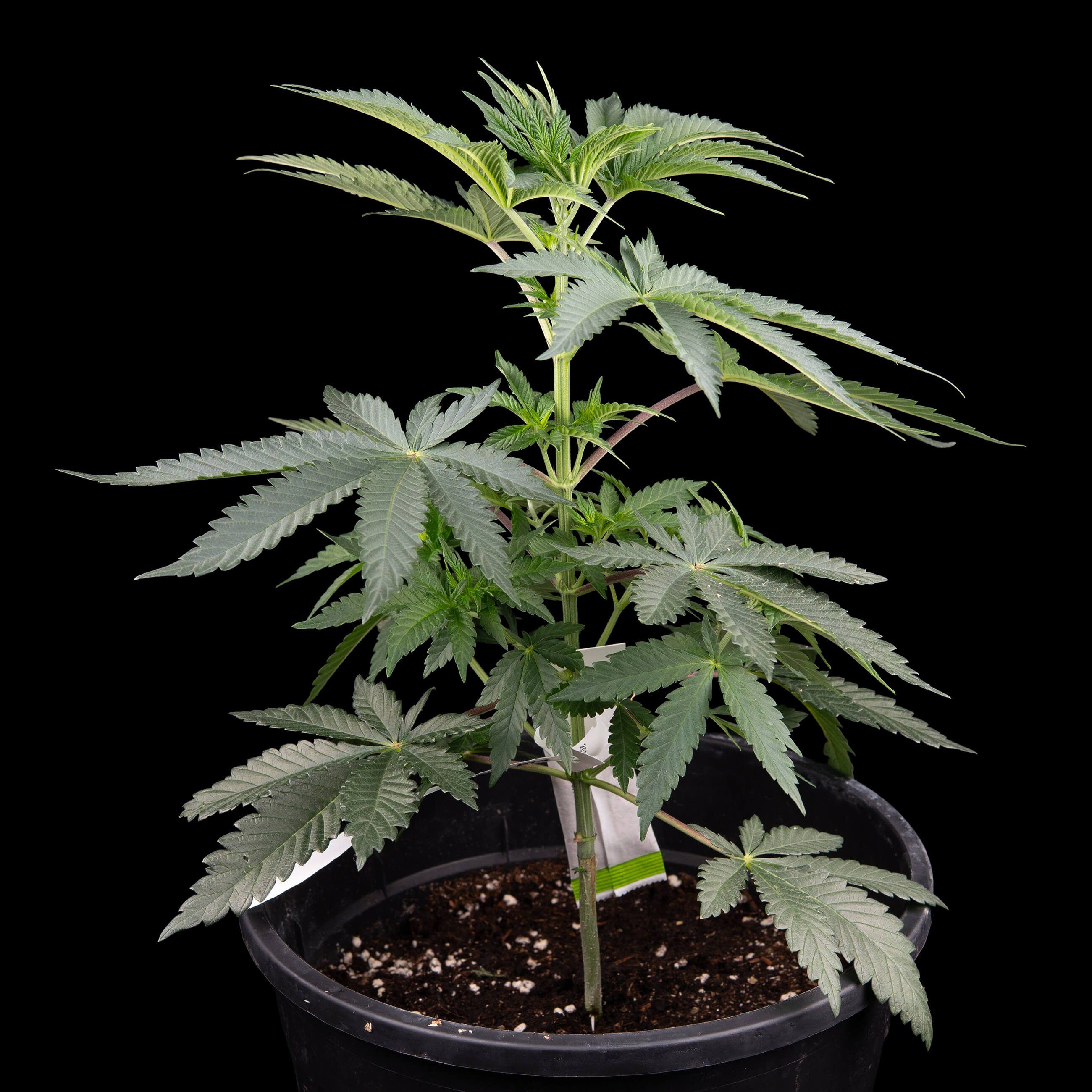
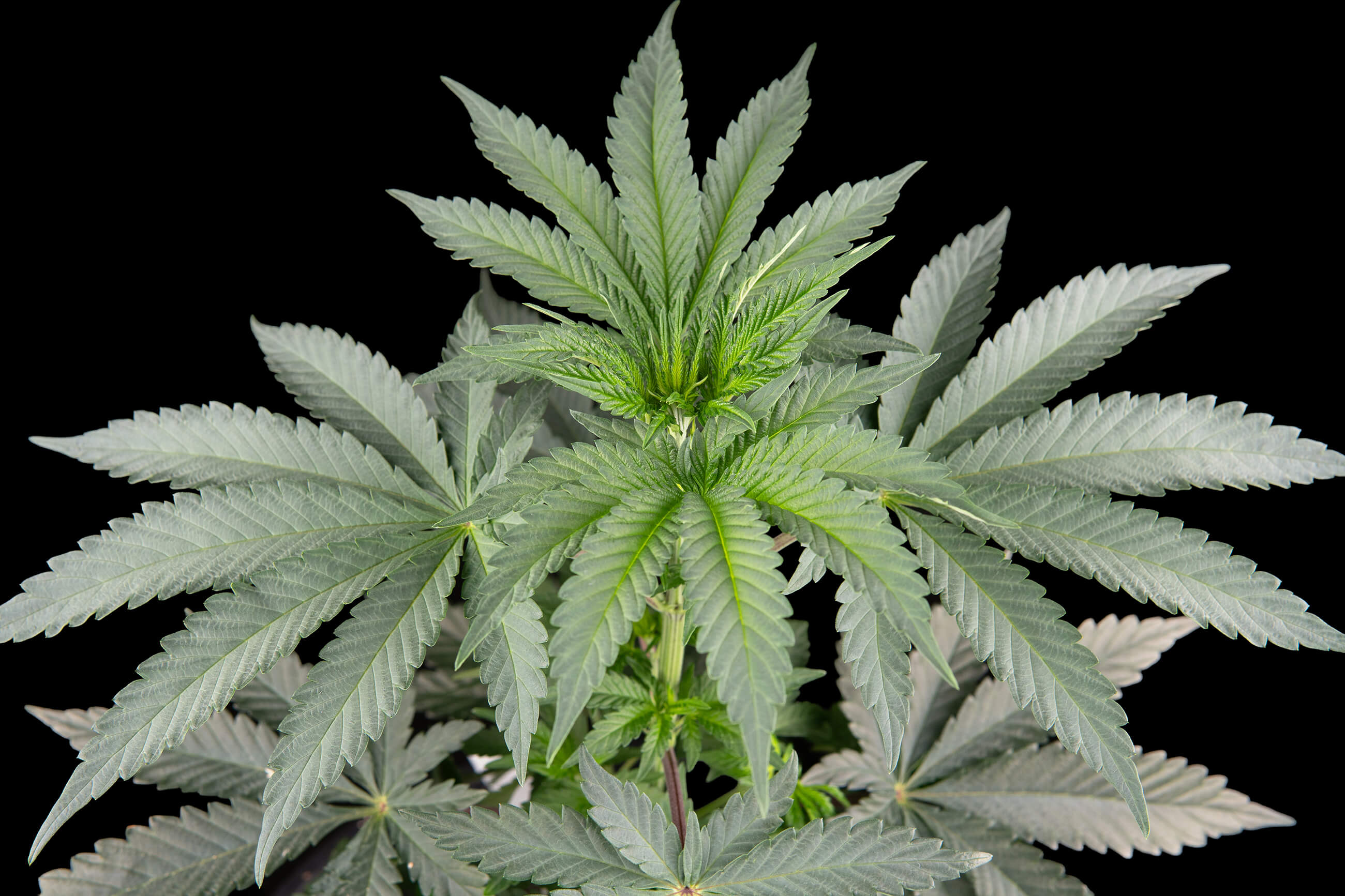
Week six gave our plant its single largest bout of vertical growth as it grew 11 cm to reach 42 cm in height. This was largely seen in the rapidly expanding internodal spacing, which was now nothing short of extreme. While the frame of the plant was incredibly sparse, the lateral branches were beginning to fully take shape.
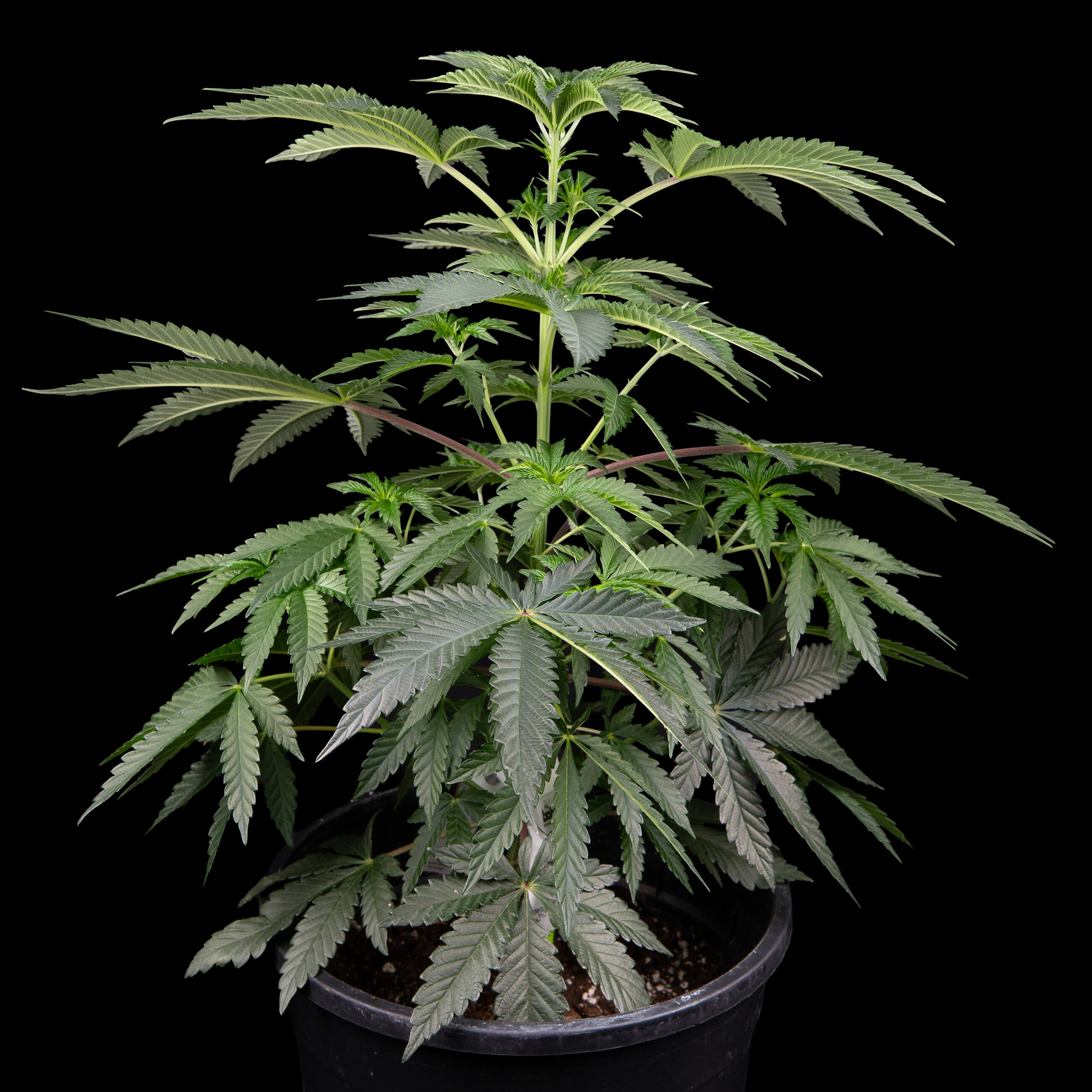
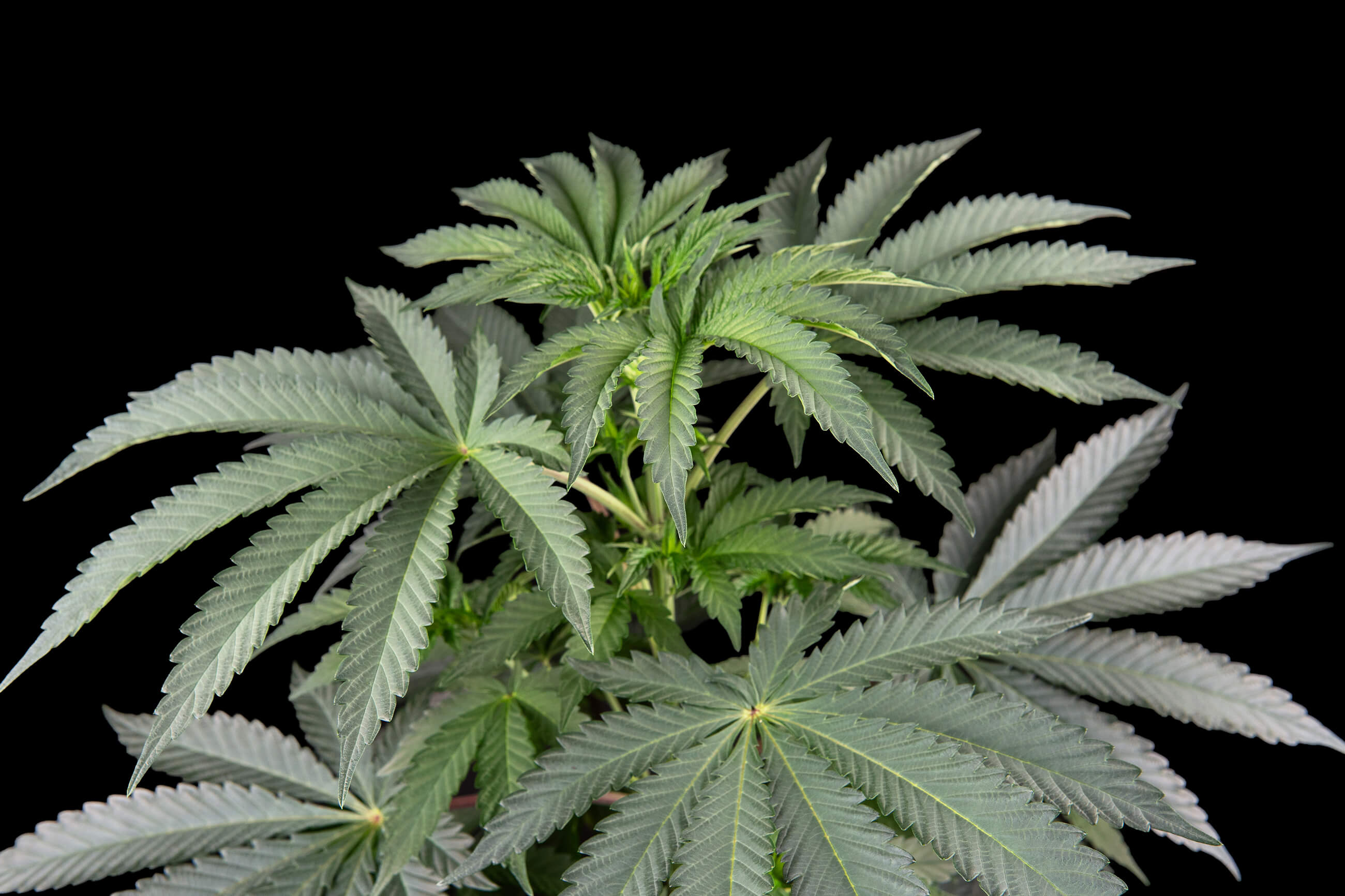
In week seven, our plant began to slow its vertical growth as its energy shifted to flower production. By the end of the week, it had gained only 6 cm, standing at 48 cm while the lateral branches grew considerably to create a cylindrical frame with dense vegetation in the lower reaches. By now, we were feeding with 1500 ml of water each day, and that wouldn’t change for the rest of the grow.
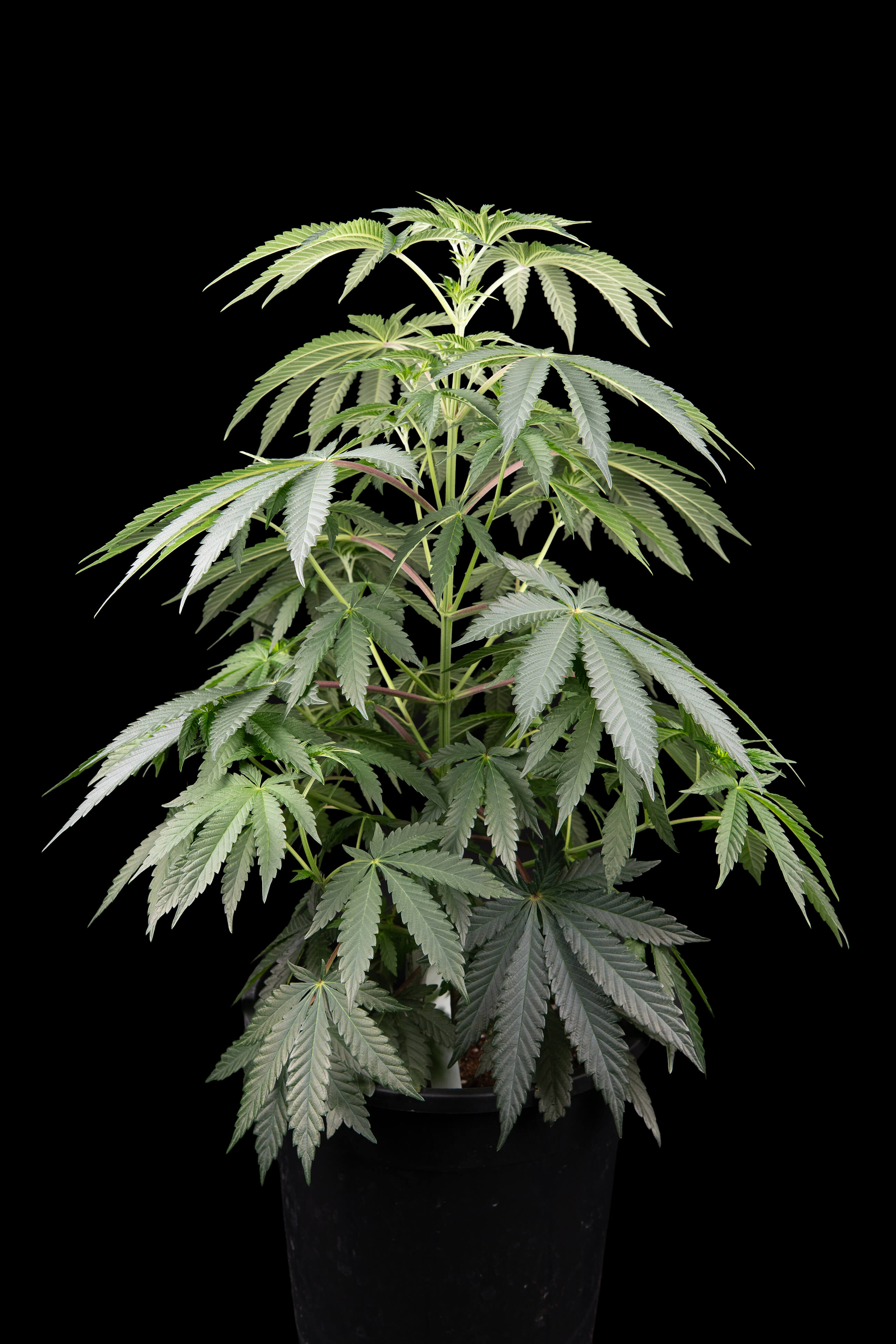
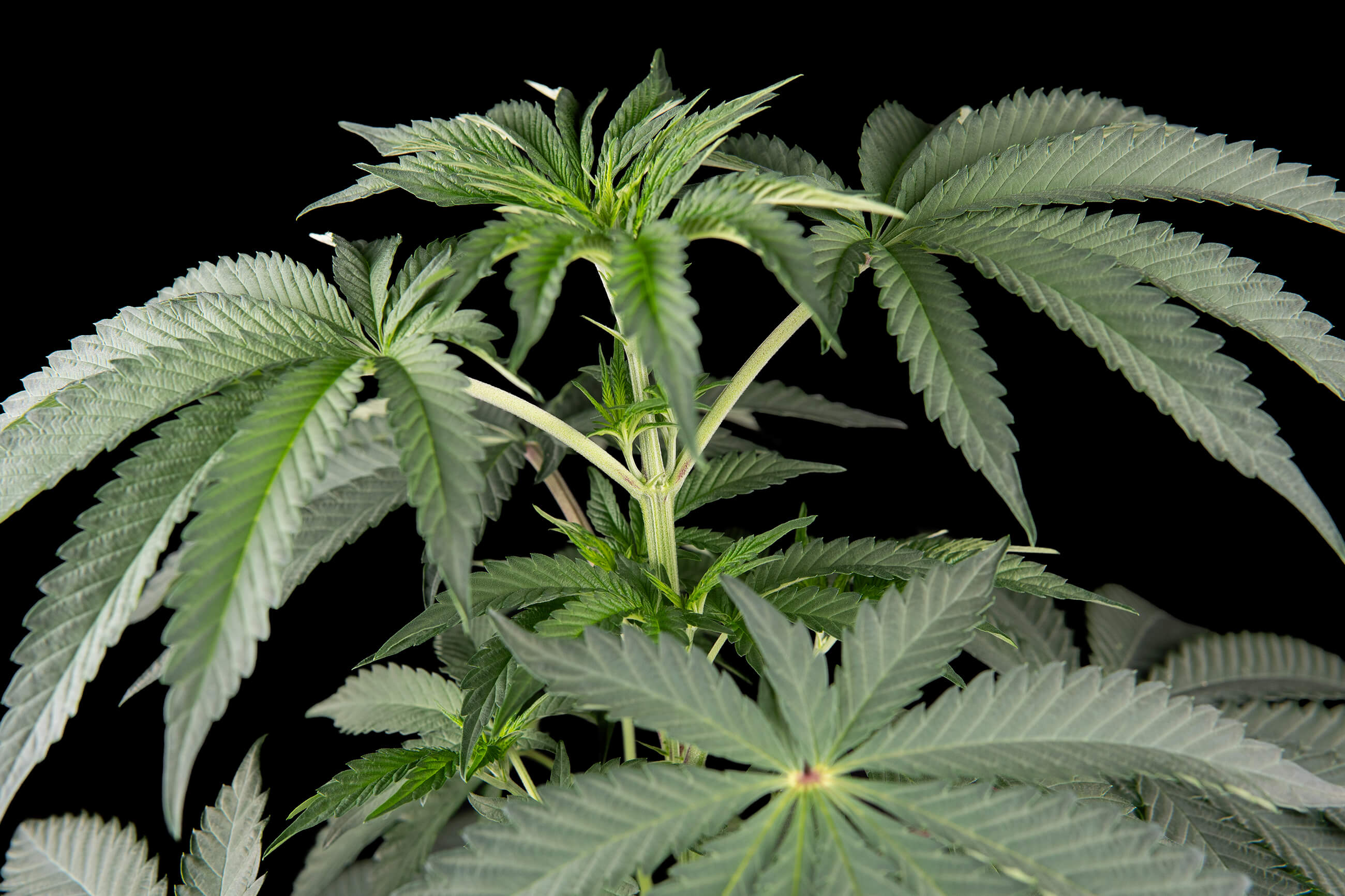
Week eight saw our plant continue to slow down as it grew to 52 cm. The lateral branches had grown immensely in the last week, and were still quite vertical, creating a tangled column of branches and leaves. Despite this, the extreme internodal spacing allowed for impressive airflow and light penetration to the entire plant.
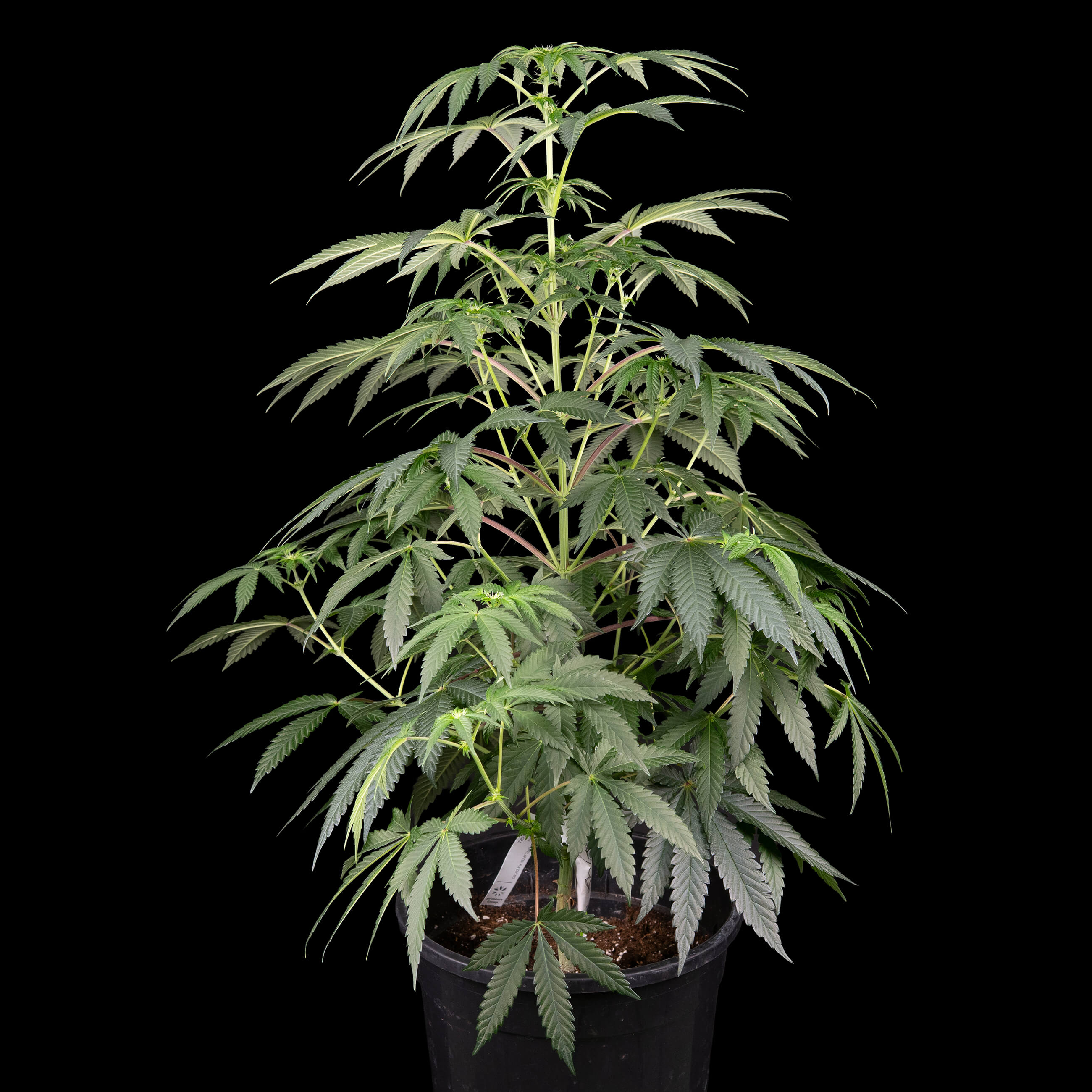
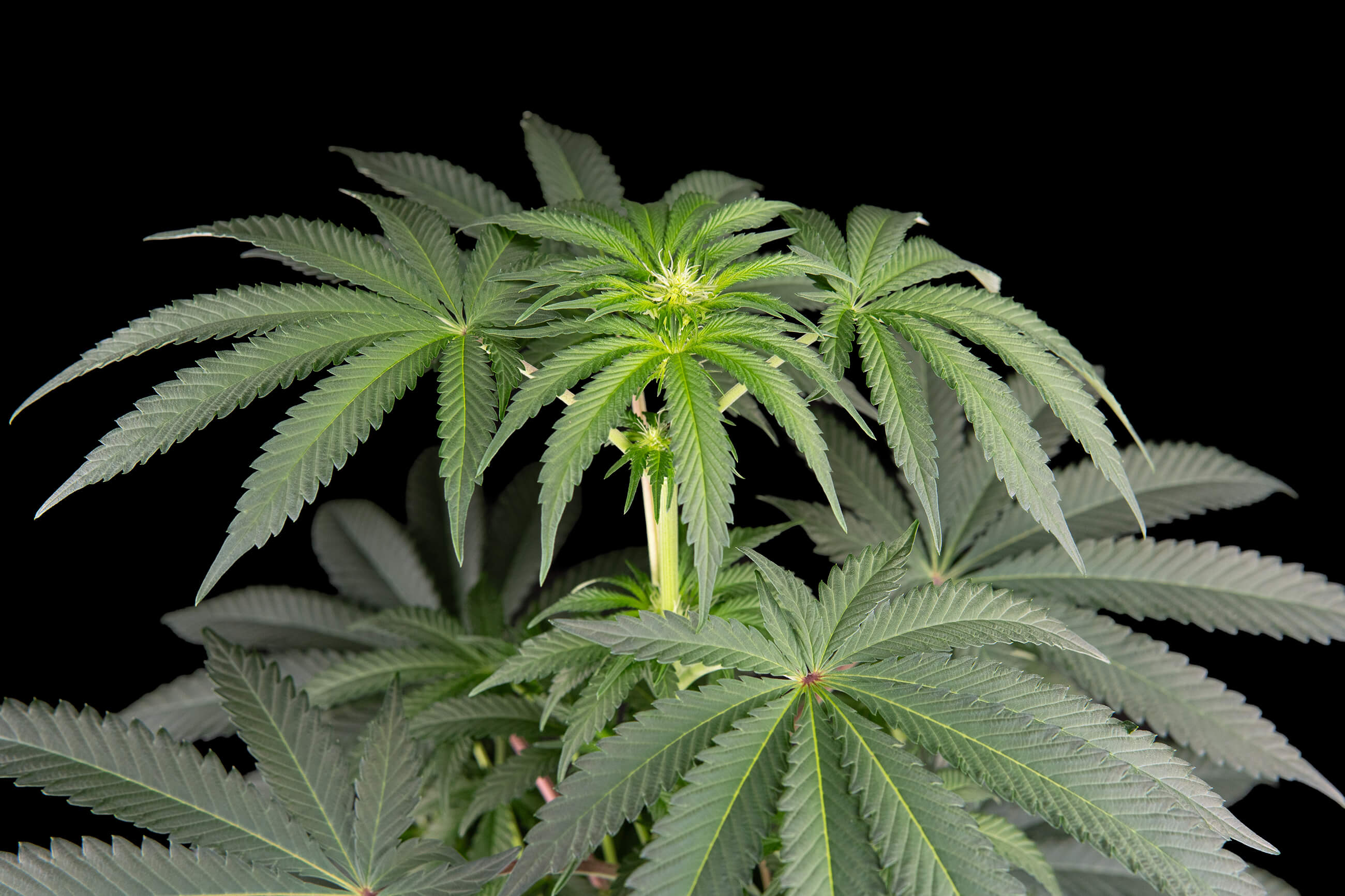
In week nine, our plant went through a surprising growth spurt, gaining 9 cm to reach 61 cm tall. The lateral branches continued to develop and were now beginning to grow somewhat outwards from the main stem. Over this week, we finally began seeing the earliest signs of flowering with small clusters of white pistils appearing at the tips of each branch.
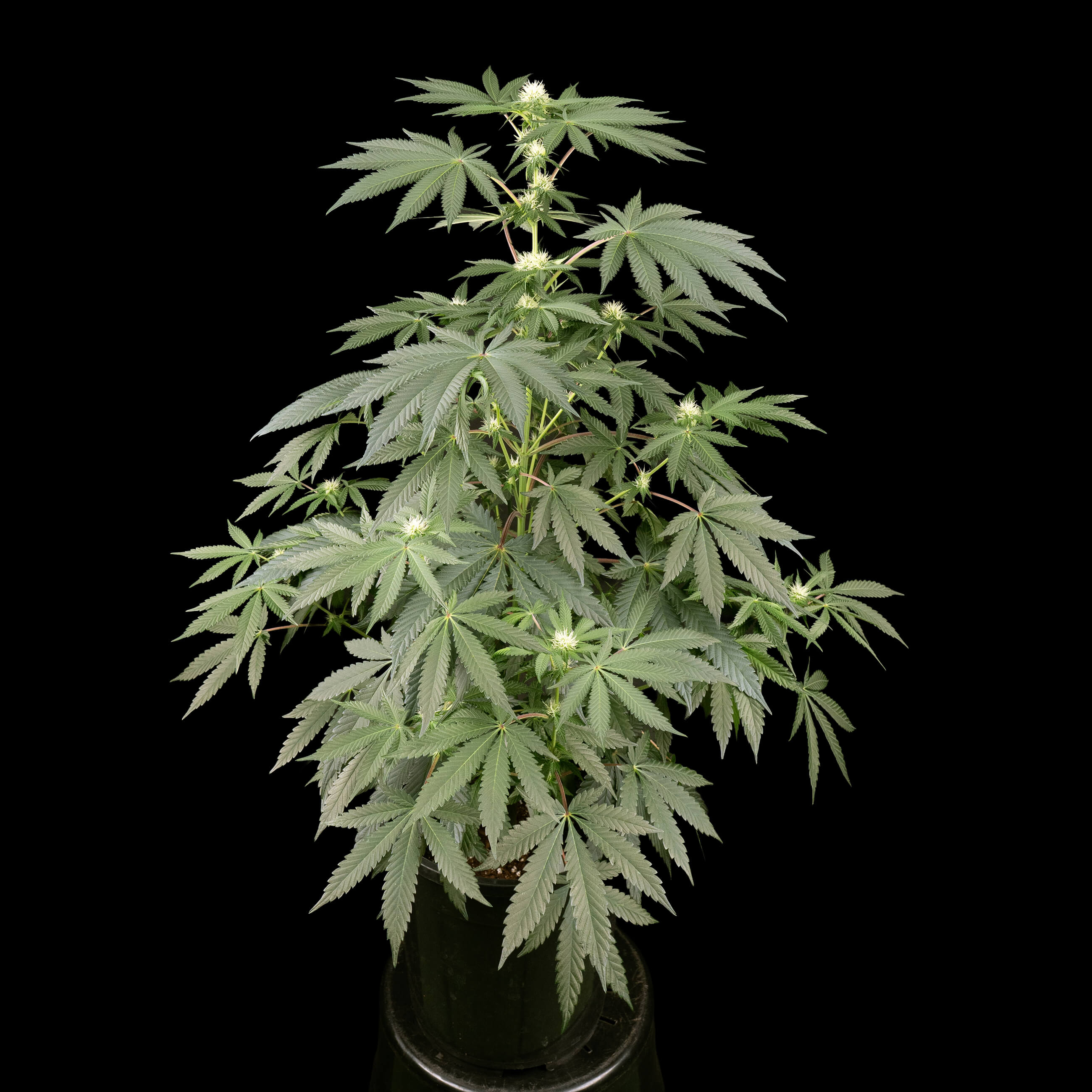
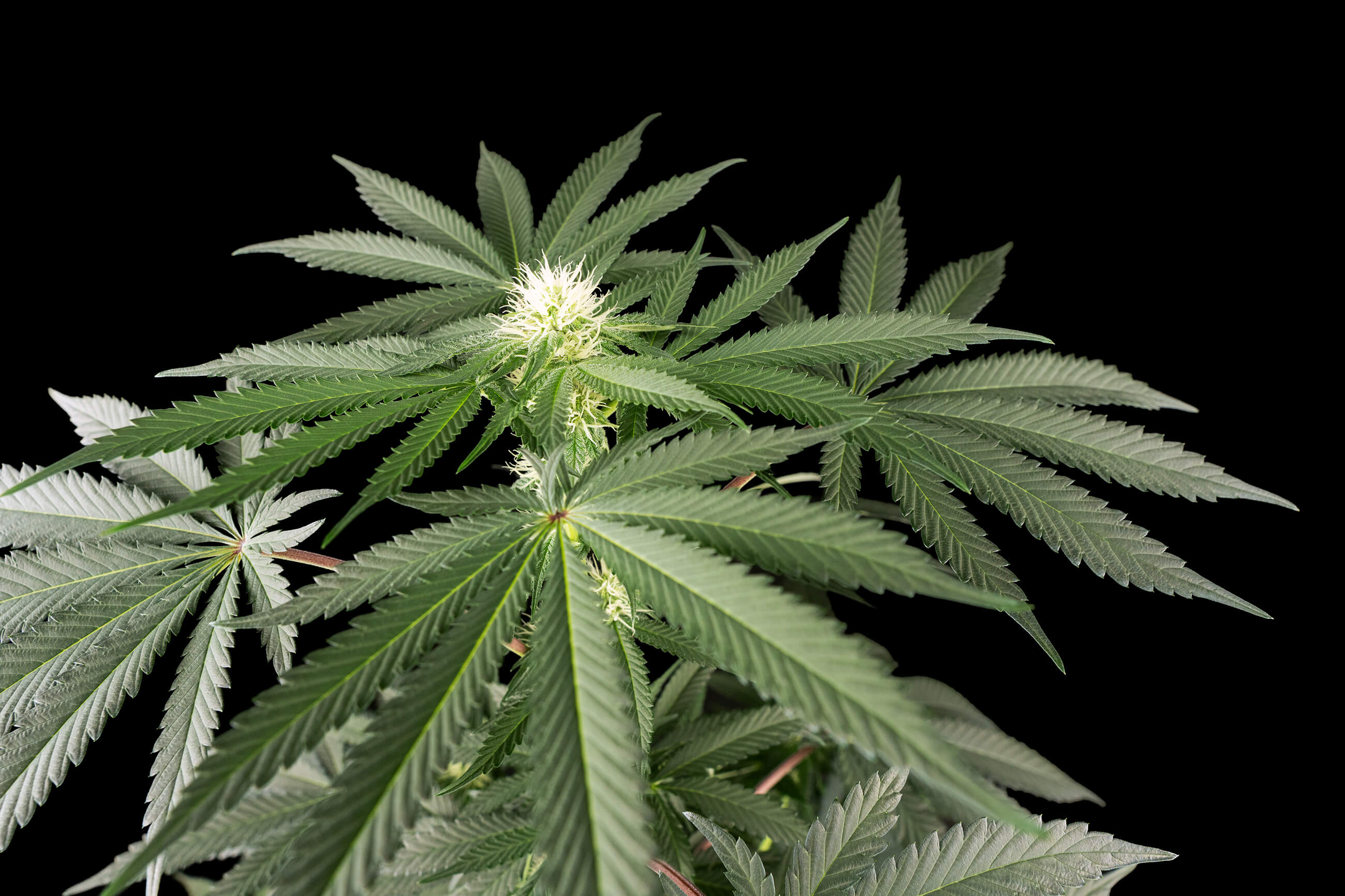
Week ten saw flowering officially switch into high gear as our plant went through one last burst of growth, climbing to a height of 68 cm as the main stem rose only slightly above the lower canopy. While the plant had been slow to start flowering, it was making up for lost time with the buds growing noticeably larger over the course of even a single day.
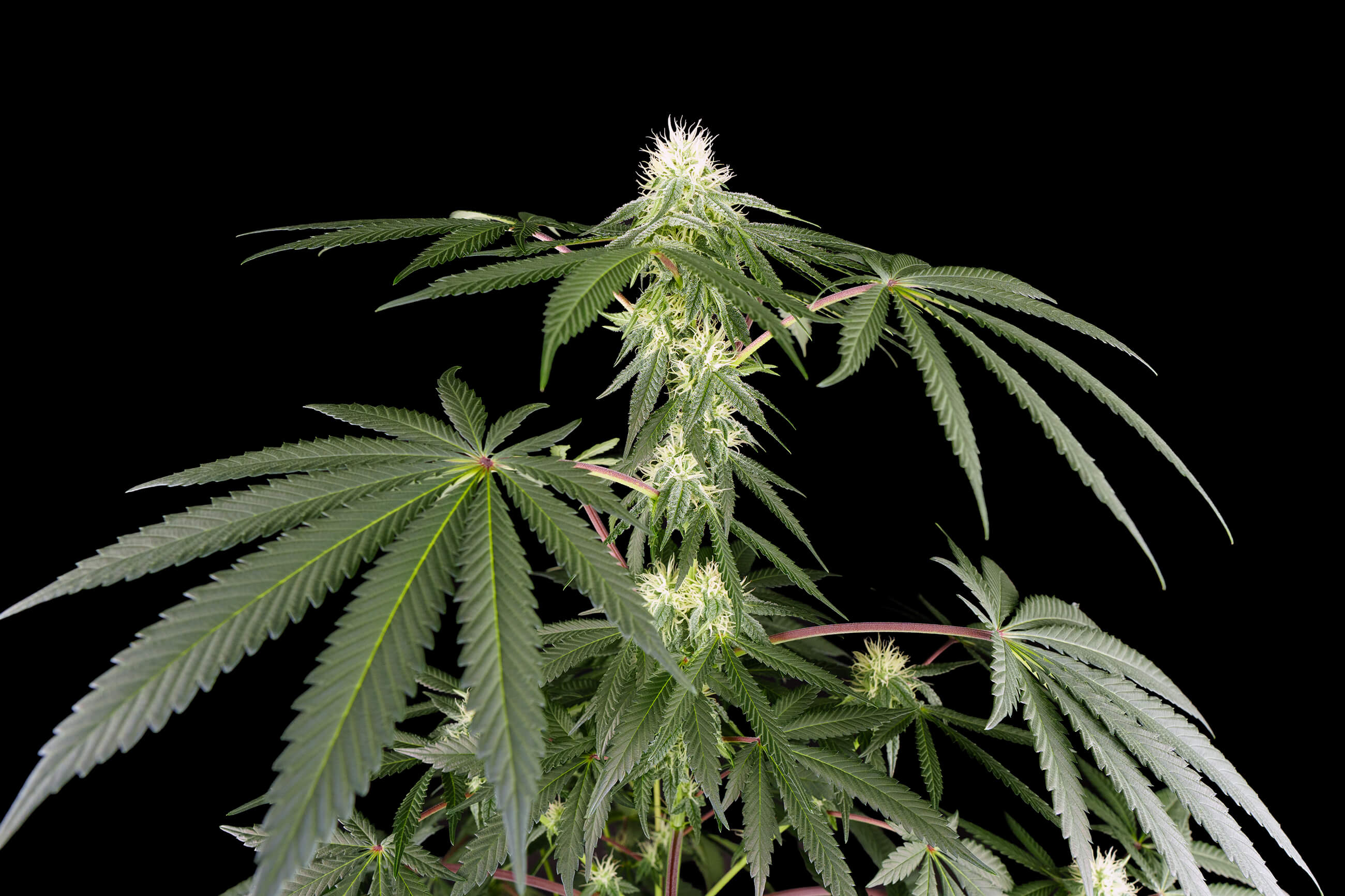
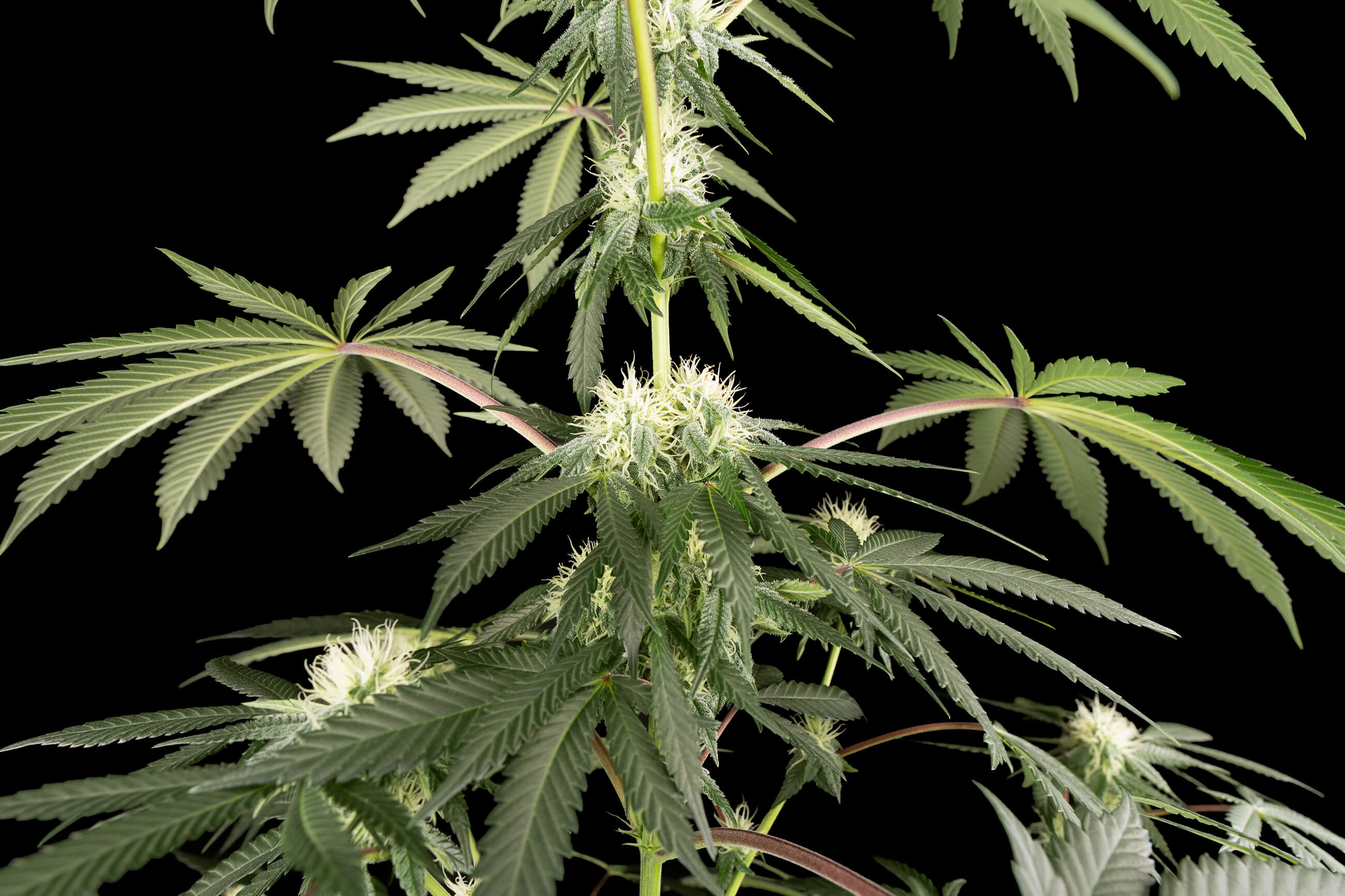
In week eleven, vertical growth slowed considerably, with our plant reaching a height of 71 cm. The main cola was becoming a single solid bud while the secondary colas were rapidly developing alongside several smaller popcorn buds.
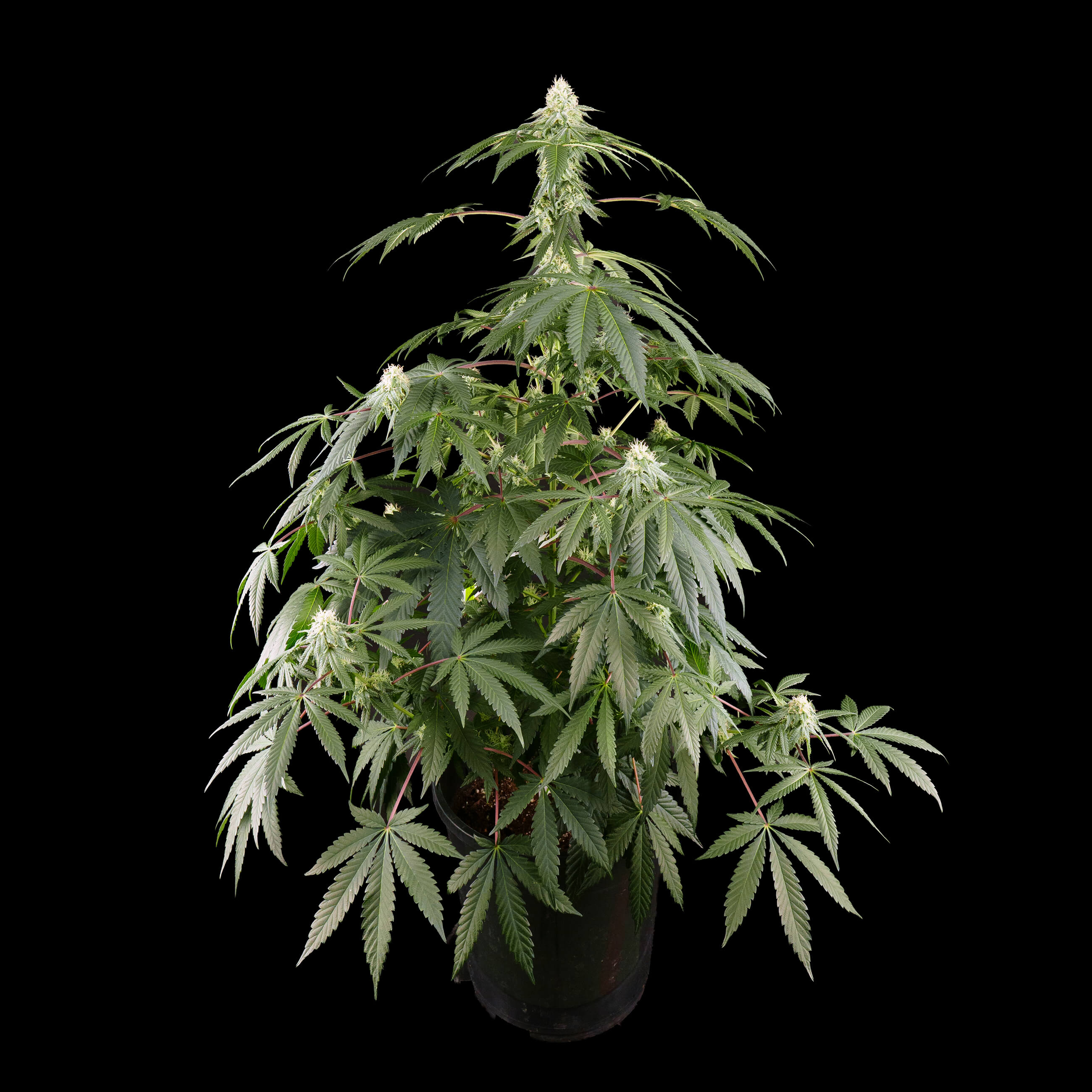
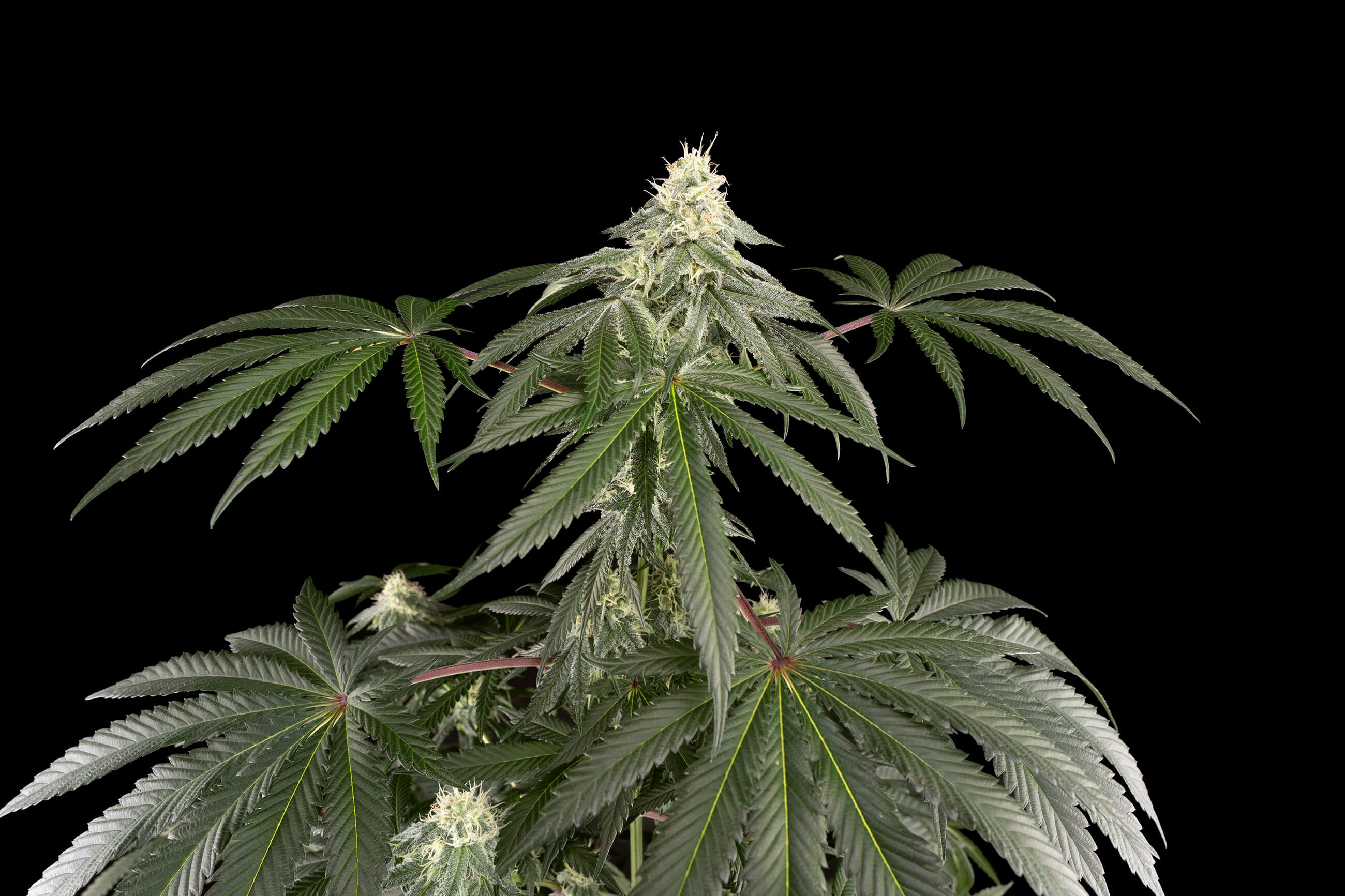
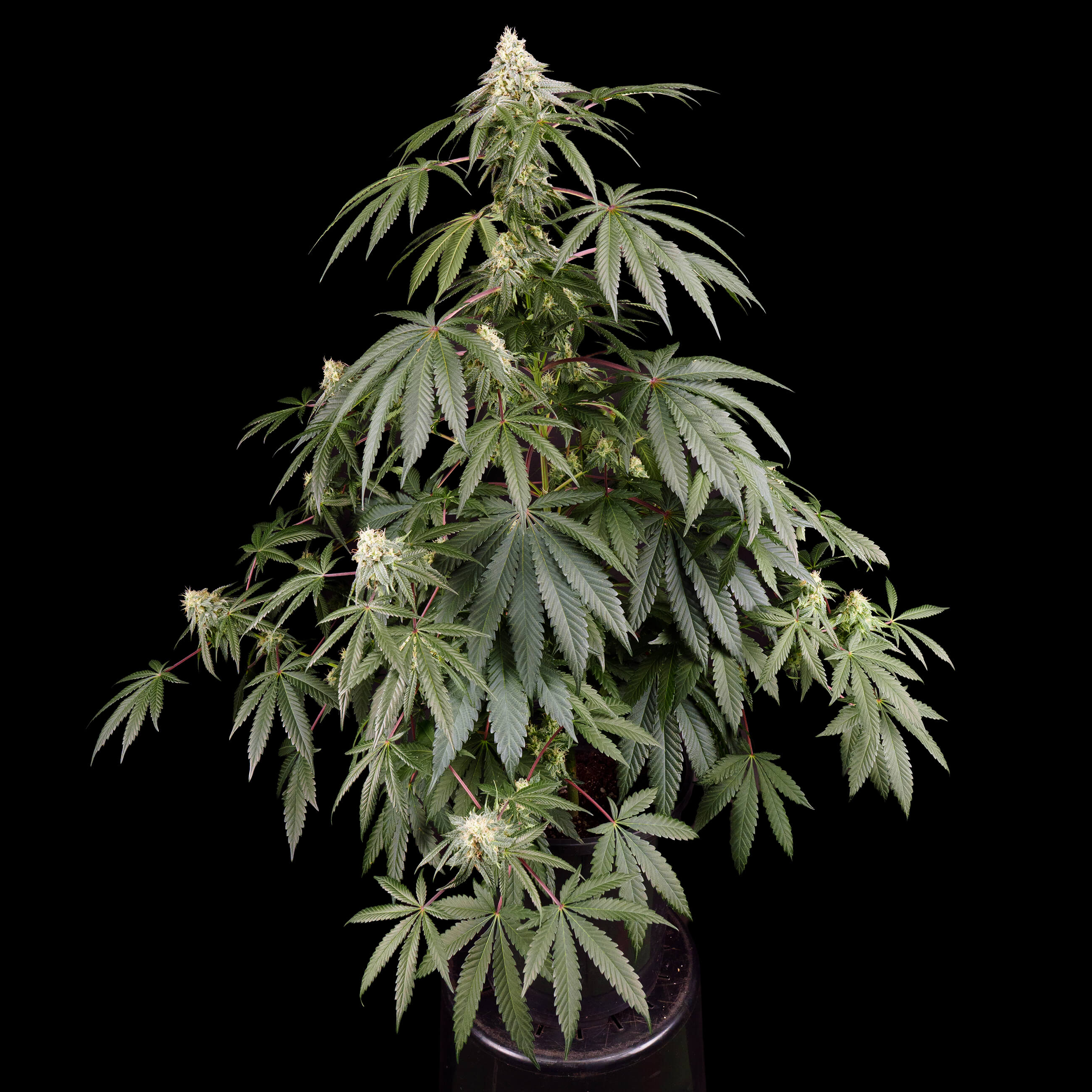
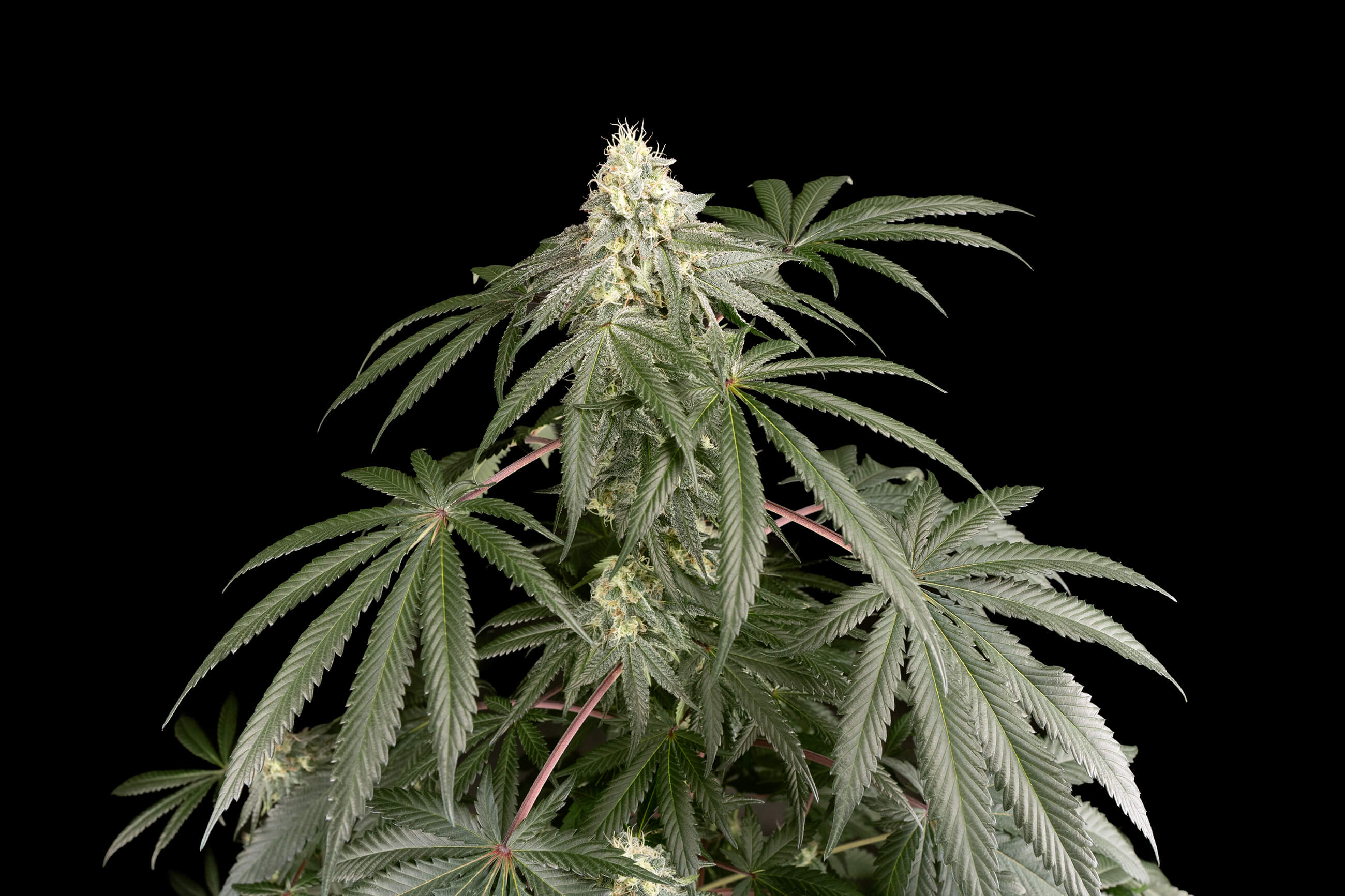
Over weeks twelve and thirteen, our plant grew to 73 cm while the buds continued to grow larger and denser. The lateral branches were doing an impressive job of supporting their flowers, and we were seeing the first pistils turn from white to amber.
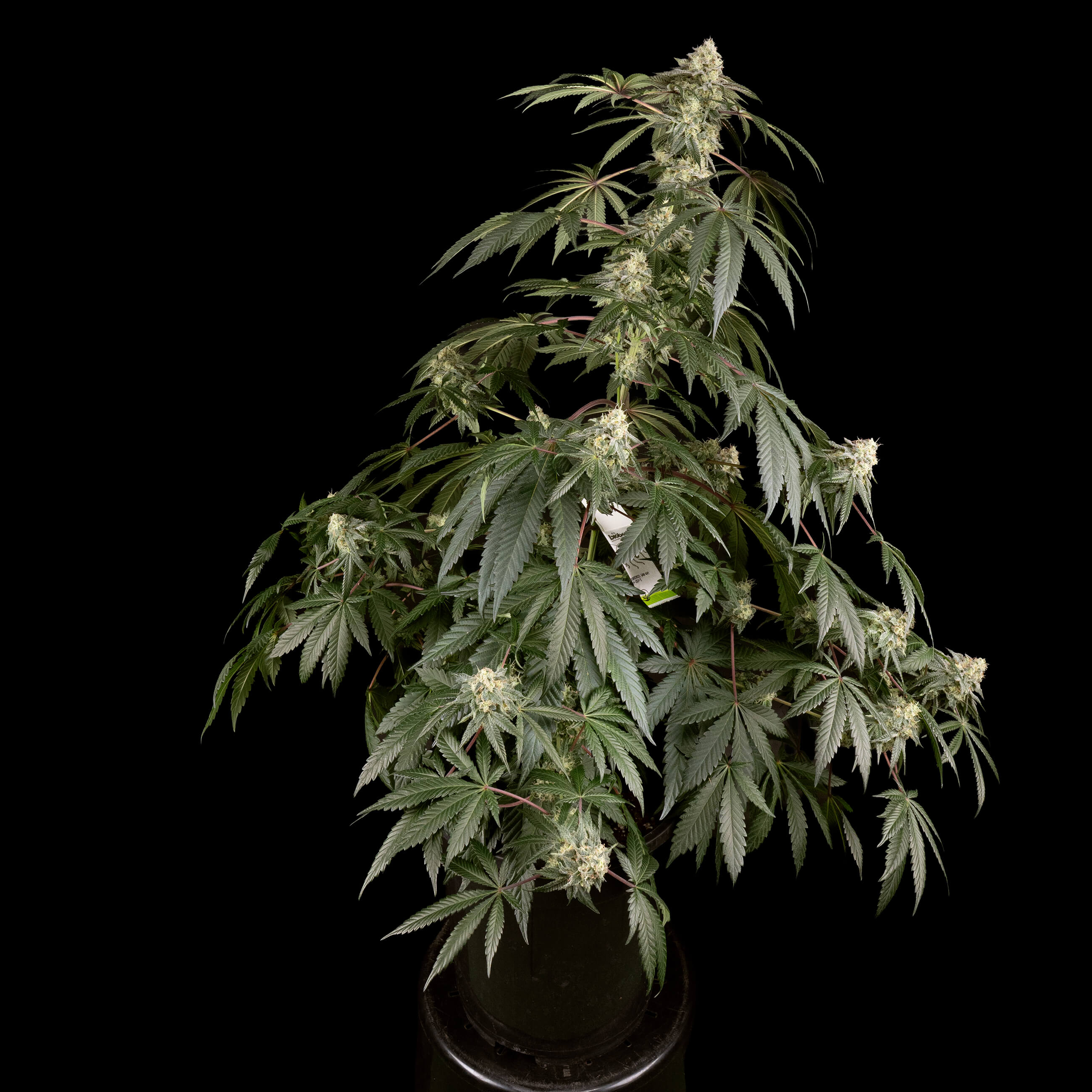
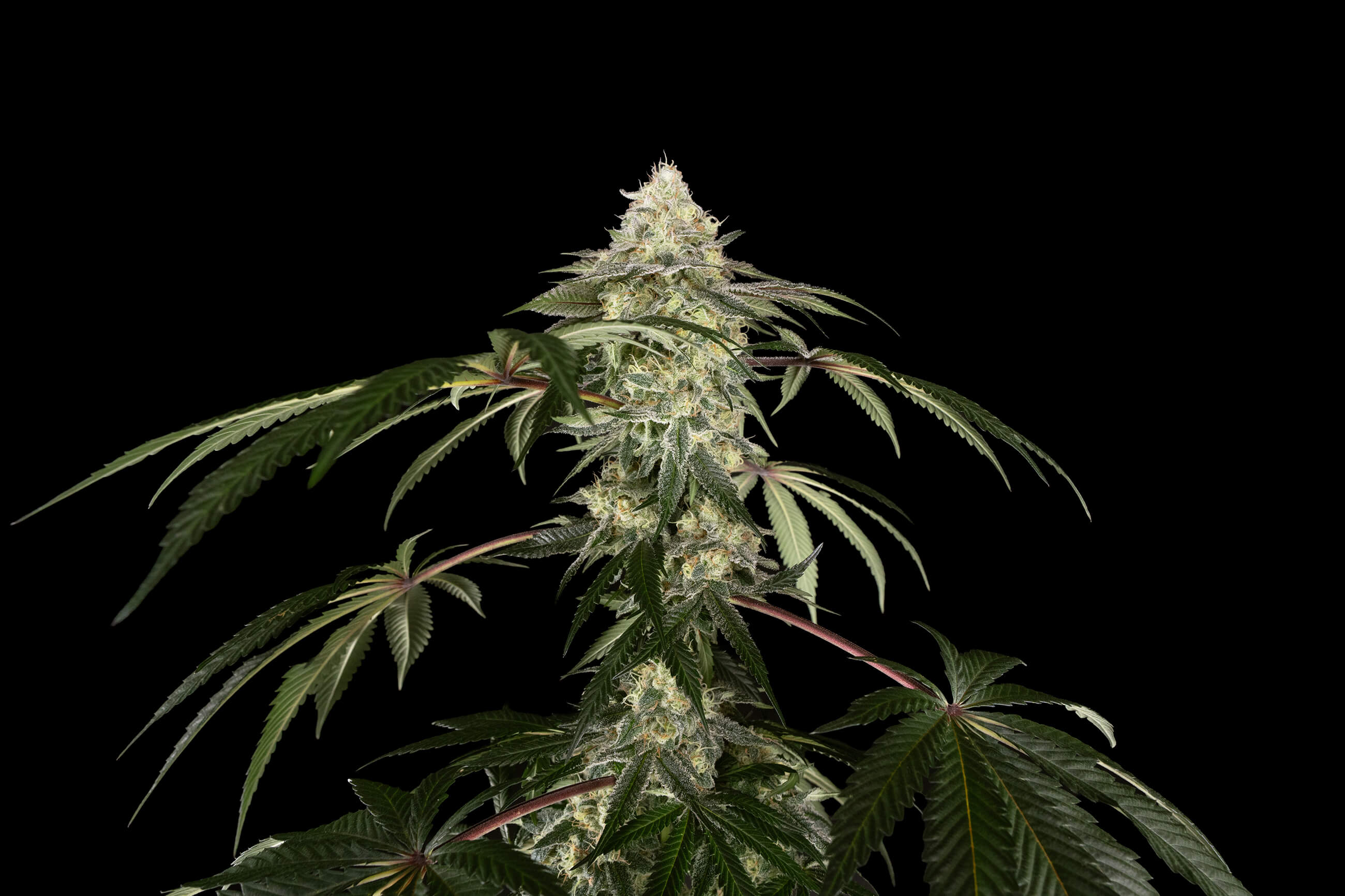
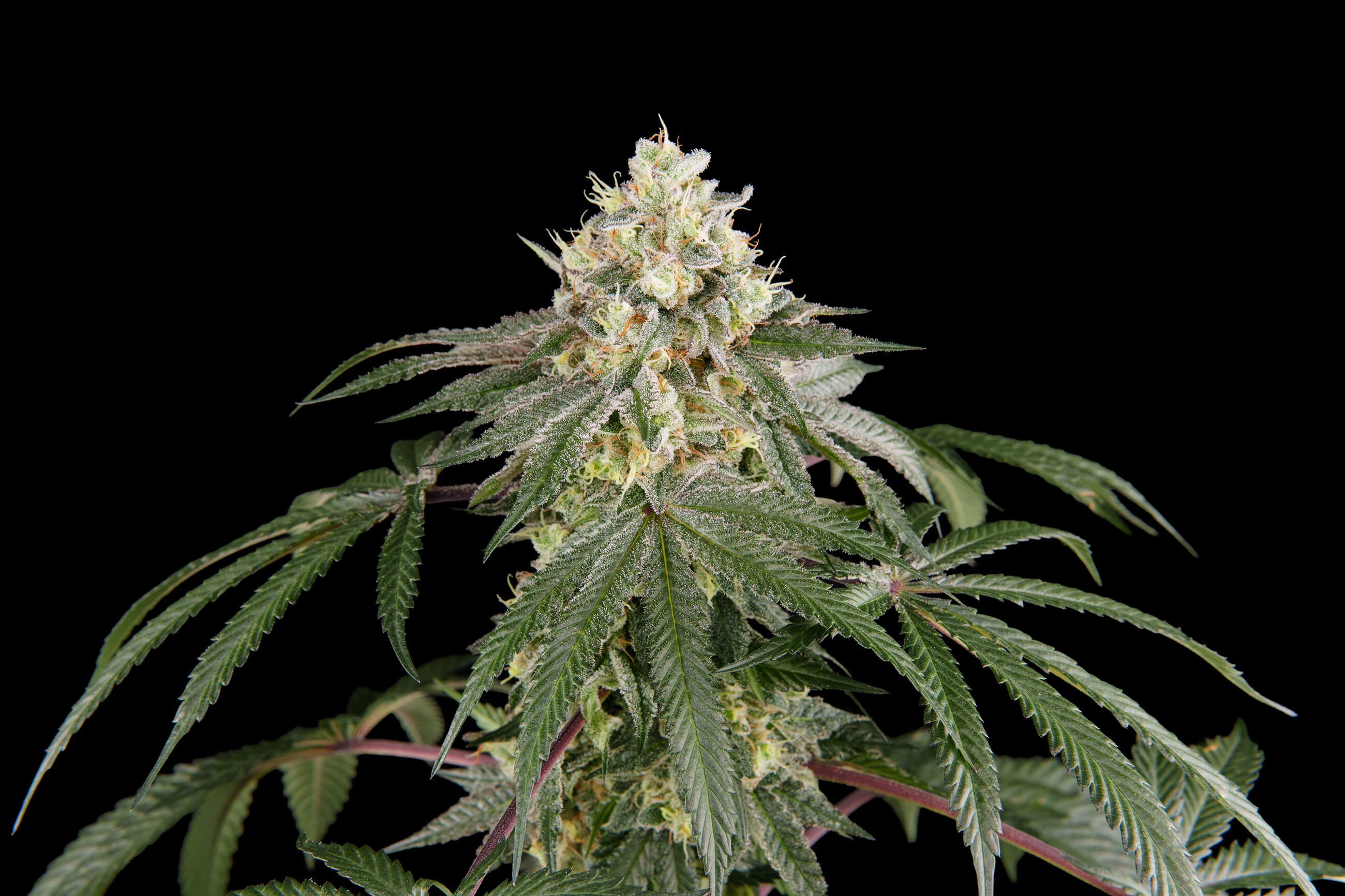
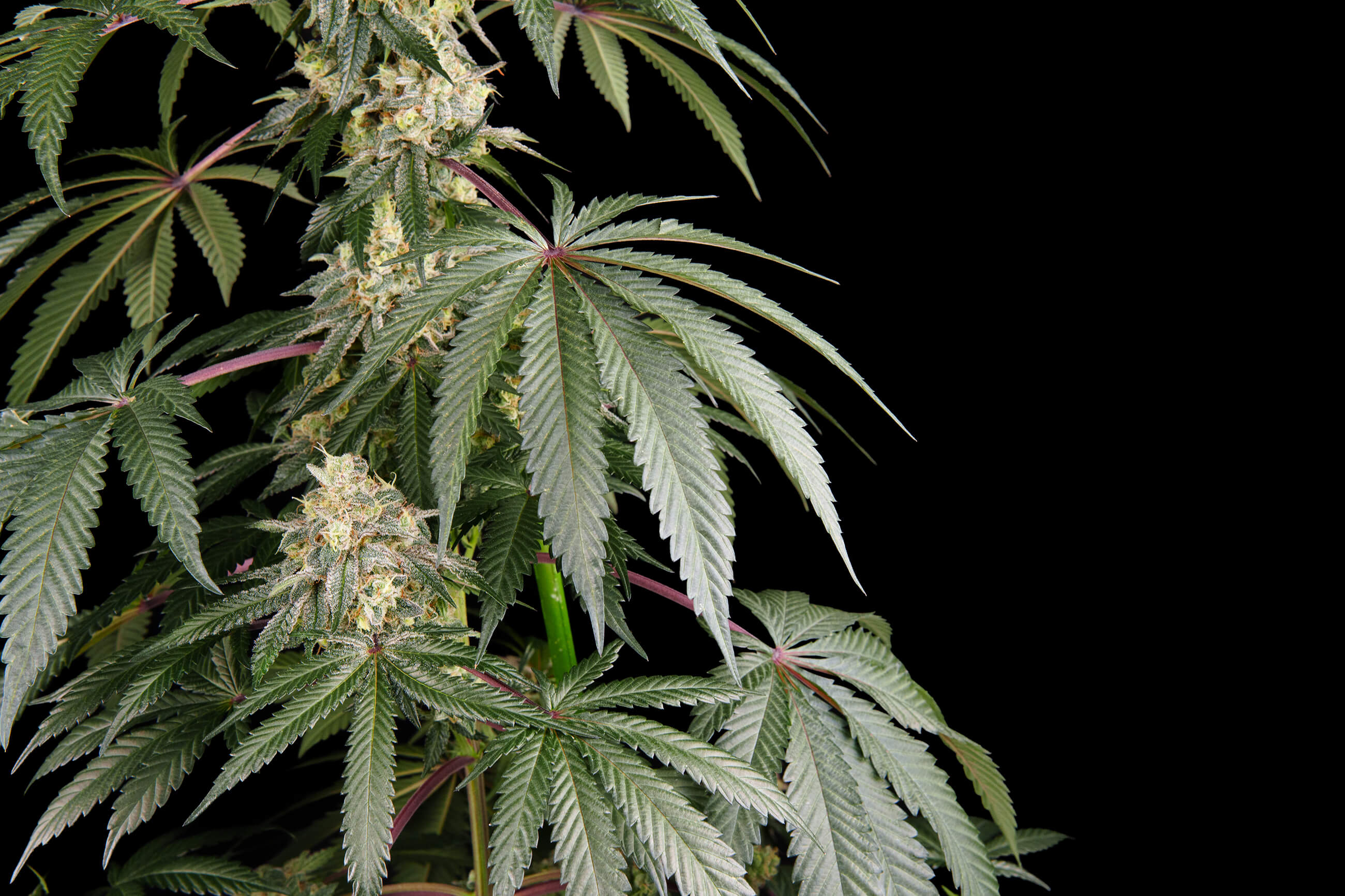
By the end of week fourteen, our plant reached its maximum height of 75 cm and was sporting a moderate number of genuinely impressive buds. As this plant was a little slow to flower, it needed one more week to fully mature.
Finally, in week fifteen, we harvested our Cherry Gas Feminized cannabis plant.
Harvest
Harvesting our Cherry Gas Feminized plant was quick and easy. To start, we cut the plant down at its base, removed the fan leaves, and hung it upside down in our drying room, which is kept at 15.5°C with around 50% humidity. Once the branches were dry enough to snap when bent, we knew it was time to trim the buds.
After we’d removed any remaining leaves, we placed the flowers into glass jars for curing and left the jars open for 24 hours. The flowers were quite large and dense, and we wound up with a considerable number of impressive buds. These were fairly leafy and covered in a thick layer of resin, which made trimming something of a chore.
Once the majority of the remaining moisture had evaporated, the jars were sealed and “burped” several times a day, gradually reducing the frequency to once a day until the flowers reached the desired consistency.
After several weeks of curing, we ended up with a respectable 78 grams of dried flower with an equally impressive THC content of 22.8%.
Related post
Terpene profile
Once flowering started, our Cherry Gas Feminized plant began emitting a sweet, cherry aroma layered on top of creamy, sugary vanilla undertones, with only a subtle hint of gas poking through. The smell was quite distinct from a fair distance, though still manageable enough to be a reasonable option for growers who prefer discretion.
After the buds were fully cured, the aroma softened slightly while certain notes grew sharper and more defined. A blast of fruity cherry took the lead, while a softer dessert-like sherbet character and a faint earthy base rounded things out. The flavour perfectly captured all of these notes, and kicked off with a sticky-sweet cherry flavour on the inhale, a creamy vanilla mid-palate, and a smooth sugary exhale with subtle, gassy undertones.
The high from Cherry Gas Feminized started off with an uplifting, euphoric burst of creative, social energy. After some time, that social drive gradually eased into a warm, relaxing body stone that took the edge off without locking us to the couch. On the whole, the high remained balanced throughout, making it well-suited for daytime use or early evening sessions where you want to keep a clear head, while still relaxing.
Related post

The outcome
In the end, we were impressed by our experience with Cherry Gas Feminized. While the plant was slow to flower, and the yield wasn’t especially heavy, the plant was remarkably easy to manage, and there was never any risk of it growing too large. This moderate stature and uplifting, energetic high make this a great pick for indoor growers who want something a little more uplifting than a traditional indica.
- Disclaimer:Laws and regulations regarding cannabis cultivation differ from country to country. Sensi Seeds therefore strongly advises you to check your local laws and regulations. Do not act in conflict with the law.
