


In this report, we’ll explore our time with Pineapple Jack Feminized, a 70% sativa hybrid that perfectly blends the lanky, stretched-out growth pattern of a classic sativa with just enough indica heritage to fit comfortably into most indoor spaces. Overall, this plant was a breeze, and if you’re an indoor grower tired of bushy indicas, it’s worth a look.
Total growing time: 90 days
Flowering time: 62 days
Final height: 107 cm
Final yield: 143 grams
THC content: 23%
Pineapple Jack Feminized was launched in 2025 as part of the Sensi Seeds’ Breeding Grounds collaboration with the team at Serge Cannabis. We grew our plant under a 1000 W Phillips GreenPower lamp that we hung three metres above the ground, set to an 18/6 schedule during vegetation. During the “daytime”, the temperature was kept at 23°C, and dropped down to 21°C when the lights turned off. We kept the room at a relative humidity of 65% during vegetation, and we grew our plant in an 8-litre plastic pot filled with BAC Lava Mix.
Germination & seedling
Just like all of our grows, our first order of business was germinating our seed, and we used the trusty Paper Towel Method. This is easily the quickest, easiest, and most dependable way to germinate a seed, and only requires a plate, some paper towels, and a plastic bag.
To start, simply fold up a couple of paper towels, add 20-30 ml of water (they should be damp but not dripping), and lay them on a plate. Next, place your seeds onto the towels and cover them with another damp paper towel. Finally, put the entire thing into an open plastic bag and set it somewhere warm but out of direct sunlight. After 24-36 hours, you’ll see your seeds splitting open to show off a small white taproot, signalling that it’s time to plant.
Next, we planted our seed (taproot down) into a pre-soaked rooting sponge, put that into a pre-soaked Rockwool cube, and set it all under a 600 W LED lamp. This early in a plant’s life, too much light, heat, or water can permanently damage the plant and can even prevent a seed from sprouting. After three days, it was time for our seedling’s first watering with 100 ml of pH-balanced water (pH 6.2; EC 0.8) mixed with a small dose of rooting hormone.
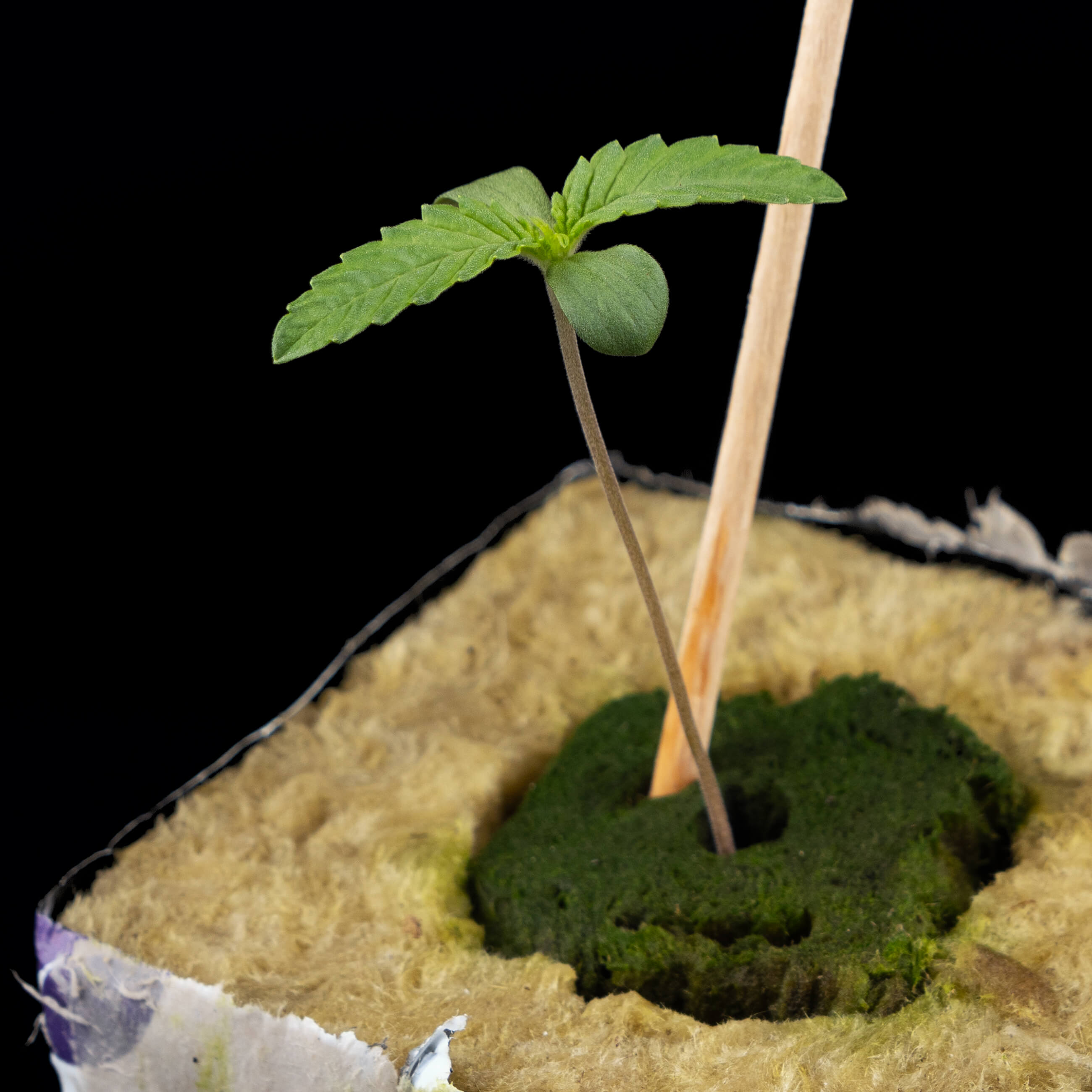
By the end of the first week, our plant was 8 cm tall with four healthy cotyledons. After the initial feeding, we continued watering it every day with 100 ml (pH 6.0; EC 1.4) of water mixed with Bio Grow liquid nutrients. As the week came to a close, we could see roots growing out of the Rockwool cube, meaning that it was time to move our plant to its new 8-litre plastic pot under our 1000 W lamp.
Vegetation
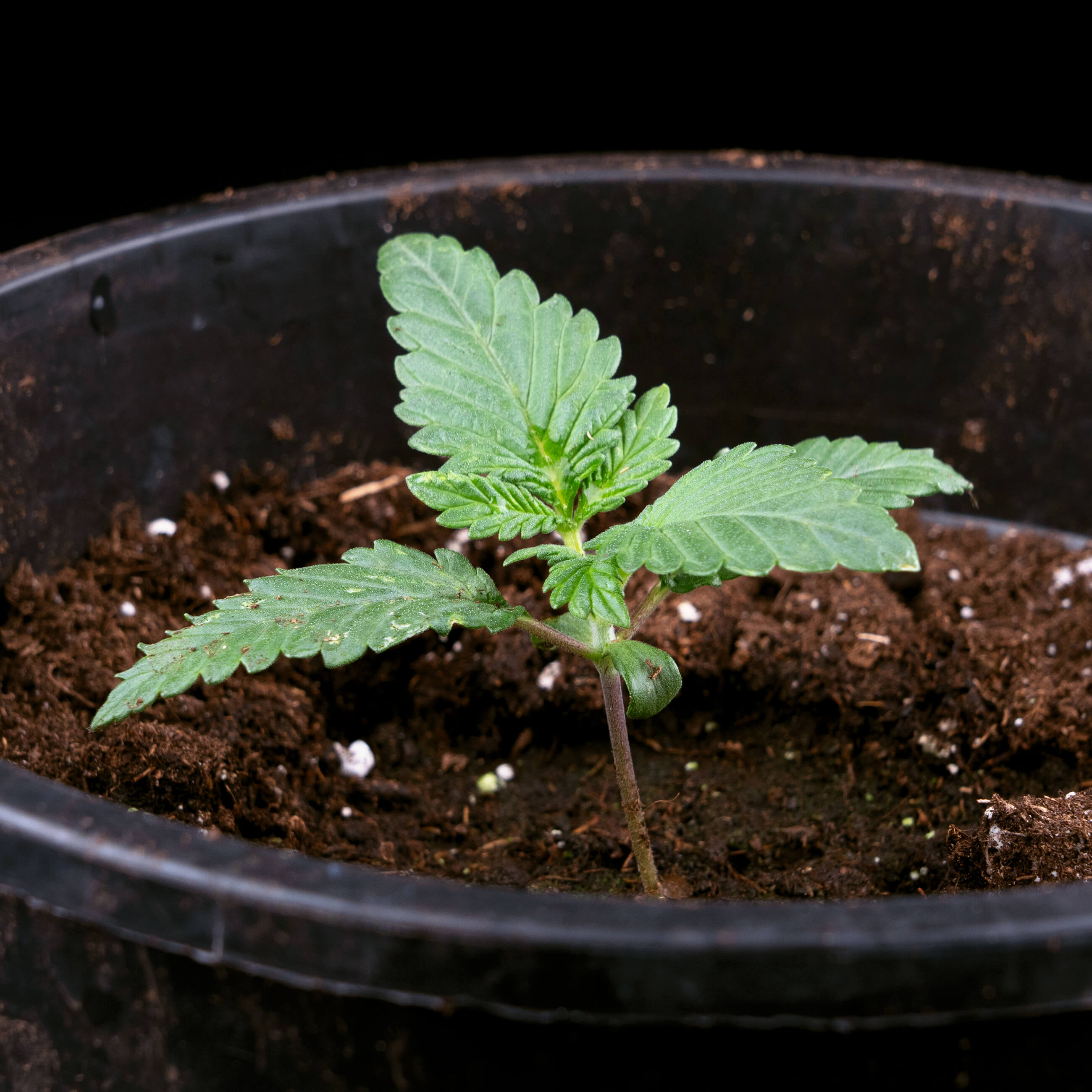
Week two saw our plant grow slightly to reach 12 cm and develop its first set of somewhat small, but rather healthy true leaves. Expecting more rapid growth over the next week, we doubled the amount of daily water to 200 ml.
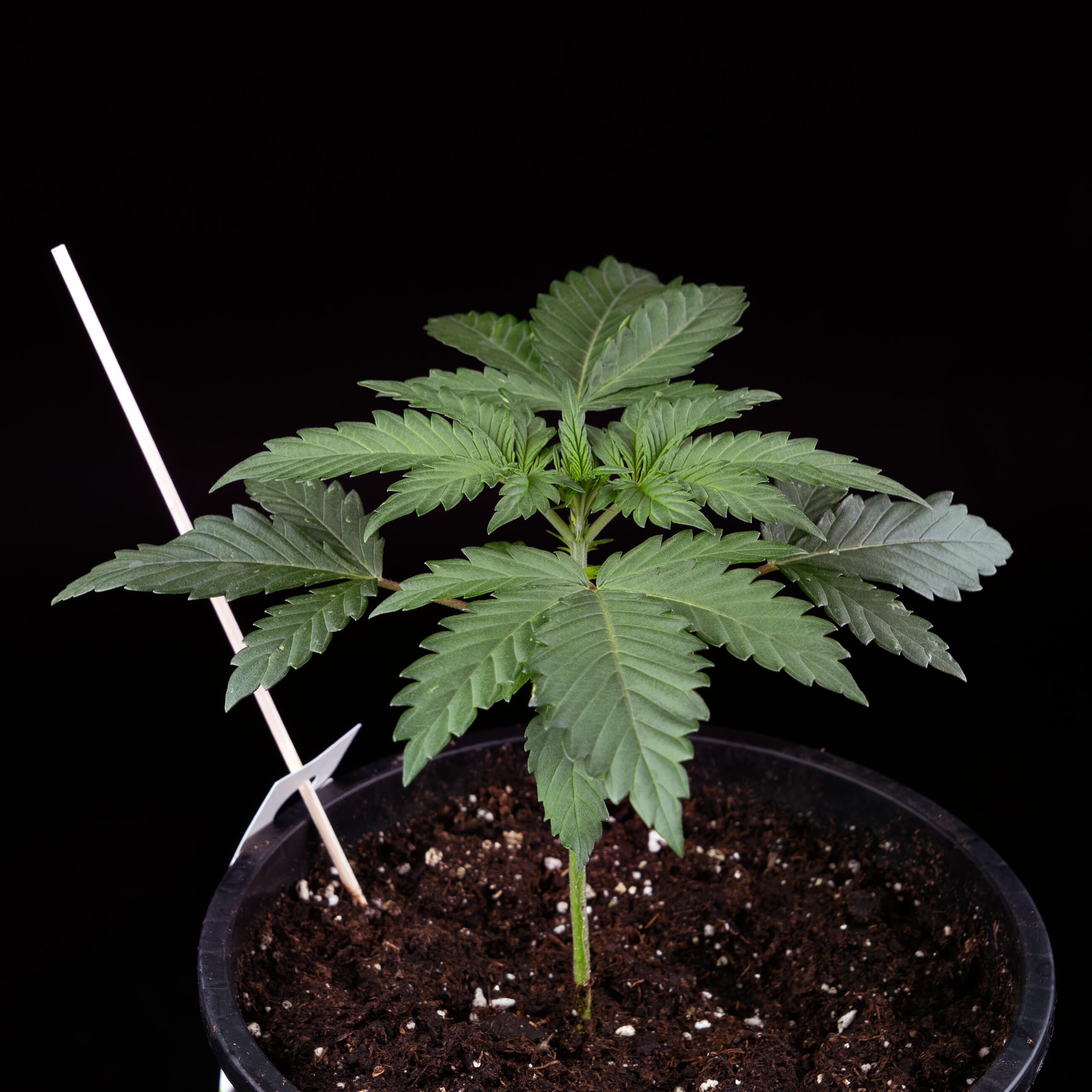
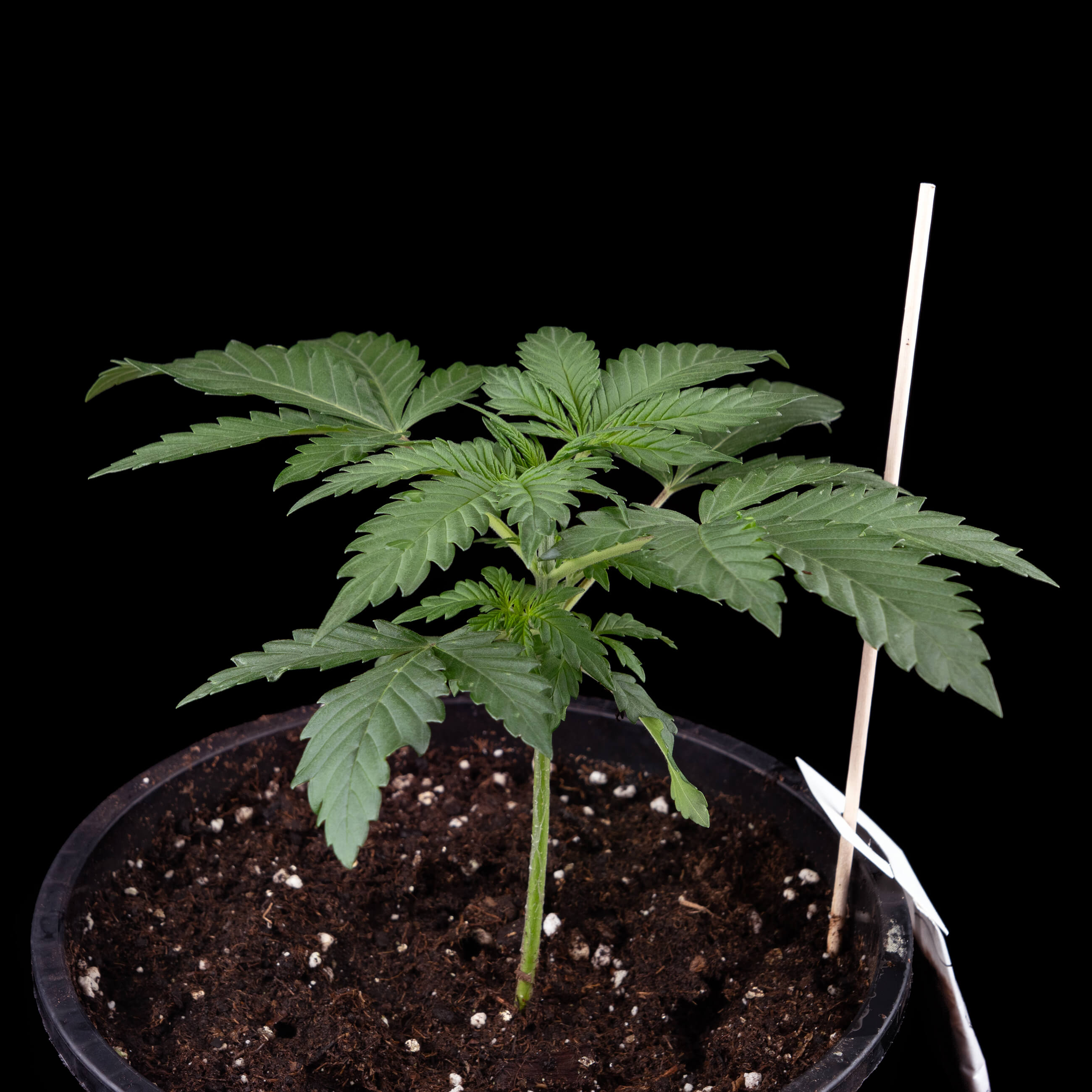
In week three, our plant nearly doubled in size, growing to a new height of 23 cm. This week also saw the first lateral branches as well as multiple new sets of leaves along the rapidly stretching main stalk. At this stage, the internodal spacing was certainly on the long side, and the plant was a little lanky with a long gap between the lowest leaves and the soil. With flowering just a week away, we again doubled the volume of daily water to 400 ml.
As one last step before flowering our plant, we hung small satchels of Neoseiulus californicus and Amblyseius swirskii off of the lowest branches. These small bugs have developed a symbiotic relationship with cannabis plants, meaning that they won’t harm the plant at all, but will hunt down pests like thrips and spider mites before they can destroy a garden. We replace these every four weeks to maintain a fresh supply.
Related post

Flowering
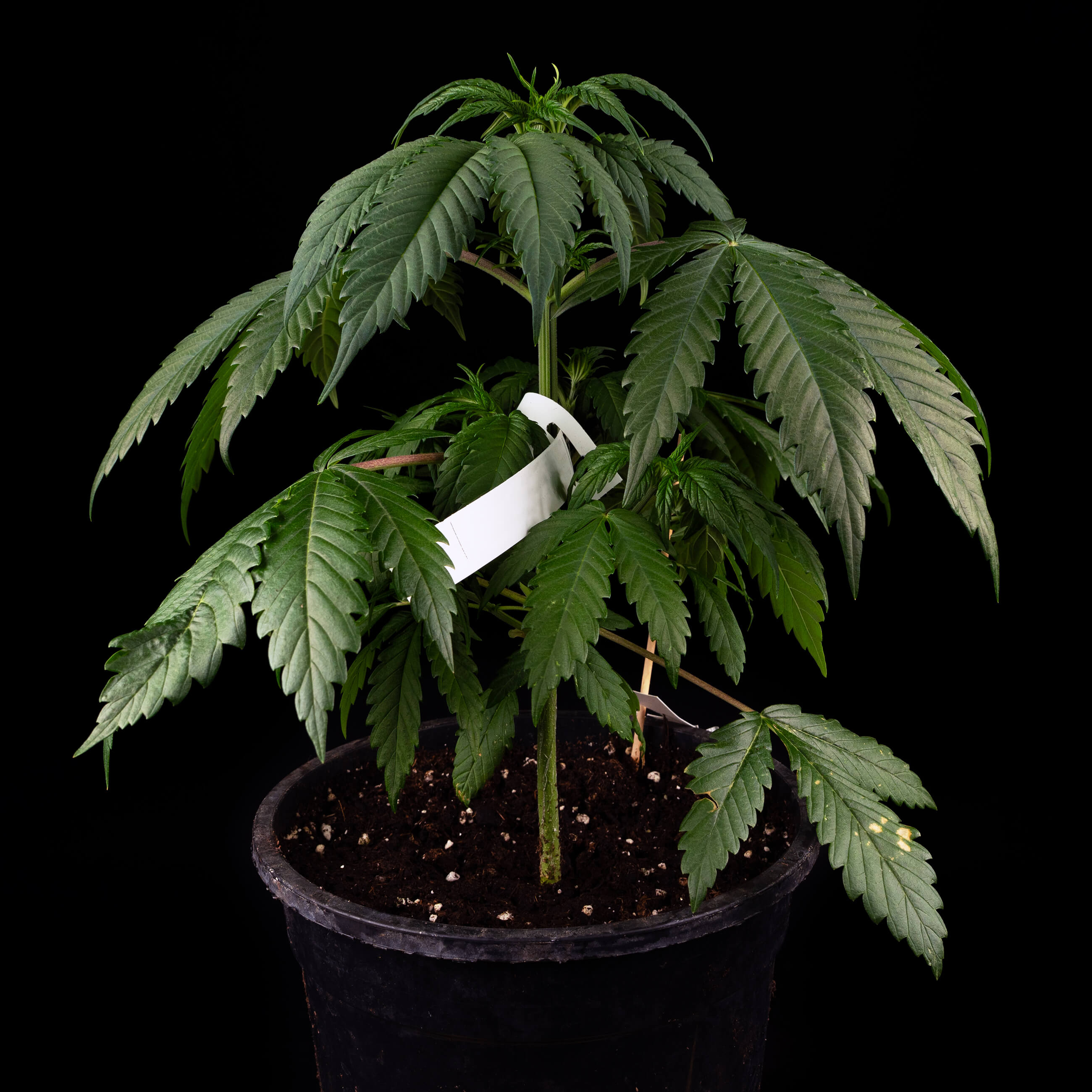
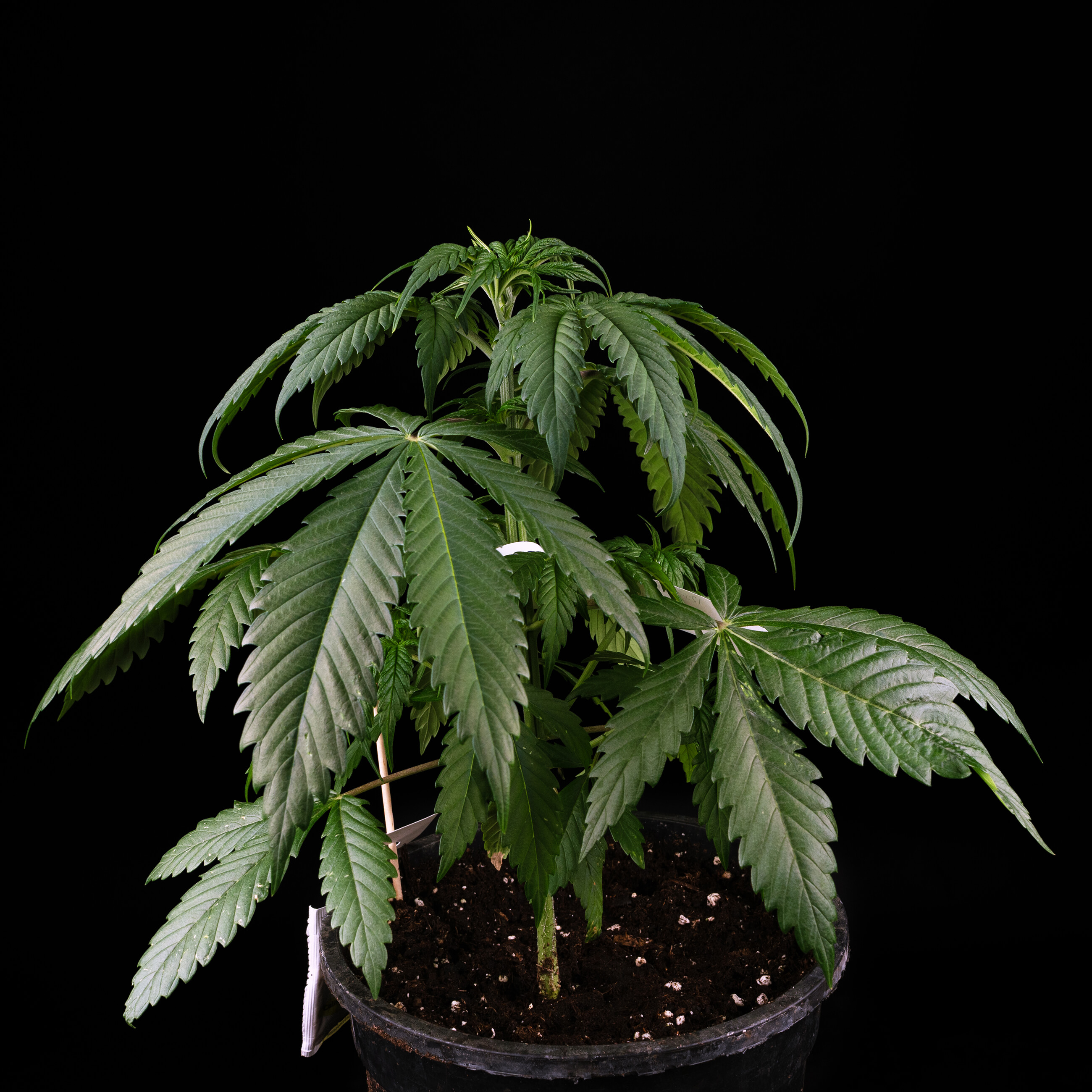
As we entered week four, we now needed to flip our plant to flowering by adjusting the lights to a 12/12 schedule, reducing the humidity in our space to 60%, and changing our feeding regimen. During this week, we began daily feedings with 800 ml of water (pH 6.0; EC 1.8) mixed with Bio Flower liquid nutrients. As the week drew to a close, our plant was 34 cm tall with a thick main stem, large, heavy leaves, multiple lateral branches, and incredibly long internodal spacing.
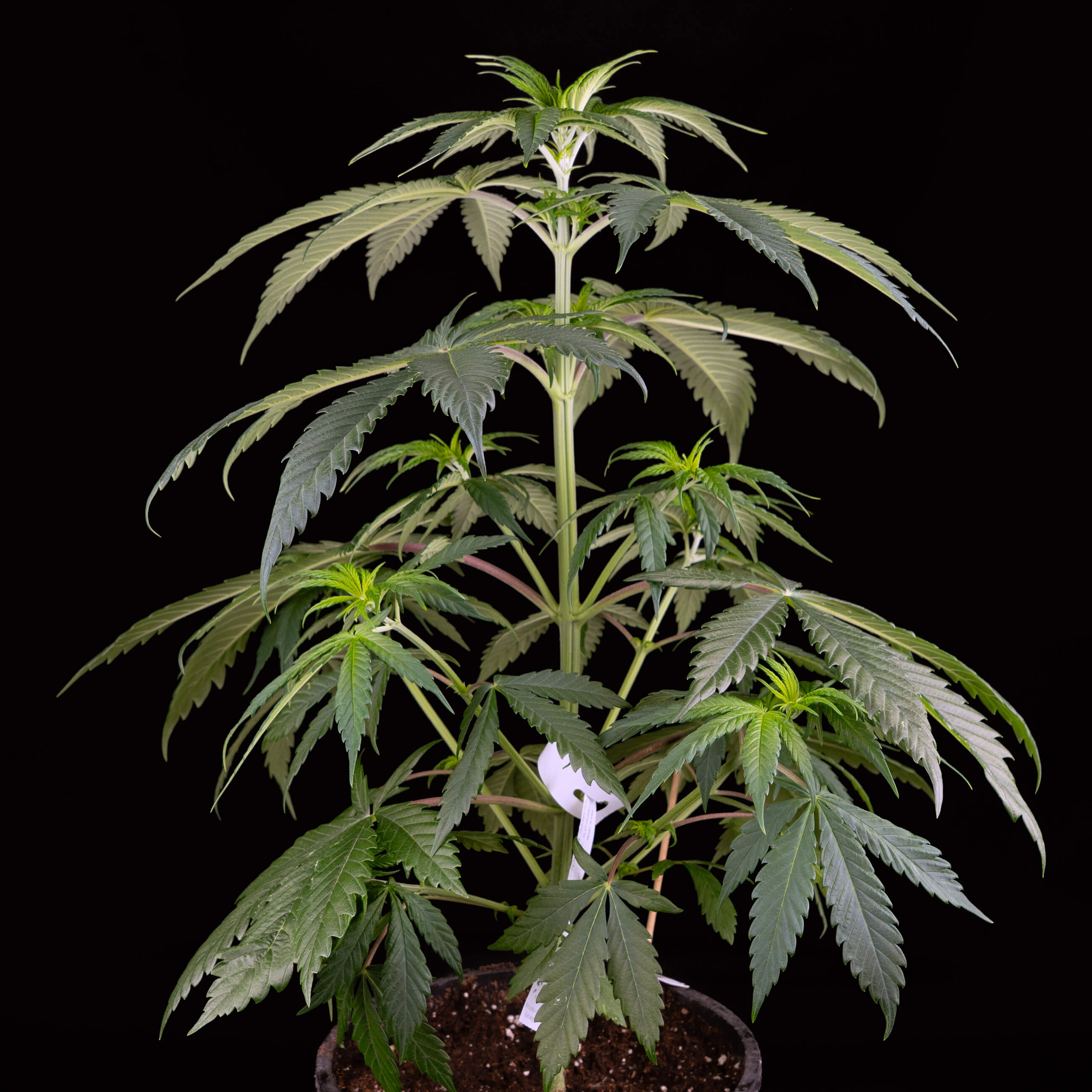
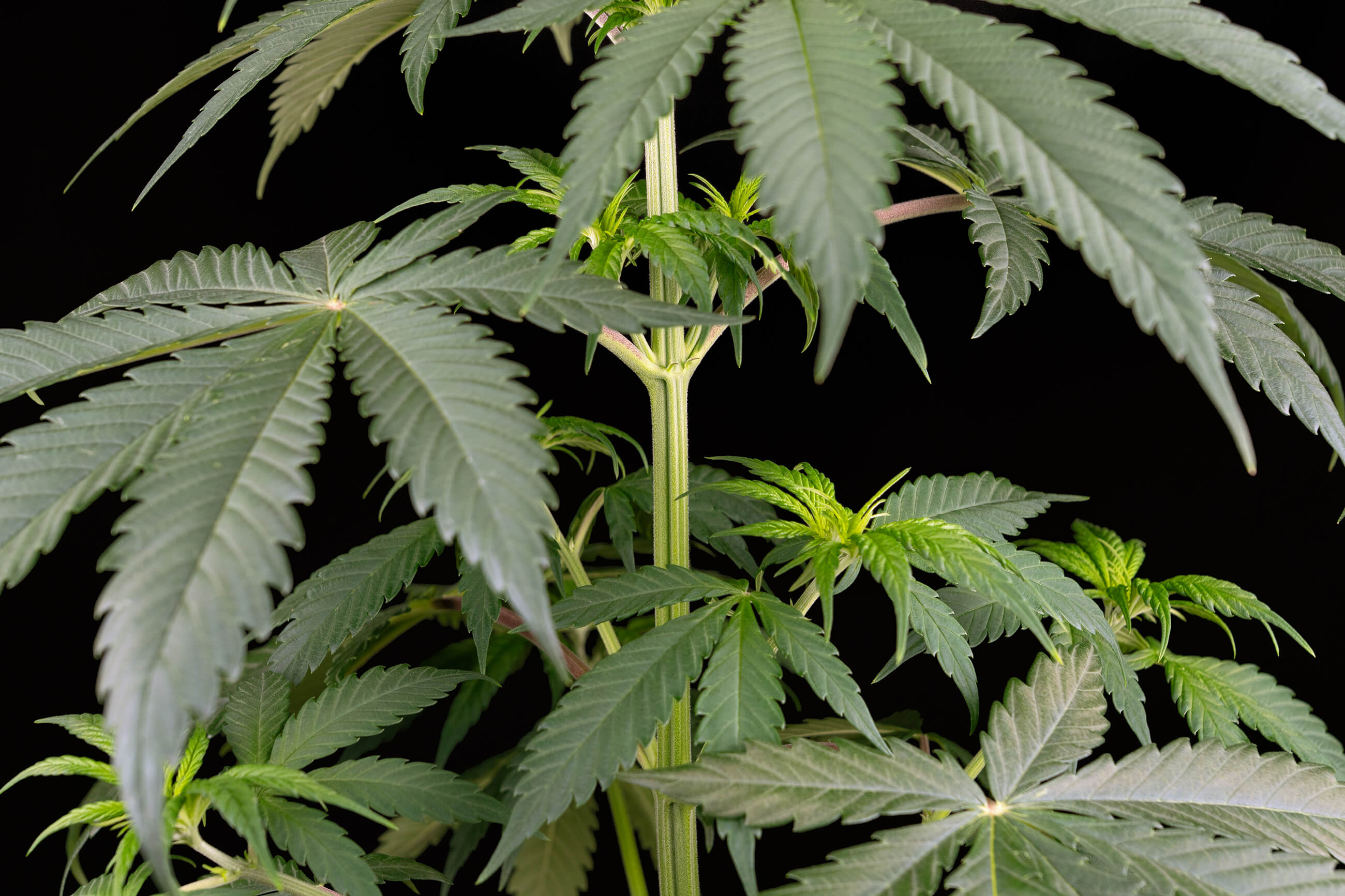
In week five, our Pineapple Jack Feminized plant saw steady growth as it climbed to 43 cm and continued its immense stretching. The plant had rather sparse vegetation, but a thick stem and rapidly-growing lateral branches. With the plant set to continue its rapid growth, we increased daily feedings to 1000 ml of water.
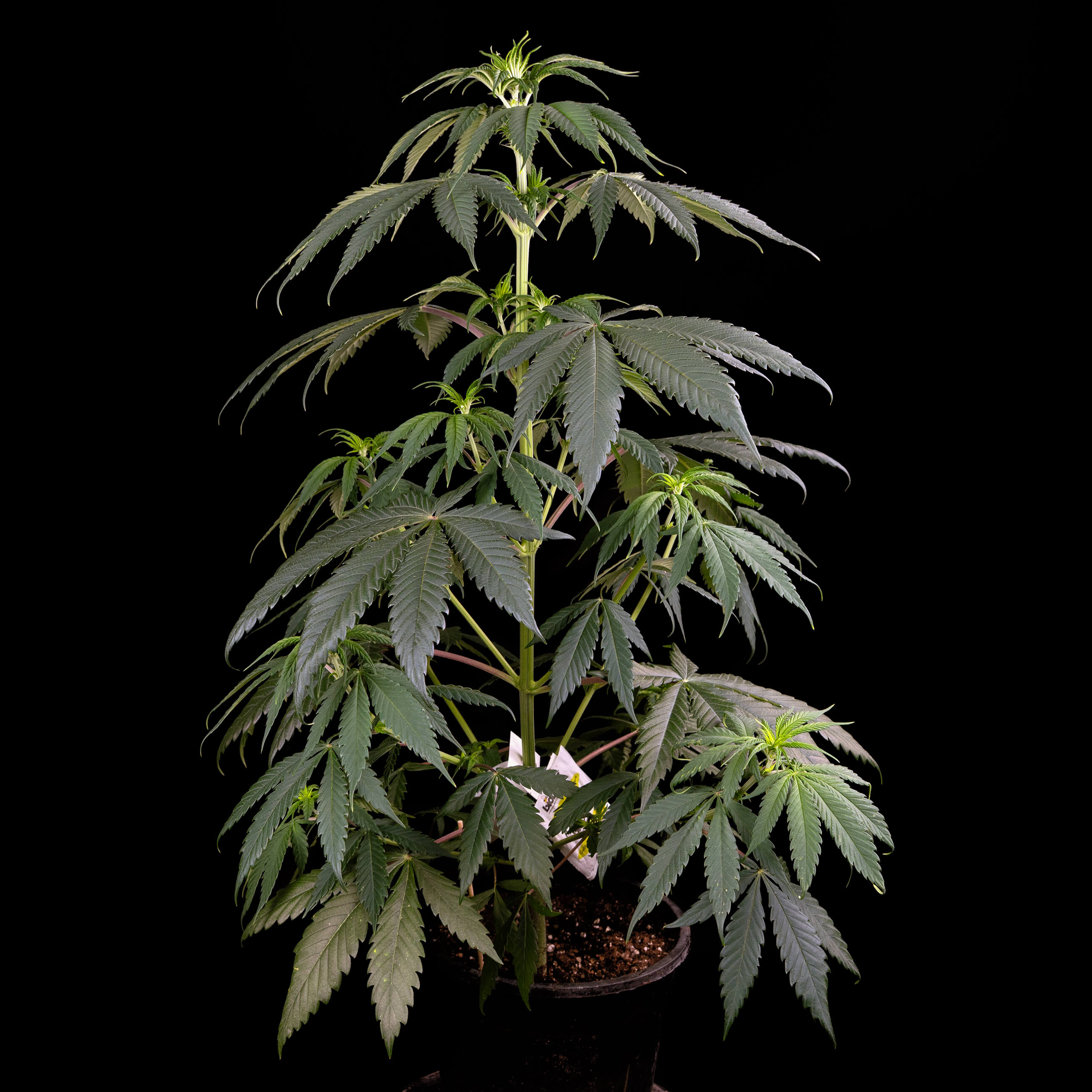
Week six saw our plant shift into high gear as it shot up 14 cm to reach a new height of 57 cm. The internodal spacing was continuing to stretch, and the lateral branches were continuing their rapid growth, giving the plant an extremely narrow, cylindrical shape. Anticipating flowering to kick off any day, we upped the water to 1500 ml per day; this wouldn’t change for the rest of the grow.
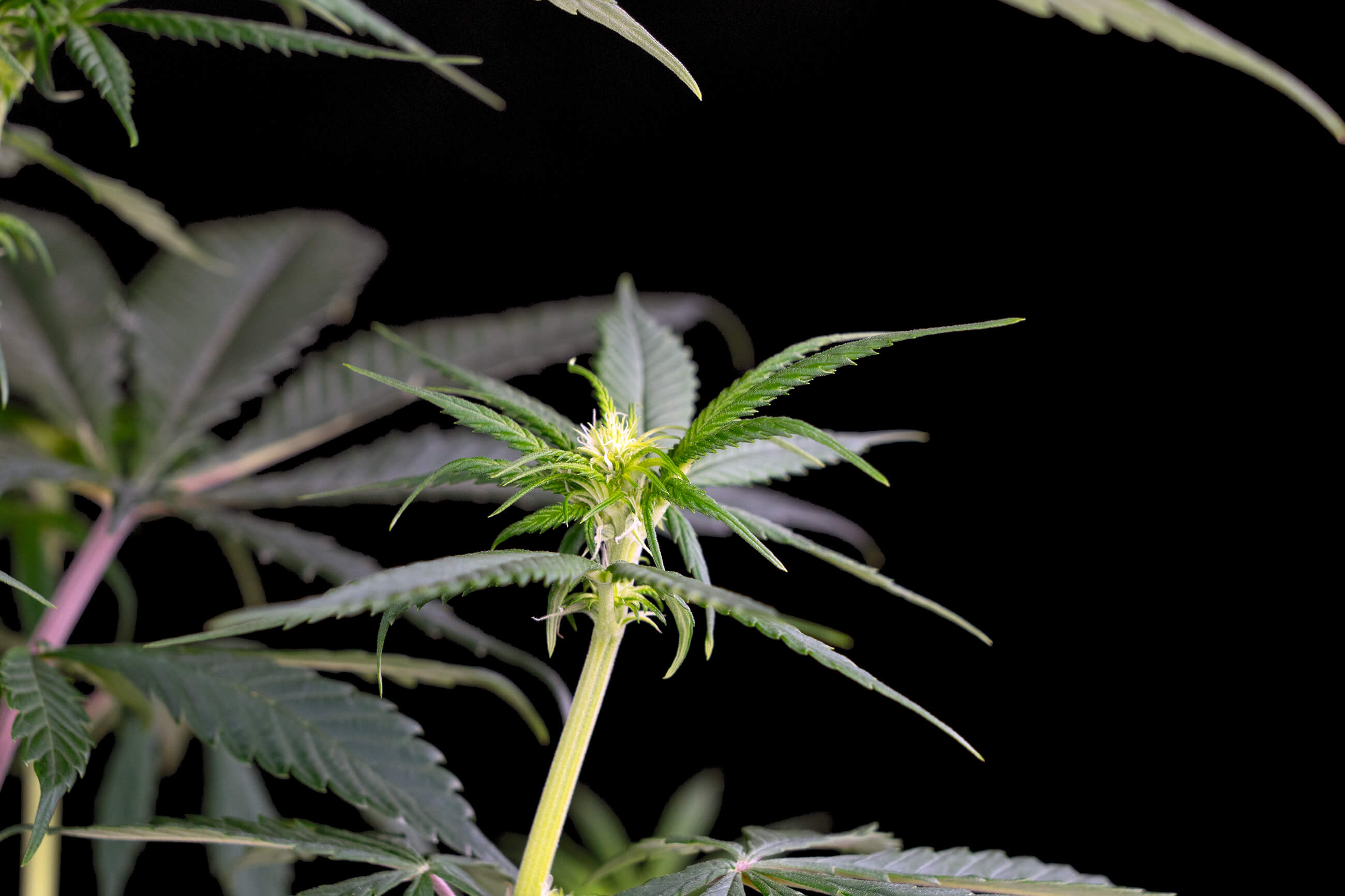
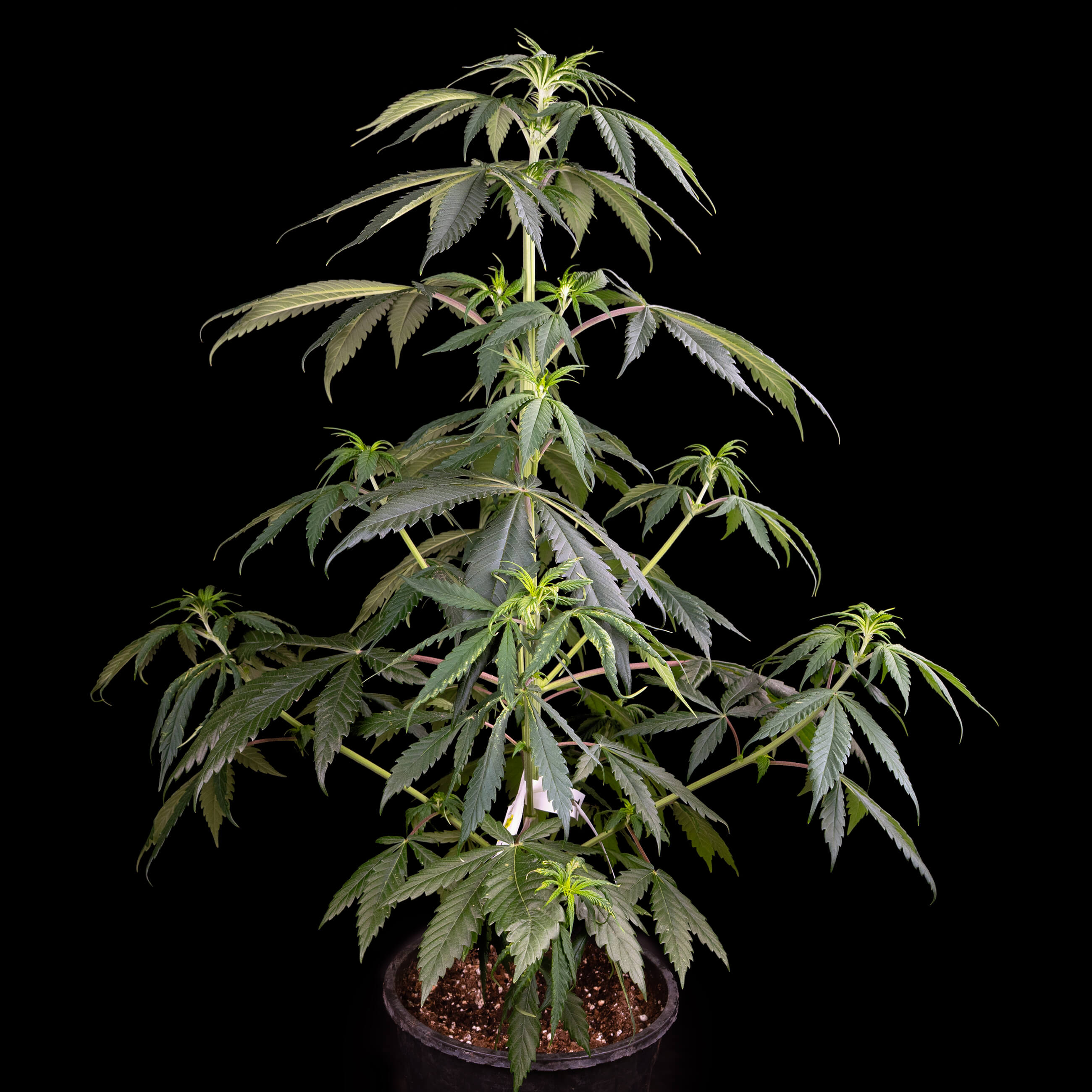
In week seven, we began to notice the earliest signs of flowering, as small clumps of white hairs appeared at the tops of the lateral branches. The internodal spacing was continuing its stretching, and the lateral branches were beginning to grow somewhat outwards, increasing the plant’s footprint considerably. As the week drew to a close, our plant was standing at a very nice 69 cm with no signs of slowing down.
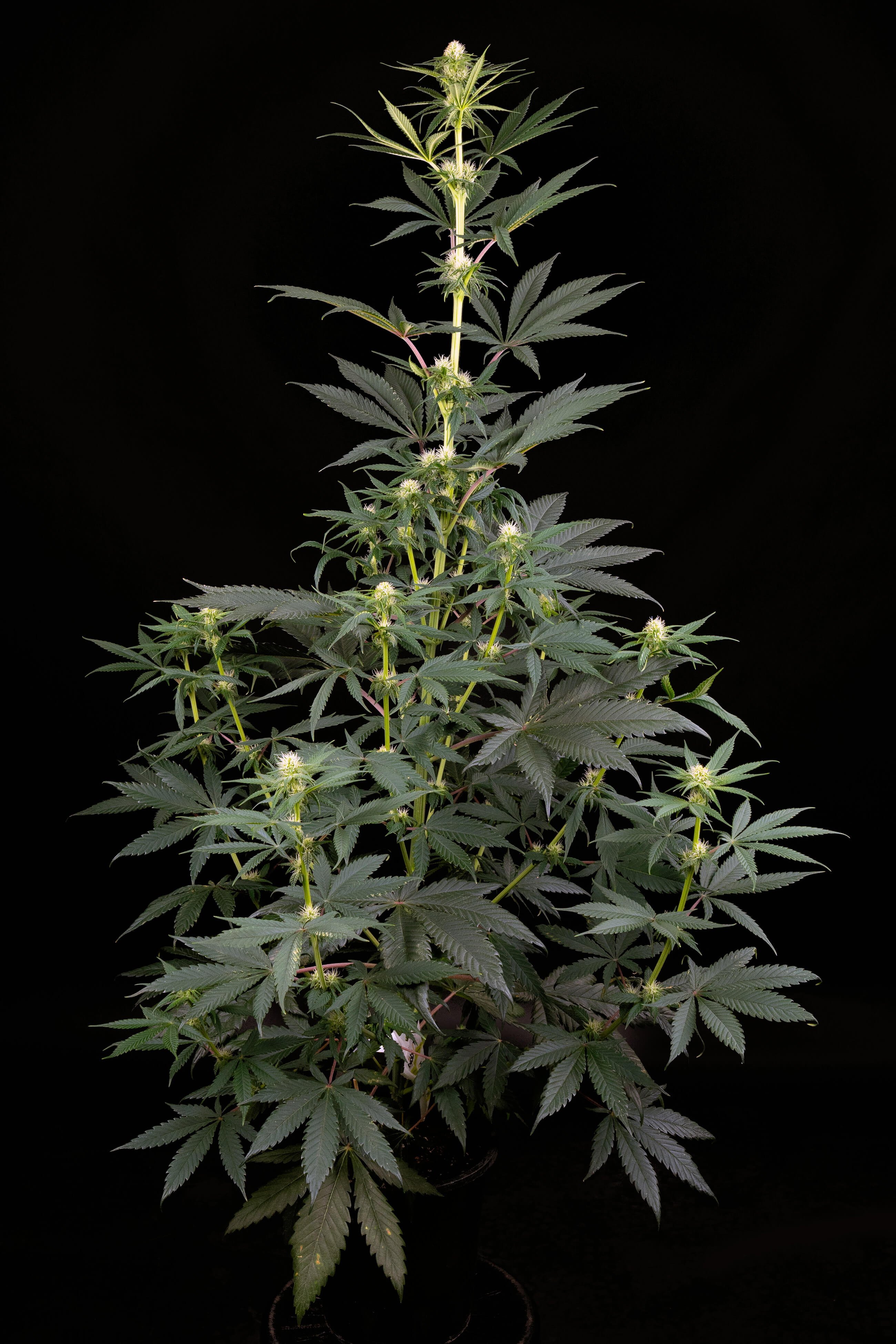
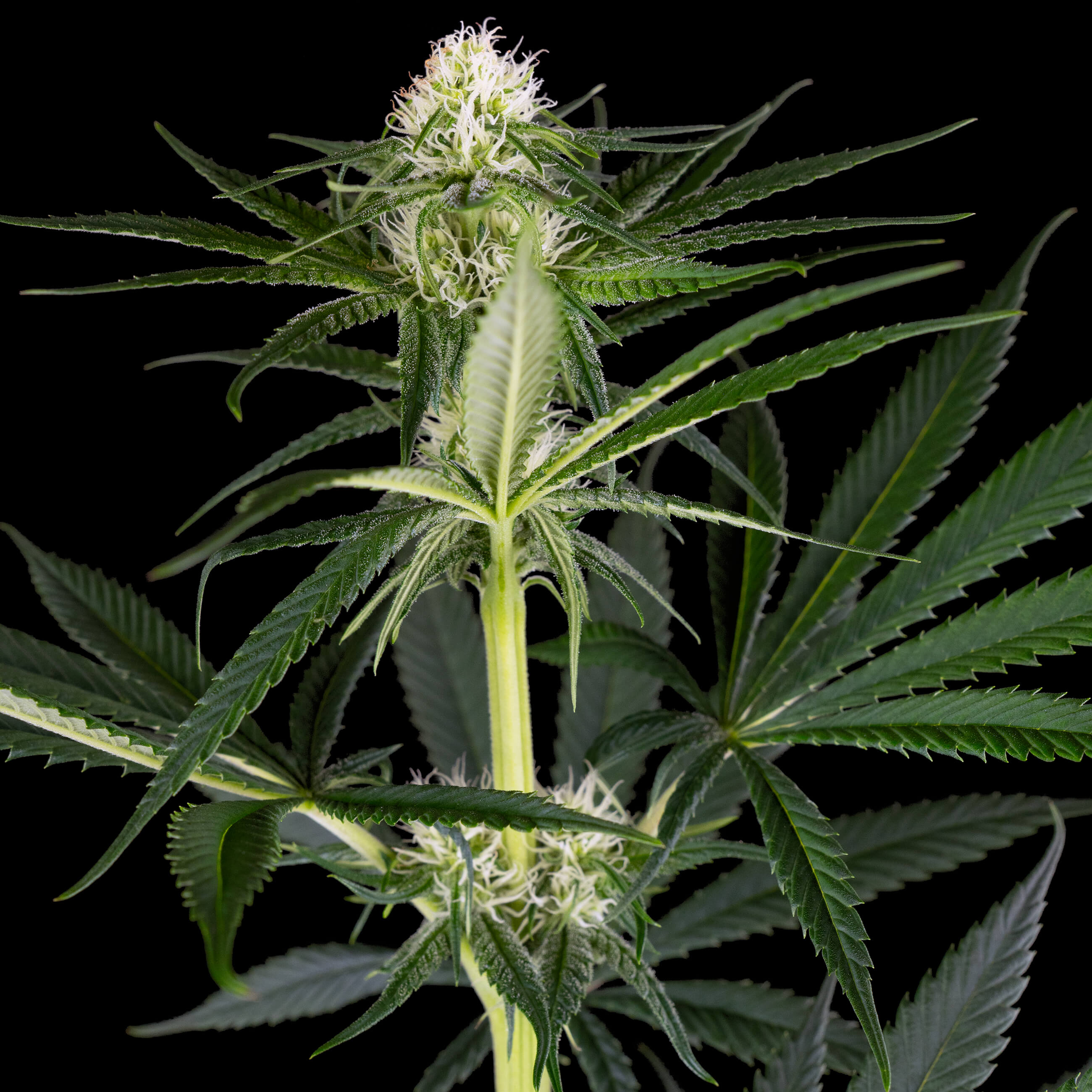
Throughout week eight, our Pineapple Jack Feminized plant saw its largest week-on-week growth spurt, gaining 15 cm to stand at 84 cm tall. While the lateral branches did grow noticeably, the real work was on the main stem. This was now towering above the lower canopy, and at this point, the internodal spacing could only be described as “extreme”. The lower branches were long, slender, and surprisingly sturdy, and small clusters of white pistils were growing in at each flowering site.
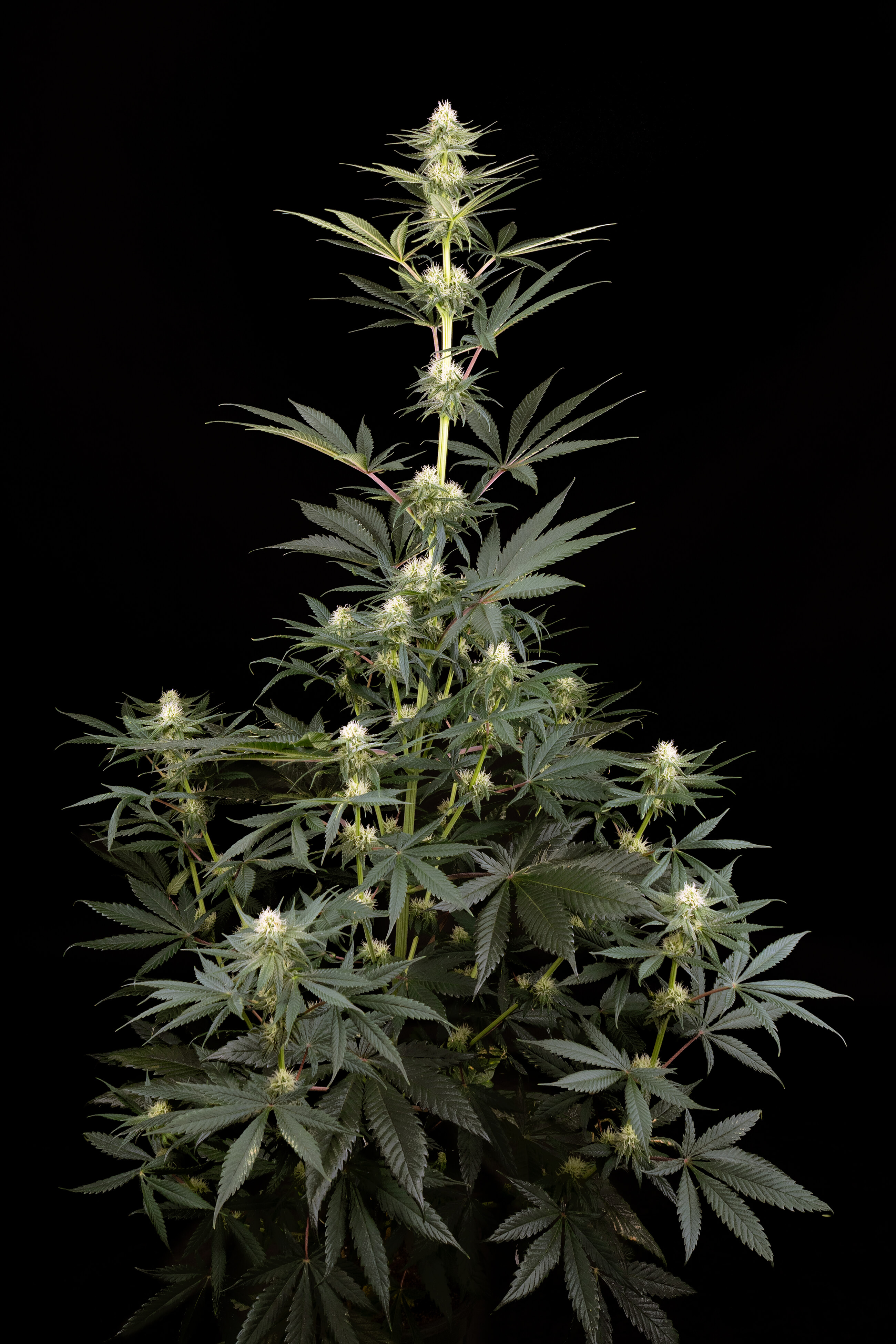
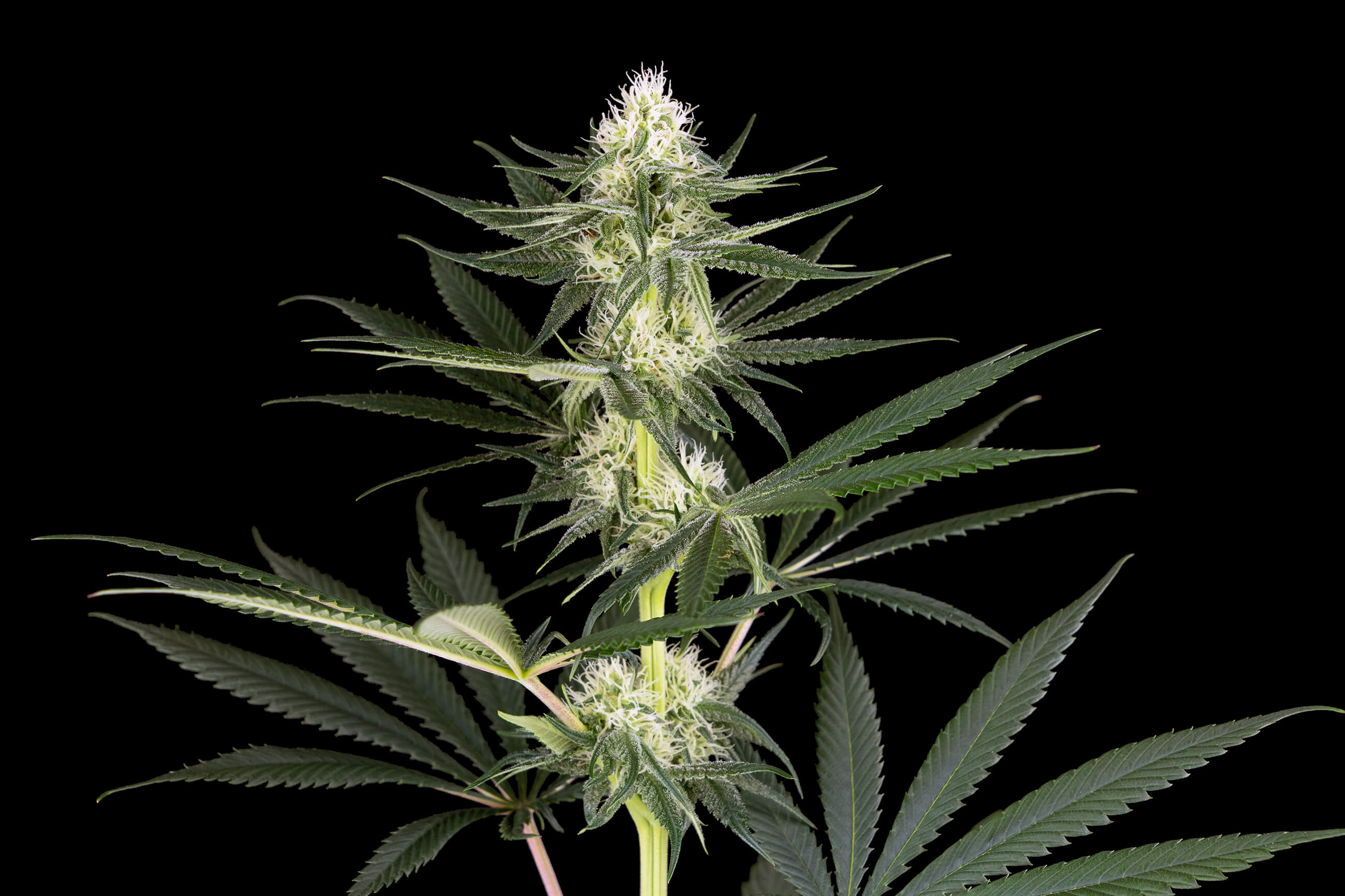
In week nine, things slowed down slightly, as our plant grew 10 cm to reach 94 cm. This was perfect timing, since it meant that the plant was diverting its energy from growing taller into flower production. Over the week, the buds began to grow noticeably larger and denser, while the main cola began to take shape.
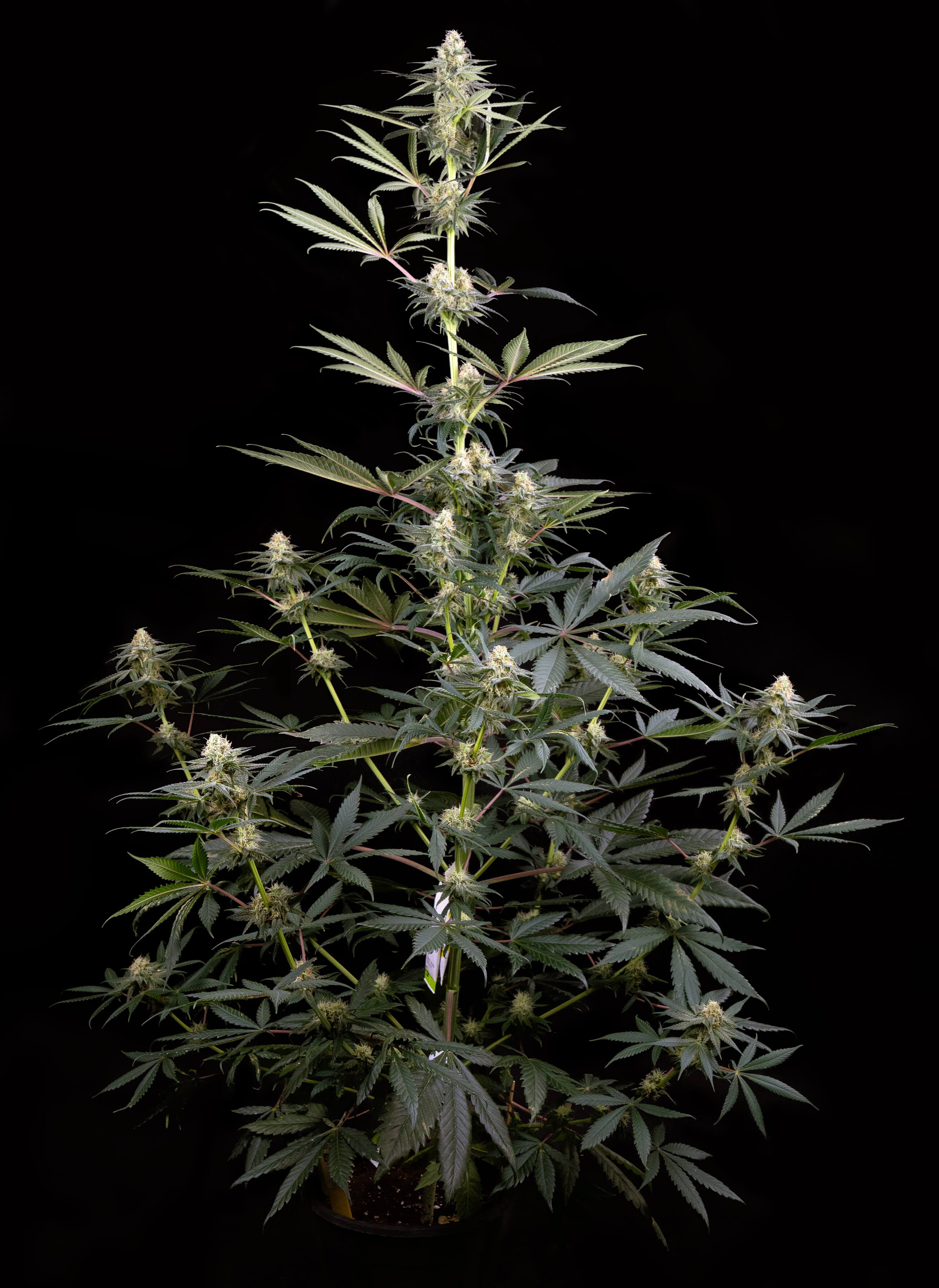
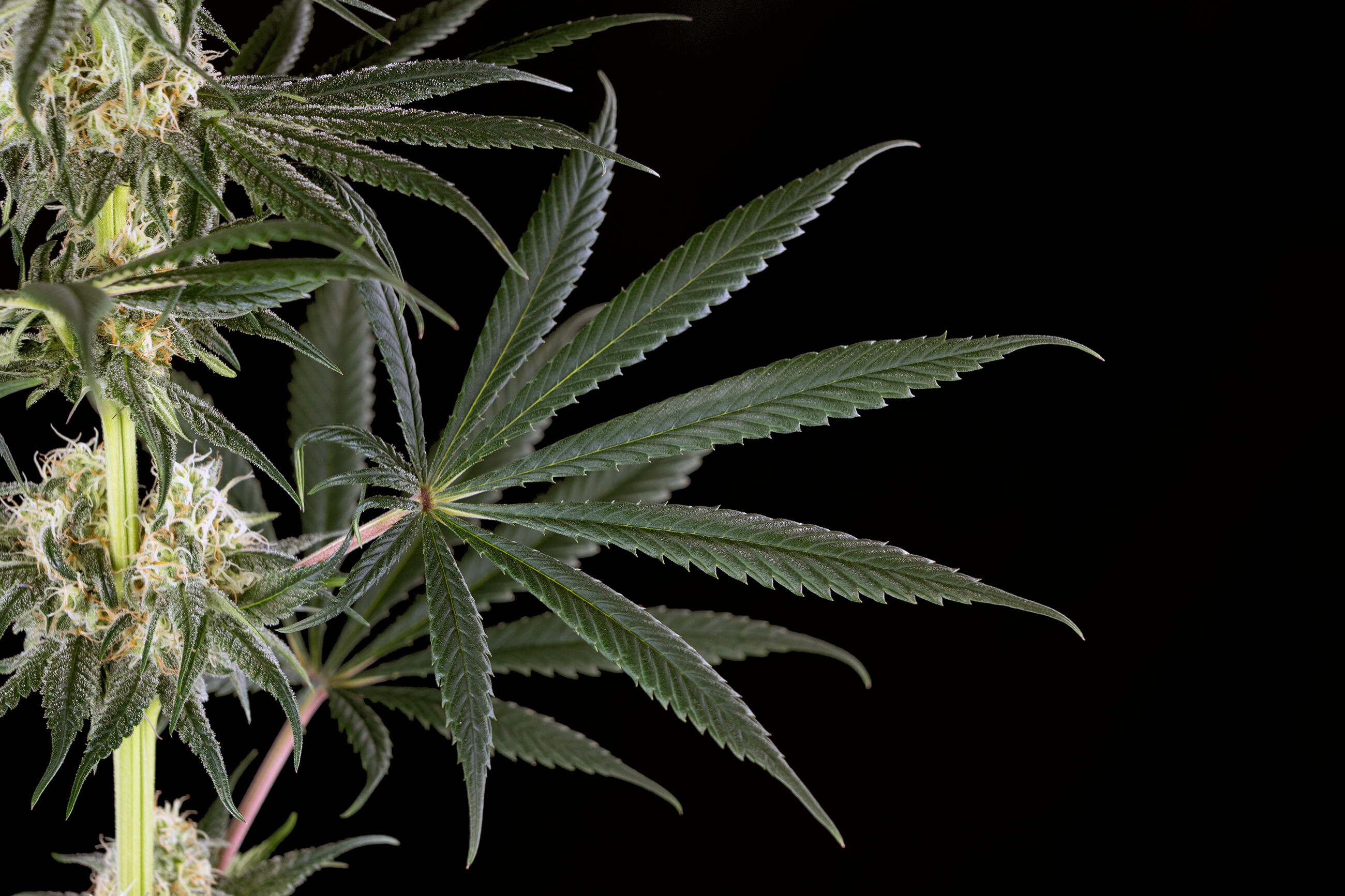
Week ten saw our plant almost stop growing as it gained only 4 cm to reach 98 cm in height. The lateral branches had almost completely stopped growing and were covered in rapidly growing buds. Despite their length, the branches were supporting the weight of their new buds just fine.
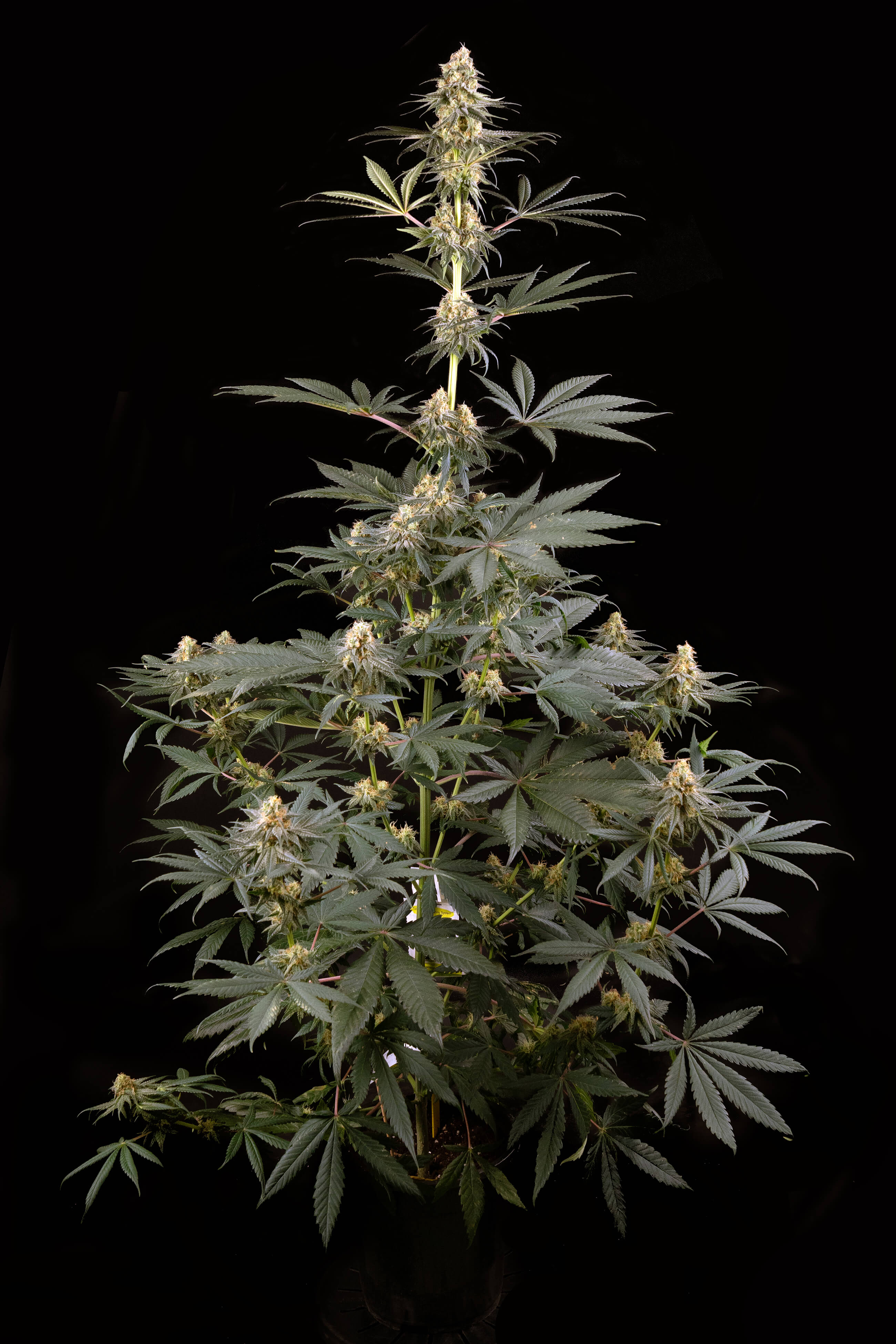
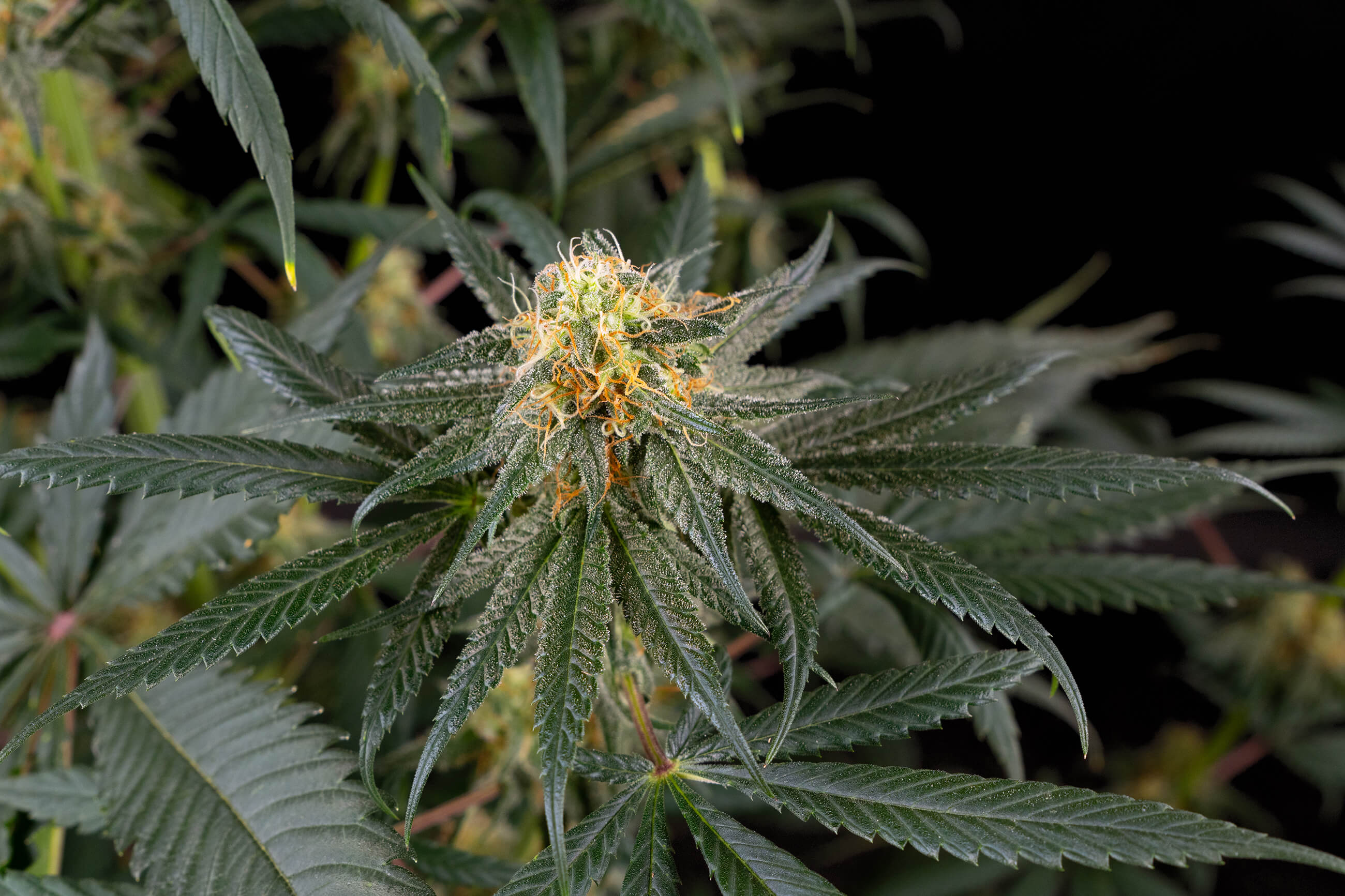
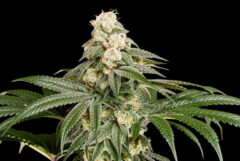
In week eleven, our plant underwent one final growth spurt, growing to 104 cm tall as the main cola exploded. The flowers were more classically indica; dense, heavy, and conical. We weren’t going to be getting any massive buds, but we would have dozens to hundreds of chunky, golfball-sized flowers that were growing larger and denser with each passing day, and the pistils were rapidly turning orange.
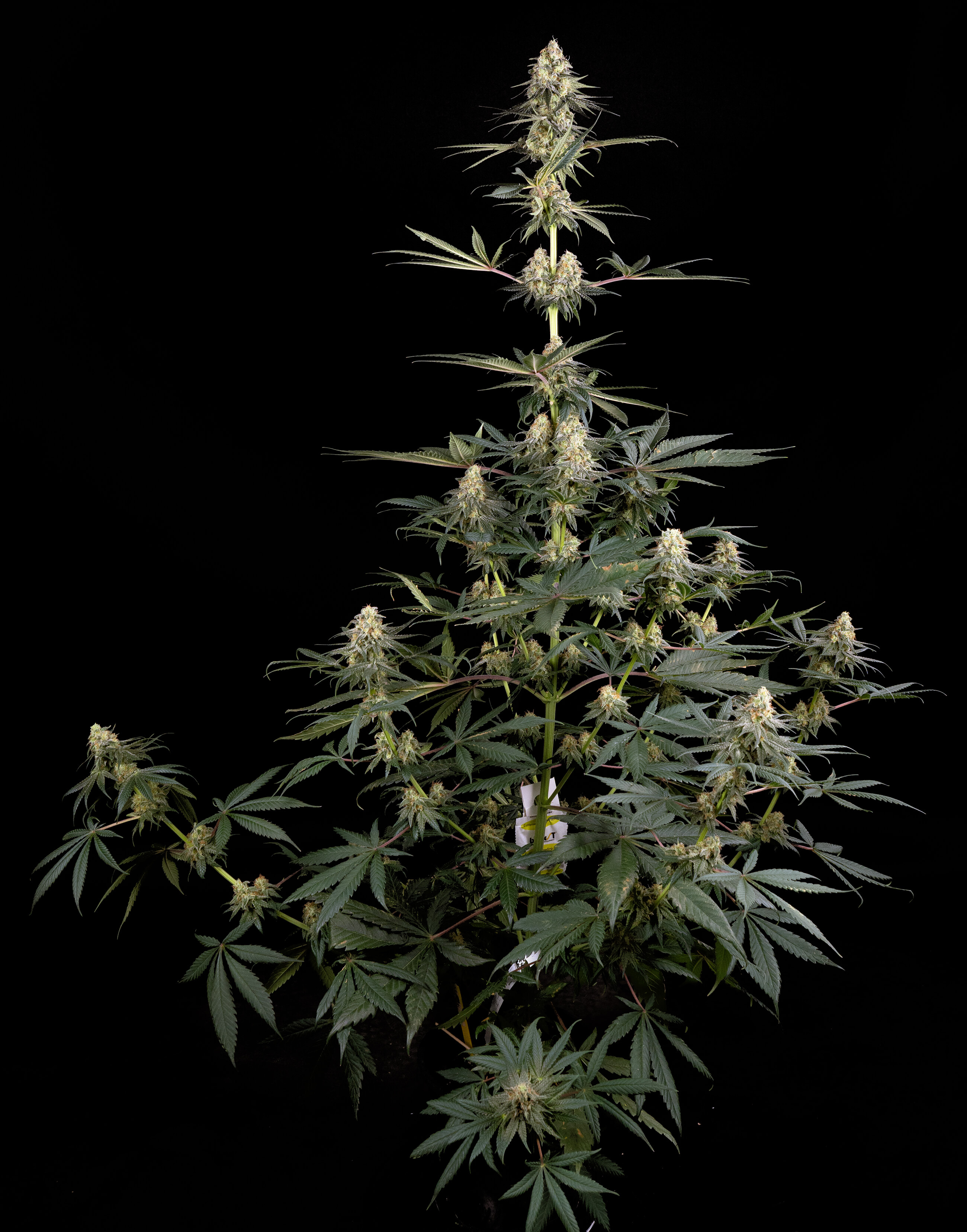
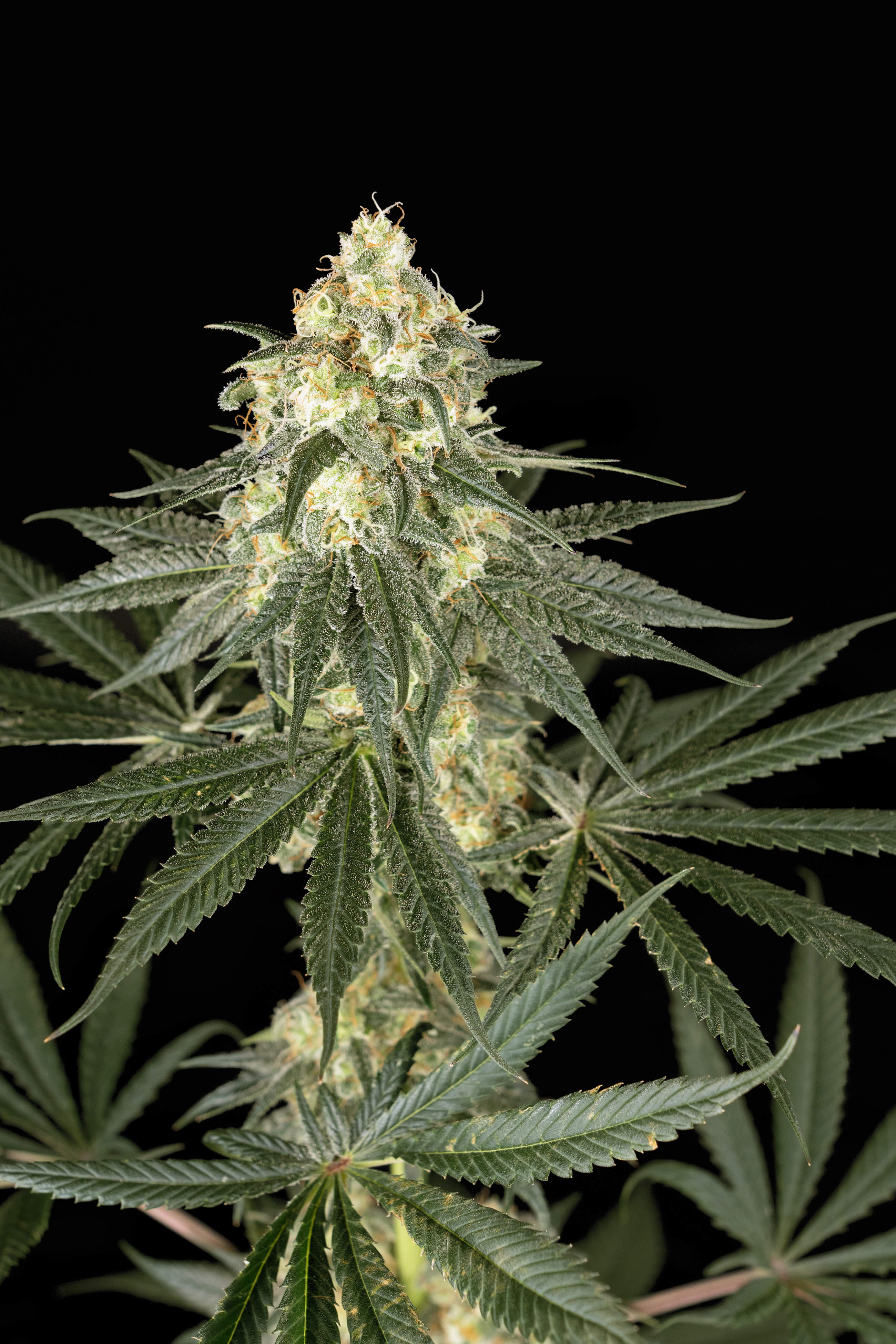
In week twelve, our plant reached its maximum height of 107 cm, and the flowers continued to change from white to a vibrant shade of orange, indicating that it was very nearly time to harvest.
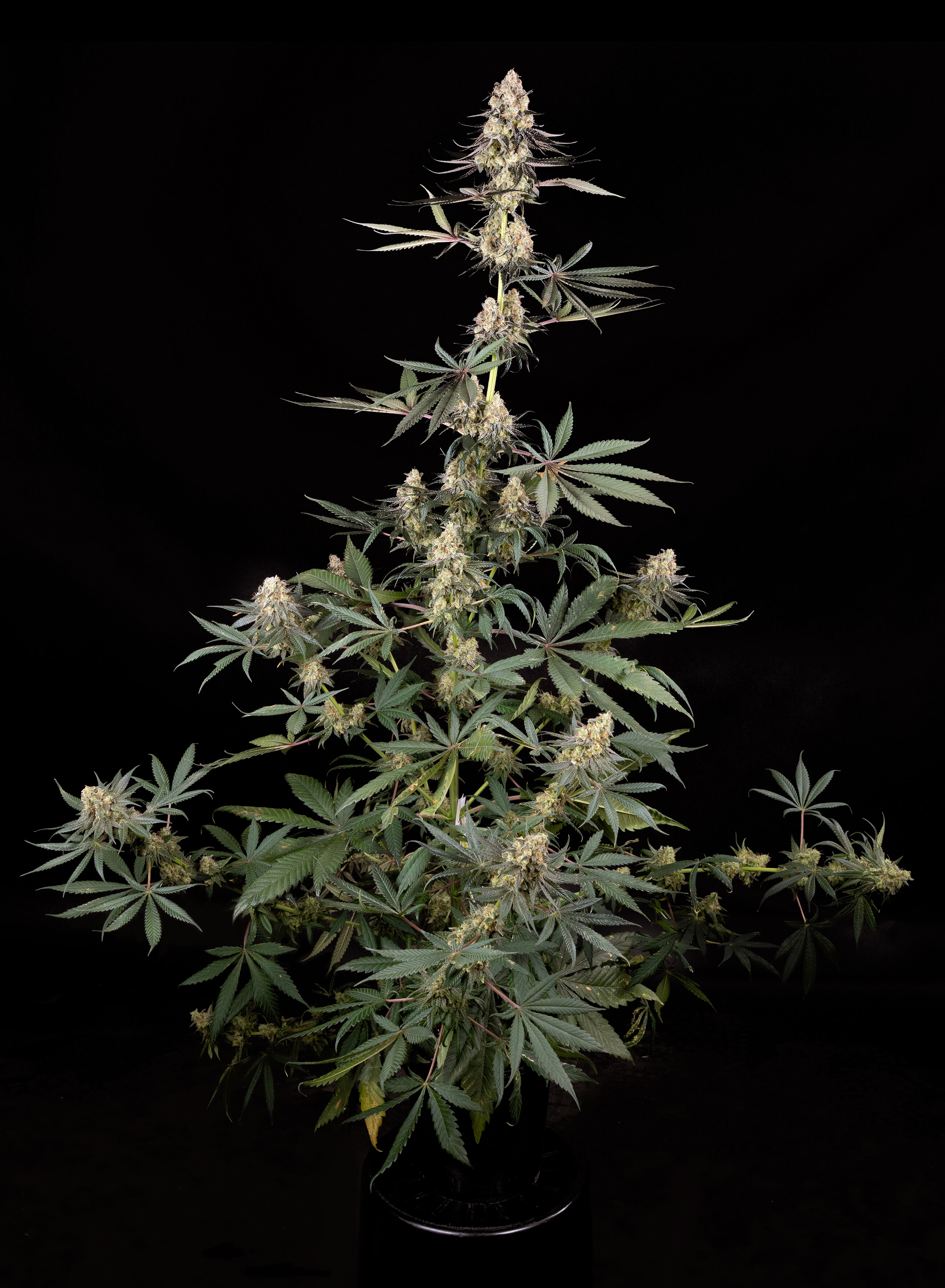
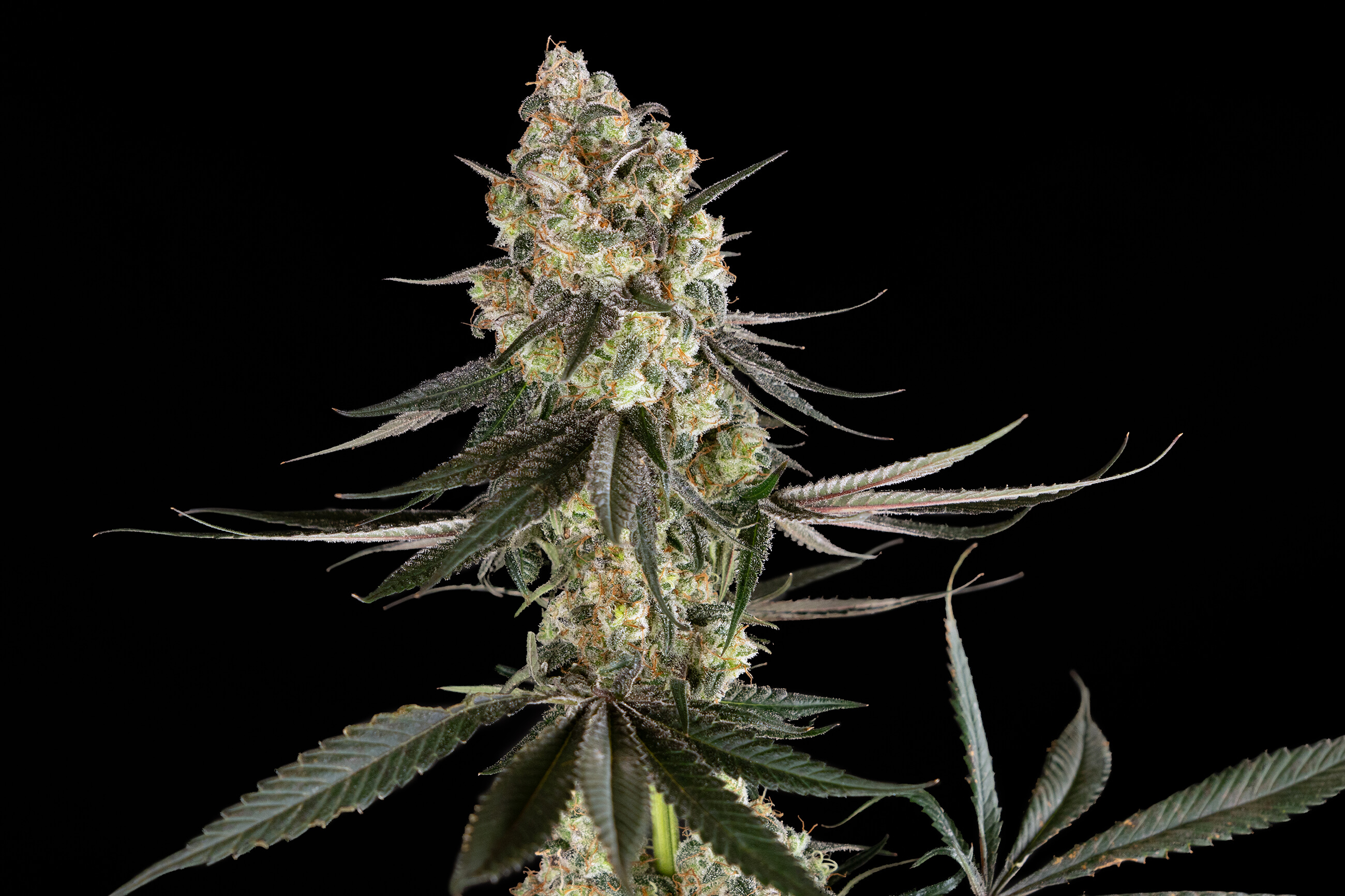
Finally, in week thirteen, we harvested our Pineapple Jack Feminized cannabis plant.
Harvest
Once it was ready, we quickly harvested our Pineapple Jack Feminized cannabis plant. The first step was to cut it down at the base, remove all of the fan leaves, and leave the mostly-trimmed plant hanging upside-down in our drying room. This space is kept at a stable temperature of 15.5°C and a relative humidity of 50%, and the plant is left hanging here until the smallest branches are dry enough to snap when bent; typically between 10 and 20 days.
Once it had dried, we took our plant down, trimmed off all of the buds, and removed any remaining vegetation. Overall, these buds weren’t super leafy, but we had quite a few of them, which made the trimming process quite time-consuming. After finishing, we put all of the trimmed-up buds into glass jars for curing.
For the first full day, the jars were left open to give the majority of the remaining moisture a chance to evaporate. After 24 hours, everything was sealed up and we set the jars in a cool, dark place. For the next several weeks, we “burped” the jars for an hour at a time; several times a day at first, but we gradually reduced the frequency to once per day until the buds were ready. On average, curing typically lasts 4-6 weeks and is a vital step in creating top-quality flowers.
In the end, our Pineapple Jack Feminized plant produced 143 grams of dried flowers with a THC content of 23%.
Related post
Terpene profile
As our Pineapple Jack Feminized cannabis plant approached harvest, it began to give off a relatively mild, though quite distinct, aroma of fresh pine mixed with tropical pineapple undertones. After the buds were fully cured, they took on a sweeter, zestier citrus aroma that was perfectly blended with light, hazy notes of gassy diesel to create a potent and pleasing scent.
The flavour was pretty much exactly what we had expected based on the smell: smooth, tropical pineapple blended with a rich creaminess. On the exhale, the taste was more citrusy with a spicy, herbal finish that left a sweet, citrus, and creamy combination that reminded us of a tropical beach cocktail.
The high from Pineapple Jack Feminized was rather uplifting and cerebral, ideal for boosting creativity and focus. After some time, this initial brain buzz gave way to a calm, mellow relaxation that took the edge off without locking us to the couch. Overall, the effects provided a profound mental clarity with a light body high, making this strain an ideal pick for those days when you’ve got to get stuff done but don’t want to stress over it.
Related post
The outcome
Overall, we were extremely happy with our Pineapple Jack cannabis plant. It can be difficult to find productive sativas that can fit into many indoor spaces, but this one seriously impressed us with its ease of growth, relatively short stature, and XXL yields. If you’re looking for an indoor sativa, you’ll want to seriously consider Pineapple Jack Feminized.
- Disclaimer:Laws and regulations regarding cannabis cultivation differ from country to country. Sensi Seeds therefore strongly advises you to check your local laws and regulations. Do not act in conflict with the law.
