


We’re exploring our time with Caramel Pineapple Feminized, which might be the most productive strain we’ve grown. Combined with its average size, this is a seriously appealing choice for indoor or outdoor growers. While this plant can be quite lanky and requires extra effort, those with the patience to see it through will find the results more than worth it.
Total growing time: 95 days
Flowering time: 65 days
Final height: 132 cm
Final yield: 235 grams
THC content: 22.8%
As with all of our grows, our Caramel Pineapple Feminized plant was grown in an 8-litre plastic pot filled with BAC Lava Mix and topped with a thin layer of Rockwool cubes. This was then placed under a 1000 W Phillips GreenPower HPS hanging 3 metres off the ground on an 18/6 light schedule. We kept the room at a stable daytime temperature of 24° C, which dropped to 21° C at night. During the vegetation phase, the relative humidity was kept at 65% and this was gradually lowered to 55% during the flowering phase.
Germination & seedling
As with all of our grows, the first step was to germinate our seed. Fortunately, this is a quick and easy process that doesn’t require any special equipment other than a few common household items. Start by folding up a few paper towels and placing them on a plate. Next, sprinkle several millilitres of water onto the towels until they’re damp the whole way through, but not dripping wet. Lastly, just place your seeds on top, cover them with another damp paper towel, put everything inside an open plastic bag, and leave it in a warm place.
After a little more than a day, our seed had cracked open, and the taproot was now sticking out about a centimetre, meaning that it was ready to plant. We placed it into a pre-soaked Rockwool cube—with the taproot pointing down—and put that underneath a 600 W lamp so as not to overload our seedling at this fragile stage.
At this point, cannabis seedlings are extremely delicate and too much light, heat, water, or even nutrients can easily kill them before they’ve sprouted. After three days, we gave our plant its very first feeding with 100 ml of pH-balanced water (pH 6.2; EC 0.8) mixed with a small dose of rooting hormone.
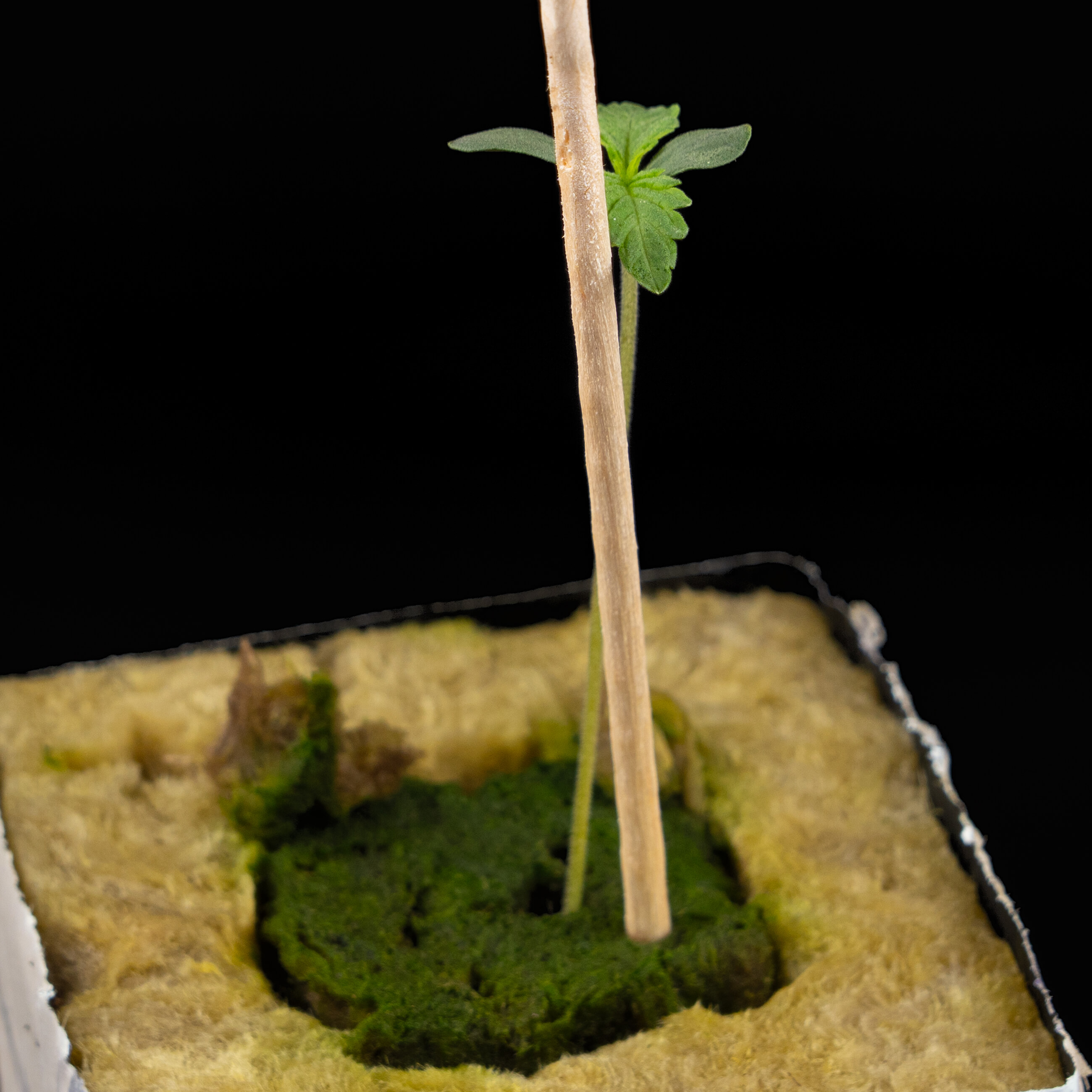
By the end of week one, our seedling was standing 9 cm tall with a fairly slim stem, which had sprouted the plant’s first true leaves. The stem was a little overburdened at this point (a fairly common situation), so we used a wooden rod to support it. By now, we were watering daily with 100 ml of water mixed with Bio Grow liquid nutrients (pH 6.0; EC 1.4).
Vegetation
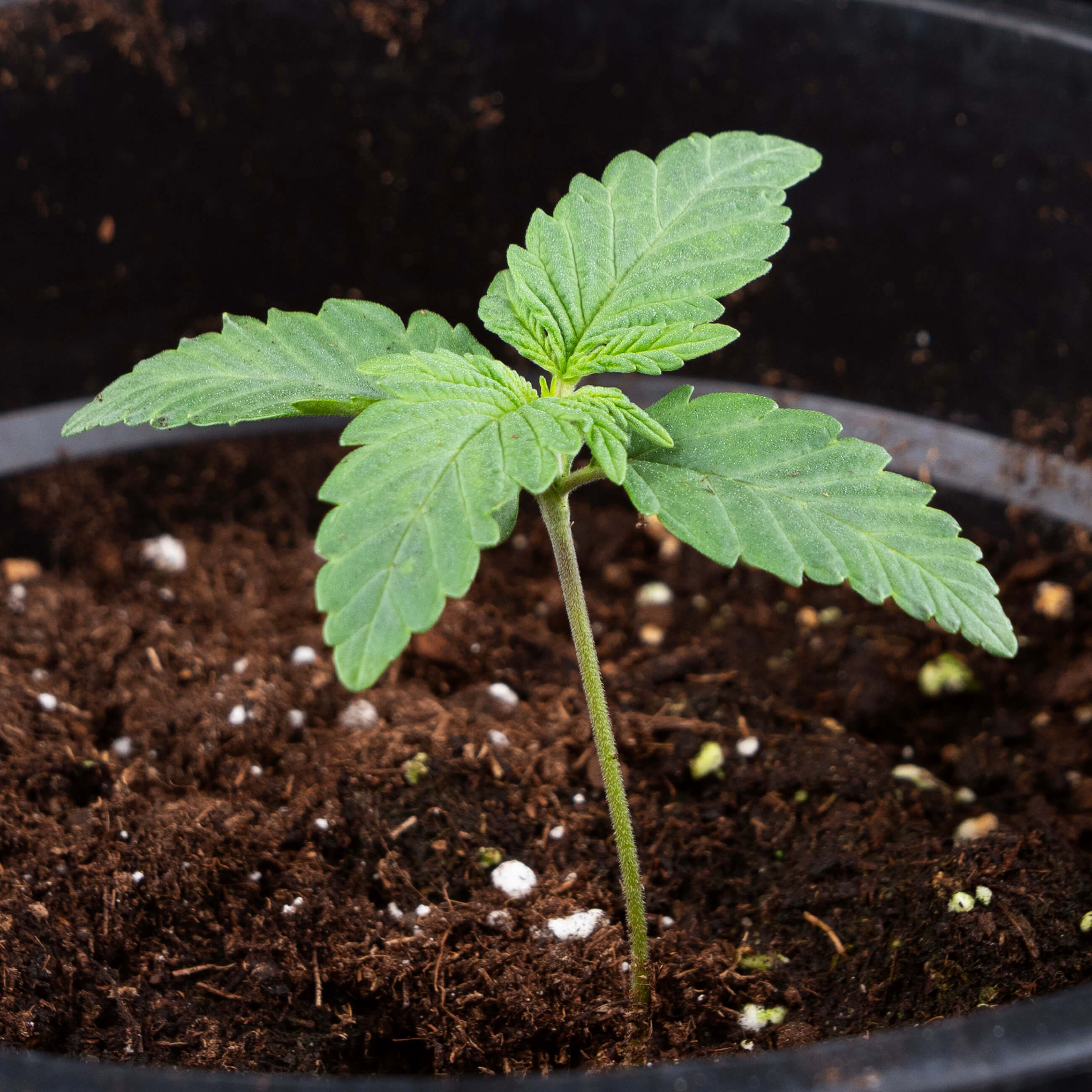
At the start of week two, we moved our Caramel Pineapple Feminized cannabis plant to its new home in an 8-litre plastic pot and set it under our 1000 W grow light. At this stage, we also doubled the volume of water we gave the plant each day to 200 ml. Over the course of this week, our plant nearly doubled in height to 17 cm and sprouted a few new sets of broad, dark green leaves. This plant was already off to a tall and lanky start, and that wouldn’t change.
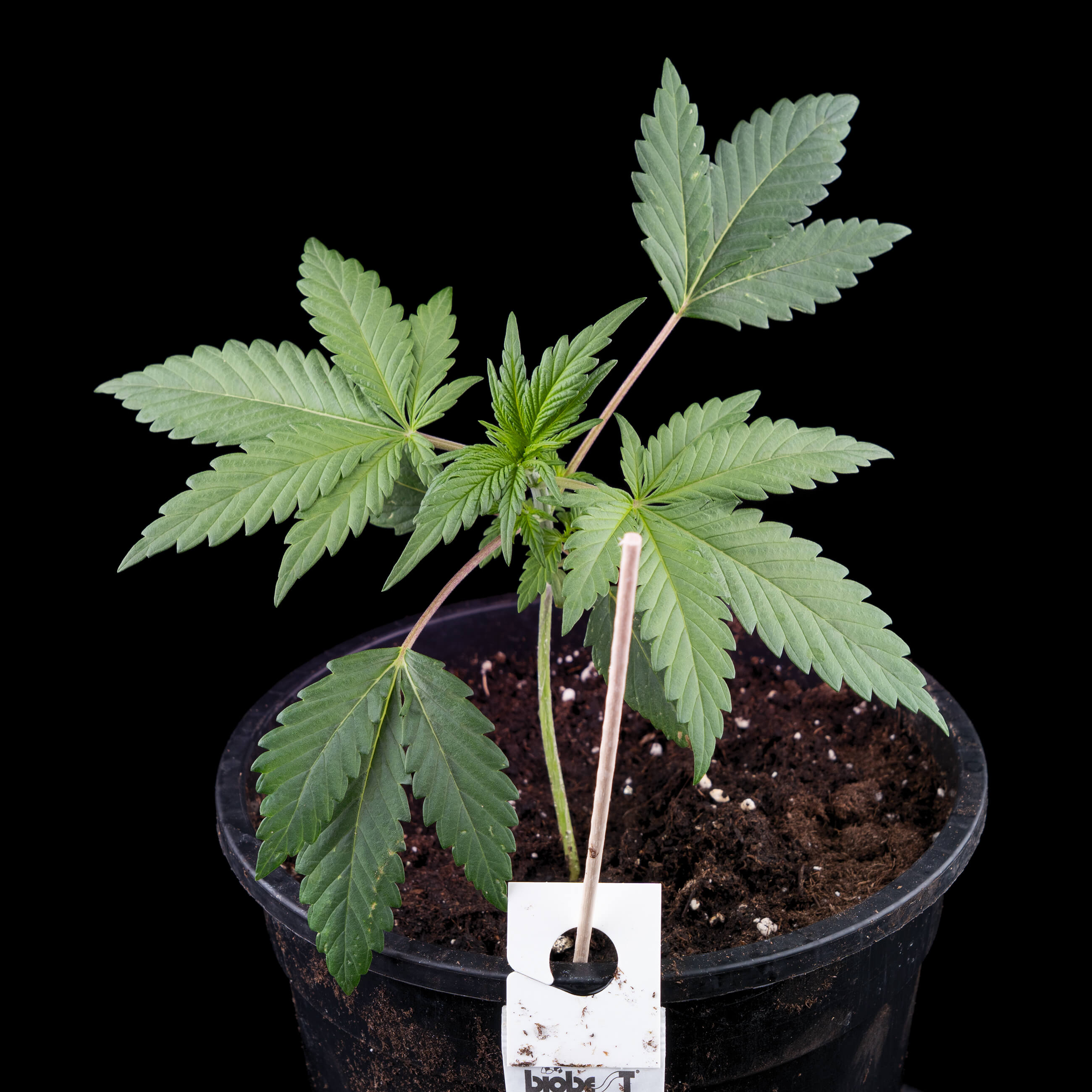
In week three, our plant continued to grow paisley, reaching a new height of 30 cm and grew multiple new sets of leaves along rather stretched-out internodal spacing. The lateral branches were developing nicely and were growing almost straight up, staying close to the main stalk. With all of this rapid growth, we once again doubled our daily feedings to 400 ml.
With our plant growing quickly, it was just about time to switch it to flowering. However, there was one final step to take before moving forward. To help protect our plant from invasive, unwanted pests, we hung small satchels of Neoseiulus californicus and Amblyseius swirskii from the lowest branches. These are filled with hundreds of tiny critters that have a symbiotic relationship with cannabis plants, meaning they won’t harm our plant. Instead, they hunt down and eat pests like spider mites and thrips, which can destroy even the healthiest garden. We replace these satchels every four weeks to maintain a fresh supply.
Related post
Flowering
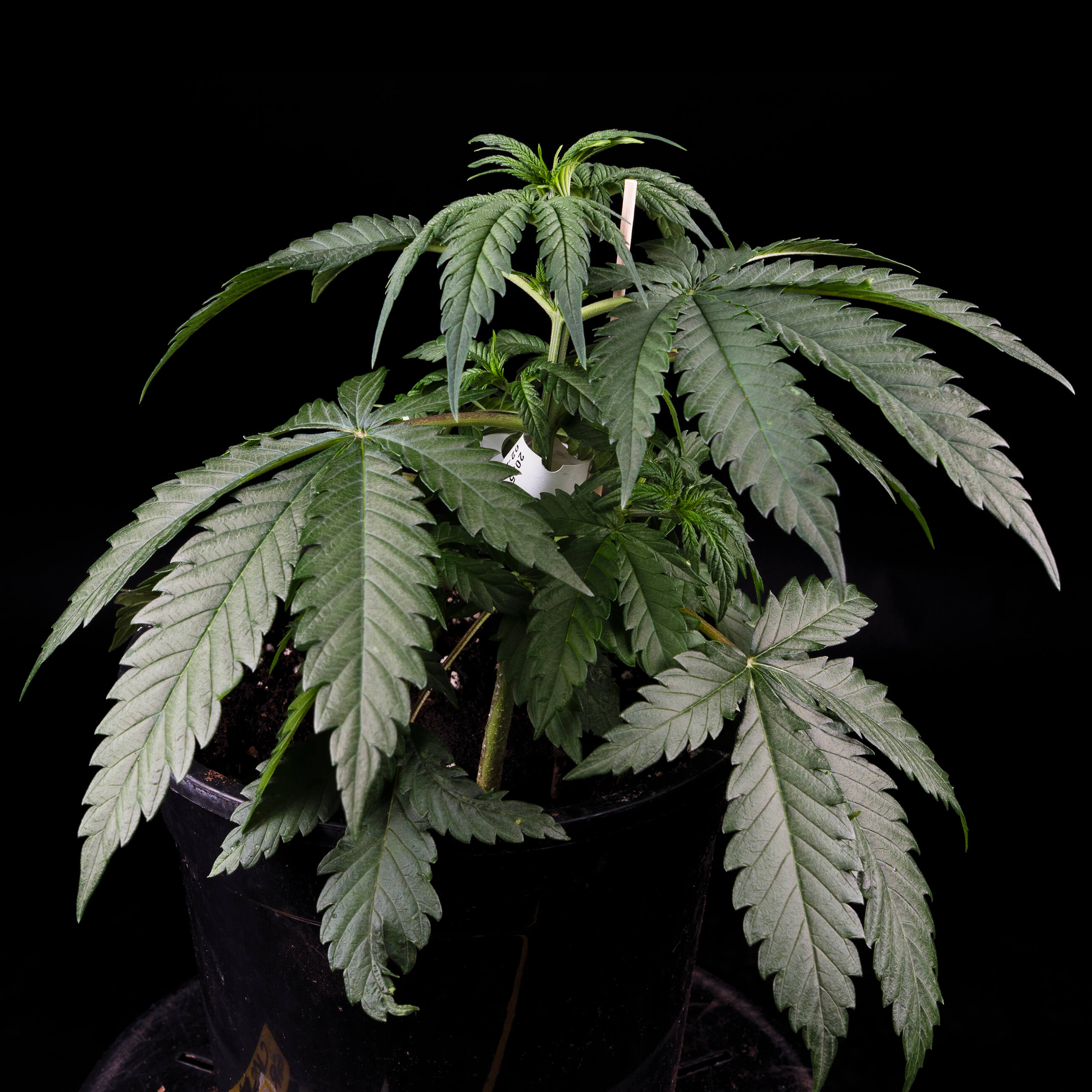
As week four rolled around, it was time to switch our Caramel Pineapple Feminized cannabis plant to flowering. Thankfully, this is perhaps the easiest part of any grow, and all we needed to do was flip our lights to a 12-hours-on-12-hours-off schedule and change up our watering habits a bit. As we entered flowering, we began daily feedings with 800 ml of water (pH 6.0; EC 1.8) mixed with Bio Flower liquid nutrients.
During this week, our plant shot up 16 cm to reach a new height of 46 cm. This rapid vertical growth was accompanied by robust growth of the lateral branches and several new sets of leaves at the top of the plant. The long internodal spacing was showing no signs of slowing, and our plant was taking on a rather cylindrical shape.
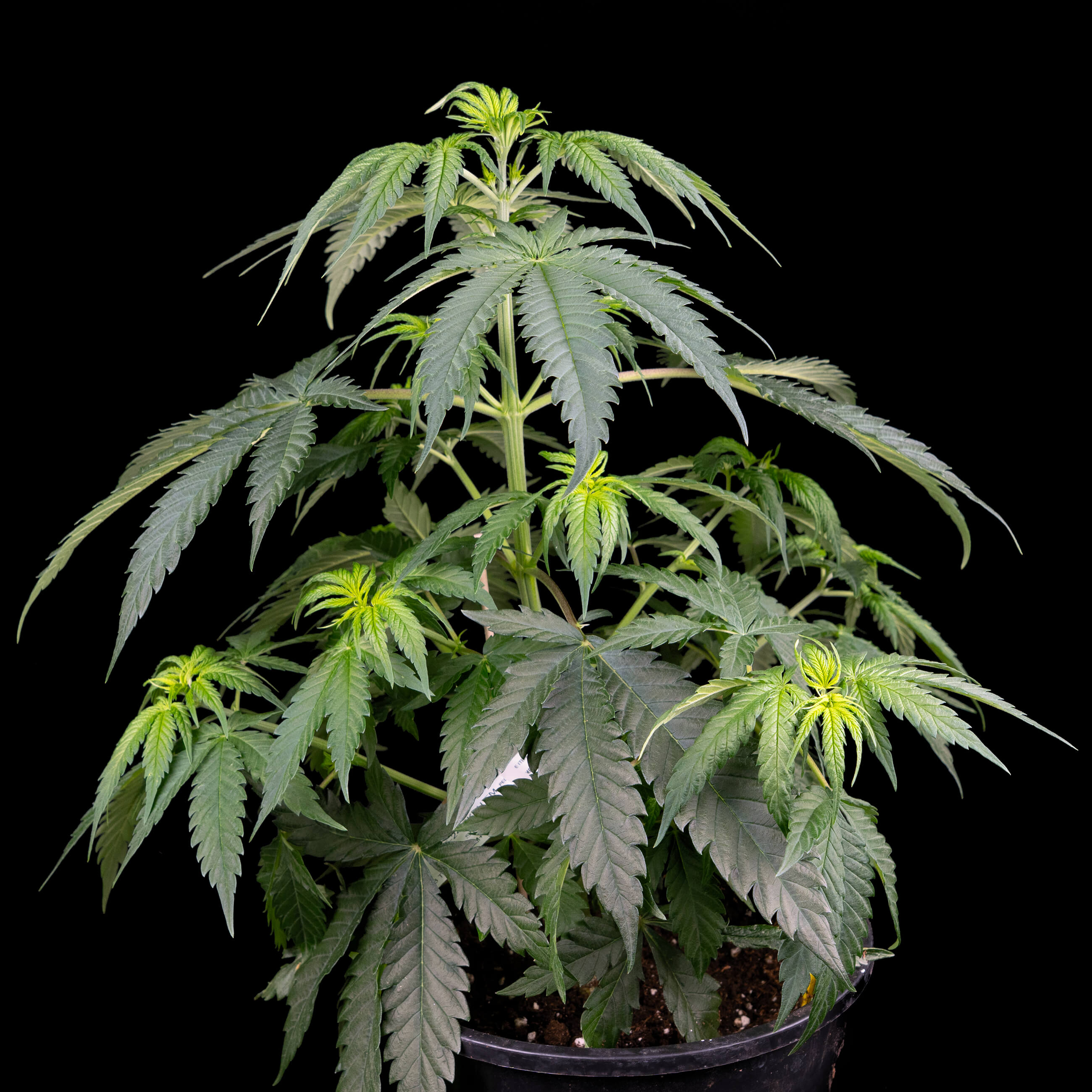
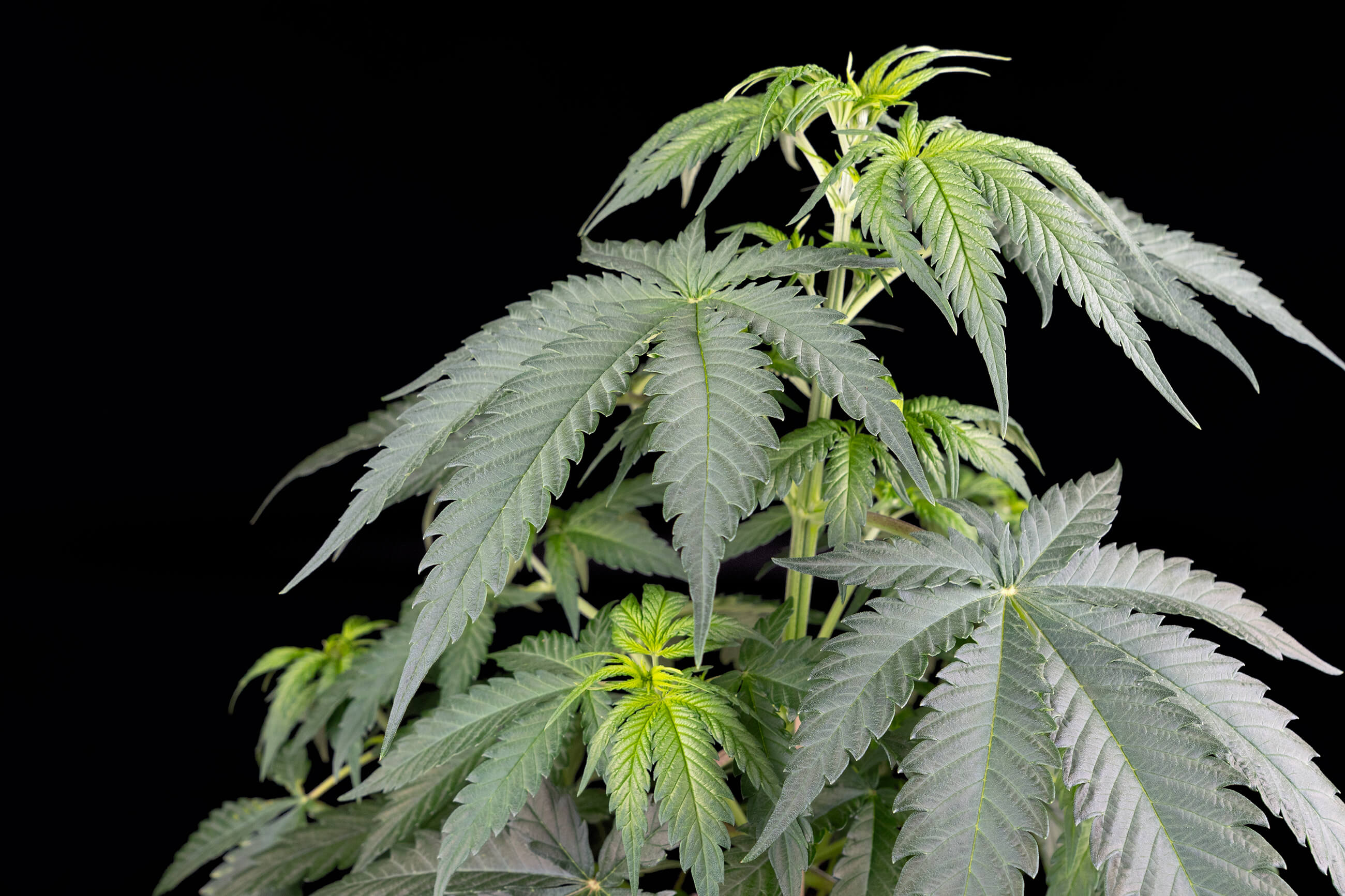
Throughout week five, our plant continued to grow rapidly, gaining another 17 cm to a new height of 63 cm. While this growth spurt did see new vegetation at the top of the plant, the majority of this height gain was due to stretch as this strain’s sativa genetics kicked into overdrive. This week also saw the lateral branches explode outward as they climbed to nearly the same height as the main stalk. To help our plant keep up with all of this new growth, we began daily feedings with 1000 ml of water.
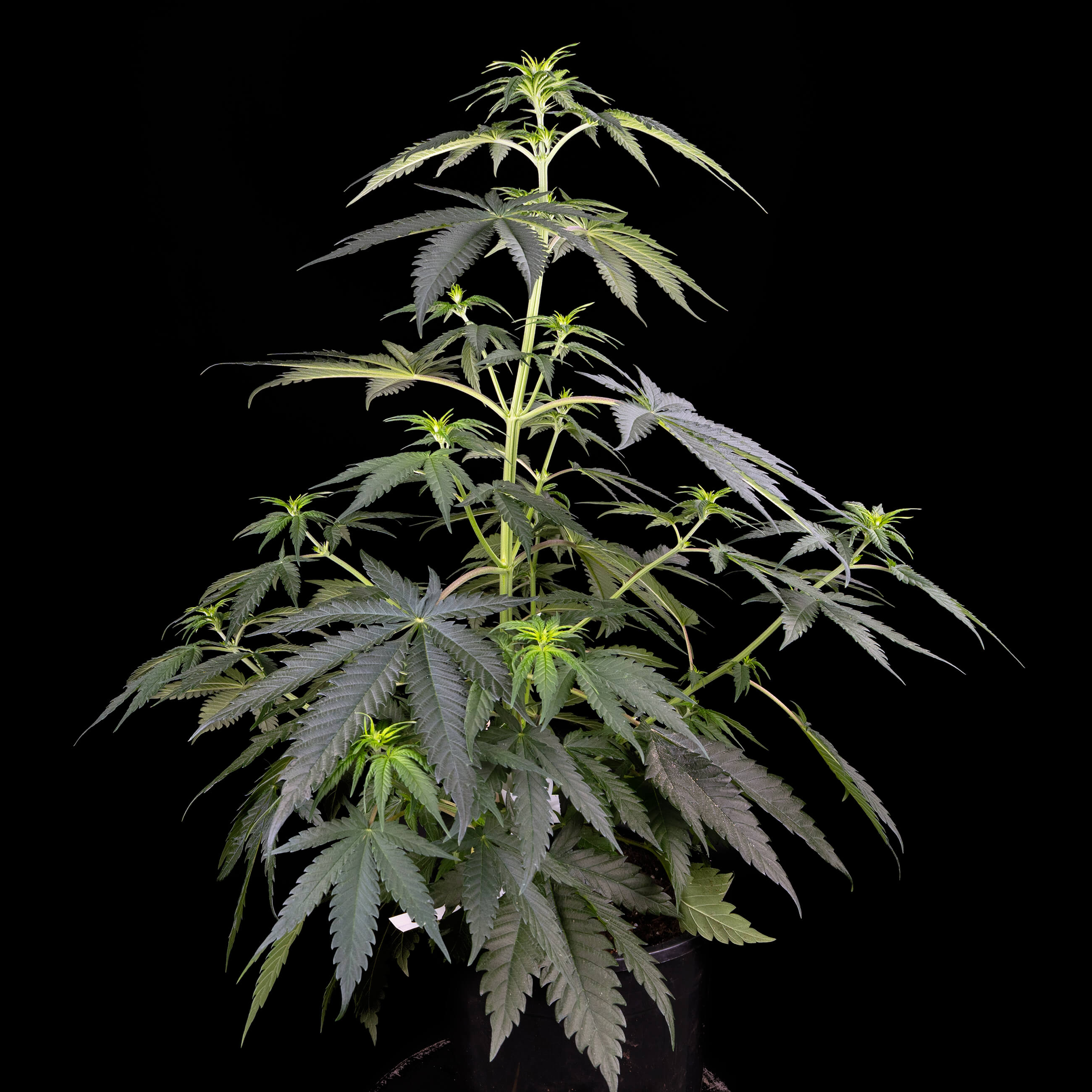
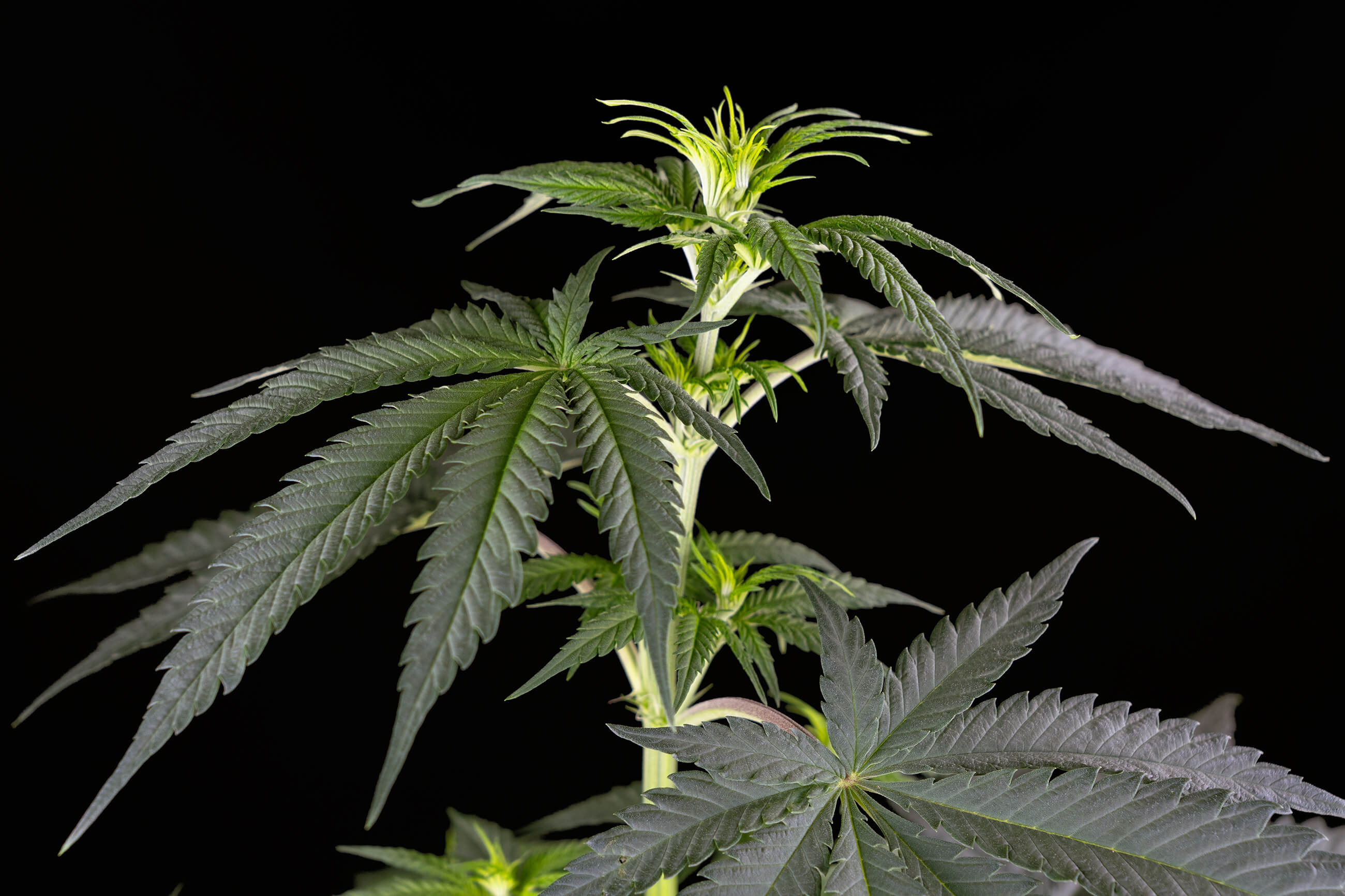
Week six saw our plant slow down a bit as it grew to a new height of 74 cm. Once again, the overwhelming majority of this growth was due to stretch, and our once-narrow plant was transforming before our eyes, developing an incredibly tall and wide structure. Over this week, we started noticing the first signs of flowering; small white pistils started popping up along the inner nodes and tips of branches. At this point, we increased our daily watering to 1500 ml and lowered the humidity to 60% to help prevent mould.
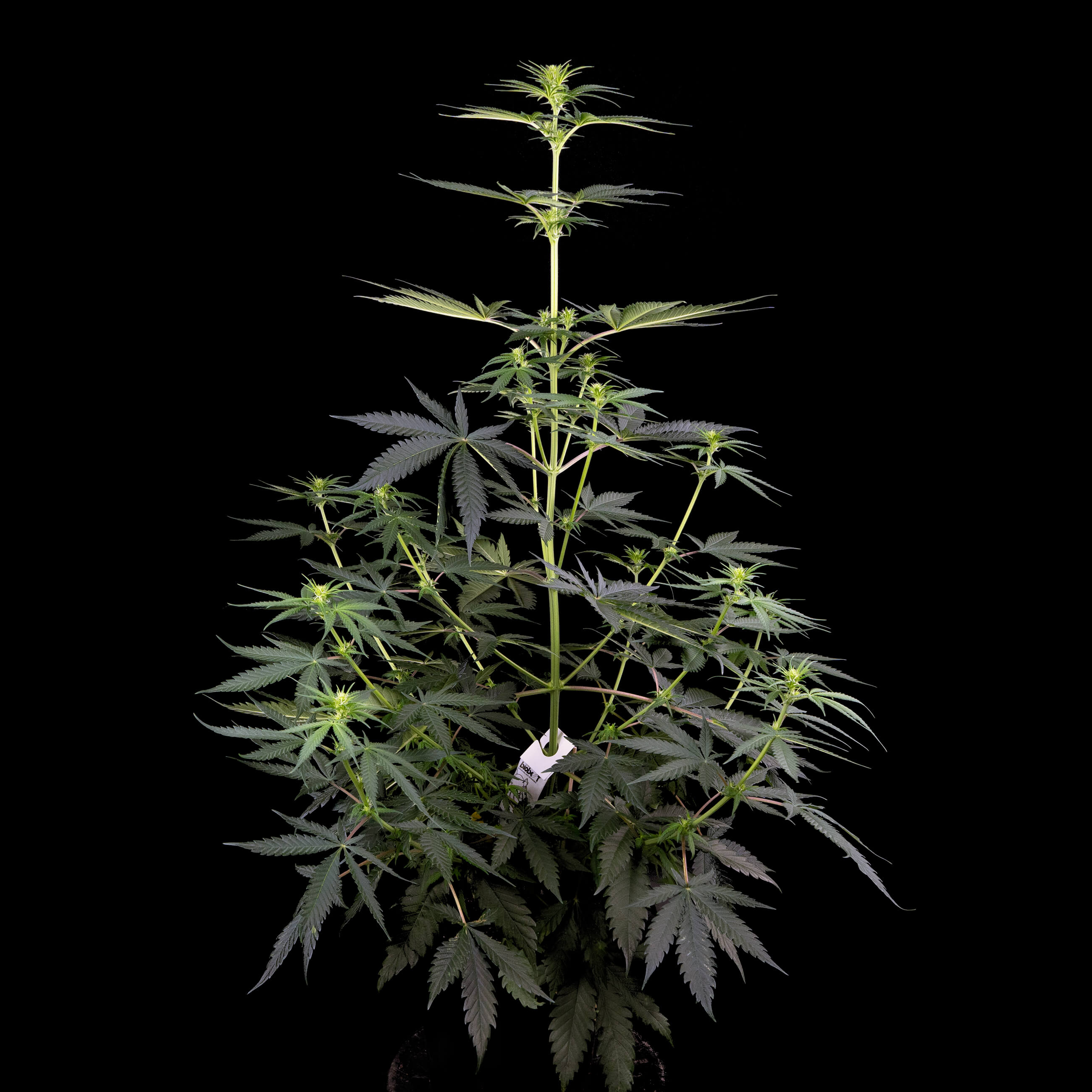
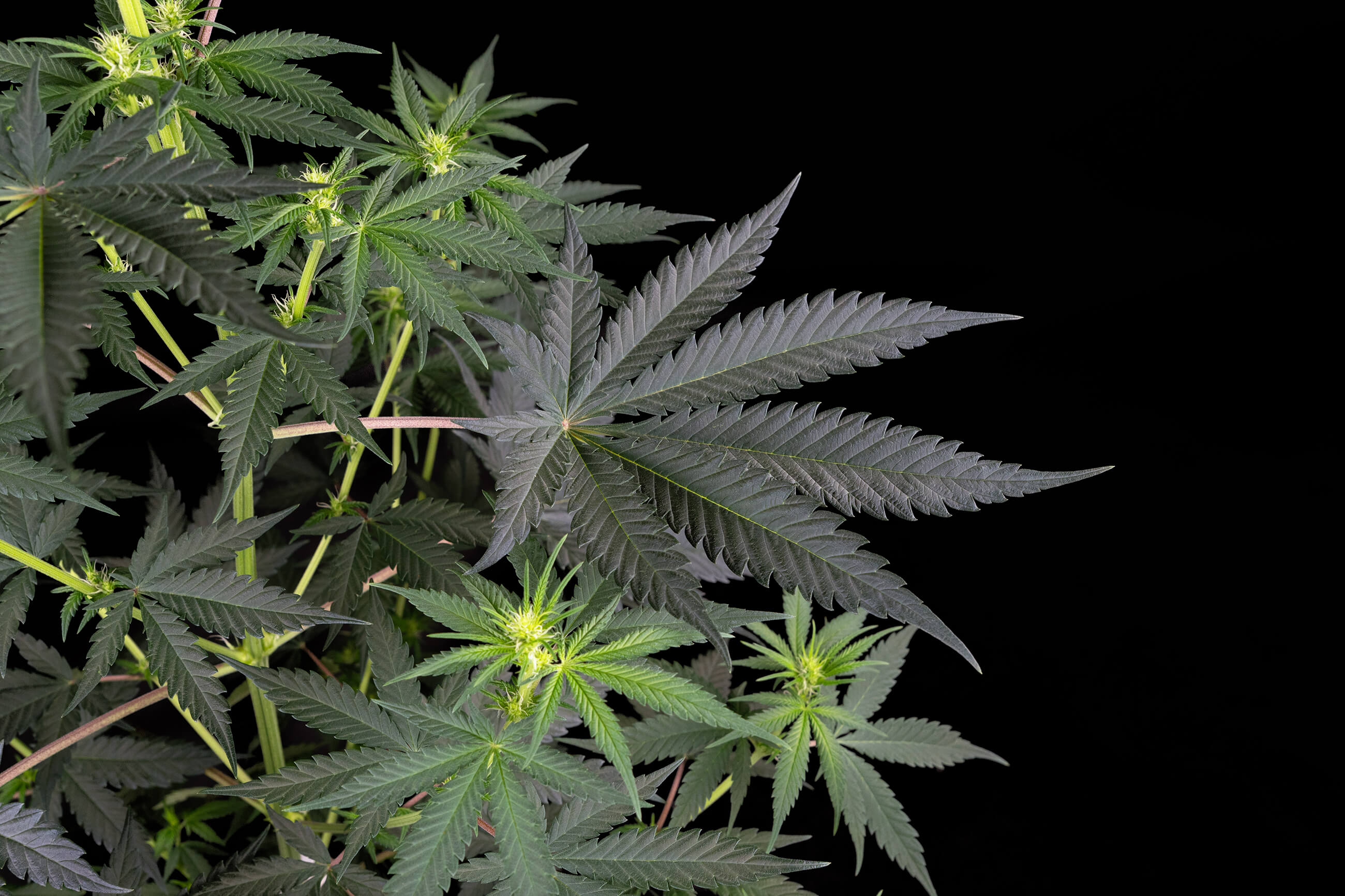
In week seven, our plant continued to stretch at a rapid rate, gaining 13 cm to reach a new height of 87 cm. By now, our plant was a lanky, tangled mess of branches and leaves and was—to be honest—getting slightly out of control. However, everything looked incredibly healthy, and the plant’s main stem was growing well above the lower canopy.
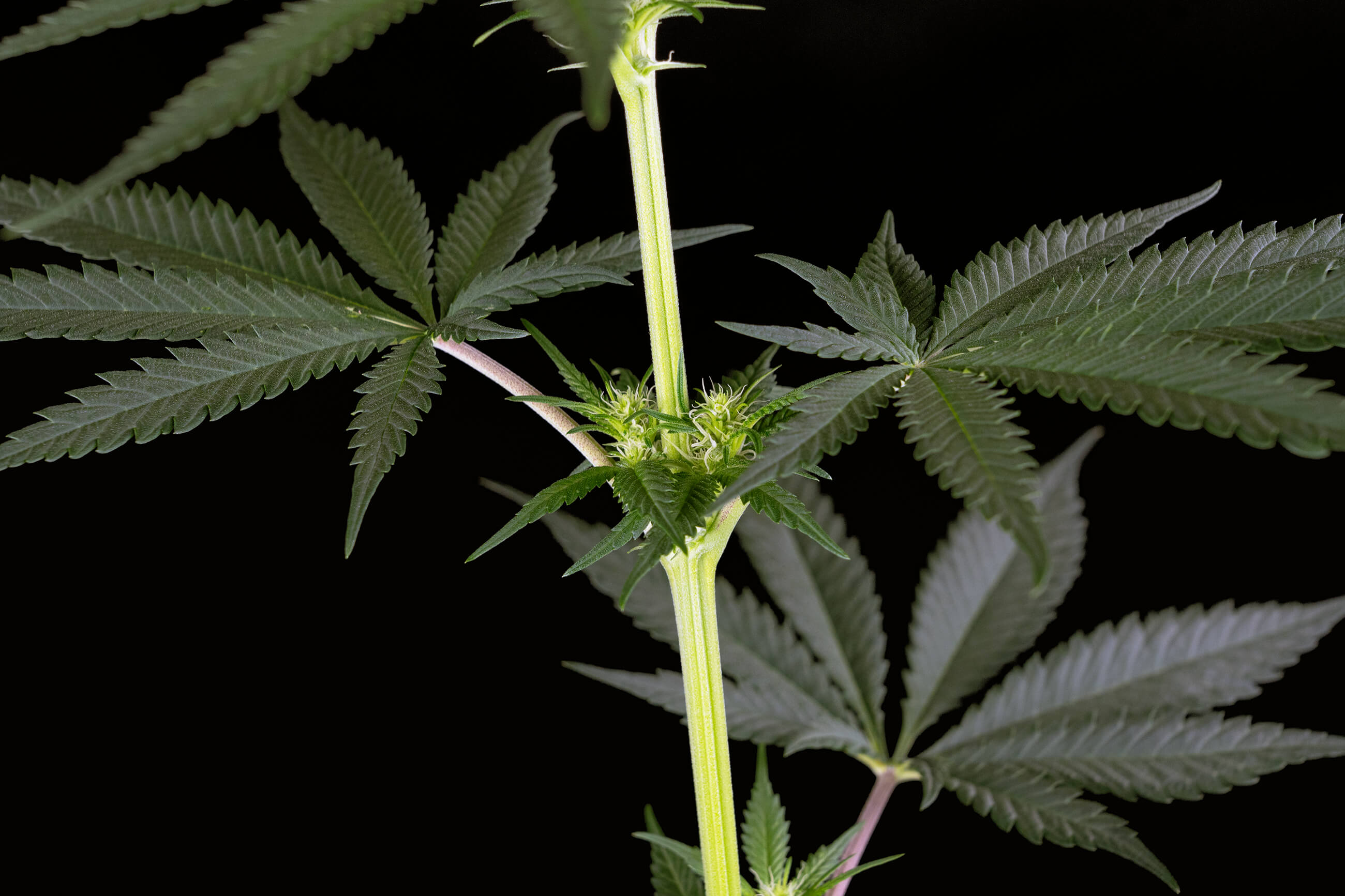
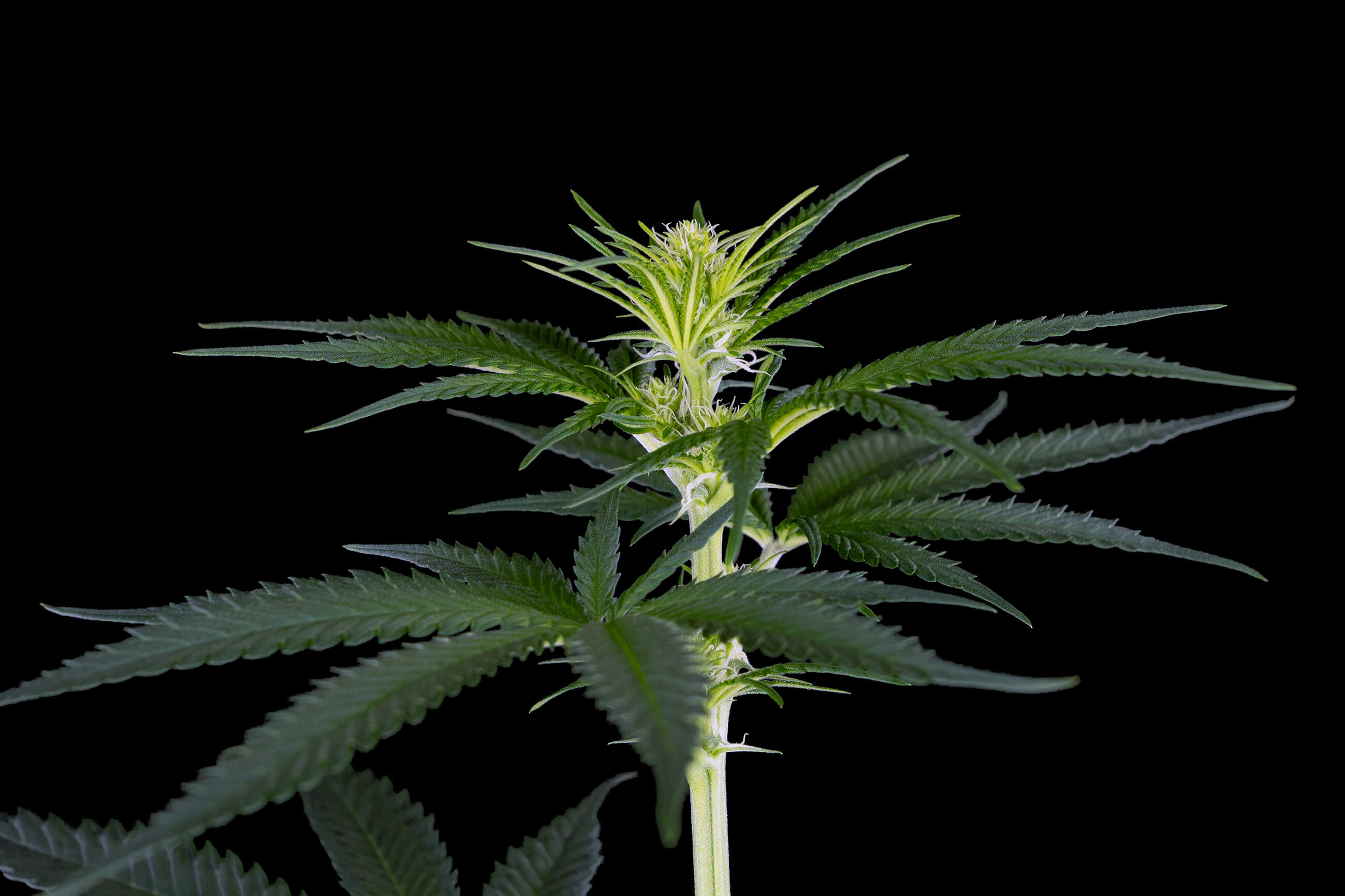
In week eight, our plant was in full bloom with each lateral branch now covered in small, but rapidly growing, buds. Our plant was showing no sign of slowing down its vertical growth as it grew to a new height of 103 cm. The long and slender lateral branches were spreading out considerably, which allowed for more than adequate light penetration and airflow to even the lowest flowering sites.
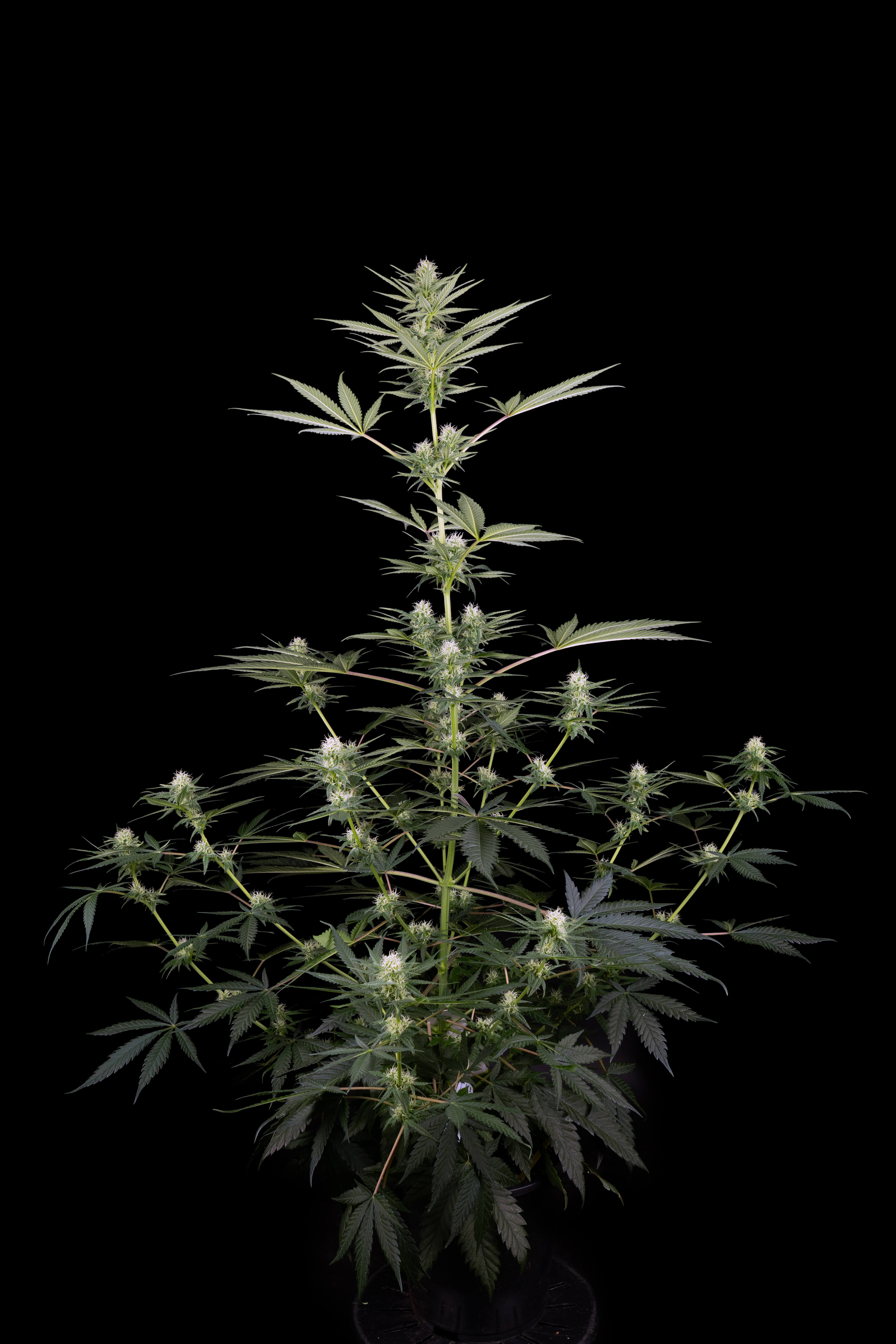
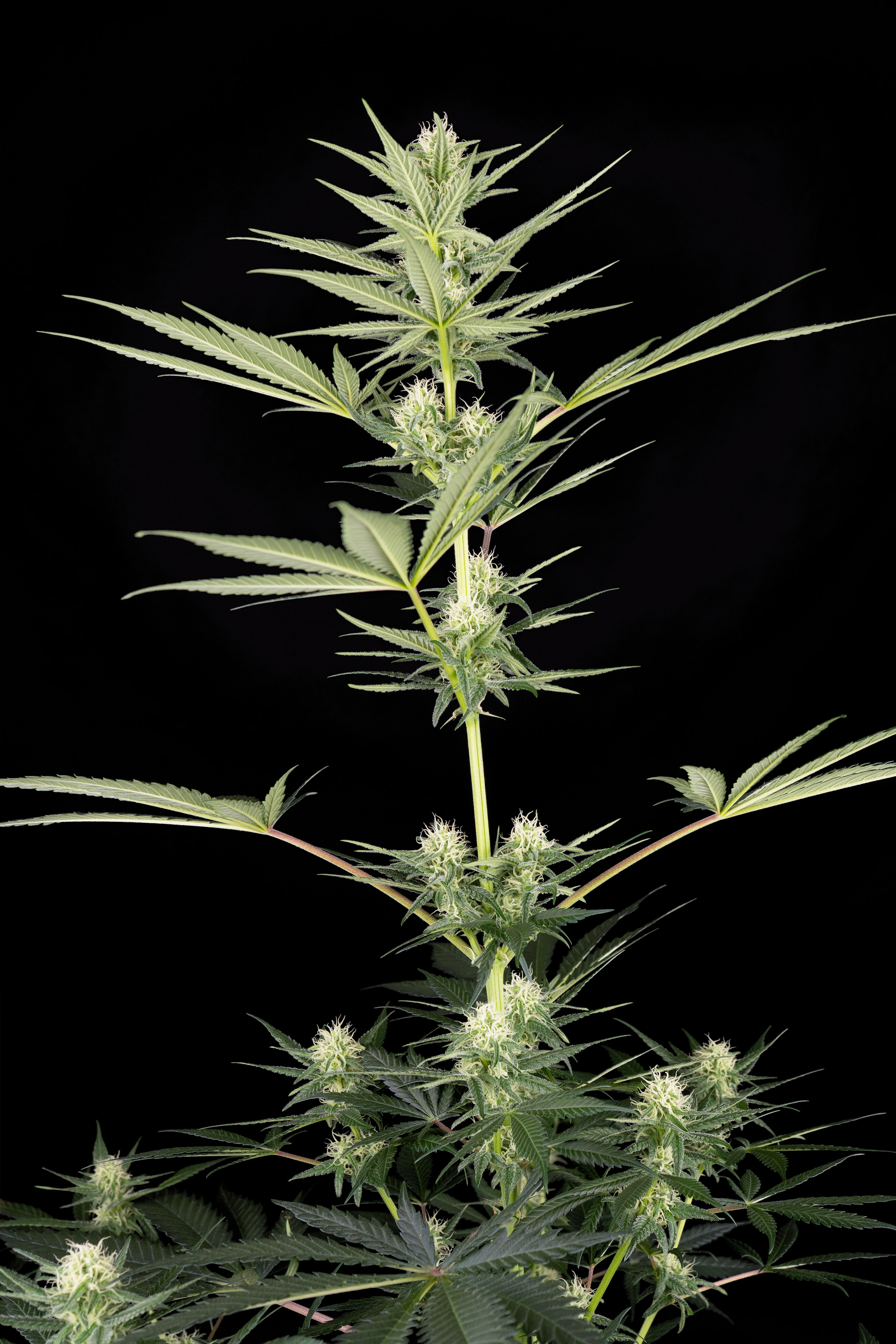
Week nine saw our plant undergo its last major growth spurt as it gained 17 cm to reach 120 cm in height. This was accompanied by the rapid development of the flowers, which were beginning to grow together into long, slender, and extremely dense buds. These were fairly spread out, and it was looking like we’d end up with several dozen golfball-sized nugs as opposed to a few large colas.
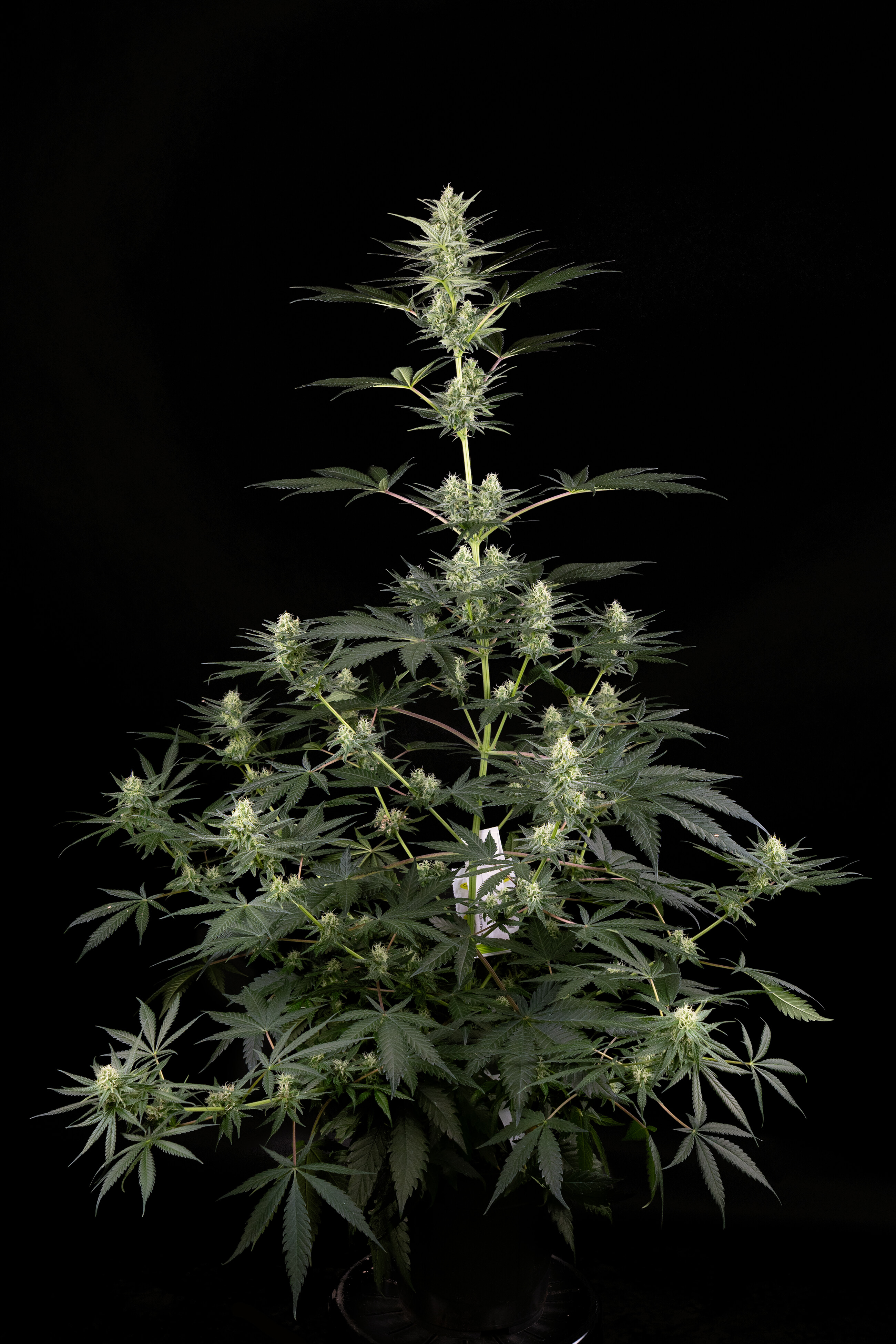
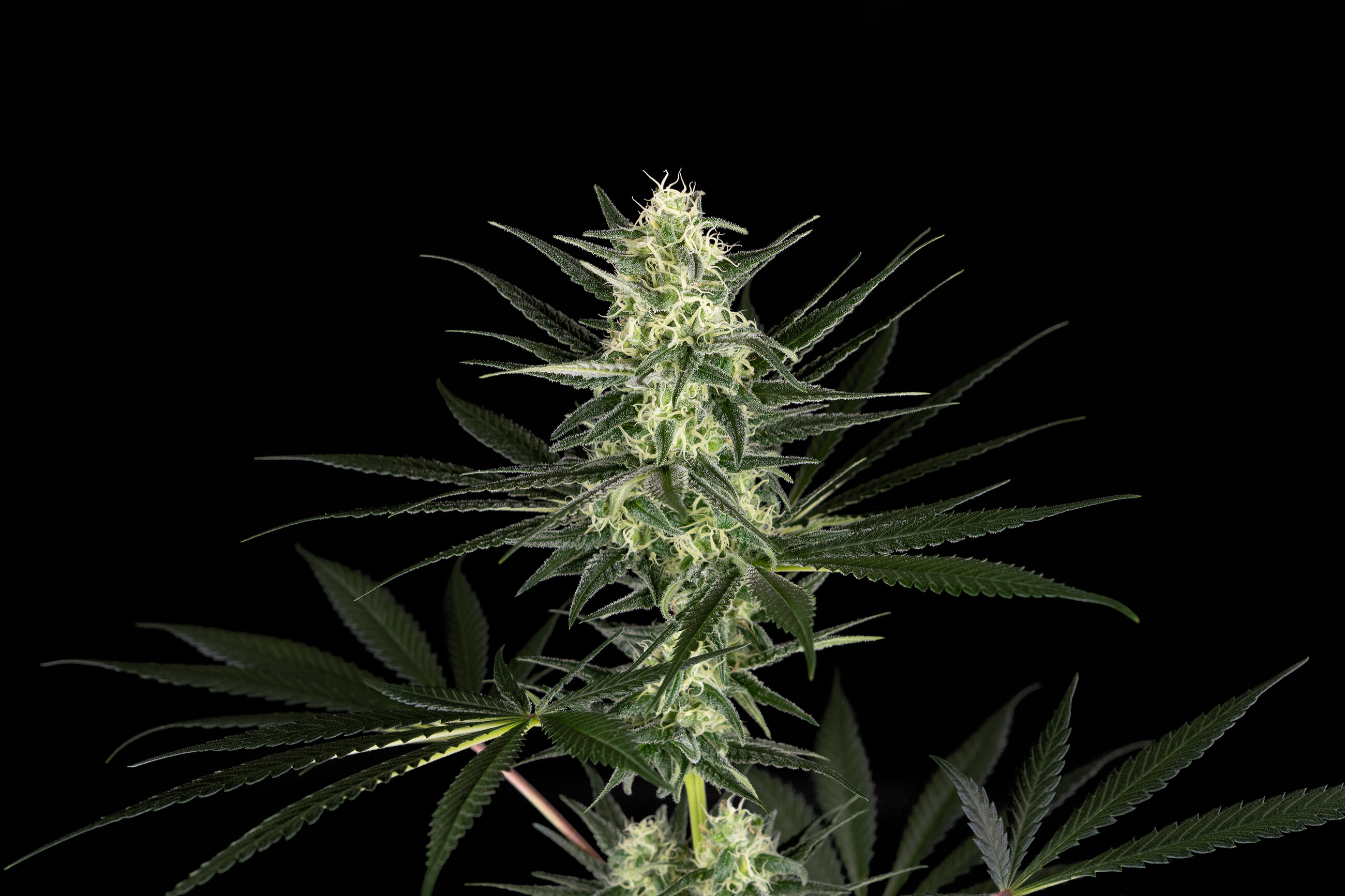
In week ten, our plant finally slowed down its massive stretch and grew to 126 cm. By now, the entire plant was covered top to bottom in rapidly growing flowers. These buds were getting so heavy that the slender lateral branches were at risk of buckling under their weight, and we had to add several wooden support rods to ensure the plant stayed upright.
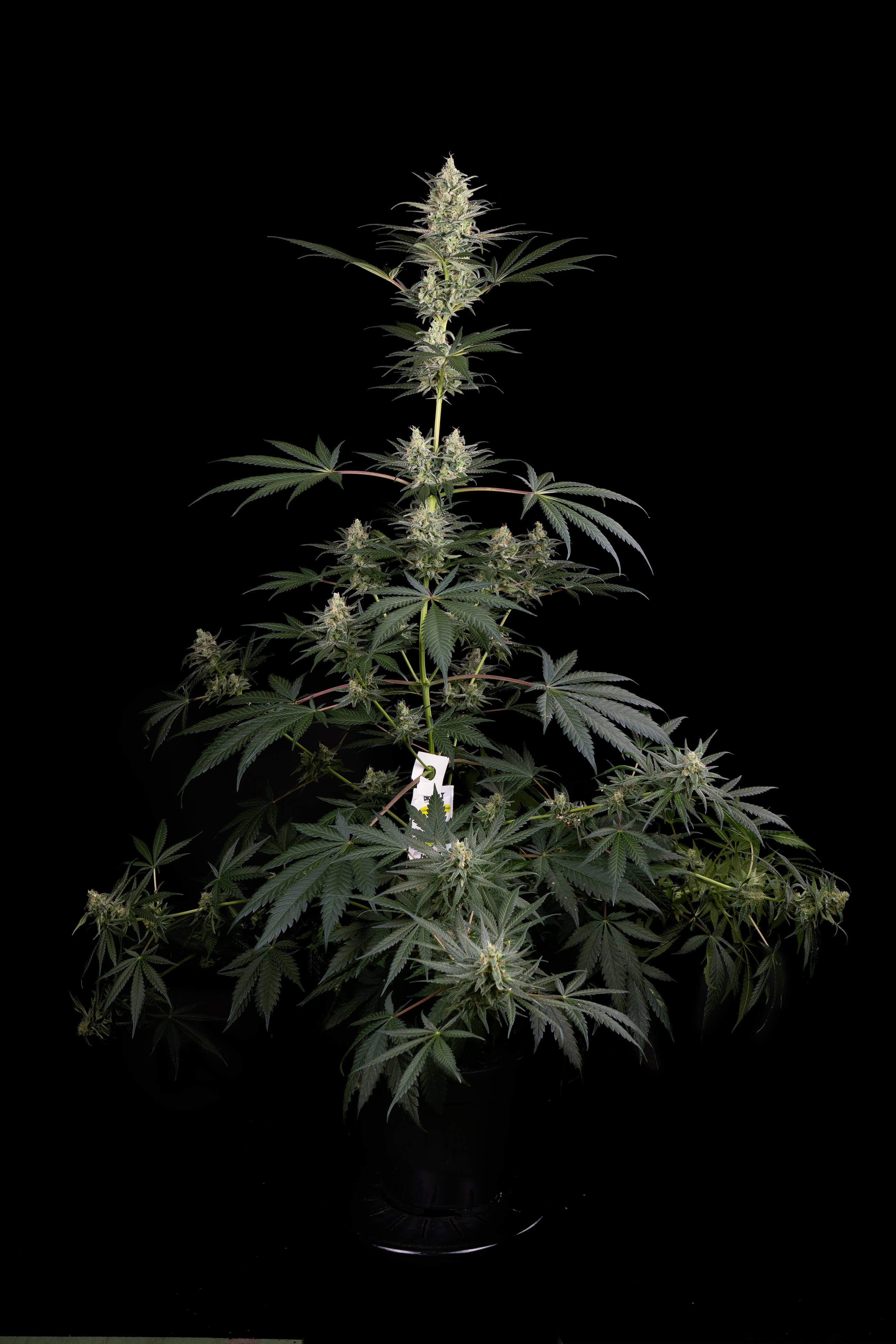
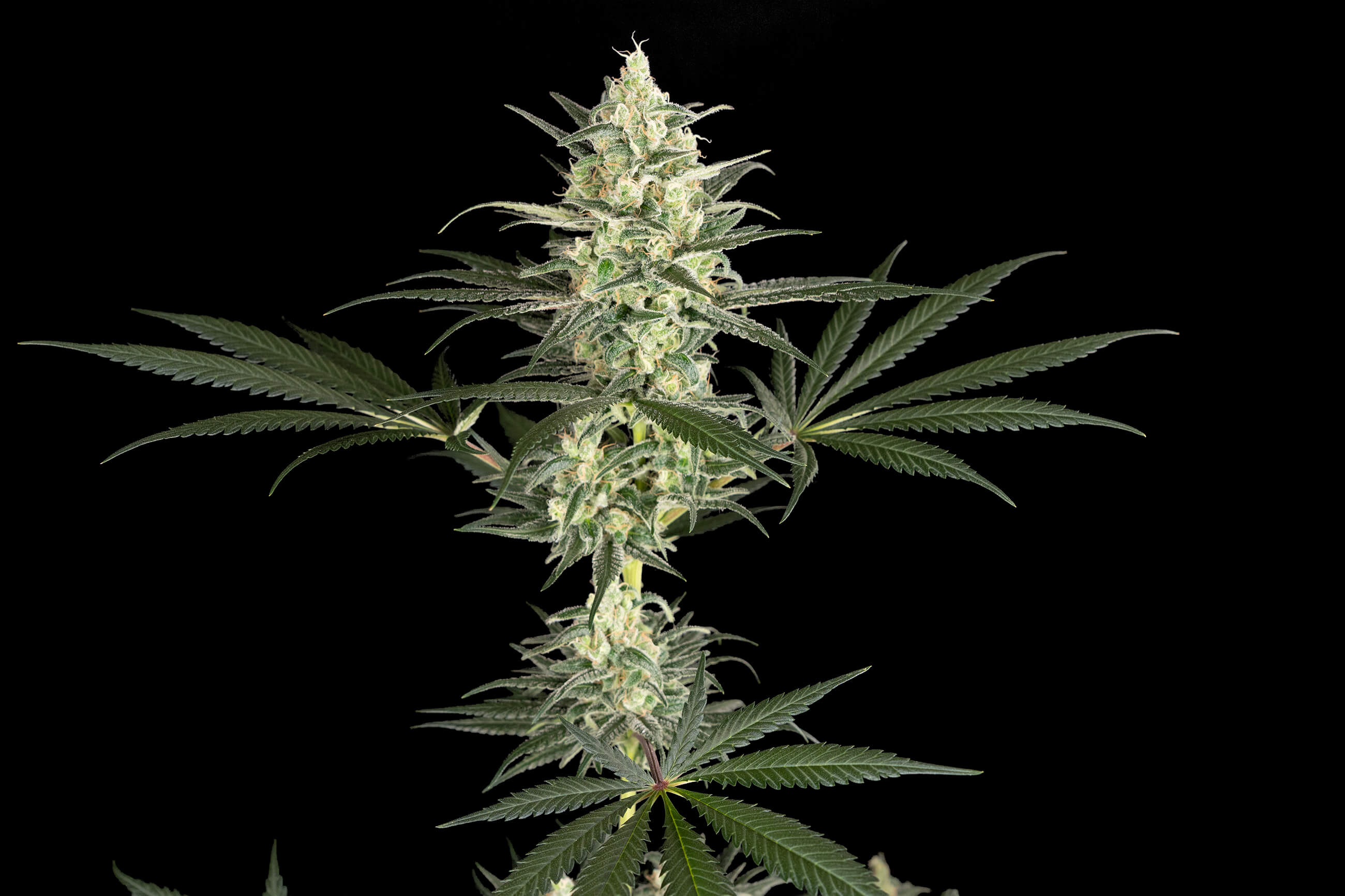
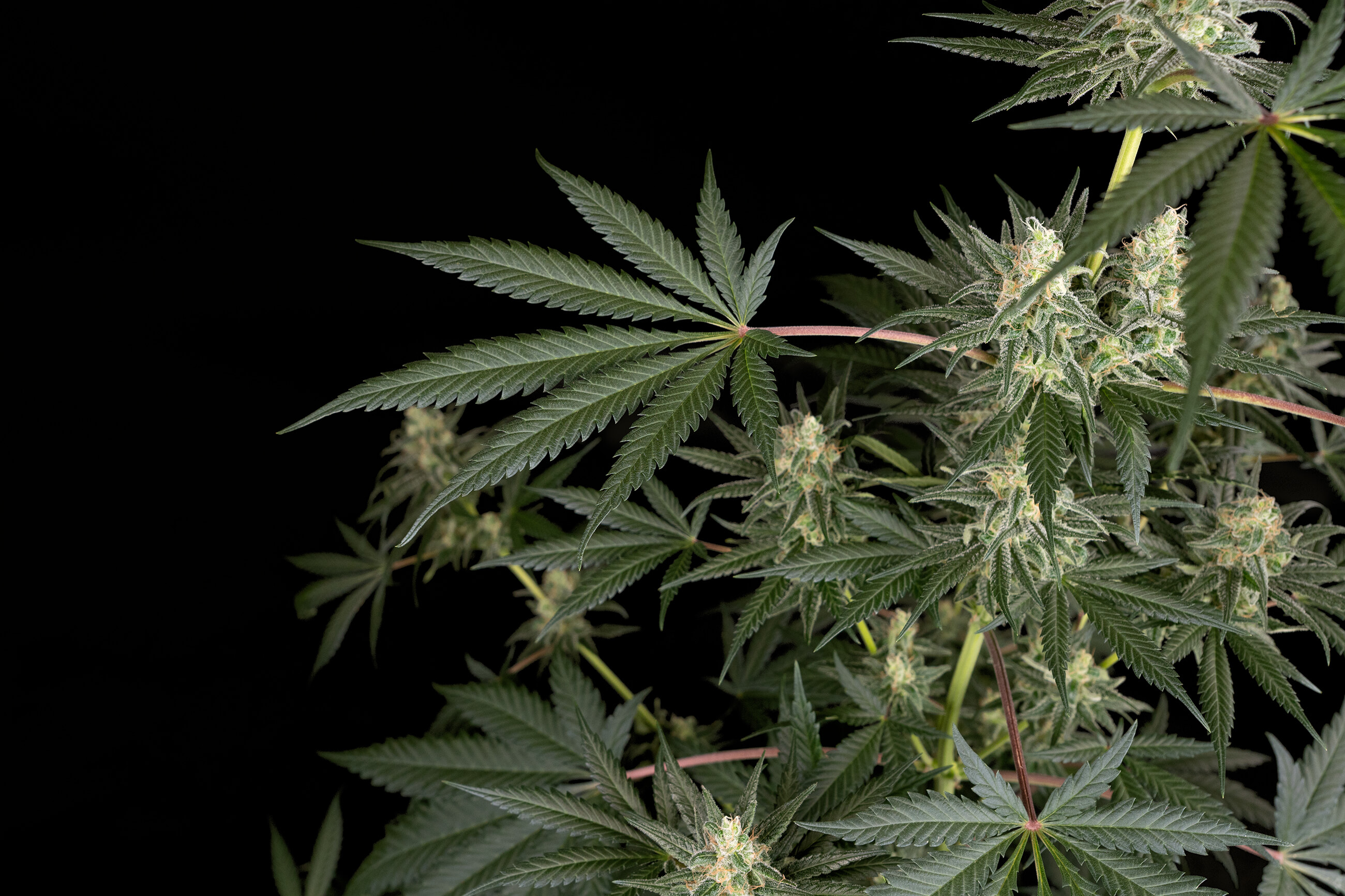
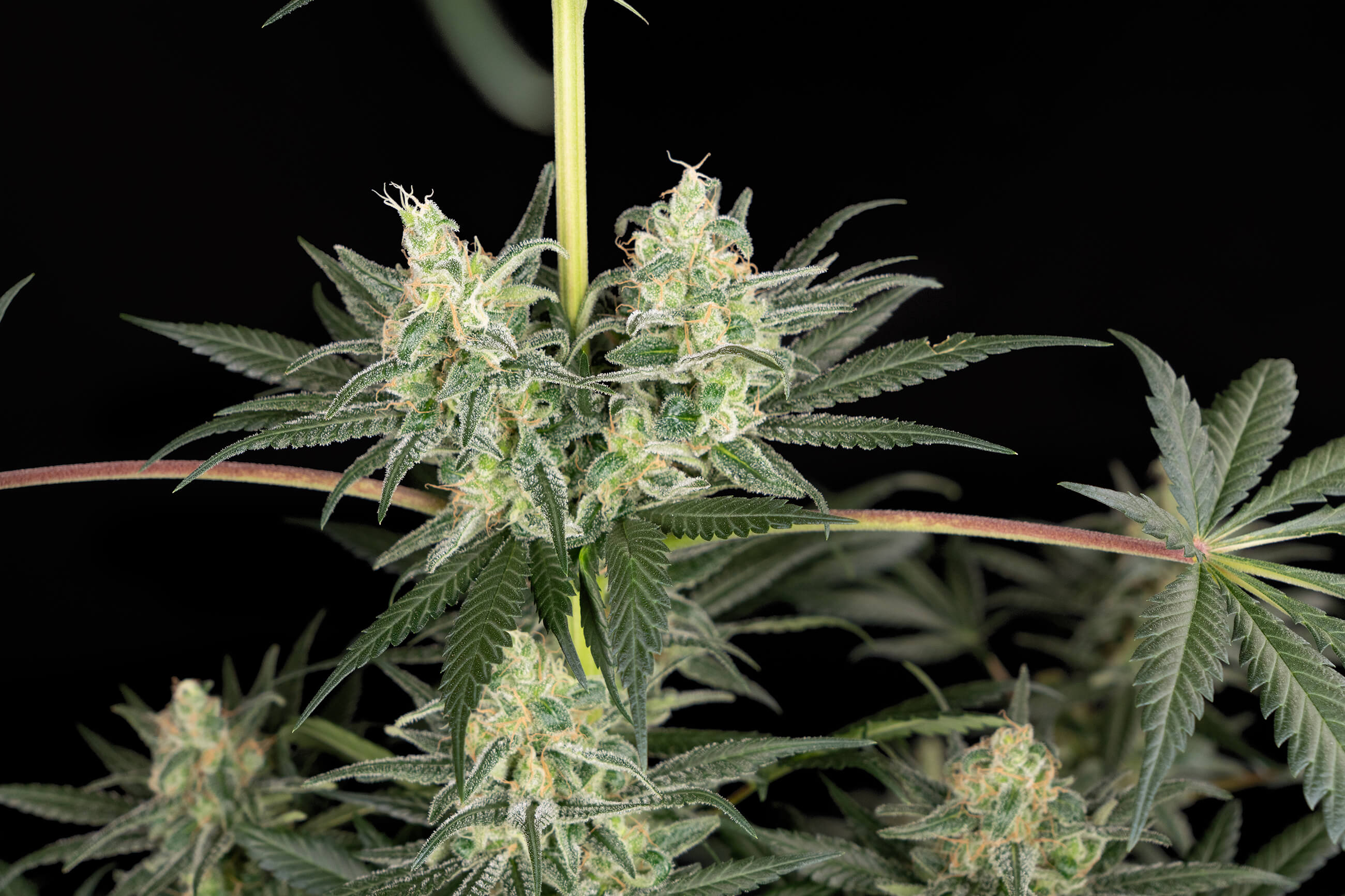
Over weeks eleven and twelve, we saw more of the same as the buds continued to grow to truly monstrous sizes. Our plant grew slightly to a height of 130 cm, and there was little left to do but allow nature to run its course.
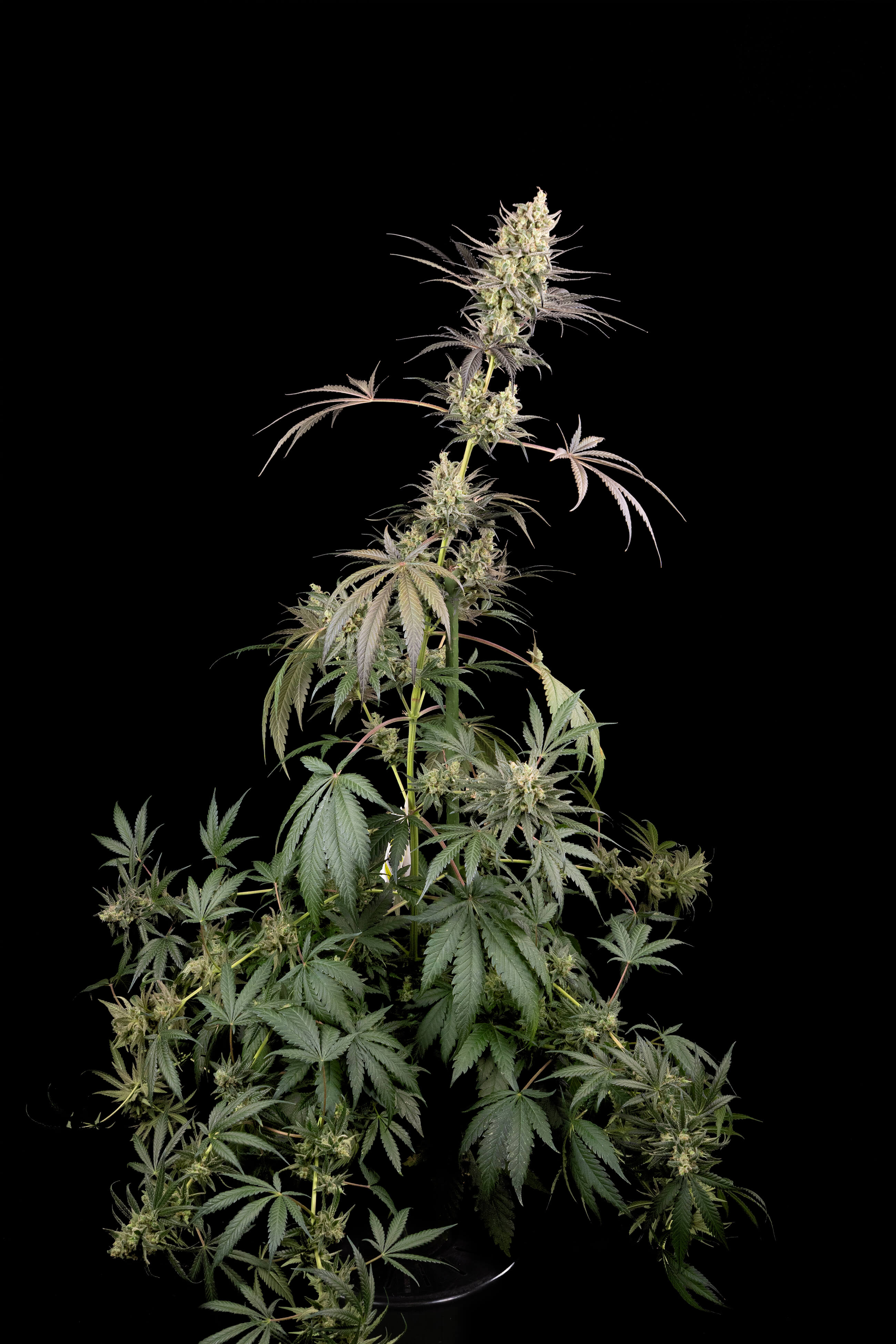
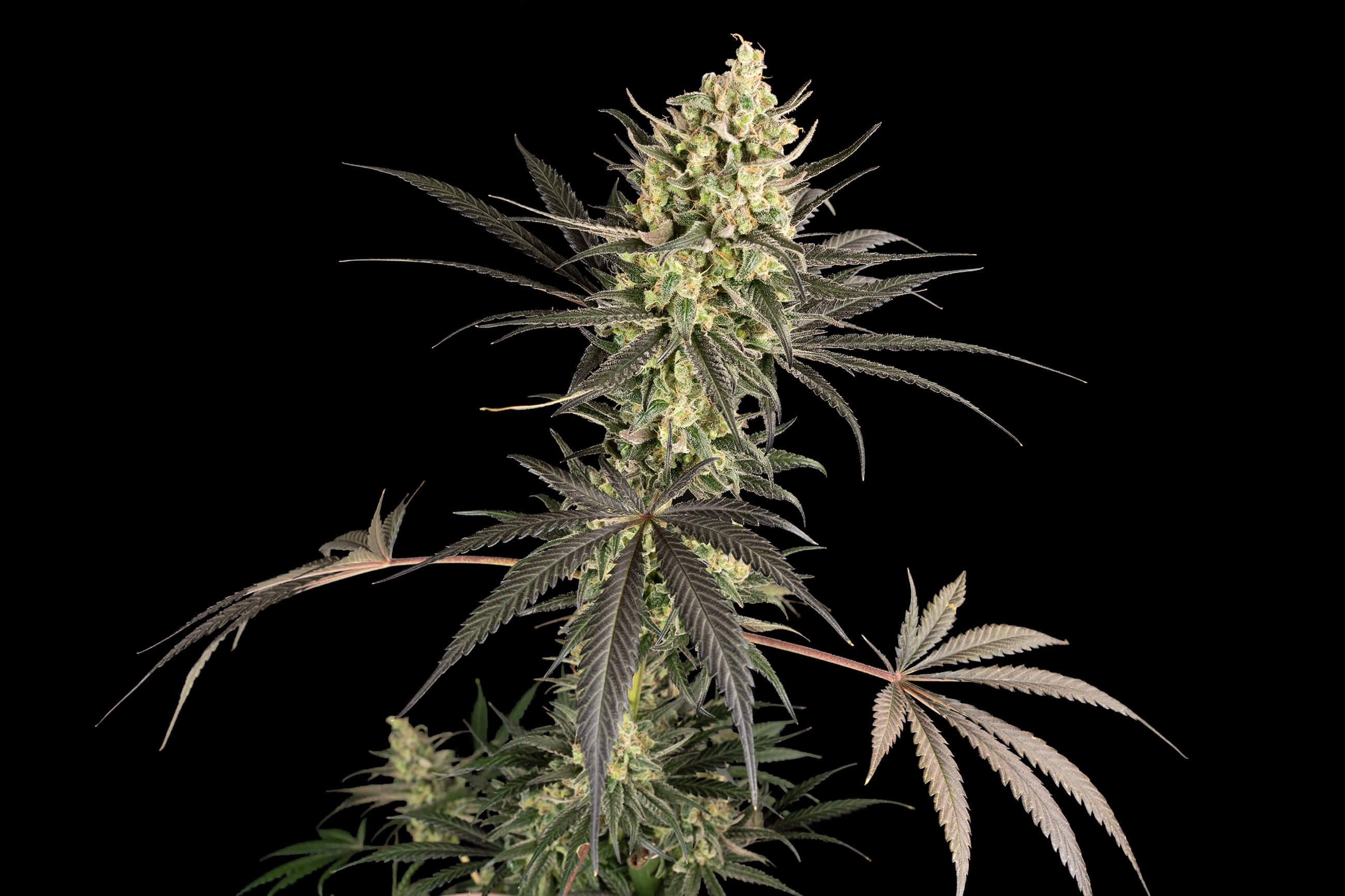
Week thirteen saw our plant reach its maximum height of 132 cm, and the pistils had mostly a vibrant orange, indicating that our Caramel Pineapple Feminized cannabis plant was ready to harvest.
Harvest
Once it was time to harvest our Caramel Pineapple Feminized cannabis plant, we started by cutting it down at the base and removing all of the fan leaves. Next, we simply hung it upside-down to dry in a climate-controlled drying room where we maintained a constant temperature of 15.5°C and relative humidity of 50% until the smaller branches were dry enough to snap when bent. Typically, this stage of the drying process takes 10-20 days, depending on the size of the plant.
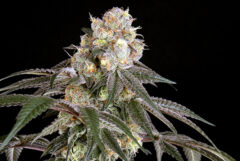
Once everything had been sufficiently dried, it was time to remove the buds and trim off any remaining leaves. These buds were moderately leafy, but there was a large number of them, and they were incredibly sticky with resin. This made trimming Caramel Pineapple Feminized more of a chore than some other strains, though nowhere near the worst we’ve seen.
Once that was done, we placed the buds into glass jars for curing. For the first 24 hours, we left these jars open to allow the bulk of the remaining moisture to evaporate. After about a day, the jars were closed up and “burped” several times a day. Over the next few weeks, we gradually reduced the frequency of burping to once every 24 hours. Proper curing is a time-consuming (but vital) step in preparing cannabis, and the entire process takes 4-6 weeks from start to finish.
In the end, we were able to harvest an absolutely staggering 235 grams of dried flower with an equally impressive THC content of 22.8%.
Related post
Terpene profile
As our Caramel Pineapple plant began to flower, our grow space was filled with an increasingly pungent floral aroma that combined the pine and lemon scents of this strain’s SFV OG genetics and blended them with a distinctly skunky undertone from the Jamaican Roadkill Skunk parent. As you might expect from a strain with such a strong Kush and Skunk lineage, the smell was quite powerful and more discreet growers may wish to take additional steps to keep it under wraps. The flavour is exactly what one would expect based on the aroma and genetic profile: floral, citrusy, and slightly earthy with a subtly skunky finish.
The effects of this hybrid strain are quite well-balanced with an initial energising and cerebral high, which is sure to get you on your feet and out the door. This gradually transitions into a floaty, relaxing body high which eases tension and soothes sore muscles without sedative effects, allowing you to stay on the move. Overall, this strain is an ideal pick for a day out in nature or getting some chores done in the garden.
Related post
The outcome
Caramel Pineapple Feminized is one of the most productive strains that we have ever seen—especially when you consider its relatively average height. While this strain’s massive stretch and long lateral branches may not be a good fit for every grow space, if you’re willing to wrangle this beast, you’ll certainly be more than pleased with your final results.
- Disclaimer:Laws and regulations regarding cannabis cultivation differ from country to country. Sensi Seeds therefore strongly advises you to check your local laws and regulations. Do not act in conflict with the law.
